Story Category: Legacy

The Booth Museum and Brighton Taxidermy

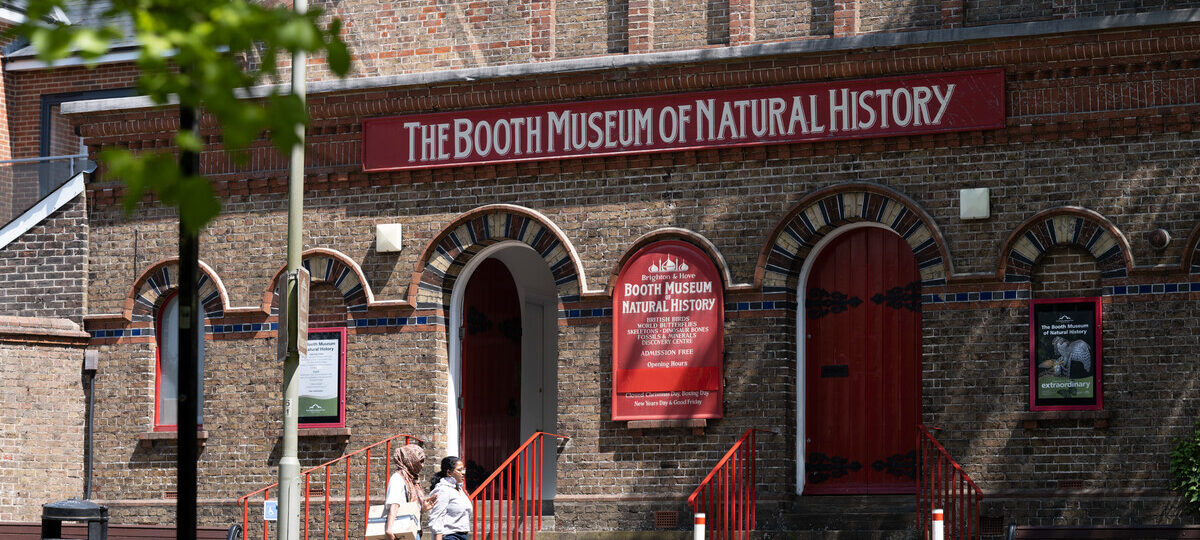
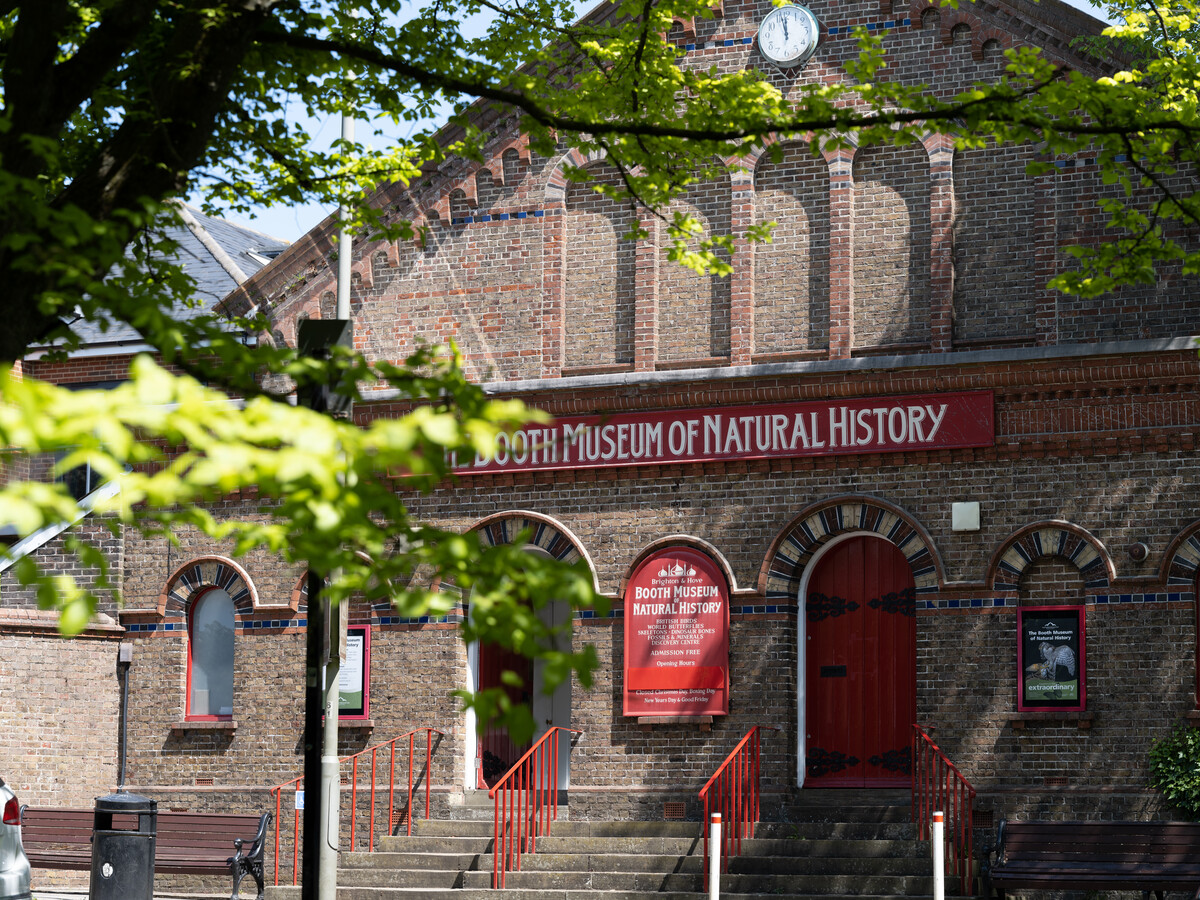
Booth Museum of Natural History, 194 Dyke Road, Brighton, City of Brighton and Hove, England. Opened in 1874 The Romanesque Revival building is listed at Grade II by English Heritage

This is a legacy story from an earlier version of our website. It may contain some formatting issues and broken links.

By the time the Booth Museum was built in 1874 Brighton had three established taxidermy companies and the Museum has examples from all three in its collections. The history of taxidermy is told, in part, through the exhibition ‘Life in Death’  which currently forms part of the main gallery.

Swaysland & Son (1814 – 1951)

The exact date of the establishment of this company is difficult to pin down.

It would seem that the firm had its origins with Stephen Swaysland a ‘Wheelwright & Bird Fancier’ and that he probably supplied live caged birds. His son George went from gardener to taxidermist. He became an accomplished naturalist and was acquainted with many prominent scientists of the day such as Charles Darwin, William Borrer and William Yarrell.

George is actually mentioned in Darwin’s “The Descent of Man”. He claims to have mounted several of the exhibits in the Bramber Museum’s “Who Killed Cock Robin?”

His three sons Henry, George and Walter remained in the family business. The firm Swaysland & Son gradually ceased taxidermy and went back to selling caged birds. Walter’s son Walter continued running the business until it ceased to operate in 1951.

The Booth collections include 23 specimens that are attributed to the Swaysland family firm either as taxidermists or as collectors.

[slideshow]

Pratt & Sons (1851 – 1952)

The founder of the firm of H Pratt, H Pratt & Sons, and finally Pratt & Sons was Henry Pratt (born 1818).

Their Brighton premises were at 35 Duke Street, 44 Ship Street, 11 North Street Quadrant and finally 15 Cranbourne Street.

Two of Henry’s children, John and Edwin, stayed in the family business. His oldest son, Henry, became a successful clockmaker in Brighton. John and Edwin both married and one of each brother’s sons, confusingly also called John and Edwin, eventually took over the business.

This was the last commercial taxidermy firm operating in Brighton. It ceased on the death of Edwin Albert Pratt in 1952. The Booth Museum includes in its collections around 50 items attributed to the Pratt family firm.

Brazenor Brothers (1863/8 – 1937)

This successful family firm was started by Robert Brazenor (1819 – 1901).

He and his wife had seven children, five of whom survived into adulthood. They all entered the family business though the girls worked in the furrier shop alongside their mother.

They briefly operated at 20 Duke Street, and afterwards they moved to 39 Lewes Road where they remained till they closed down.

Robert’s style of taxidermy could be described as ‘more enthusiastic than strictly accurate’. His representations of ‘The Babe in the Woods’ adequately demonstrates this.

Brazenor Brothers undertook a great deal of osteological work for the Rottingdean based collector Frederick W Lucas, much of which can be seen in the skeleton gallery in the Booth Museum. One of their biggest tasks was the preparation of the Killer Whale skeleton in the Booth Museum. They undertook several other preparations of large material such as the 20.7 meter long Rorqual. This was sectioned and allowed to rot down in specially built vats on Race Hill. Eventually the skeleton was erected on Boscombe Pier, near Bournemouth, from where it was discarded.

For many years Alfred, the youngest son, was the mainstay of the business. In this he was joined by his son Herbert Ferris Brazenor. Herbert joined the staff of Brighton Museum & Art Gallery and rose to become Deputy Director. He died in 1972.

Jeremy Adams, retired Assistant Keeper at the Booth Museum

The Booth Museum of British Birds

Booth Museum of Natural History, 194 Dyke Road, Brighton, City of Brighton and Hove, England. Opened in 1874 The Romanesque Revival building is listed at Grade II by English Heritage

This is a legacy story from an earlier version of our website. It may contain some formatting issues and broken links.

Booth Museum, Brighton

The single most important source of information about Booth’s collection is the publication “Catalogue of the Cases of Birds in the Dyke Road Museum, Brighton”. This was written by Booth with additional notes by Arthur Foster Griffith.

The catalogue states that there are 1,498 specimens of mounted birds recorded as having been collected by him. These are vital pieces of information as subsequent to Booth’s death many changes have been made to the museum, new cases have been built, specimens have been inserted into some original cases and some specimens have been removed. In addition, specimen taxonomy has also been updated.

See images of the bird dioramas on our flickr stream

Jeremy Adams, retired Assistant Keeper at the Booth Museum

Thomas Parkin, MA, JP, FGS, FZS, FLS, 1845 – 1932

Booth Museum of Natural History, 194 Dyke Road, Brighton, City of Brighton and Hove, England. Opened in 1874 The Romanesque Revival building is listed at Grade II by English Heritage

This is a legacy story from an earlier version of our website. It may contain some formatting issues and broken links.

Prolific collector

During his lifetime Thomas Parkin assembled a large and significant collection of eggs. The collection was, in the majority, purchased, chiefly from the Stevens Auction Rooms in Covent Garden. Parkin’s collection along with all of his catalogues and a considerable amount of other documentation was acquired by Hastings Museum on his death and subsequently transferred to the BoothMuseum in 1998.

Educated at Rugby, Trinity College where he was awarded his Masters degree in 1871 and called to the Bar of the Inner Temple in 1874, Parkin was one of the founding members of the Hastings & St. Leonards Natural History Society and was elected its first president.

[slideshow]

Parkin travelled extensively. In 1887 he sailed toAustralia, New Zealand and Tasmania via the Cape of Good Hope collecting seabirds en route. He returned via Cape Horn. The seabirds were given to the British Museum. He also collected in Southern Spain and in the southern states of the USA and made trips to North Africa, living briefly inParis before returning to England for the cricket!

Parkin’s catalogues are filled with data, original labels, receipts and letters (including original envelopes) from various donors or other ornithologists. There is an alphabetised list of oologists with whom he had been in contact and many notes on various egg collectors, photographs of them and details of their gravestones. The catalogues also include many laboriously hand copied articles from miscellaneous journals relevant to the eggs in his collection.

Parkin also served in the Royal Cumberland Militia and the catalogue includes a photograph of him in uniform sporting his very fine waxed moustache.

The Booth Museum collections contain 4,190 specimens collected by Parkin. 4,160 of these are eggs which are scrupulously catalogued with find dates, localities and details of earlier collectors all recorded. In addition, there are seventeen examples of Dodo bones collected by George Clarke in La Mare aux Songes inMauritius. Parkin also acquired the egg of a Great Auk, the holy grail of egg collectors.

Jeremy Adams, retired Assistant Keeper at the Booth Museum

Passing the Ball: Brighton to Mali and Back

Image of a home-made football from Mali, on display in Brighton Museum

This is a legacy story from an earlier version of our website. It may contain some formatting issues and broken links.

Brighton Museum & Art Gallery has been working with young people in Mali to help create content for a new World Stories gallery, opening in June 2012 to mark the London 2012 Games.

Developed in partnership with young people, this new permanent gallery will explore the changing world around us, drawing on Brighton Museum and Art Gallery’s stunning collections from Africa, Asia, the Pacific and Americas, alongside newly-commissioned contemporary art and artefacts.

As the Youth Engagement Officer on this project I have been working with young people to engage them with the Museum’s collections and involve them in developing this exciting new space.

[slideshow]

The football story

One of the new displays will explore what football means in young people’s lives in Brighton & Hove and in West Africa: how football is embedded in local cultures; what it means to be a fan and the role football plays in bringing people together. Museum staff are working closely with Brighton & Hove Albion’s community and international development programmes, to involve young people in Brighton and in Mali, in West Africa, in developing this story.

In March 2011 I spent 10 days in Bamako, the capital city of Mali, finding out what football means to the young people who live there and exploring some of the issues surrounding the sport. Our project partner in Mali is Coaching for Hope, a UK-based charity that uses football to create better futures for young people in West and Southern Africa. Together we organised a two-day youth football tournament, conducted filmed interviews and ran activities with the young people to explore the topic.

During my trip I was helped by Sebastian Morua, who works for Brighton & Hove Albion and had been delivering a youth leadership programme in Bamako with Coaching For Hope. The course is designed to create a platform for youth advocacy and encourage the promotion of the youth voice in the community through football. During my trip I worked with this group of ‘young leaders’.

Football in Mali

When I first arrived in Bamako I was taken aback by the overwhelming presence of football. To say football is everywhere is an understatement. People play football wherever they can and wasteland pitches can be found on every corner. In the late afternoon sun countless matches kick off in neighbourhoods across the city and they all attract their fair share of spectators.

As I walked through the busy market in Bamako, trying to dodge the mopeds, every other person was wearing a football shirt, and the streets were saturated with stalls selling football boots and shirts. When you travel by car, you only have to slow down for a minute before someone appears at your window offering to sell you a football.

During my trip I wanted to collect some objects for the museum display that reflect the presence of football in everyday Malian life and there certainly were plenty to choose from. Images of famous footballers adorn many everyday items such as school books, bumper stickers and playing cards. The faces of Malian players Mahamadou Diarra and Frédéric Kanouté are particularly popular, as well as West African players such as Chelsea’s Didier Drogba, and Manchester City’s Yaya Touré.

Young people

On my second day I met Adama Yéyé (known as Yéyé), one of the young leaders, who volunteered to help with the organising of the tournament and the filming project. Yéyé is originally from Burkina Faso but he now goes to school in Bamako and is also a jewellery-maker by trade. When I asked him how old he is, an interesting conversation followed. He said ‘My real age is 22 but my football age is 14’. Sebastian explained that it is common for young people to have younger ‘football ages’ to make them appear better youth players to football scouts. This is a widespread problem in African football.

I wanted to film young people talking about what football means to them and their aspirations so we met with the young leaders for a group interview. The group of 12 young people (3 young women and 9 young men) were incredibly friendly and keen to contribute to the project. I was inspired to find that disabled people seem to be well-integrated in the wider community, in and that many hearing people communicate through sign language with their deaf friends. In the group there were 2 deaf young people – Gaoussou, 18 and Moussa, 19. They were confident members of the group; the first to answer my questions and keen to share their football experiences with me.

Collecting for the new gallery

After school one day a group of children were having a kick around on some wasteland. I had been told that young people often make their own football if they don’t have one so I asked the group how they would do it. They decided they would show me. They gathered together to discuss their task very seriously and then set about collecting rubbish to build the ball. A discarded sock formed the structure, charcoal the base and plastic bags the layers. Once the ball was deemed to be the right weight and shape, they quickly divided into teams and started playing football to demonstrate the effectiveness of their ball. The sock ball came back to England with me (much to their bemusement) and we took them to the market to buy them a brand new football.

Many young people play football in jelly shoes (or plastiques) because they are cheap and durable and I wanted to buy a used pair for the museum collection. I set off with Yéyé on a mission to find some. We had been in the taxi only a few minutes when Yéyé spotted a young person casually walking down the road, swinging his plastic shoes. We pulled over and, a brief conversation later, Omar jumped in. Although I wasn’t entirely sure how much Yéyé had explained (due to the language barrier!) Omar seemed happy with the arrangement. We set off to the market to buy him brand new football boots in exchange for his plastiques, had a coffee and said goodbye – but not before Yéyé and Omar had swapped numbers and arranged to play football.

The football tournament

The tournament took place in a huge walled pitch at the heart of the Badema Lafia neighbourhood. The pitch was marked out using charcoal and nets were hung on the goal posts. The competition was due to start at 7am on the Saturday morning. In Mali football is played early in the morning or in the evening to avoid the extreme daytime heat. I visited during the hottest season and temperatures reached a sweltering 40 degrees. Football matches always attract a crowd and shortly after we arrived children from the area gathered to watch the action. There were eight teams competing from neighbourhoods across Bamako. They included a team of young women and a team of deaf young people.

The competition is tough and is undertaken with the utmost seriousness. Over the next two days I got a real sense of the commitment of the coaches and the young people to the game.

At the side of the pitch one young player explained what the game meant to him: ‘I’m a footballer here. I like football because it’s known by everyone. It’s a sport for rich and poor, and disabled people too. It helps me keep in shape and later it’ll help me earn a living too.’

Next steps

My trip to Mali was an interesting and inspiring one and I thoroughly enjoyed the opportunity to meet young people who are passionate and committed to football. Brighton Museum & Art Gallery will now follow this up with a parallel project involving young people in Brighton & Hove: conducting interviews, making a film and collecting objects for the new display. We are working with Albion in The Community to stage a youth tournament in the summer 2011.

If you are age 14-25 and would like to find out more about the World Stories project, and how you could get involved, please contact me on 07504221330 or worldstories@brighton-hove.gov.uk

Hazel Welch, Youth Engagement Officer, Brighton Museum & Art Gallery
The Golden Eagle – Aquila chrysaetos

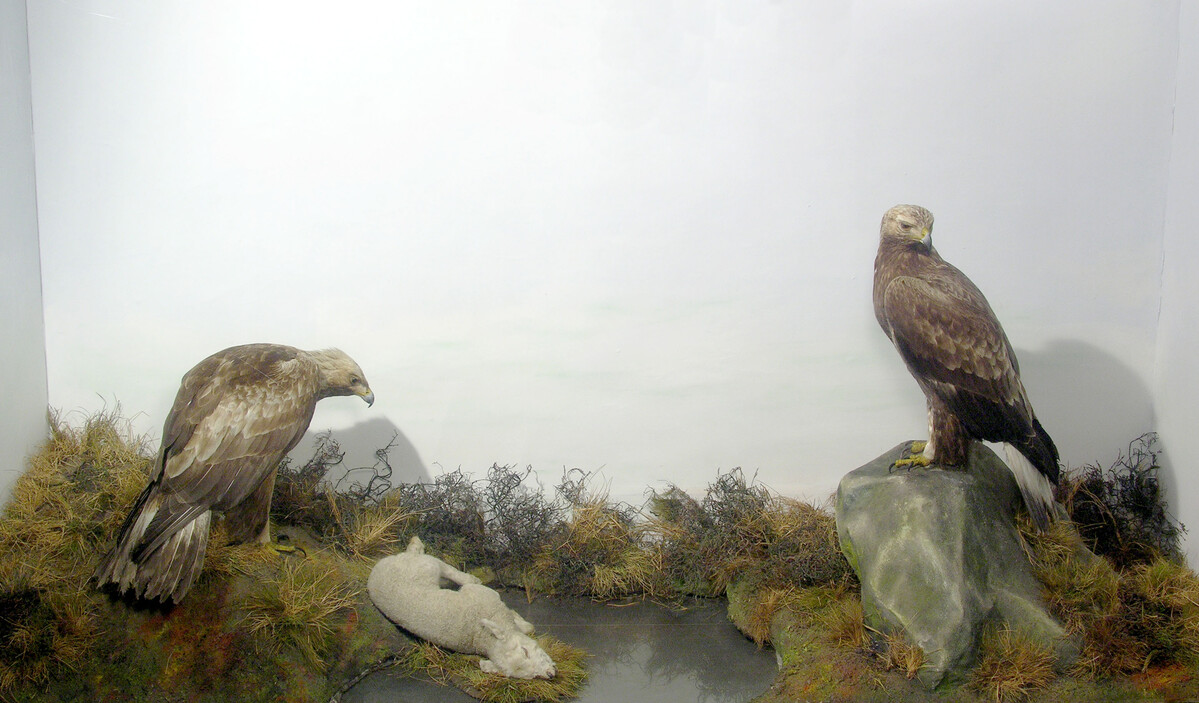
Booth Museum Golden Eagle diorama

This is a legacy story from an earlier version of our website. It may contain some formatting issues and broken links.

The Golden Eagle (Aquila chrysaetos) in flight is one of the most spectacular natural sights and is the second largest bird of prey in Great Britain. It is found from North America through Europe, and across Asia into Japan.

Although once found in England, centuries of persecution have meant that this magnificent bird is now restricted to Scotland, although some have recently been re-introduced to Ireland. To mark the start of Springwatch 2011 – and with golden eagles a popular subject for Springwatch’s ‘nest-cams’ – we introduce the Booth Museum’s Golden Eagle displays, given pride of place at the front of the museum.

Returning with Prey

Returning with Prey

This grand case is one of the most impressive of Edward Booth’s original bird displays. The taxidermy examples have been arranged in accordance with the natural behaviour Booth observed and painted whilst hunting for the birds in Scotland, during the 1870s. The display shows an eagle on its nest, with its mate returning with prey for the chicks. They are displayed in a mock-up of the mountainous terrain of the Scottish Highlands, where the birds were collected.

This exhibit is one of three Golden Eagle cases on display at the museum, showing the birds in a variety of behaviours and life stages, and all created for Edward Booth himself. The taxidermy, like most of Booth’s original birds, is of a very high standard, with each individual looking lifelike and well preserved. The exhibits at the Booth Museum are now one of the only legal ways to get a close up view of a Golden Eagle nest.

The Golden Eagle – Aquila chrysaetos

The Golden Eagle – Aquila chrysaetos

Golden Eagles are monogamous and build large nests which they will return to each year. They lay between one to four eggs, but usually only one or two chicks survive to fledge. Their diet consists mainly of small mammals, but they have been observed taking much larger prey, including driving full grown deer over cliffs. They will also take birds up to the size of swans, and will feed on carrion and large insects.

The Golden Eagle is historically revered throughout the Northern Hemisphere. It is considered to be greatly mystical in native cultures across North America, and their feathers are said to be as important to Native American tribes as the crucifix is to Christians. In Mongolian and Kazakh tribal communities The Golden Eagle is still sent after foxes and wolves, and many were owned by Genghis Khan, who was a keen falconer. In Europe, the Golden Eagle was reserved for Emperors and was the symbol of the Roman Empire. It has been used in the heraldry of many member states of the medieval Holy Roman Empire and is the national bird of Kazakhstan and Mexico. In 2004 it was voted as the new national bird for Scotland in a public poll. It was adopted as the standard of Napoleon’s Grand Armée, and the Saladin Golden Eagle is prominent on the Egyptian flag.

Despite this, the Golden Eagle has been persecuted by people for centuries. In Britain they were historically slaughtered by game keepers and farmers for taking livestock. Although now illegal, and subject to severe penalties, eagles are still poisoned or shot, despite a number of studies showing their impact on livestock is minimal. Although endangered in the UK and many other European countries, the Golden Eagle is not considered to be at risk internationally, thanks to healthy populations in North America and Asia.

Lee Ismail, Curator of Natural Sciences

At Work With . . . Paula Wrightson

Paula Wrightson at Preston Manor

This is a legacy story from an earlier version of our website. It may contain some formatting issues and broken links.

…Paula Wrightson, Museum Learning Officer (Adult event programme)

I have been working with the ghosts at Preston Manor for five years although I’ve yet to actually meet one.

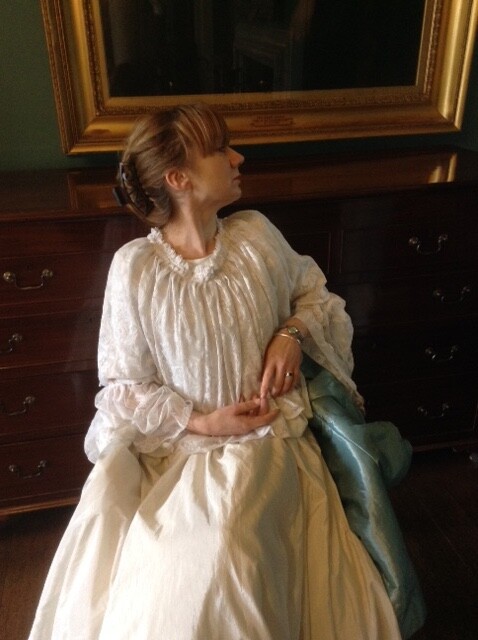
In this time I’ve become fascinated not only by our famous Preston Manor ghost story but by the history of belief in ghosts, especially in the Victorian period. The Victorians went ghost crazy and the Stanford family of Preston Manor appear to have been drawn into the fad.

I have been lucky enough to read the letters written in the 1930s between John Benett-Stanford and Henry Roberts, the first curator of the Manor when it became a museum in 1933. It is through these letters that we can piece together some of the story. What is known is that Lady Ellen Stanford certainly did not believe her house was haunted “personally I do not believe anyone has ever seen one here” she wrote of ghosts in 1930.

[slideshow]

However, her mother was so convinced she took part in a séance, which was held at the house on 11th November 1896. At this time holding a séance was fashionable in high society. Even Queen Victoria is said to have dabbled. Spiritualist mediums could make a good living on the grand house circuit and many, interestingly, were women, as the job was considered a respectable profession (especially for genteel ladies in need of an income).

The medium present at the Preston Manor séance was Ada Goodrich Freer, going under the pseudonym ‘Miss X’. She became a leading member of the Society for Psychical Research which was set up in 1882 and continues today. Without doubt Miss X provided a dazzling show that November night. A transcript of the proceedings still exists from which we can deduce a ‘talking board’ was used (marketed as the Ouija Board from 1901). Miss X’s fantastical communications with ‘the other side’ (too lengthy to go into here) together with the archive of letters, provide us with the basis of the ghost tours and events that we run at Preston Manor today.

John Benett-Stanford, who was not present at the séance, intended writing a history of his family ghost story but in his own words he was “too lazy” to do so. He hoped Henry Roberts would take up the mantle and wrote numerous lines of enquiry to Roberts including the hope that the household ghost of the White Lady might call by one night and “share your whisky and soda with you”.

No one has yet written the definitive history of the Preston Manor ghosts, not least because the story continues. I keep an on-going file of up-to-date reports of sightings and experiences.

Charles Darwin’s ‘Abominable Mystery’ or The Origin of Flowering Plants

View of exterior of Booth Museum of Natural History.

This is a legacy story from an earlier version of our website. It may contain some formatting issues and broken links.

Today is the anniversary of the death of Charles Darwin (12 February 1809 – 19 April 1882). In tribute to the naturalist, we look at his ‘Abominable Mystery’.

Charles Darwin was concerned with the fossil record showing the sudden and rapid diversification of the flowering plants. These concerns were expressed in a letter he wrote on 22nd July 1879 to his close friend Joseph Hooker:

Letter to Joseph Hooker

Letter to Joseph Hooker (Cambridge University Library)

Origins of Flowering Plants

Darwin speculated that they arose in response to a rise in ‘flower frequenting insects’. In fact we now understand that the co-evolution of plants and insects was an important process in the flowering plants’ origins and divergence. Put quit simple: no insects, no flowering plants.

The relationship between the two has been one of love and hate.

Love – the plants exploiting the insect for sex (transfer of pollen) by offering food, shelter and other rewards.

Hate – the plants having to defend themselves against the attack of insects using them for food.

The processes continue today.

We now know that the flowering plants arose in the Early Cretaceous, around 130 million years ago. By the mid Cretaceous they had rapidly diversified and spread around the world with 50 families recognised.

This special fossil is called Bevhalstia plebja and was found in 1995 at Smokejacks Quarry, a Weald clay (Lower Barremian) brick-pit in Surrey. It was described by C.R. Hill in Cretaceous Research (1996) 17, 27-38. Further examples of this strange plant have subsequently been found.

[slideshow]

Bevhalstia appears to be an unremarkable water weed growing on the margin of a pond or marsh. Far from being unremarkable it is a unique plant that does not match any living flowering plant. It has tiny flower buds at the ends of some of its branches that lack defined flower petals. It has leaves with veins like the leaves of modern flowing plants.  

This is an amazing plant – a true ancestor, the earliest known, of all the amazing flowering plants and featured in a National Geographic article.

Gerald Legg, Keeper of Natural Sciences

Satire on a Royal Marriage 1795

The Lover's Dream

This is a legacy story from an earlier version of our website. It may contain some formatting issues and broken links.

James Gillray, The Lover’s Dream, 24 January 1795
Hand-coloured etching and aquatint. FA208920

James Gillray, The Lover’s Dream, 24 January 1795, FA208920

James Gillray, The Lover’s Dream, 24 January 1795, FA208920

George, Prince of Wales had promised to marry Caroline of Brunswick in exchange for writing off his debts. In the print, his wife to be hovers over the sleeping Prince. A winged figure holds a marriage torch in one hand as he lifts the train of the wedding dress with the other. Cupid pulls aside the bed’s heavy curtains. On the other side of George’s bed, George’s father King George III holds a bag full of cash expectantly while the Queen, anticipating her son’s forthcoming marriage, holds a book entitled ‘The Art of Getting Pretty Children’.

Behind Prince George’s parents are his companions. The politician Charles James Fox and the playwright and politician Richard Sheridan appear worried as they slink away together with George’s former wife Maria Fitzherbert (his marriage to the Catholic widow was never recognized) and George’s current mistress, Lady Jersey. A plump Bacchus is about to fall off a cask of port. The print bears the inscription: ‘”A Thousand Virtues seem to lackey her, Driving far off each thing of Sin & Guilt.” Gillray suggests satirically that George’s exuberant lifestyle will come to an end with the wedding.

The Lover’s Dream shows Prince George before he met Caroline of Brunswick. George dreams blissfully of his future wife’s beauty and of a peaceful marriage, oblivious to the trouble that lies ahead. Indeed, adultery and, ultimately, divorce would define George’s marriage to Caroline.

The Lover’s Dream is one of the highlights from our new acquisition of 235 prints from the golden age of political caricature. James Gillray (1757-1815) was one of the leading satirists of late 18th and early 19th century. This beautifully-executed print demonstrates his wit, humour and visual imagination. The Lover’s Dream will be shown together with other colourful caricatures in the display George IV And His Circle – Newly Acquired Caricatures From The Kenneth Baker Collection in the Prints & Drawings Gallery at Brighton Museum & Art Gallery from 7 June 2011.

Jenny Lund, Curator of Fine Art

At Work With . . . Jenny Hand

This is a legacy story from an earlier version of our website. It may contain some formatting issues and broken links.

. . . Jenny, Knowledge & Information Manager

A key part of my role at Brighton & Hove Museums is to ensure the careful organisation of vital information about the objects and archives in our care. In our exciting digital age, this means working with a huge database and many, many digital images and documents. The flexibility of digital information management makes the process of recording and retrieving information relatively quick and easy but the whole thing can be a little inhuman at times!

Back when Brighton Museum was established, in the far-from-digital year of 1873, the recording of information was a much more painstaking business with every donation, purchase and excavation find recorded by hand with pen on paper. These records can be found in the museum’s archives which contain around thirty handwritten, leather bound ledgers known as accession registers. To me, the registers are objects of beauty in themselves and to give you an idea of how much information is contained within them, each ledger has around 300 pages and each page has roughly eight donations listed on it. This makes a total of 72,000 separate donations over the course of a century and many donations consist of more than one object! What I also find intriguing is that the ledgers can illustrate, to a certain extent, the personalities of the staff who wrote so carefully in them for over 100 years until computers were introduced in the 1980s.

[slideshow]

In this image you can see the first page of the first accession register which began in 1890. Amongst the list of entries has to be my most favourite labelled simply and humorously, in retrospect, as ‘a section of wood with curious stain’! The entry is numbered ‘9’ in the system implemented by one of the museum’s most influential curators Herbert S Toms. Toms was a dedicated archaeologist who managed the museum between 1897 and 1939. A later account of him by his protégé Ralph Merrifield describes Toms’ approach to keeping records:

“Detailed accessioning was an innovation introduced by Toms to the museum and was gradually extended by him to cover the earlier collections, which had often been catalogued with such unhelpful entries as “one long article, probably ceremonial”. Tom’s care in recording was undoubtedly instilled in him by [Lt-General] Pitt Rivers, whose words he was fond of quoting: “If it has lost its register number throw it into the first ditch you come to” – a dictum that should not be taken quite literally by archaeologists or curators.”

We maybe quick on the digital draw these days but you cannot fault a good numbering system to help with the organisation of electronic records! At Brighton Museum we have just returned to using the ever reliable R numbers devised by Toms, thereby bringing a brilliant record keeper, born almost 140 years ago, into the 21st century.

Exogiini Sofoloi, APRIL FOOL!

Booth Museum of Natural History, 194 Dyke Road, Brighton, City of Brighton and Hove, England. Opened in 1874 The Romanesque Revival building is listed at Grade II by English Heritage

This is a legacy story from an earlier version of our website. It may contain some formatting issues and broken links.

How many of you guessed that our alien story was an April Fool? We did give you a clue – in the doctors name – which is an anagram of April Fools. Can you tell us what is significant about the location and date we gave for her fictional discovery?

The specimen you see in the picture is preserved example of the foetus of a macaque, a type of monkey, which is found across the world from Japan to Gibraltar and North Africa. Macaques are the most widespread genus of primates after humans. This particular one was donated to the Booth Museum by London Zoo in 1981. It is a Southern Pig Tailed macaque, native to Malaysia and Borneo.

Although not really an extraterrestrial, macaques did become the first animals to return from space alive, in 1959, as part of the NASA space programme.

Lee Ismail, Curator of Natural Sciences