This is a legacy story from an earlier version of our website. It may contain some formatting issues and broken links.
… Gerald Legg, Keeper of Natural Sciences
Of exploration, empire, butterflies and beer
Having worked at the Booth Museum of Natural History for more years than I like to admit to I have had the unique opportunity and privilege to work with natural history collections and be involved with all manner of things associated with the natural world.
The collections are far more than just dead specimens or their remains tucked away in a drawer or sitting in a cabinet on display. They have their obvious ‘uses’ such as being examples of life on Earth that anyone can see and appreciate. They can help us understand an organism: where it occurs or occurred; its variations in form and structure; how its distribution or form has changed over time (a good reason to have many of the apparently ‘same’ types). As new techniques arise they can be a mine of information, e.g. analysing for heavy metals such as lead can show where and when industrial activity has polluted the environment. It may be possible to extract DNA and gain an understanding of the relationships of organisms or even determine its genome which, for a rare species may be invaluable in the future. One of the most useful aspects of the collection is its help in identifying specimens submitted to the museum by members of the public, councils, the police and others. Books with pictures or detailed ‘keys’ to help tell you what you have are all very well, but a good ‘reference’ collection is the ultimate identification guide. We do a lot of identification work and our collections have proven invaluable in helping with this.
Specimens have considerable aesthetic value too; their colours and shapes help to enrich the world around us even when they are no longer flying or running wild but in a glass case in the museum. Many of our specimens have and continue to provide inspiration for artists and students of art, from a whole eagle to parts of the detail on a microscope slide of a piece of rock.
Moving away from the specimens themselves they can illustrate how we have come to understand the world through exploration and in the case of many European powers, particularly Britain, colonial expansion and exploration. When you start to examine and think about a specimen it can take on a whole new lease of life and open up a completely different world to the ‘lovely or useful specimen’ one. Take a look at the label (one or more) attached to a specimen and you can see more than just a name of a place, date and name of who collected the specimen. Those labels say far more – you only have to use your imagination and do a little research. Take one of our Birdwing Butterflies: Troides amphrysus amphrysus BC34196.

Troides amphrysus amphrysus, BC34196
It is obviously very beautiful, as are all the Birdwing butterflies; hence they are very collectable which has not helped their survival. Many Birdwings are now very rare and driven to this state through loss of habitat and the depravations of collectors. It occurs in Java and Bali and is strictly protected locally and is also listed in Appendix II of the Convention on International Trade in Endangered Species of Wild Fauna and Flora (CITES), and Appendix B of the EU regulation on trading with species of wild Fauna and Flora.
Now take a closer look at the label on the pin:
Three labels, a printed one, probably produced by Godman & Salvin with a date when they received it (May 1895), a hand written one, which, judging by the writing on the back, was made apparently by recycling an old label, that matches Wallace’s hand writing and one with our accession number.
Java. amphrysus
Godman-Salvin coll. 95-5 Java
Wallace.
Bates coll.
Wow! What a history, so simply written here in a few words.
This magnificent butterfly was caught around 1861 in Java, during the time when Victorian explorers were probing the world for the Empire, wealth and knowledge. Just imagine the life this insect had led before its capture. Conjure up a hot tropical forest, which over a hundred and ten years ago would have been difficult, dangerous and expensive to get to, the butterfly flitting high in the canopy. It descends into a clearing created by a fallen giant tree and is caught by a local inhabitant, pinched (to kill it), and slipped into a basket made of a local palm. Taking it back home the inhabitant awaits the explorer to visit and a deal is done. The explorer carefully puts it into a specially folded envelope, writes some details of when and where it was caught then places into an insect-proof box and tries to keep it dry and free of mould. Months pass and the explorer returns to Britain, sorts his catches and carefully mounts or ‘sets’ the butterfly. It is remarkable it has survived the perilous journey aboard a sailing vessel for months on end. Not all collections survived as we shall see.
The explorer/collector in this case is no dealer or everyday person he is Alfred Russell Wallace, OM, FRS (8 January 1823 – 7 November 1913), naturalist, explorer, geographer, anthropologist and biologist and is best known for independently proposing a theory of evolution due to natural selection that prompted Charles Darwin to publish his own theory. Wallace did extensive fieldwork, first in the Amazon River basin and then in the Malay Archipelago, where he identified the Wallace Line that divides the Indonesian archipelago into two distinct parts, one in which animals closely related to those of Australia are common, and one in which the species are largely of Asian origin. In 1869 he published an important work ‘The Malay Archipelago, The land of the orang-utan, and the bird of paradise. A narrative of travel, with sketches of man and nature’. In this book Wallace gives an account of his three months in Java in 1861 when this butterfly was probably collected. In this book (available on line as an ebook) Wallace says:
In the east of Java I had suffered from the intense heat and drought of the dry season, which had been very inimical to insect life. Here I had got into the other extreme of damp, wet, and cloudy weather, which was equally unfavourable. During the month which I spent in the interior of West Java, I never had a really hot fine, day throughout. It rained almost every afternoon, or dense mists came down from the mountains, which equally stopped collecting, and rendered it most difficult to dry my specimens, so that I really had no chance of getting a fair sample of Javanese entomology.
He was considered the 19th century’s leading expert on the geographical distribution of animal species and is sometimes called the ‘father of biogeography;’ Wallace was one of the leading evolutionary thinkers of the 19th century and made a number of other contributions to the development of evolutionary theory besides being co-discoverer of natural selection. These included the concept of warning colouration in animals, and the Wallace effect, a hypothesis on how natural selection could contribute to speciation by encouraging the development of barriers against hybridization.
The specimen did not stay with him but was given to his friend and co-explorer Henry Walter Bates FRS FLS FGS (Leicester, 8 February 1825 – London, 16 February 1892) naturalist and explorer who gave the first scientific account of mimicry in animals. Bates was most famous for his expedition to the Amazon with Wallace in 1848. Wallace returned in 1852, but lost his collection (fortunately he did not loose his Malay Archipelago material!) in a shipwreck. When Bates arrived home in 1859 after a full eleven years, he had sent back over 14,000 species (mostly of insects) of which 8,000 were new to science.
Like many collections Bates’ was broken up and dispersed with specimens going to many notable collectors and museums of the time. In this case specimen BC33969 was acquired by Godman and Salvin a pair of naturalists who were more well-known for their ornithology but whom also amassed an extensive butterfly collection and together described many new species and published over 120 papers on butterflies.
Osbert Salvin FRS (February 25, 1835 – June 1, 1898) was a naturalist, best known for co-authoring Biologia Centrali-Americana (1879-1915) with Frederick DuCane Godman, a 52 volume encyclopaedia on the natural history of Central America. Salvin was born in Finchley, the second son of Anthony Salvin, architect, of Hawksfold, Sussex. He was educated at Westminster and Trinity Hall, Cambridge, taking his degree in 1857. Shortly afterwards he accompanied his second cousin by marriage, Henry Baker Tristram, in a natural history exploration of Tunisia and eastern Algeria. Their account of this trip was published in The Ibis in 1859 and 1860. In the autumn of 1857 he made the first of several visits to Guatemala, returning there with Godman in 1861. It was during this journey that the Biologia Centrali-Americana was planned.
In 1871 he became editor of The Ibis. He was appointed to the Strickland Curatorship in the Universityof Cambridge, and produced his Catalogue of the Strickland Collection. He was one of the original members of the British Ornithologists’ Union and produced the volumes on the Trochilidae and the Procellariidae in the Catalogue of Birds in the British Museum. One of his last works was the completion of Lord Lilford’s Coloured Figures of British Birds (1897). Salvin was a Fellow of the Royal Society, the Linnean, Zoological and Entomological Societies, and at the time of his death was Secretary of the B.O.U. The Godman-Salvin Medal, a prestigious award of the British Ornithologists ‘Union, is named after him and Godman.
Salvin is also listed as one of the pioneer photographers. He carried a camera on his expeditions, photographing indigenous peoples, ruins and other scenes.
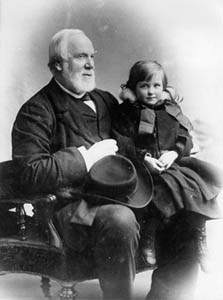
His colleague, Frederick DuCane Godman D.C.L., F.R.S., F.L.S., F.G.S., F.R.G.S., F.E.S., F.Z.S., M.R.I., F.R.H.S., M.B.O.U. (15 January 1834 – 19 February 1919) was the lepidopterist of this ornithologist pair. Godman is best known for his co-authoring of Biologia Centrali-Americana (1879-1915) with Osbert Salvin. He also published The Natural History of the Azores (1870) and a Monograph of the Petrels (1907-10). Godman was the third son of Joseph Godman, of Park Hatch, Surrey and was educated at Eton College and Trinity College, Cambridge. At Cambridge he became acquainted with Alfred Newton and Salvin. The custom of these ornithological friends to meet and talk over their recent acquisitions led to the foundation of the British Ornithologists’ Union (BOU) in November 1857. Godman was Secretary of the BOU from 1870 to 1882 and from 1889 to 1897, and President from 1896. A partner in Whitbread & Co. (the beer connection!), Godman inherited an ample fortune which allowed him to travel the world. In 1883, Godman went on to become the developer of South Lodge, a neo-Jacobean style country house estate in Sussex.
So, a simple label has links to many great names in Victorian science and exploration:
Wallace, Bates,Darwin, Godman, Salvin, Strictland, Tristram and even a brewery – Whitbread & Co.!