Story Category: Legacy

At Work With . . . Jenny Hand

This is a legacy story from an earlier version of our website. It may contain some formatting issues and broken links.

. . . Jenny, Knowledge & Information Manager

A key part of my role at Brighton & Hove Museums is to ensure the careful organisation of vital information about the objects and archives in our care. In our exciting digital age, this means working with a huge database and many, many digital images and documents. The flexibility of digital information management makes the process of recording and retrieving information relatively quick and easy but the whole thing can be a little inhuman at times!

Back when Brighton Museum was established, in the far-from-digital year of 1873, the recording of information was a much more painstaking business with every donation, purchase and excavation find recorded by hand with pen on paper. These records can be found in the museum’s archives which contain around thirty handwritten, leather bound ledgers known as accession registers. To me, the registers are objects of beauty in themselves and to give you an idea of how much information is contained within them, each ledger has around 300 pages and each page has roughly eight donations listed on it. This makes a total of 72,000 separate donations over the course of a century and many donations consist of more than one object! What I also find intriguing is that the ledgers can illustrate, to a certain extent, the personalities of the staff who wrote so carefully in them for over 100 years until computers were introduced in the 1980s.

[slideshow]

In this image you can see the first page of the first accession register which began in 1890. Amongst the list of entries has to be my most favourite labelled simply and humorously, in retrospect, as ‘a section of wood with curious stain’! The entry is numbered ‘9’ in the system implemented by one of the museum’s most influential curators Herbert S Toms. Toms was a dedicated archaeologist who managed the museum between 1897 and 1939. A later account of him by his protégé Ralph Merrifield describes Toms’ approach to keeping records:

“Detailed accessioning was an innovation introduced by Toms to the museum and was gradually extended by him to cover the earlier collections, which had often been catalogued with such unhelpful entries as “one long article, probably ceremonial”. Tom’s care in recording was undoubtedly instilled in him by [Lt-General] Pitt Rivers, whose words he was fond of quoting: “If it has lost its register number throw it into the first ditch you come to” – a dictum that should not be taken quite literally by archaeologists or curators.”

We maybe quick on the digital draw these days but you cannot fault a good numbering system to help with the organisation of electronic records! At Brighton Museum we have just returned to using the ever reliable R numbers devised by Toms, thereby bringing a brilliant record keeper, born almost 140 years ago, into the 21st century.

Exogiini Sofoloi, APRIL FOOL!

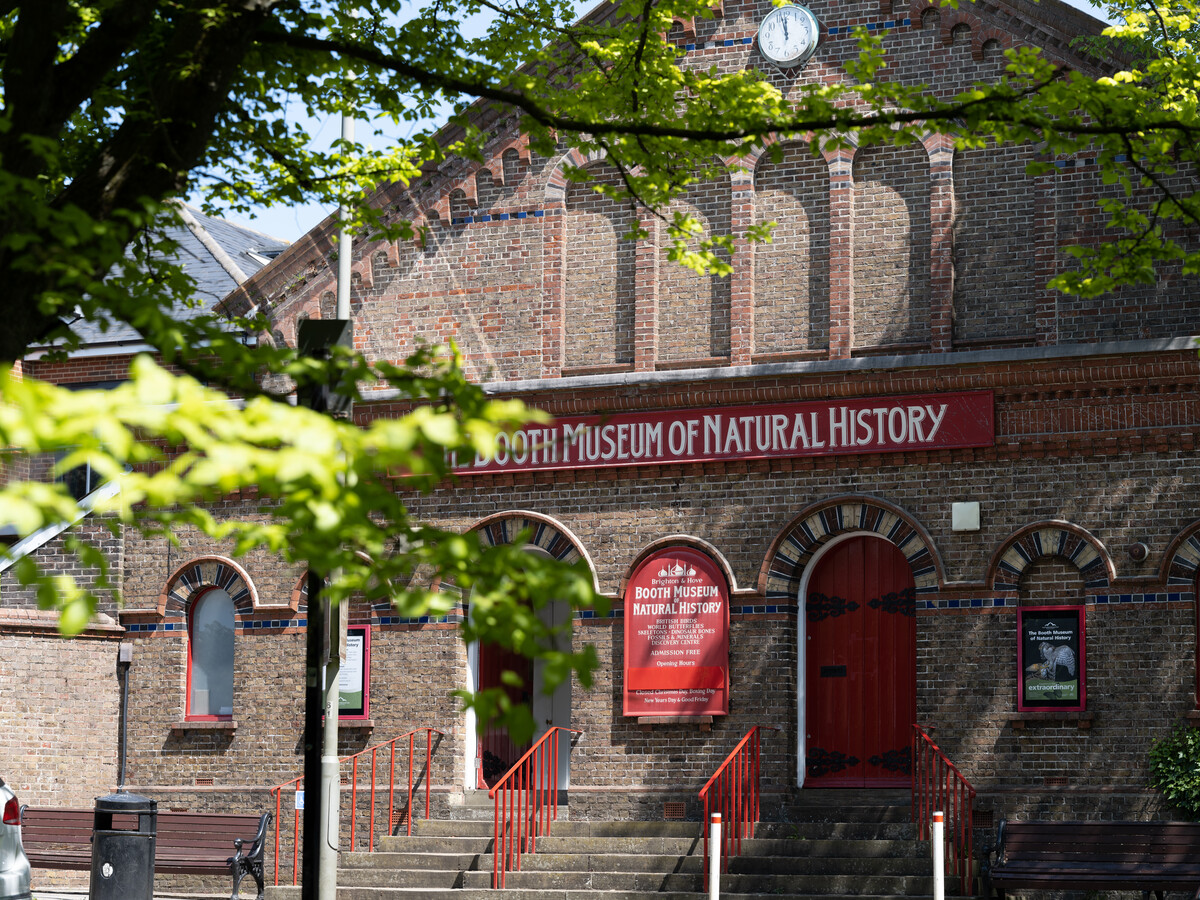
Booth Museum of Natural History, 194 Dyke Road, Brighton, City of Brighton and Hove, England. Opened in 1874 The Romanesque Revival building is listed at Grade II by English Heritage

This is a legacy story from an earlier version of our website. It may contain some formatting issues and broken links.

How many of you guessed that our alien story was an April Fool? We did give you a clue – in the doctors name – which is an anagram of April Fools. Can you tell us what is significant about the location and date we gave for her fictional discovery?

The specimen you see in the picture is preserved example of the foetus of a macaque, a type of monkey, which is found across the world from Japan to Gibraltar and North Africa. Macaques are the most widespread genus of primates after humans. This particular one was donated to the Booth Museum by London Zoo in 1981. It is a Southern Pig Tailed macaque, native to Malaysia and Borneo.

Although not really an extraterrestrial, macaques did become the first animals to return from space alive, in 1959, as part of the NASA space programme.

Lee Ismail, Curator of Natural Sciences

Exogiini Sofoloi, Proving the Existence of Extraterrestrial Life?

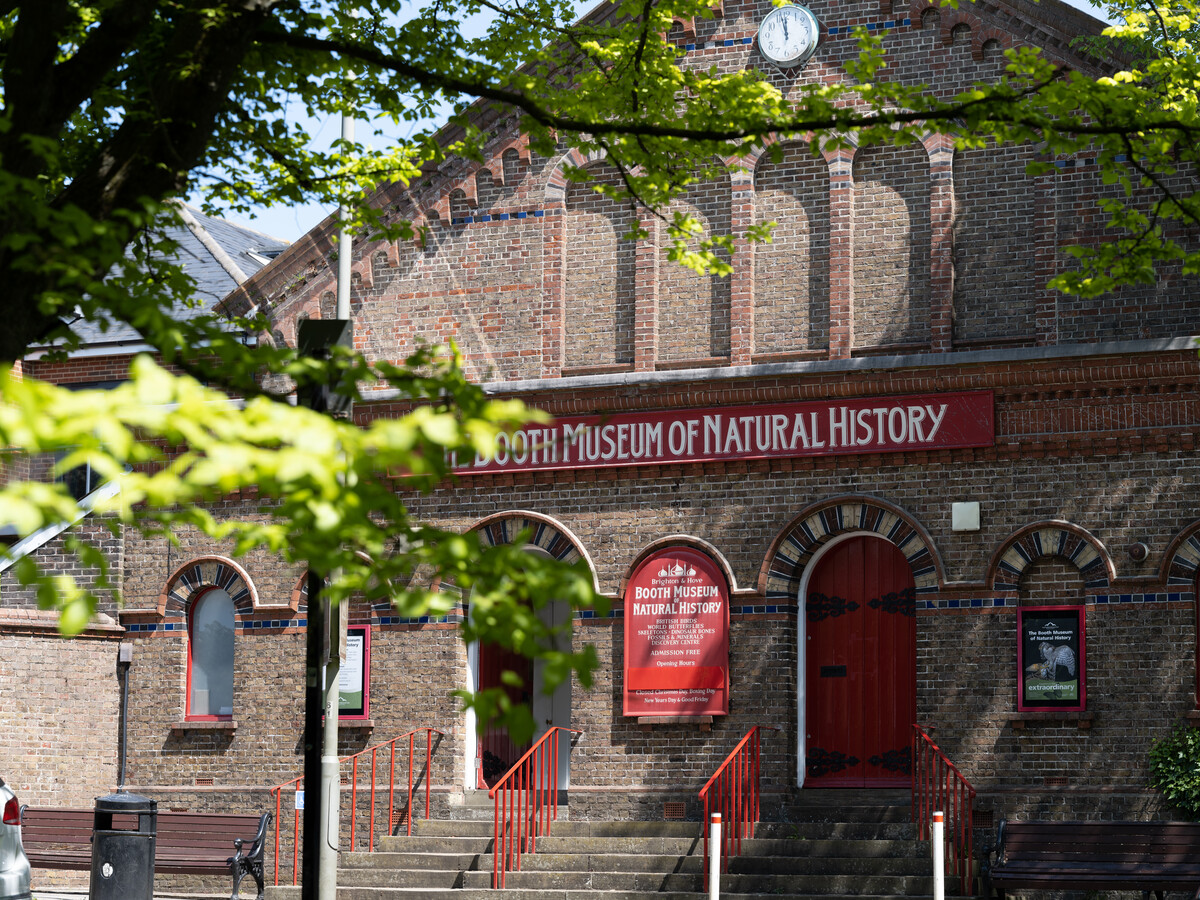
Exterior of the Booth Museum.

This is a legacy story from an earlier version of our website. It may contain some formatting issues and broken links.

Brighton & Hove Museums has recently acquired a specimen which could prove the existence of extraterrestrial life, through the bequest of a local scientist. In the will of the late Dr Pilar Sofol a number of unidentified specimens, collected by her on field trips abroad over sixty years ago, were donated to the Booth Museum of Natural History including the one featured below.

Exogiini Sofoloi

Exogiini Sofoloi

The arrival of Dr Sofol’s collection was greeted with excitement by curatorial staff at the museum. The vast numbers of plant specimens, which formed the basis of Dr Sofol’s life’s work researching horticultural subjects, were accurately documented and identified but the non-plant material collected by her during that time were poorly labelled or had no information at all. Fortunately, a reference to the specimen you see in the picture was found in a side note in her field journal. Sofol records that she found the decaying remains of what looked like a severely malformed, bald, monkey whilst on a plant collecting expedition along the Pecos River, New Mexico in August 1947. Dr Sofol simply placed the specimen in a formaldehyde solution and continued with her research. After returning to the UK in the late 1950s most of her collections were placed in storage and by all accounts generally ignored until after her death.

When curatorial staff discovered Dr Sofol’s note, identifying this specimen as a malformed primate, they attempted to identify a species through DNA analysis. Despite several attempts all samples came back showing the specimen as having no relation to any species currently living on earth. As all organisms currently alive have some relation to each other this outcome was somewhat baffling. In addition, the results showed that the specimen was a close match to bacteria found inside meteorites. As a result, the specimen has now been sent to the biological research division of a space agency for further study as a possible alien life form. Findings will be published later this year.

We are so used to the concept of alien life nowadays that it may seem strange to you that Dr Sofol didn’t go about trying to prove the existence of alien life when she made her discovery in 1947 but at that time there was little interest in extraterrestrial life. Man hadn’t yet left the earth, let alone landed on the moon.

In honour of her discovery it has been submitted that the creature should be named Exogiini Sofoloi.

Lee Ismail, Curator of Natural Sciences

The March Hare

A Hare from the Booth collections

This is a legacy story from an earlier version of our website. It may contain some formatting issues and broken links.

“The March Hare will be much the most interesting, and perhaps as this is May it won’t be raving mad — at least not so mad as it was in March.” – Alice’s adventures in Wonderland, Lewis Carroll.

The character of the Mad March Hare in Lewis Carroll’s Wonderland is based on the old English saying ‘mad as a March hare’. This comes from the behaviour of the hare during the first breeding season of the year, which coincides with the start of spring in Western Europe.

During the early days of spring, the hares are seen in large groups acting in an increasingly erratic manner, including leaping vertically, boxing, chasing and biting other hares. This coupled with the fact that during much of the year the hares are shy animals and are difficult to spot makes their strange behaviour appear borne of madness to casual observers.

In reality, this behavior is a year round occurrence which occurs whenever females are ready to mate. This behavior is far more readily observed in spring for a number of reasons.

A Hare from the Booth Museum of Natural History

A Hare from the Booth Museum of Natural History

Firstly, during the harsh winter months, most females will not have been fertile, either looking after the final batch of young from the previous year, concentrating on finding food, or still too young. As a result, the vast majority of females are ready to mate at the same time, congregating in large groups.

Secondly, the males tend to create harems of the females at this time of year. They will bite and chase off subordinate males who get too near and box with other dominant males to win other harems. However, not all the females are willing to mate at the same time, and will box with the male to show their unwillingness to mate.

Finally, the hare is most often observed by humans in the spring time as the crops in the fields and meadows are still low to the ground after the winter. This coupled with the large groups makes their appearance in March all the more obvious.

The behaviour and appearance of hares has led to them being both revered and despised throughout history. The Hare was sacred and linked to a number of gods in many religions from cultures as diverse as the Native Americans, Indians, Egyptians and the Chinese. In Anglo-Saxon mythology the goddess Ostara, the rising sun, is depicted with the head of a hare. She is associated with spring, fertility and resurrection and is a friend to children. From this legend comes the story of her transforming her pet bird into a hare. This hare then laid brightly coloured eggs, which she gave to children as presents. The tradition of giving coloured eggs still exists in Easter today.

Cockney - Sportsmen Finding A Hare

Cockney – Sportsmen Finding A Hare

As with many animals revered in the older religions, Christians changed hares into animals of evil. They said that witches transformed into hares in order to suck the blood of cows, and any wounds inflicted on a hare would be found on a woman the next day. However, old folk tales persisted throughout the centuries, leading to a number of conflicting legends presenting hares as animals of both good and bad omen.

A number of hares, including the recent acquisition pictured above, are in the collection at the Booth Museum. We also have hares (as well as a large number of other animals) available for loan to schools and other organisations. Please contact the Booth Museum for details on borrowing.

Lee Ismail, Curator of Natural Sciences

Mr Watt, Grumpy Man of Metal by Jon Mills

Man in a Plane

This is a legacy story from an earlier version of our website. It may contain some formatting issues and broken links.

Delve into the world of the craft maker Jon Mills as he brings his work to a free exhibition at Hove Museum.

Man in a Plane

Man in a Plane

Jon Mills was born in Birmingham in 1959, the latest in a line of metalworkers. He studied at Wolverhampton before helping to found Brighton’s Red Herring Studios in 1983. In the mid 1980s he honed his skills at brazing, forging, laser-cutting and welding and exhibited work at One Off, Ron Arad’s London workshop and gallery.

In recent years Jon has been involved in major architectural commissions, inventing exciting structures that engage with their surroundings whether in cities or in the countryside. He has made balconies for Caerphilly and Kings Lynn, railings at Folkestone and Wolverhampton and a bridge over the River Dyfi in Powys.

His output is extraordinarily diverse and charmingly subversive. He makes dangerous toys and automata, dysfunctional furniture and an amazing range of sculpture with themes that are witty, whimsical, and sometimes darkly Gothic.

Dan Dare Chair

Dan Dare Chair

Hove Museum holds one of the earliest versions of his Dan Dare Chair of 1987 (C4.1993). The sheet-steel seat, with its hand-operated, multi-directional radar dish was made two years before Wallace and Gromit’s fantasy trip to the moon in a home-made rocket (in A Grand Day Out). It inspires the visitor to explore the universe from the comfort of a domestic armchair!

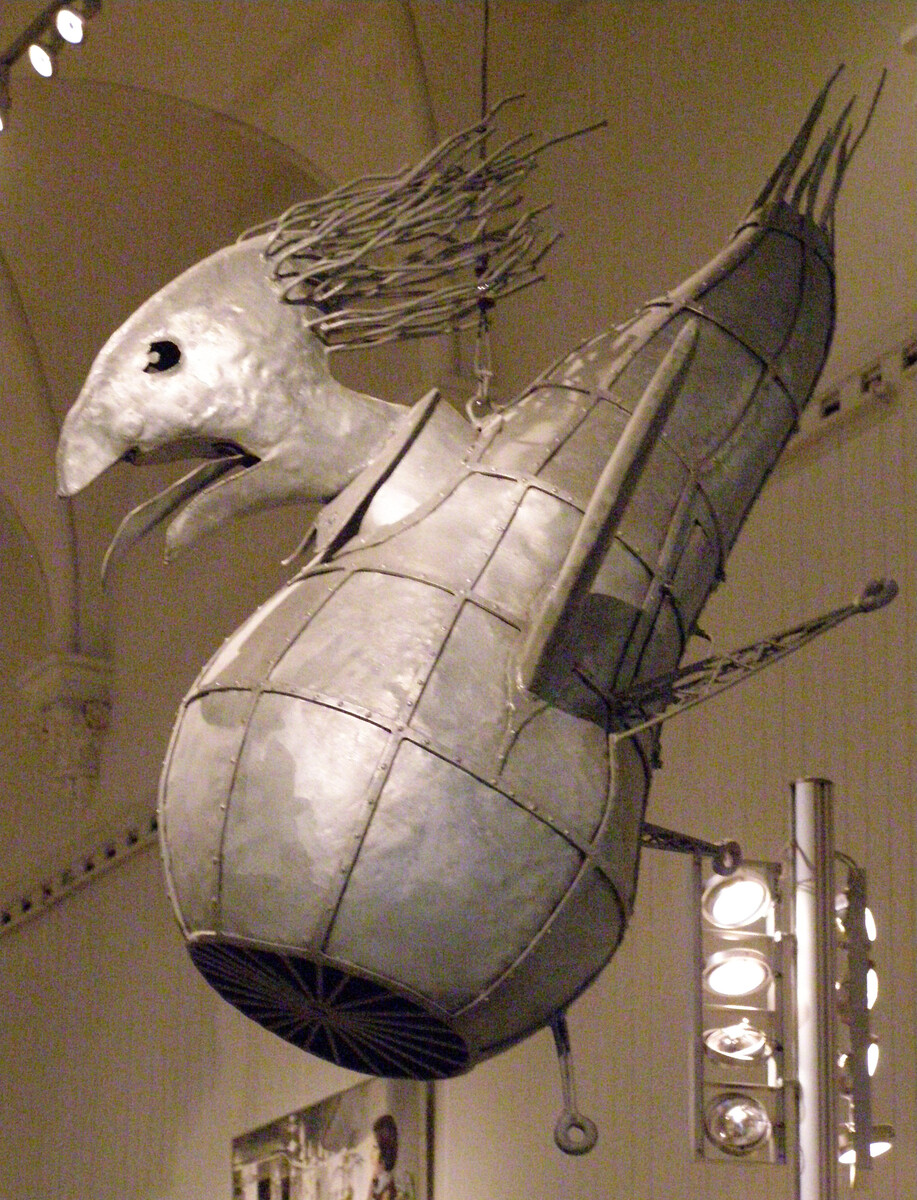
In 1999 Jon created the comically horrifying Man in a Plane (DA301849) which can now be seen in Brighton Museum’s 20th-Century Design Gallery plummeting for ever towards earth.

For the reopening of Hove Museum in 2003 Jon worked with children from the Peter Gladwin School in Portslade to produce railings for the first-floor Landing Gallery. Here are a row of growing plants that look like broad beans, covered with creepy-crawlies from the compost heap!

Railings in the First Floor Landing Gallery at Hove Museum

Railings in the First Floor Landing Gallery at Hove Museum

I’m thrilled that Jon’s latest creation, Mr Watt, Grumpy Man of Metal is coming to visit Hove Museum this spring. I understand that he is intending to make some special donations to Brighton & Hove’s collections. I wonder what they can be…?

Stella Beddoe, Senior Keeper and Keeper of Decorative Art

1905 Annual Report of the Lewes Road Hospital & Dispensary for Women and Children

Lady Chichester,s Hospital Hove

This is a legacy story from an earlier version of our website. It may contain some formatting issues and broken links.

The centenary of International Women’s Day falls on the 8th of March. The theme for this year’s event is Equal access to education, training and science and technology: Pathway to decent work for women.

With this in mind, we take a look at the Lewes Road Dispensary celebrated for its entirely female staff.

145 Islingword Road, site of the original Lewes Road Dispensary

145 Islingword Road, site of the original Lewes Road Dispensary

Brighton History Centre holds this 1905 Annual Report for the pioneering Lewes Road Hospital & Dispensary for Women and Children. The opening page of the report states its aim:

‘To afford to poor women of Brighton and the neighbourhood, the opportunity of free consultation with Doctors of their own sex’.

Dispensaries were a widespread means of offering free or low-cost medical treatment to members of society who couldn’t afford doctors fees. The Lewes Road Dispensary was radical in that it had an entirely female staff, at a time when women had only recently been permitted to work as doctors.

Even more revolutionary was the Lewes Road Hospital (later renamed the ‘Lady Chichester’) which ran alongside the dispensary. The annual report states:

‘the patients are chiefly women and girls who are suffering from serious nervous breakdown … it is the only institution of the kind in the kingdom where expert treatment can be obtained by those who cannot afford large payments’.

1905 Annual Report for the pioneering Lewes Road Hospital & Dispensary for Women and Children

1905 Annual Report for the pioneering Lewes Road Hospital & Dispensary for Women and Children

In a pamphlet held at Brighton History Centre Dr Helen Boyle says the hospital provided an environment away from the effects of ‘bad air, bad food, noise, and worry’. She describes a treatment regime beyond bed rest that included music, massage, sea-bathing, walks on the Downs and even trips to concerts at the Dome.

Both the dispensary and hospital were extremely successful – running until 1948 when they came under NHS control.  However, as the annual reports show, funding was always a pressing issue. As well as listing names of subscribers (with sums donated), the 1905 report details gifts given by benefactors which include ‘loan of a piano’, ‘a bicycle from Miss Cohen’, and bed-linen ‘beautifully marked with monograms’ by one volunteer.

The report also lists the number of patients treated, income and expenditure, and gives names of staff including the dispensary founders Helen Boyle and Mabel Jones, and notable Brighton physician Louisa Martindale. It tells us that the dispensary and hospital Vice-President is the eminent Elizabeth Garrett-Anderson – the first British woman doctor.

The report offers us a fascinating glimpse of the work of pioneering women in Brighton and of conditions for their women patients before a free health service. Brighton History Centre also holds a 1910 annual report and further pamphlets about the hospital.

Anna Kisby, Brighton History Centre

Read more about pioneering Brighton women in our post Found! Suffragettes hiding in the Brighton Dome.

Helen Boyle (1869-1957)

Lady Chichester,s Hospital Hove

This is a legacy story from an earlier version of our website. It may contain some formatting issues and broken links.

To mark the Centenary of International Women’s Day on the 8th of March, we learn more about pioneering Brighton woman,  Dr Helen Boyle.

Helen Boyle (1869-1957) was Brighton’s first woman GP and transformed the lives of working-class women in the area through her ground-breaking treatment of mental illness.

Responsible for establishing a dispensary and hospital staffed by women for women, she went on to become the first female psychiatrist at the Royal Sussex County Hospital and co-founder of MIND.

As a young doctor Helen Boyle arrived in Brighton in 1897 galvanised by her work in London’s East End which gave her first-hand experience of the mental and physical strain on women living in poverty. Determined to provide medical services to working-class women, with Dr Mabel Jones she set up the Lewes Road Dispensary for Women and Children in the then deprived area of Hanover. The dispensary offered free or low-cost treatment to women who couldn’t afford GP’s charges, in a sympathetic female-only environment – and was a great success.

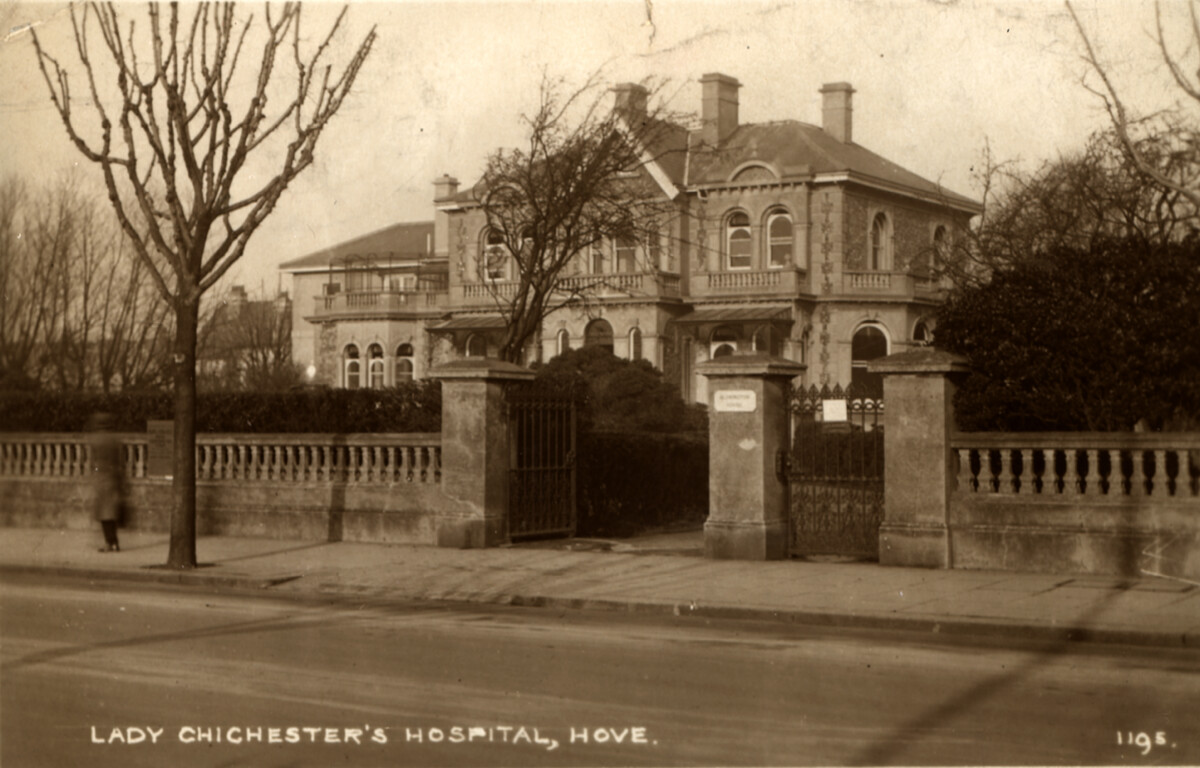
The Lady Chichester Hospital, Hove, 1922

The Lady Chichester Hospital, Hove, 1922

But Boyle’s long-held ambition was to transform the treatment of working-class women with early-stage mental illness, whom she fiercely described as ‘neglected and maltreated until … they were turned into the finished product – lunatics’. In 1905 she founded the Lady Chichester Hospital for Women with Nervous Diseases.

Before that time, poor women of Brighton with mental illnesses from depression to borderline insanity – exacerbated by inadequate living conditions, nutrition and exhaustion – had recourse to no help other than committal to the asylum. Boyle’s hospital was the first of its kind in England, treating poor women before they became certifiable.

As well as receiving professional acclaim in the medical sector, Boyle was honoured for her war work in Serbia in 1915. She never married, but shared a home for the last seventeen years of her life with her companion Marguerite du Pre Gore Lindsay. She died in Pyecombe in 1957.

Further information on Boyle and other early women doctors is held at Brighton History Centre.

Anna Kisby, Brighton History Centre

Dollond Microscope

Booth Museum of Natural History, 194 Dyke Road, Brighton, City of Brighton and Hove, England. Opened in 1874 The Romanesque Revival building is listed at Grade II by English Heritage

This is a legacy story from an earlier version of our website. It may contain some formatting issues and broken links.

With the Brighton Science Festival (13th February – 6th March) in full swing, we take a moment to discover more about scientific instruments at the Booth Museum.

The microscope collection of the Booth Museum of Natural History in Brighton includes an almost complete ‘Jones’s Most Improved’ brass Regency microscope by Dollond (often misspelled Dolland), London (1825).

Regency Microscope by Dollond

Regency Microscope by Dollond

Peter Dollond was born in 1730 the son of John Dollond, a Huguenot silk weaver. He started business as an optician in 1750 at the age of twenty. Dollond was appointed optician to George III and the Duke of York and renowned for producing high quality instruments.

The design of this microscope was originally conceived by George Adams II in the latter years of the 18th century, however after his death in 1795, his stock and rights were bought by the brothers William and Samuel Jones who modified the design slightly and marketed it as their own.

Notable customers of Dollond included Leopold Mozart, Frederick the Great and Thomas Jefferson. In 1927 Dollond & Co merged with Aitchison & Co forming Dollond & Aitchison, the high street chain of opticians.

The microscope resides in a mahogany case at the Booth Museum. It contains almost all the accessories.

The Royal Pavilion – Brighton’s Top Celebrity

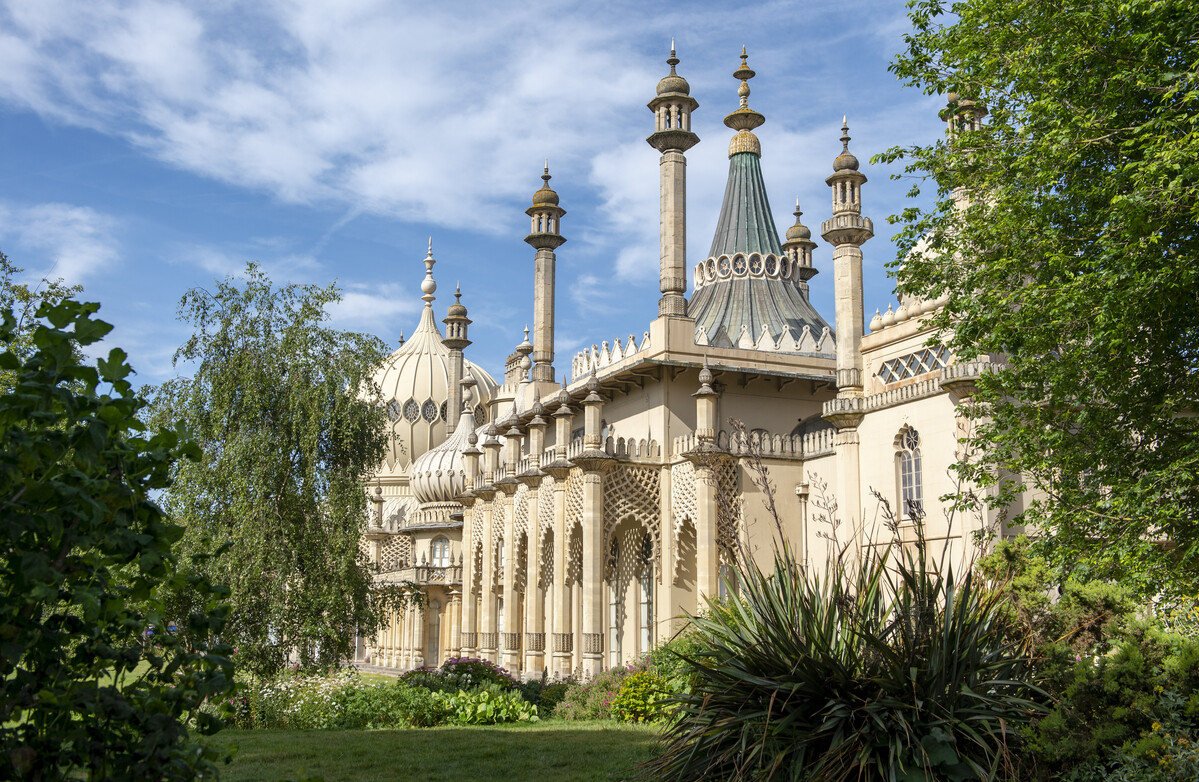
Exterior of Royal Pavilion from the Garden.

This is a legacy story from an earlier version of our website. It may contain some formatting issues and broken links.

Over the last two months TV stations have been queuing up to film in the Royal Pavilion. Not surprising, given its wonderfully over-the-top, exotic and vibrant looks.

I am studying for a doctorate in Art History, and have been based at the Pavilion for more than two years now, and have also worked as a Pavilion guide for 18 months. Over the last year I have helped out on three filming days for various TV programmes, beginning with the perennially popular ‘Antiques Roadshow’, which came to Brighton in June.

It was fascinating to see how a high-profile show is produced and how much organising and filming is involved for what results in a few minutes on screen. The ‘Antiques Roadshow’ is filmed in high-definition and is presented by Fiona Bruce, so the technical equipment and number of support staff involved was impressive, but also slightly worrying. Large cameras, sound and lighting equipment and many people milling around can be a hazard to a fragile historic building and a number of staff were on duty simply to keep a watchful eye on the filming process and to protect the building.

The day’s filming finished without incident and the Pavilion looked its glamorous best in glorious June sunshine.

[slideshow]

The actual Roadshow took place the following day at Brighton College and in true style I turned up with a few of my own items wrapped in bubble-wrap and happily joined the long queues for evaluation. To my surprise several members of the film crew and even Fiona Bruce remembered me from the day before and told me how much they had enjoyed filming at the Pavilion. The filming resulted in not just one but two Brighton episodes, with the Pavilion featuring in the introduction to the first.

A few weeks later I was asked to appear in a couple of scenes for the ‘Antiques Road Trip’, a spin-off from the Roadshow and produced by Scottish TV for BBC2. It has just begun its second series and is shown right now on weekdays at 5.15 p.m.

I was asked to talk about a few rare and beautiful objects of my choice in the Pavilion and to discuss these in front of the cameras with presenter David Harper. Although on a smaller scale than the Roadshow it was fascinating to take part in the filming and to get a chance to talk about things I find particularly interesting.

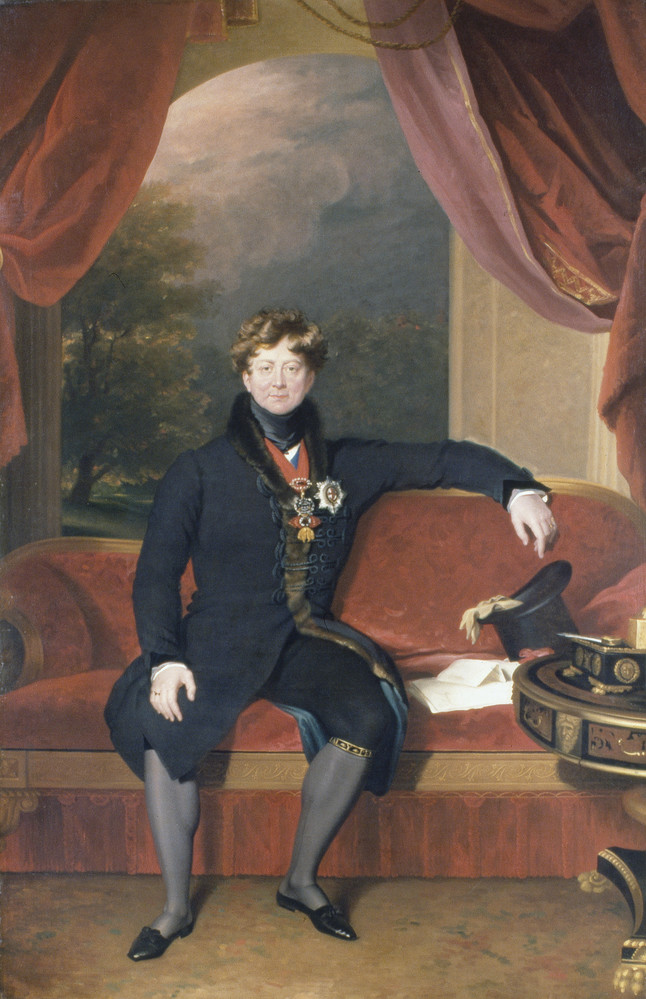
The objects had to have a connection with George IV. My chosen items included a Pavilion cabinet sold after Queen Victoria acquired the Pavilion. It was re-discovered at an auction in the United States the 1990s, and an exotically decorated inkstand that once belonged to George IV.

I had a wonderful time and am rather proud to have had an opportunity to talk about my favourite building in England on TV. Other shows that have recently been filmed at the Pavilion are ‘Bargain Hunt’ and a programme on Queen Victoria’s time in Brighton. http://ow.ly/414bI

Alexandra Loske, guide and researcher

Chinese New Year

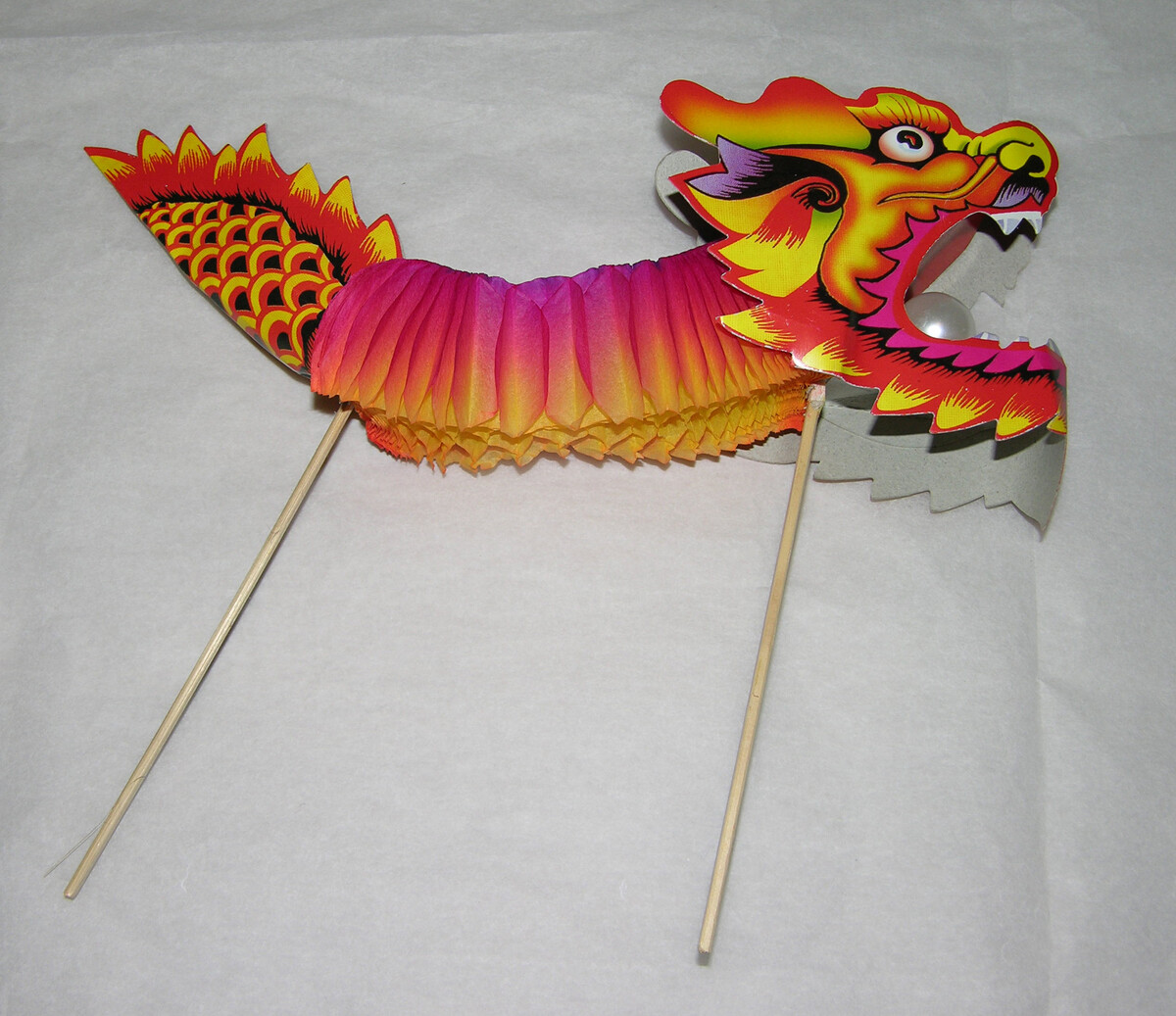
Chinese New Year Dragon Puppet

This is a legacy story from an earlier version of our website. It may contain some formatting issues and broken links.

Chinese New Year begins on 3 February 2011 this year.  It is the year of the rabbit, which should bring good luck to those born under this sign. Chinese New Year is also known as the spring festival – so it is a time for forgiveness and new starts. It also marks the beginning of the new moon cycle, which is why the festival starts on a different date each year.

At Brighton and Hove Museums, the World Art department celebrates the occasion by looking at some of the objects used during the Chinese New Year festivities.

At the start of Chinese New Year, people place something of value in one of these little pots. They keep it in the pot for a year to ensure everlasting wealth.

Dragon Puppet

Dragon Puppet

This is a Chinese paper dragon puppet. In China, the dragon represents good luck, long life and wisdom. Dragon dances are performed at New Year to scare away evil spirits.

‘Hong Bao’

‘Hong Bao’

At New Year, ‘Hong Bao’ (meaning Red Packet) takes place. These red money envelopes are given out to children and unmarried adults. The envelopes contain an even amount of money, as odd numbers are associated with funerals. The red colour is associated with luck and the envelopes are decorated with good luck images. The envelope above shows a man and he represents wealth.