Story Category: Legacy

Museum Tales 4: Bouquet

This is a legacy story from an earlier version of our website. It may contain some formatting issues and broken links.

Bouquet

My dictionary curtly defines the word ‘bouquet’ as a ‘bunch of flowers!’

Yet, over the years I’ve seen people channel their artistic tendencies into the creation of colourful, balanced and delightful floral displays. Those dedicated souls who arrange the flowers in churches, for example, surely must consider their efforts as considerably more than the mere tending of bunches of flowers. Their displays are comprised of the gatherings of numerous individual blooms which, tenderly and strategically placed in vases, reveal the wonder of nature and the botanical ingenuity of mankind.

As a member of the Creative Writing group at Brighton Museum I was spoiled for choice of inspirational objects, and privileged to work in a treasure trove of artefacts, each with the power to ignite a writer’s imagination. For today’s exercise, I went to ‘The Flower Painting Room’ to select from its array of framed paintings one with personally appealed, and then to write about it. I wandered around and gazed intently at what appeared to be a collection of still life portraits of many-hued flowers, in water-filled containers, centrally placed on the tops of wooden tables.

These images of hacked down flowering plants connected me to the memory of a most sensitive, nature loving soul I once knew. So closely attuned to the feelings of all living things in her environment that she said she felt their pain when heedlessly abused by humans. She even claimed that she could hear flowers screaming when cut and gathered for people’s frivolous, ornamental and inessential purposes. With that in mind, I turned away from the walls hung with almost copycat variations on a definite theme; the isolated, carefully bunched flowers in crystal vases.

Of their own volition, my eyes focused on the brightness of a piece of abstract art that hung in a corner close to the exit. It appeared to be illuminated by sunlight or spotlights or, perhaps, by the fiercely burning spirit of its artistic creator. The painting gave me the impression, not so much of a floral bouquet, but more, much more, that of a garden full of growing flowers and plants. It was as if I was looking out through a circular window onto a distant complex of paths, shrubs and flowerbeds. It conveyed the sense that I could even smell the bouquet; actually inhale the bounty of life-giving earth. This arresting abstraction, ‘Sappho,’ was challengingly brought to life by the English artist, Gillian Ayres, CBE, RA, born 1930.

If I take away one lasting memory from this Creative Writing at the Museum experience, it will be the internal glow of her outstandingly defiant and awe inspiring piece of an original painter’s art!


James Kerr


Inspiration: Gillian Ayres’ ‘Sappho’


Museum Tales 4: The Angel

The Angel

This is a legacy story from an earlier version of our website. It may contain some formatting issues and broken links.

The Angel

Sent out to browse in the museum, I wandered into the Arctic Room. Not one I was familiar with. The print by Shuvinai Ashoona called ‘Angel in Town’ fascinated me. It shows an angel in a typical white robe, bare feet, I can’t remember if her wings were showing, I think they were.

She is hovering above a modern town, not all the houses have orange tiled roofs. It could be Portslade. The information next to the print says that this is a contemporary Inuit settlement. The buildings stand on blocks to keep them out of the snow and to prevent them sinking into the soil when the snow thaws. I look carefully but there is no igloo in sight.

What would the angel say if she landed in my town? Would she knock on doors to introduce herself or would she wait and see if anyone noticed her hovering. I hope she wasn’t cold, there wasn’t any snow in the picture but it gave no indication what the weather was like and she wasn’t very warmly dressed, not even wearing sandals.

I don’t know why I was assuming she was a female angel, not being very familiar with angels I just took a guess. Then I wondered how she would address us. Supposing it was me she found, would she say “Hallo Darling? Hallo Madam? Hallo Maxine?”

The only angels I could remember didn’t address the people they were visiting; they usually came straight out with their message “I come to bring you tidings of great joy”, that sort of thing.

Perhaps she would ask if there was anything she could do for me? I’m not sure what I would say. Would she be like a fairy and offer me a wish? Two wishes? Three wishes?

Would I be altruistic and ask for world peace or something more important that is preying on my mind? Could she arrange an accident to kill off Trump but in such a way his supporters would not keep a good memory of him and realise what a perfect idiot he was? That might tax her skills; but I think there would be general cheering all round.

I have just started a collection of cartoons about Trump which I display on a cork board in the lavatory. I have labelled it ROGUES GALLERY. There is only one cartoon there at the moment but I feel confident there will be many more. It gives me a tiny bit of satisfaction to have him in my own lavatory. It is the privileged power of the observer, a phrase used by another member of our group which seems apt.

Maxine Toff


Inspiration: Shuvinai Ashoona’s ‘Angel in Town’

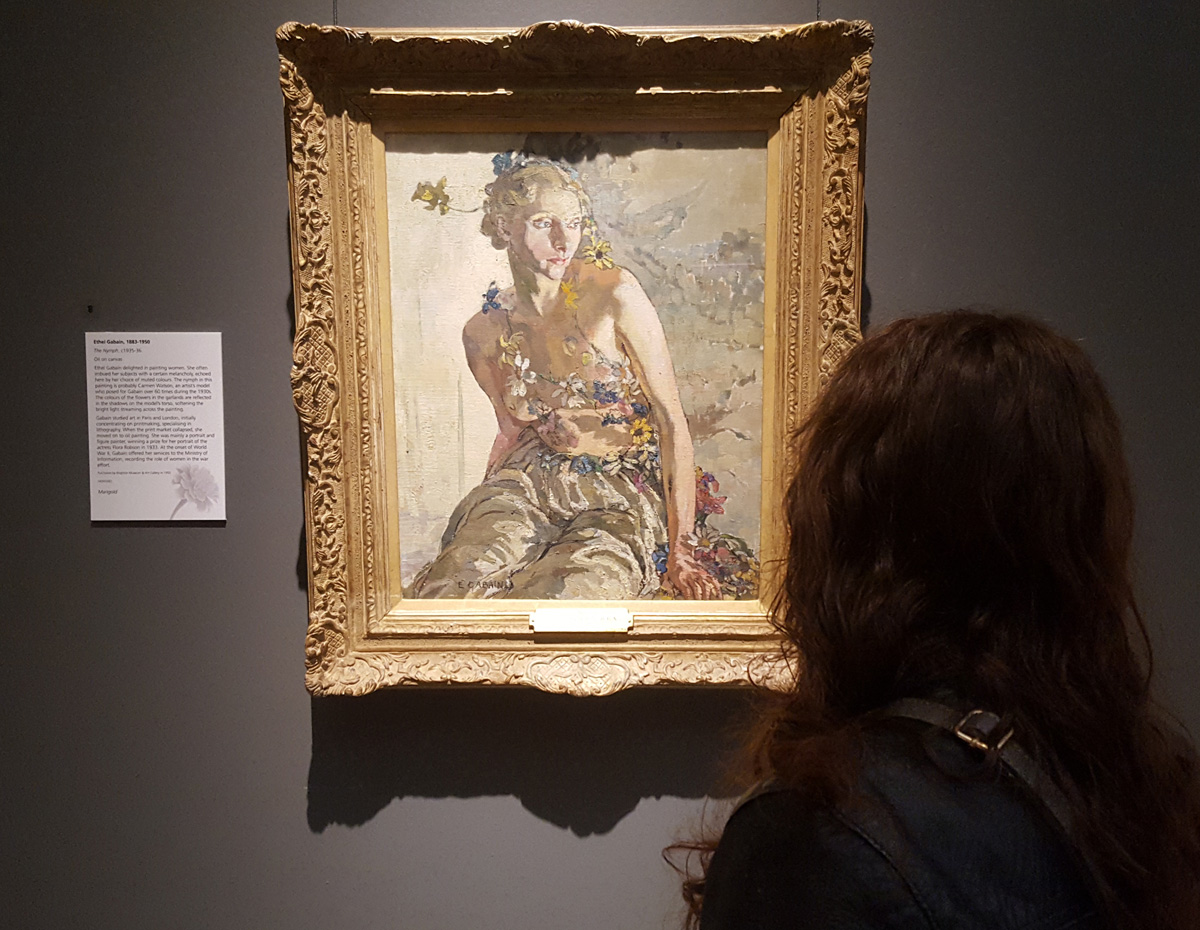
Museum Tales 4: The Nymph

This is a legacy story from an earlier version of our website. It may contain some formatting issues and broken links.

The Nymph

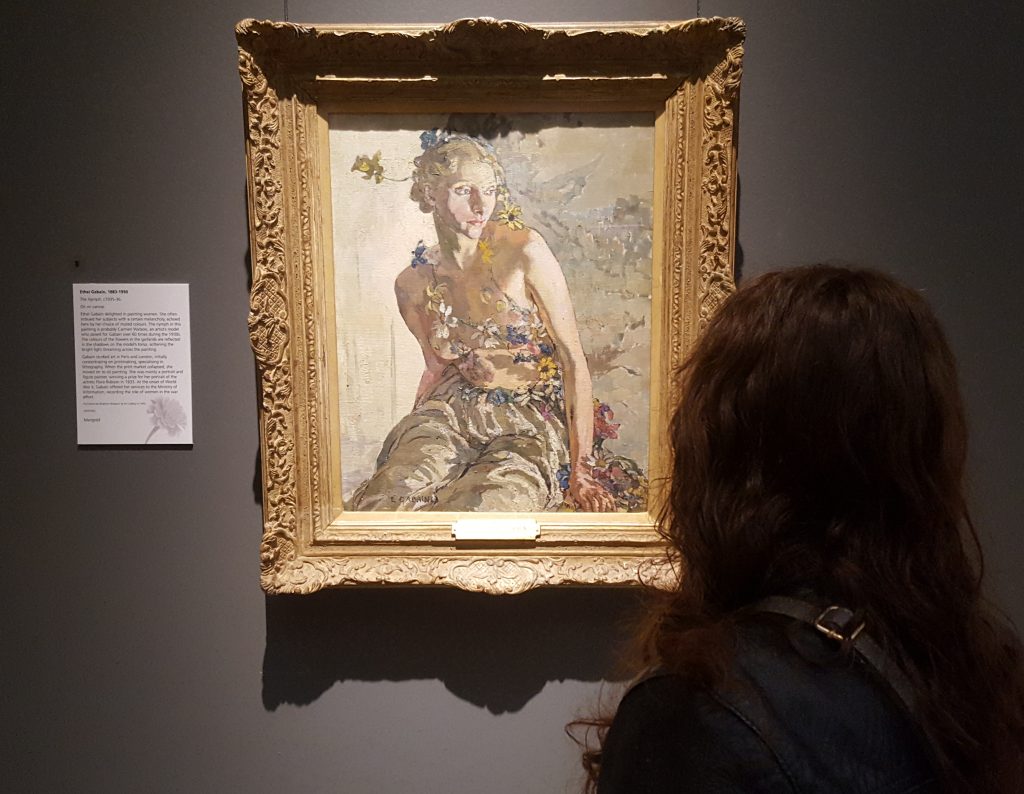
They’ve asked me to take the part of the nymph in the forthcoming production of “The Nymph and the Prince,” written by Hermione Threadgold, and last performed on a London stage in 1920. It brought the house down then and, in fact, closed the theatre because the actress who played the Nymph removed most of the flowers on the garland which covered her top half; it was a sensation and the sale in opera glasses went through the roof. She left some strategically placed blossoms but nonetheless it was a sensation and the headlines in the papers read “Blooming Naughty Nymph.”

Well, frankly I’m worried. This production takes place in our village hall.

Moray Sanders


Inspiration: Ethel Gabain’s painting ‘The Nymph’

Museum Tales 4: African Mannequin

African Mannequin

This is a legacy story from an earlier version of our website. It may contain some formatting issues and broken links.

African Mannequin

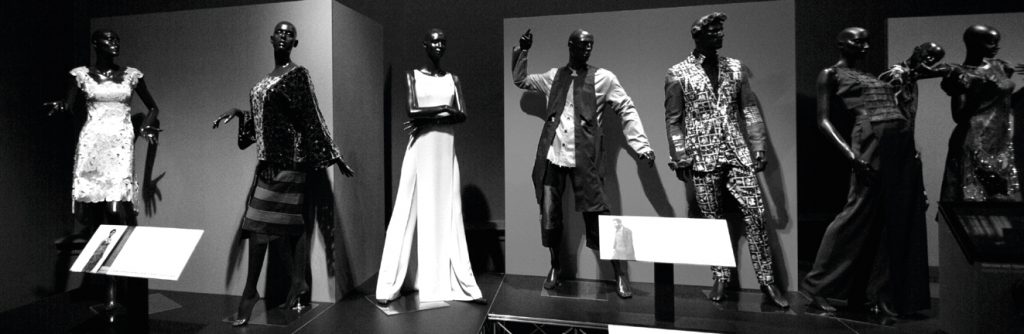
I am light I am dark

I am the midday sun of the Sahara

I am the lion in the grass of the Savannah

I am life I am joy

I can be girl I can be boy

I am the zebra on the hoof

I am here to reclaim your youth

I am fire I am water

I’m your son and your daughter

I am the hunt but not the kill

I can shock and I can thrill

I am the you you wish to be

Look in the mirror–

It is always I you see


Paul Tschinder

Museum Tales 4: Pot Oiseau

Pot Oiseau

This is a legacy story from an earlier version of our website. It may contain some formatting issues and broken links.

Pot Oiseau

Shall I sing my song now. Does it sound of soft liquid purlings.

Could this be the beginning. Where was everything. Was it just a void, a nowhere, an absence. Did you see a shapeless form appear. Was it a fog. A nebula. Was it myself that condensed out of this cloud.

What should I be. Something alive. A creature. Could I be a bird. Was I just the dream of a bird. A thought. A word. Was it ‘oiseau’ or ‘vogel’ or ‘uccello’. Do you remember how I tried to have feathers and dainty bones. And flutter and perch. Was it all hopeless.

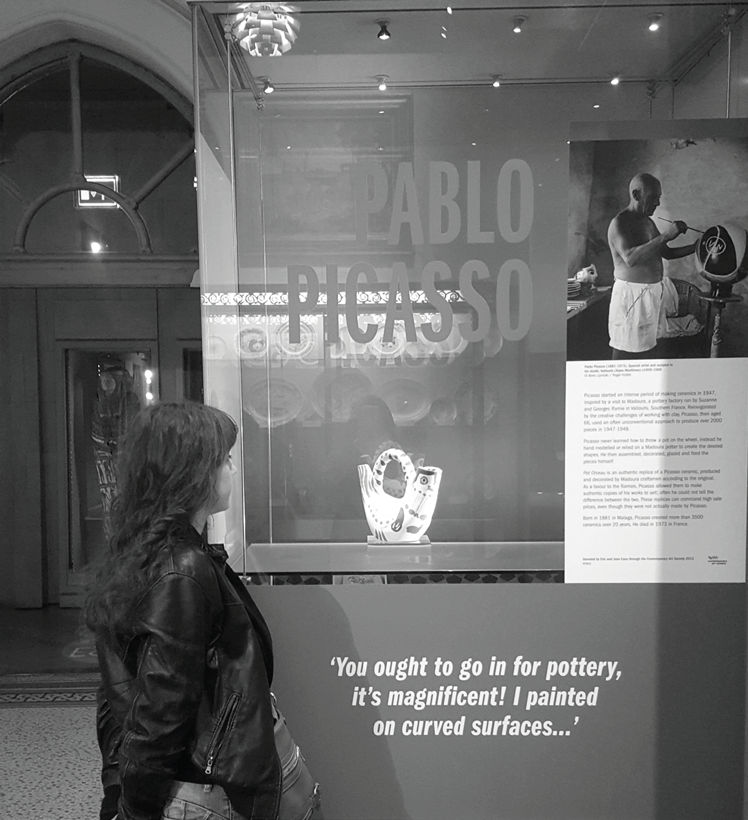
Was it clay I scooped up then. Was I too young to shape myself alone. Where did I find hands. Were they Pablo’s hands. Were his fingers the fingers of children. Did you see me press my clay into his palms.Did I pinch myself with his touch. Was that me licking myself into shape with his Spanish skin. Did I tell you how I ached to be a bird but the clay wanted to be a pot. In the end was it a bird-jug we agreed to be.

Were Pablo’s brushes painted with slate blue and charcoal when I smeared myself against them. Did you like my zinc white plumage like stone. Are you amused by my human face. Was I baking in the kiln for long. Can I call myself terra cotta. Do I look a little like a snail to you. Or a post-horn.

Am I not a dove. Colombe. Paloma. Pijon. When you look at me do you see a work of art. Or a pitcher of cool water. Would you like me to pour you a glass.

Shall I sing my song now. Does it sound of soft liquid purlings.

Tony Spiers


Inspiration: Picasso’s ‘Pot Oiseau’

The Big Butterfly Count in Royal Pavilion Gardens: ‘Take Nature’s Pulse’

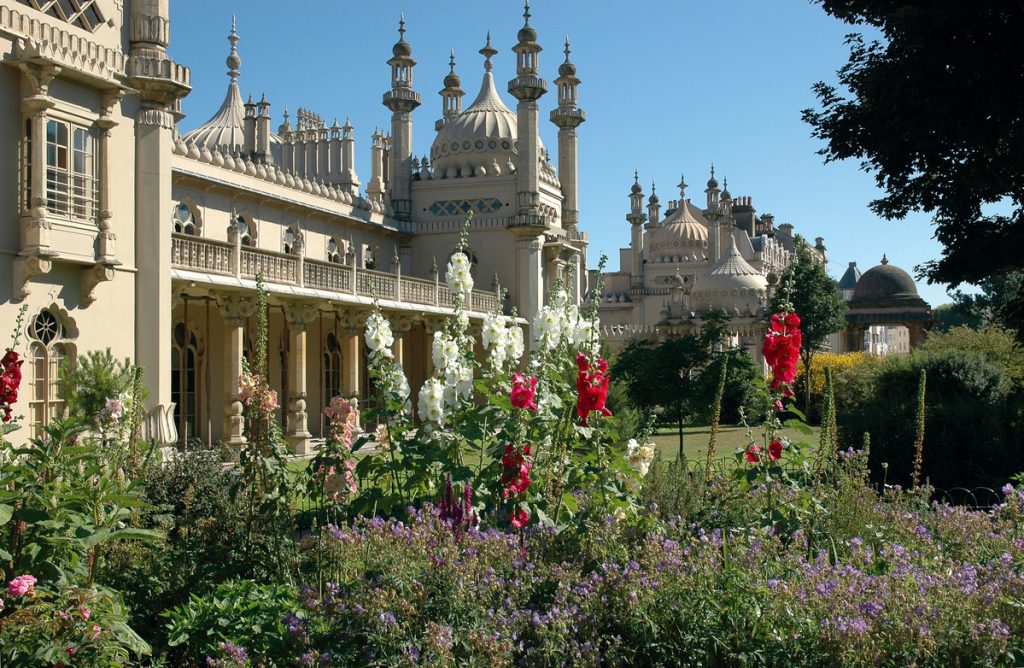
Exterior view of The Royal Pavilion

This is a legacy story from an earlier version of our website. It may contain some formatting issues and broken links.

The Big Butterfly Count is a nationwide survey aimed at helping to assess the health of our environment.

It launched in 2010 and has rapidly become the largest survey of butterflies in the world! Brighton Museum needs your help to assess the health of the butterfly population in the Royal Pavilion Gardens which provides an urban retreat for many pollinators. We will then add your data to this nationwide survey.

The beautiful Royal Pavilion Gardens in full bloom

The beautiful Royal Pavilion Gardens in full bloom

Butterflies taste with their feet!? More butterfly fun in MuseumLab

When you have counted the butterflies in the Gardens come up to Museum Lab in Brighton Museum and add your data to the count. MuseumLab will be packed out with fun activities celebrating all things butterfly. Learn how butterflies see, hear and taste the world around them. See butterflies from the Booth Museum of Natural History up close under the microscope, create butterfly artwork for our displays, take home seeds from the Royal Pavilion Gardens and much more!

A drawer of Butterflies from The Booth Museum. The Booth Museum houses over 400,000 moths and butterflies in its collection

A drawer of Butterflies from The Booth Museum. The Booth Museum houses over 400,000 moths and butterflies in its collection

Why save our Butterflies and Moths?

Butterflies and Moths not only bring so much beauty to our gardens and green spaces, they and their caterpillars also play an integral role in many different ecosystems. The adults pollinate countless plants and the caterpillars provide food for much loved vertebrate species including many birds and bats.

Six-spot Burnet moth, a beautiful day-flying moth which is found in Sussex

Six-spot Burnet moth, a beautiful day-flying moth which is found in Sussex

We can all play an important role in helping to keep up the butterfly and moth populations by not using pesticides. Also by planting natural features in our gardens and filling green spaces with nice nectar plants. These plants include many herbs we can use in the kitchen like marjoram, mint and thyme along with beautiful flowers like buddleia which will breathe life back into your garden.

Butterflies and moths are an essential part of our ecosystem. We can all help save these wonderful creatures by taking part in the Big Butterfly Count, but don’t take our word for it, take Sir David’s…


This event is free with Brighton Museum admission and will be held in the Museum Lab and in the Royal Pavilion Gardens on

Wednesday 2nd August: 2-5pm

For More information visit: http://www.bigbutterflycount.org/about

Grace Brindle, Collections Assistant

Introducing the Museum of Transology

Curator E-J Scott, by Sharon Kilgannon at Alonglines Photography

This is a legacy story from an earlier version of our website. It may contain some formatting issues and broken links.

A short note from Janita Bagshawe, Head of Royal Pavilion & Museums, on our new Museum of Transology display, which opens in Brighton Museum tomorrow.

Our mission at the Royal Pavilion & Museums is to use our collections, buildings and knowledge to connect people to the past and help them understand the present in order to positively influence their future. The Museum of Transology at Brighton Museum is an inspiring example of the way that objects and personal stories can help us all better understand the present and positively influence the future.

Photo of E-J Scott holding a large Museum of Transology label

Curator E-J Scott, by Sharon Kilgannon at Alonglines Photography

The Museum of Transology is a bold, brave and profound collection of objects and photographs that began with donations from Brighton’s vibrant trans community. Curated by E-J Scott, it is now the largest collection representing trans people in the world. This highly intimate exhibition challenges the idea that gender is fixed, binary and biologically determined, by exploring how the objects reflect the participants’ self-determined gender journeys.

Photograph of lipstick and handwritten label

First makeup by Katy Davies, courtesy of Fashion Space Gallery

From hormones to prosthetics and campaigning t-shirts to lipstick – what brings the objects to life are the personal stories of hope, despair, confidence and desire. Trans lives have often been hidden, ignored, misunderstood and forgotten.  At times challenging and provocative this exhibition gives voice to the reality of trans lives. It is a moving and emotional experience, and one that we are proud to share with our visitors.

Janita Bagshawe, Head of Royal Pavilion & Museums

Preston Manor’s old gardeners unearthed

Conservatory boiler room showing chimney, 2017

This is a legacy story from an earlier version of our website. It may contain some formatting issues and broken links.

Family history research is a popular hobby and with easy access to digital records increasing numbers of us are delving into the lives of our ancestors. So it is always exciting when people come to Preston Manor having discovered family members who lived or worked in the house.

Henry Hooker

Monochrome photo of seated elderly man with a book

Henry Hooker (by permission of descendants of the Hooker family)

In July 2014 descendants of Henry Hooker, Preston Manor’s Victorian gardener, visited and were kind enough to provide biographical information and this photograph showing Henry in thoughtful pose with an open book and potted fern.

Mr Hooker was born near Petworth, West Sussex, in 1830 at the start of the reign of William IV. He died in Brighton aged 83 in 1913, the year before the First World War broke out.

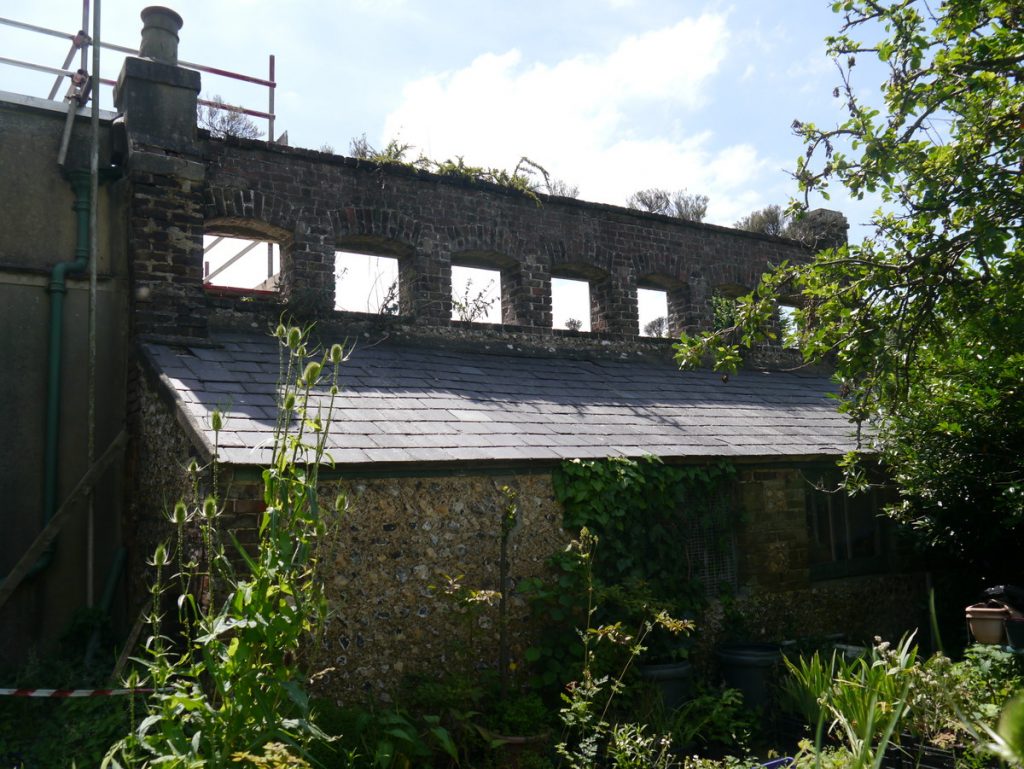
At the time of the 1881 census the Hooker family were living at The Lodge, a substantial flint-faced double-gabled gatehouse at Preston Manor, now sadly demolished.

Family research can reveal interesting secrets. Henry married in 1865 aged 35 but the relationship did not last. Henry set up home with his new partner, Harriet Hills, and for the sake of respectability they simply pretended they were married. In the Victorian period divorce was a complex and expensive procedure not undertaken by many: as late as 1900, for every 20,000 married couples in England and Wales, fewer than three sought divorce in any year.

Henry and Harriet had three sons: Frank, George and Harry aged 11, 10 and 4 at the time of the 1881 census. Harry was born at The Lodge in 1876 and went on to work as a butcher with shops in Elm Grove and Lewes Road, Brighton.

The Hooker boys would have been familiar with the kitchen gardens at Preston Manor, which housed a conservatory, a vinery and a peach house as well as cold frames and potting sheds. If the boys were lucky their father may have allowed them a taste of the luxurious hothouse fruits that graced the tables of his employer. For reasons unknown the Hooker family had moved on by the 1891 census. We know Henry’s health can’t have been a factor, for in 1911 he was listed in the commercial pages of Kelly’s Directory as a ‘jobbing gardener’ at 81 years of age.

One of the many skills required by the Preston Manor head gardener would be looking after the greenhouses, including not only the propagation of plants but also keeping the structures heated. Grand glasshouses of the 18th century had complicated systems using hot air and steam, but early 19th century innovations saw domestic glasshouses heated by hot water pipes by means of a coke fired boiler, as at Preston Manor. Evidence of the system can still be seen today.

Conservatory boiler room showing chimney, 2017

Various greenhouses existed at Preston Manor over the years. A report by Mr Bertie Maclaren of Brighton’s Corporation’s Parks and Gardens Department dated 7 January 1938 states:

‘…the newest greenhouse requires immediate attention in the shape of repairing and painting. The old greenhouses are beyond repair.’

Preston Park Rock Gardens, 2015

At this time the greenhouses were used to propagate alpine plants for the newly created Rock Gardens opposite Preston Park. Shortly after Maclaren’s report, tomatoes and lettuce were grown as part of the ‘Dig for Victory’ directive during the Second World War.

On 13 June 1941 curator, Henry Roberts received a letter from the Acting Superintendent of the Parks and Gardens Department informing him:

‘we are taking the glass out as it has become dangerous for anyone to work under and also, in view of the fact that it would probably all be lost should there be a bomb in the vicinity.’

Colour postcard showing road and floral clock

Floral Clock, Hove, 1960s

The glass must have returned post-war for during the 1950s and 60s the greenhouses were used to cultivate bedding plants for the town. In this period ‘carpet bedding’ of brightly-coloured summer annuals was a familiar sight in all public gardens and parks in Brighton, Hove and other seaside towns. This block-colour formal planting is less fashionable now but a lasting example can be seen at the Floral Clock at Palmeira Square.

The glasshouses at Preston Manor survived until 1994. Much effort was made to save them but sadly the structures had become too dilapidated to restore. Those shown in these pictures from 1993 would have been used by Preston Manor gardener Mr George Cherriman whose descendants visited Preston Manor in July 2015.

George Cherriman

Mr Cherriman was born in 1878 in West Grinstead in the reign of Queen Victoria and died in 1955, the year the first television commercial was aired.

George Cherriman 1952 (by permission of the Cherriman family)

The Cherriman family kindly provided this photograph taken in Cowfold in 1952, and a more perfect example of an old fashioned gardener cannot be imagined. We even know the dog’s name: Apple Blossom. She belonged to George’s younger brother, William, who served in the Veterinary Corps during the First World War. George didn’t go to war. Aged 38 in 1916, he was near the upper age limit for conscription of 41. Gardening was not considered a reserved occupation, but George was exempt being a married man.

At Preston Manor George was employed from the 1920s as a 2nd gardener under head gardener, Mr Franks. He stayed in post after the house became a museum in 1933. Thereafter for ten years until retirement George worked as a gardener for the Brighton Corporation.

We have a colourful description of Mr Cherriman courtesy of the son of Mr Leslie Little, another 2nd gardener at Preston Manor, who had started work there in 1929 at the end of 18. Mr Little’s son, John, was interviewed in 1995.

‘Mr Cherriman…I remember when we were kids we used to go to tea on Sunday afternoon. He lived in North Road which is in Preston Village. He was a gardener a lot older than my father and I think my father actually took a lot of his experience. He was only about five foot eight. He had a lovely moustache that was kind of rolled at the ends. He was quite a character, you know. He said things like what they got up to when they had problems with the boilers and had to keep the heat going in the house and the greenhouses where they used to have to fire up with coke for the hot water pipes. He had a black bowler fitted…that was a part of his uniform in those days and an apron in the greenhouses. I can picture him now. He used to wear the old doings on his trousers, like a spat sort of thing, fitted on top of his boots up to his knees.’

Colour photo of grave stone

Grave inscription for George Cherriman

The Cherriman family came in search of their ancestor’s place of employment and also his grave, which is in St Peter’s churchyard adjacent to Preston Manor. To find the grave we contacted the Churches Conservation Trust at St. Peter’s who located Mr Cherriman in Plot 181. There is no standing headstone but after overgrown plants were cleared we found the inscription on a low stone: ‘George Cherriman died 24th November 1955 aged 77 Rock of Ages’.

Emma Cherriman

Colour photo of grave stone

Grave inscription for Emma Cherriman

Pleasingly, the search uncovered another find at the plot, the inscription for George’s wife, Emma: ‘In loving memory of Emma Cherriman, 10th September 1950 aged 77 years. Abide with Me.’

George and Emma were married at Burstow in Surrey on 28 August 1907. They were married for 43 years and had no children.

We know that Mrs Cherriman also worked at Preston Manor from a 1984 interview with Ethel Silverson, 3rd housemaid from 1920 to 1922.  Ethel recalled how Mrs Cherriman came once a week and scrubbed the floor of the servants’ hall:

‘…it was really white when she’d finished it. It was beautiful’.

The servants’ hall at this time was in the west wing of Preston Manor and is not open to the public at present. The room has wooden parquet flooring, unusually grand for servants’ quarters. It is this wood that Emma Cherriman scrubbed clean; not the flagstone floor seen in the Victorian servants’ hall open to visitors today.

Tours and Hops

Colour photo of group enjoying a tour

Garden Tour of Preston Manor, 2012

Preston Manor’s old kitchen gardens are opened occasionally for special events and pre-arranged tours, and the partly cultivated plot is looked after by a small dedicated team of garden volunteers working under the directive of today’s head gardener who works for the Council’s City Parks team.

In 2016 Preston Manor was approached by Matt Redman of the Brighton Hops Project. The project sought city locations for not-for-profit hop growing, the crops to be exchanged with local breweries. Mat crowdfunded his work and planting took place in early 2017, with Preston Manor acting as a flagship for the project.

Colour photo of hops growing against a flint cobble wall

Hop growing at Preston Manor, 2017

Fragrant dried hop flowers have been used in Britain since the 1500s to impart a bitter flavour to beer. The plant is also used in herbal medicines as a treatment for anxiety and insomnia. Hop plants grow exceptionally tall so the high south-facing walls of the old kitchen garden make an ideal habitat and the plants are thriving well.

Mr Hooker and Mr Cherriman would be astonished to see the Preston Manor kitchen gardens devoid of greenhouses and intensive cultivation. However, plans are underway to develop this hidden corner of the grounds and make good use of the land to benefit future visitors.

Help us learn more

If you discover ancestors with a link to Preston Manor,or know people who worked at Preston Manor in more recent times, we are always pleased to hear reminiscences and see photographs. Putting together the story of the lives of people for whom Preston Manor was a workplace or a home is an ongoing jigsaw puzzle of fragments continually collected together to make a full picture.

Paula Wrightson, Venue Officer, Preston Manor
Unlocking the MuseumLab doors: rarely seen Robert Goff etchings from our stores

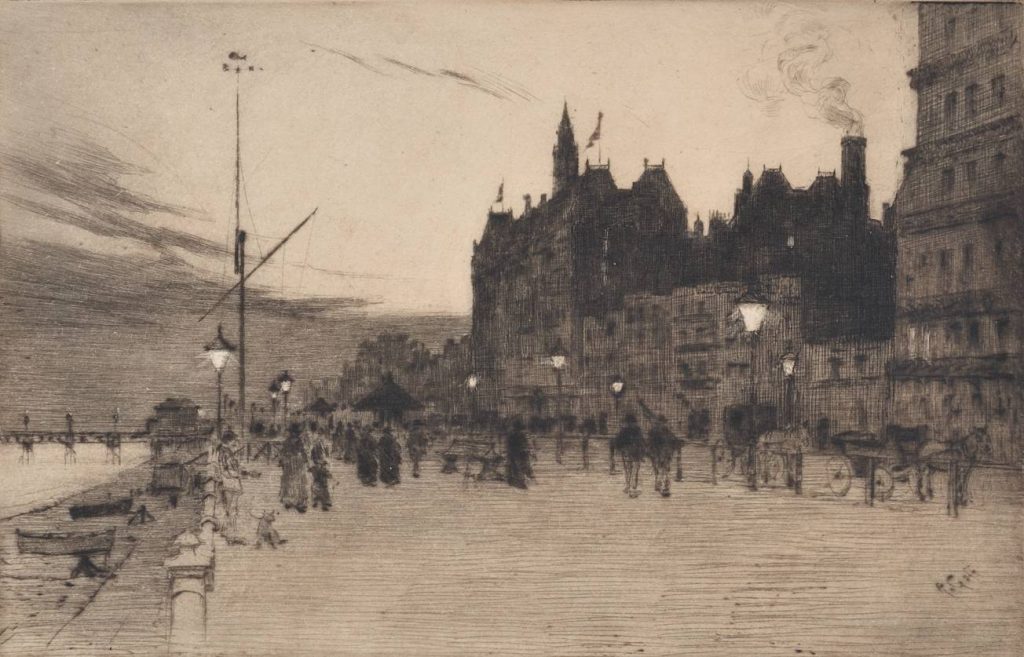
Hotel Metropole, c1895, by Robert Charles Goff (FA209267)

This is a legacy story from an earlier version of our website. It may contain some formatting issues and broken links.

In Brighton Museum this week we are once again unlocking our MuseumLab doors to give you the chance to view rarely seen objects from our collections.

Every week on Tuesday, Wednesday and Friday afternoons from 2-5pm visitors can meet curators in our MuseumLab space and see an array of curious objects that are normally safely locked away in our museum stores.

Hotel Metropole, c1895, by Robert Charles Goff (FA209267)

Hotel Metropole, c1895, by Robert Charles Goff (FA209267)

Highlight of the Week: Discover Goff, Beyond Barriers

Etching by Robert Goff of the West Pier

Etching by Robert Goff of the West Pier

Visit MuseumLab on Friday 9 June and join our Curator of the Royal Pavilion Archives, Alexandra Loske, as she reveals wonderful etchings of Brighton from the artist Robert Goff. These images will be free from any display cases to give you the chance to get up close and personal with the works, and an opportunity to chat directly to Alexandra and hear intimate stories of this wonderful artist. Why not even relax in our cosy corner, be inspired by Goff, and sketch your own artwork to add to our displays?


Be part of a live investigation!

Alexzandra Loske-Page in Museum Lab with Goff Etching (photo credit: Stuart Robinson)

Alexandra Loske in Museum Lab with Goff Etching (photo credit: Stuart Robinson)

A painting from Florence that may be linked to Goff will also be brought to MuseumLab by a researcher for investigation. Alexandra will use our Goff etchings to help reveal any connections between the works.

Come and be part of the open forum on 9 June and help us discover fresh insights into the painting and the Goff etchings.


More on Goff

In the video clip below, Alexandra Loske discusses Robert Goff’s West Pier. This was produced for our 2011 exhibition Robert Goff: an Etcher in the Wake of Whistler.


[arve url=”https://www.youtube.com/embed/gAWT-RKZDsw” mode=”normal” align=”center”/]

You can also view and download hi-res digital images of some of Goff’s works from our Digital Media Bank.


New light on old coins, medals and badges

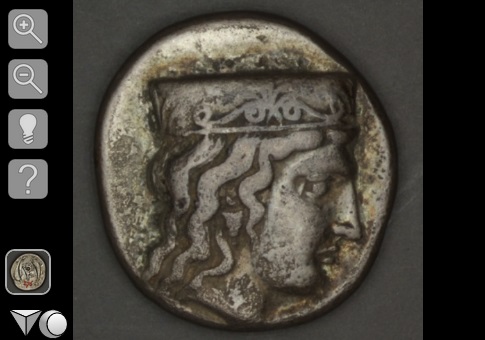
Ancient Greek coin depicting the head of the goddess Hera, c360BC

This is a legacy story from an earlier version of our website. It may contain some formatting issues and broken links.

Several of my colleagues have been working with the University of Brighton’s Cultural Informatics Group to create an experimental website that sheds new light on some of the coins, medals and badges in our collection.

Cap badge of 19th Prince of Wales' Own Hussars

Cap badge of 19th Prince of Wales’ Own Hussars

Collectively known as our numismatics collection, these objects are rarely displayed. Even when they are displayed, small items like these are hard to see behind a glass case, and it’s usually only possible to see one side of the object.

The aim of the Coins, Medals and Badges website is to allow users to zoom in on these items, and see both sides. But it also enhances the experience with an unusual application of 3D digital technology.

Why 3D?

Coins, medals and badges may seem like an odd choice to display as 3D objects, as most of us would think of them as being more or less flat. Yet if you examine something like a new pound coin in your hand, you’ll see there is a detailed relief that can only be seen by holding it in the correct position for the light. Much the same exercise is required for examing a coin that was minted thousands of years ago, and the same applies to many medals and badges.

Ancient Greek coin depicting the head of the goddess Hera, c360BC

Ancient Greek coin depicting the head of the goddess Hera, c360BC

The Coins, Medals and Badges website simulates this process by using a technique known as Reflectance Transformation Imaging (RTI). You can read a more detailed description of RTI here,  but a basic explanation is that each object is photographed multiple times with a different light source used in each image. A viewer is then used to rapidly swap between these images as the mouse (or finger on a touchscreen) is moved over the digitised object so that new features and details are revealed or covered by shadow.

The video clip below shows the website in action.

[arve url=”https://www.youtube.com/embed/FgoHSkD9TNo” align=”center” maxwidth=”800″/]

Thanks

Our enormous thanks is owed to the University of Brighton’s Cultural Informatics Group, particularly Dean Few, a PhD student who designed and built the website; Myrsini Samaroudi, a PhD student who worked with Dean to train Royal Pavilion & Museums staff and volunteers to digitise the objects using RTI; and Research Fellow Dr Karina Rodriguez-Echavarria.

Royal Pavilion & Museums work on this project was led by curator Andy Maxted, with the digitisation and web content produced by two volunteers: Aisling Byrne, and Rana Bellem-Hussein.

Details of the software used can be found on the credits page of the Coins, Medals and Badges website.

Please note that as this is an experimental website using some new technology, there may be compatibility issues with some web browsers, particularly Internet Explorer. We recommend using Firefox or Chrome.

Although the website has worked well on the PCs and tablets we have tested it on, you may find some layout issues if using the website on a mobile phone.


Kevin Bacon, Digital Manager