Story Category: Legacy

Behind the Music Room Murals

This is a legacy story from an earlier version of our website. It may contain some formatting issues and broken links.

Recently, we had to remove the lower section of the mural (dado panel) on the northeastern wall of the Music Room as the lath and plaster wall behind it was damaged.

The plaster was carefully repaired and the mural was lined in the studios. It was then carefully put back on the wall, and the trompe l’oeil effect re-instated.

Music Room mural and wall during treatment

S.Evans. Paintings Conservator Royal Pavilion & Museums


The Mystery of the Medals

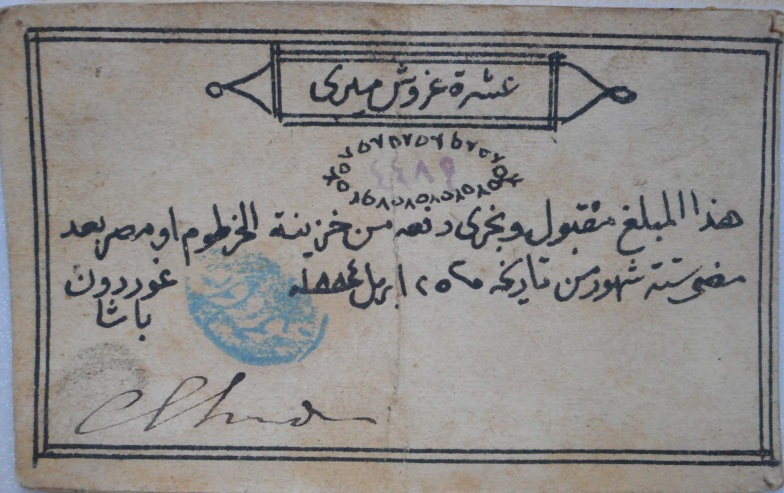
Promissory Note issue by General Gordon during the siege of Khartoum (1884)

This is a legacy story from an earlier version of our website. It may contain some formatting issues and broken links.

In 1932 a Miss Gordon deposited some commemorative medals at Hove Museum. No-one at the time had made a note of who she was but the medals belonged to a Frederick A Marshall who had worked in the Diplomatic service in Japan and Europe.

After some searching it was discovered that ‘Miss Gordon’ was Sarah Ellen Rose Gordon, daughter of Sir Henry William Gordon K. C. B. and Lady Henrietta Rose Gordon. Sir Gordon was brother of the famous General Charles George Gordon of Khartoum (1833-1885) whose biography ‘Events in the life of Charles George Gordon’ Henry Gordon wrote in 1886.

Promissory Note issue by General Gordon during the siege of Khartoum (1884)

Promissory Note issue by General Gordon during the siege of Khartoum (1884)

The museum already has a small bust of General Gordon and he is commemorated on some of the porcelain pieces in the collection.

Commemorative jug with a relief portrait of General Gordon (c1884)

Commemorative jug with a relief portrait of General Gordon (c1884)

On his retirement Sir Henry William Gordon, his wife and Sarah lived at Oat Hall, a large villa in Lindfield, Sussex. Sir Henry died in 1887. Around 1900 Lady Gordon and their youngest daughter, Sarah, moved to 100 Lansdowne Place and later to 46 Norton Road, Hove where Lady Gordon died in 1907. She was buried in Holy Trinity Churchyard, Cuckfield with her husband.

In 1913 Sarah made a large donation to Hove Library of 80 Volumes of ‘All the Year Round’ and 5 volumes of ‘Household Words’ (both of these publications being associated with Charles Dickens) plus some other works too.

By 1915 Sarah had moved again to 27 Wilbury Road, Hove where she lived until her death in 1937.

On 28 January 1933 General Gordon’s centenary was celebrated by the mounting of an exhibition at Hove Museum. Sarah and her brother, Louis, lent several relics including tools Gordon took to China. (Encyclopaedia of Hove & Portslade)

The medals that Sarah had donated a year earlier belonged to Frederick Adolphus Marshall who, with his German wife, Luise, and daughter, Genevieve, lived at 19 Tisbury Road, Hove. The families may already have known each other abroad as both had led military lives; Sarah was born in Hong Kong and Genevieve in Paris. After her father’s death in 1905 Genevieve lived with Luise; she left money in trust to Sarah Gordon in her will.

Frederick Adolphus Marshall was born in Hackney in 1824 the son of a coal merchant from Yorkshire. He and six other children lived in Mare Street, Hackney. Frederick, the youngest son, left the family home sometime after 1841. Ten years later the family moved to Southampton. Frederick’s father, John Marshall, had got into considerable debt, living beyond his means and owing £21,226 to the Great Western Coal Company and others. John moved with his wife to a house belonging to his eldest daughter in Eldon Square, Reading, Berkshire where he died in 1861.

According to the Western Daily Press, Bristol, May 16 1905 and the Yorkshire Post

“Mr Frederick Marshall died Friday last at Brighton (12 May 1905) within a few days of his 82nd Birthday. He was one of the oldest and most valued Europeans who have served the Japanese Government. He may, in fact, wrote the ‘Times’ [Newspaper], “be said to have been the first mentor of Japanese diplomacy in Europe: for when upon the inauguration of the new era in Japan, the Mikado determined to establish diplomatic relations in the chief European capitals. Mr Marshall was appointed to act as Secretary of Legation with the first mission which visited London and Paris for this purpose, and he assisted afterwards in the establishment of other Japanese legations in Berlin, Madrid, Lisbon, Brussels, etc.”

Even after Marshall’s retirement he continued to write special reports on subjects of public interest for the Japanese Government. And for many years he was a frequent contributor to the chief British periodicals, and more especially to the ‘Algernon Blackwood’ Magazines.

Lavender Jones

Christmas in Conservation

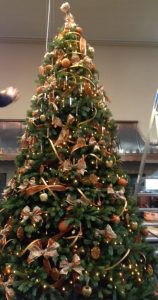
Christmas tree inspired by our own copperware collection

This is a legacy story from an earlier version of our website. It may contain some formatting issues and broken links.

What a busy month we have had within the Conservation team! We have been showing the public how we clean our copperware, planning closed weeks in the New Year at two of our sites, and preparing the Royal Pavilion for Christmas including an enchanted forest in the Music Room, several missing cats and a beautiful Christmas tree inspired by our own copperware collection. It really is stunning.

Photo of Christmas tree in Great Kitchen of the Royal PavilionAutumn is one of the nicest times to visit the Pavilion as the Palace is slightly less busy, although this is in contrast to our own work at the Pavilion – so who knows you will probably see us out and about on the floor and if you chance upon us (we wear shirts with conservation logos) please stop and ask us what we are planning to do next.

Gaye (Assistant Conservator)

Museum Ideas Conference: another week another conference

Museum Ideas Conference

This is a legacy story from an earlier version of our website. It may contain some formatting issues and broken links.

Last month, staff were asked if they would be interested in representing the Royal Pavilion & Museums at the Museum Ideas Conference held at the London Science Museum. I applied expecting to get rejected as I have attended conferences in the past, most recently the week before, and it is probably someone else’s turn — so I was pleasantly surprised when I was accepted.

img_1565-b

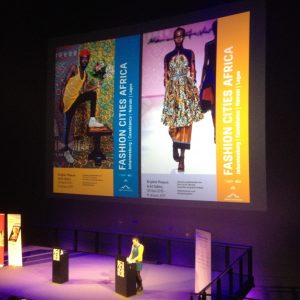
The conference was an opportunity for museums around the world to present what they have been doing differently or experimentally recently. Museums presenting at the conferene included Medical Museion, Copenhage; Jane Addams Hull-House Museum, Chicago; Jewish Museum, New York; Manchester Museum; The Pitt Rivers Museum, Oxford; The Old Town Museum, Aarhus; and the Metropolitan Museum of Art, New York, to name a few. Not forgetting our own Helen Mears who was talking about Brighton Museum & Art Gallery’s present Fashion Cities Africa display.

fullsizerender

At the Royal Pavilion a colleague and I have been working on co-ordinating the Pavilion Tales programme of short talks, so I was particularly interested in the talk by Gravity Goldberg from the Contemporary Jewish Museum, San Francisco, on the museum’s programme of outside speakers giving talks associated with the displays and collection. This is slightly different to how we at the Royal Pavilion have set up the programme, as our speakers are members of staff, but it is an idea to consider for the future when the programme has developed further, and it is something that Bite Size talks held in Brighton Museum & Art Gallery has already started to try.

In the afternoon Tobias Lumb of National Railway Museum, York presented on their partnership project with York Theatre Royal. When the theatre had to close for refurbishment they looked for new places to perform. The project involved building a stage and seating in an unused part of the museum and static performance spaces including inside some of the train carriages.  The play In Fog and Failing Snow was written using some of the museums archives. When the run was finished the museum theatre also put on The Railway Children, again in keeping with the museum’s theme.

img_1573

The final talk of the day was from Barbara Wolf from the Deutsches Historisches Museum, Berlin, discussing their recent project training refugees to give tours around the museum in their native language to other refugees. The tour guides picked objects from the collections which were relevant to them and were taught how to give a tour featuring these objects. Since the project started seven months ago thousands of refugees have attended the tours which German tourists have also wanted to join to learn about other cultures.

Overall I really enjoyed the opportunity of going to the conference and I am currently working on a project with the Royal Pavilion and Museums to put on our own conference in November. Although I have been to conferences before, I have never noticed some of the logistics as much as I did for this one, which will feed in to the planning of the Workforce Development Conference.

Holly Parsons, Visitor Services Officer

Location, Location, Location…

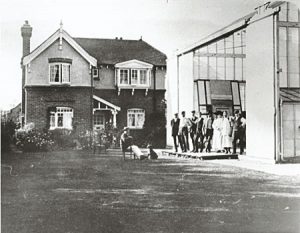
Photograph of James Williamson sat outside his studio in Hove, MF000302

This is a legacy story from an earlier version of our website. It may contain some formatting issues and broken links.

Halfway along George Street in Hove there is an unassuming café called Georgie’s. Maybe you’ve been in there or wandered past as you visit the shops. But did you know that this café features in what could be described as Hove’s, possibly the world’s, first action movie?

At the turn of the twentieth century, local film maker James Williamson released ‘Fire!’ (1901), a simple but exciting story of the fire brigade rushing to rescue people from a burning house. However, the film itself was not simple. It is the earliest example of cutting from shot to shot to move the narrative of a film along, something which we take for granted today. Georgie’s café was originally the site of Hove fire station and you can still see the crest if you look up at the top of the façade. In ‘Fire!’ we see Hove’s horse-drawn fire engines being rapidly prepared outside the fire station and sent off to the burning house.

mf000302_d01_540h450w

Photograph of James Williamson sat outside his studio in Hove, MF000302


Today, 8 November, marks the anniversary of James Williamson’s birth. Williamson was actually born in Pathhead, near Kirkaldy, Fife in 1855. He spent his early years in Edinburgh before moving to London in 1868 and there becoming an apprentice to a pharmacist. He started his own pharmacy at Eastry in Kent, later relocating to Hove in 1886. Williamson was a keen amateur photographer and this, coupled with the photographic services his business offered, led to connections with other local men who also went on to become significant in the early history of film: George Albert Smith, Esme Collings, William Friese-Greene and Alfred Darling.

He began making films in 1897 and continued to produce them until 1909. In 1910 he sold his Hove studio and moved to London, transferring his business interests to the manufacture of film apparatus and equipment, as well as film processing. Williamson died of a heart attack at his home in Richmond, London on 18 August 1933.

mf000531_d01_540h450w

Photograph of Williamson’s chemist in Hove, MF000531


In the early twentieth century, film was still in its infancy and Williamson was one of those whose experimentation led to techniques which are now considered standard in filmmaking. His ‘Attack on a China Mission’ (1900) uses shots from multiple angles to convey a sense of drama. Williamson is also credited with inventing the chase sequence which consisted of more than one shot, and I can’t help but think of the opening sequence in Boulting’s ‘Brighton Rock’ filmed all those years later on our local streets.

You can find out more about Williamson’s use of film techniques in Experimental Motion: the art of film innovation, the new display in Brighton Museum’s Spotlight Gallery which tells the story of experimental film-making in Brighton & Hove, from 1896 to the present day. Unknown to many, both Brighton and Hove have played a rich and important part in international film history. Early film-making pioneers including George Albert Smith and James Williamson, who became known as the Brighton School and worked here at the turn of the 20th century, while Modern and contemporary filmmakers and moving image artists – like Jeff Keen, Ben Wheatley and Ben Rivers – have cemented the city’s status as a hotbed of experimental film.

You can also visit the Film Galleries at Hove Museum. These galleries display some of the Williamson items from the Barnes Brothers Collection relating to the early film pioneers, as well as showing the films. The Barnes Collection forms a large part of the Media & Film collection.

The Royal Pavilion & Museums’ historic film and media collection reflects the seminal role that Brighton & Hove played in the birth of film-making in the 1890s and early 1900s. We were recently awarded funding from the John Ellerman Foundation Regional Museums & Galleries Fund to explore this further. Working with a wide range of partners including the University of Brighton, the Film Pioneers project will greatly improve the understanding and use of the collection, and reflect its connection to the important role film plays in the city today.


Brighton Museum & Art Gallery – visitor information


Hove Museum & Art Gallery – visitor information

Following the Snowpups art trail across Brighton & Hove

Snowdog sculpture outside Hove Museum

This is a legacy story from an earlier version of our website. It may contain some formatting issues and broken links.

Some of the magic of the film The Snowman and the Snowdog has been called into service along the streets of Brighton & Hove by local artists and children. The Snowdogs by the Sea project is raising funds for Martlets Hospice using the iconic Snowdog as its vehicle. Martlets has teamed up with Wild in Art to stage this extraordinary public art event along the streets of Brighton & Hove.

img_20161011_093856706

If you wander around the city between 24 September and 27 November 2016 you will certainly run across lots of the giant Snowdog sculptures. They are all fully decorated by local artists and free to enjoy by the public. Smaller Snowpups are also on display and can be found in Brighton Museum & Art GalleryBooth Museum of Natural HistoryJubilee LibraryHove Museum & Art Gallery and Hove Library. The Snowpups have been designed and created by schoolchildren from 20 schools across the city. They are spread out now but on Sunday and Monday 4-5 December they will be coming together, along with the big dogs, for a finale event in Brighton Corn Exchange.

I followed the trail myself, starting at Hove Museum with the very beautiful snowdog decorated by designer Sarah Arnett. Sarah Arnett is already well known to the Royal Pavilion & Museums as in 2014 she designed the new look for the Royal Pavilion Foundation brochure and signage.

screen-shot-2015-07-09-at-18-30-55

Design for Pavilion Foundation by Sarah Arnett

The beauty of the interior of the Royal Pavilion of Brighton inspired her to make Hove Museum’s “Snow Dragon” dog Max.

Decoration and wallpapers inside the Royal Pavilion reveal a fantasy world of oriental-style imagined places where natural elements, birds, animals, and dragons coexist to delight the eyes of visitors. After studying and interpreting the flowers, plants and decorative elements Arnett hand drew them all, and carefully cut them out and collaged the design together on a black background.

Her illustration develops from the hand-drawn to the digital illustration and are a combination of imagination, craftmanship, refinement and an explosion of colours.

After being welcomed to Hove Museum by this glamorous Snowdog I stepped into the museum and met the little Snowpups.

The Snowpups were all originally white and as a blank canvas they were waiting to be filled up with images, new ideas, colours and fun. Kids and teachers worked in collaboration, discussing, researching and choosing their own original decoration. The children decided on themes such as love, friendship, loss and hope.

There were five pups at Hove Museum to begin with but they have recently been joined by a sixth, Sid. They have now taken the opportunity to wander around the museum, so if you visit today you will have to go and search for the pups that have wandered off!

The schools involved in the project are:

  • Blatchington Mill School with the Snowpup INCA. The decoration consists in many coloured speech bubble with words chosen by students as most representative of the truly inclusive community they are part of at Blatch school.
  • Brackenbury Primary School and St Mary’s Catholic Primary School with PEBBLES. Here the theme is Brighton by the seaside as the design includes pebbly beach, beach huts, a rainbow, sunshine and seagulls.
  • The Downs Park School with PAISLEY PUP. The pup’s patterns are uniquely decorated with the fingerprints of every child in the school from the age of 5 to 16 years old.
  • Hove Junior School with PAVILOLA. The design has been chosen through a school competition. The winner took her inspiration from the shapes and patterns of Brighton’s Royal Pavilion and chose bold monochrome shapes that really stand out.
  • Portslade Aldridge Academy with DOODLE DOG. Chosen from a competition run by the Art Department of the school, this is a fun, bright and quirky design by a year 7 student.
  • Saltdean Primary School with SID. Designed by a year 6 and year 3 pupil, the decoration shows bits of sunny Saltdean, including the beautiful white cliffs, the blue sky, the beach huts and the high sea waves.

After visiting Hove Museum I made my way to the close by Hove Library where I bumped into four other lovely Pups scattered around the ground floor.

The schools we find represented here are:

  • Goldstone Primary School with the Snowpup GOLDY, whose name is inspired by the school’s name and colours, blue and gold. For the design, each year group from Nursery to Year 6 was given a paper template and they have been encouraged to use ideas explored in their art lessons.
  • Hillside Special School BY THE SEA WITH THE PETERS FAMILY. This Snowpup is in memory of Rob and Irene Peters who worked tirelessly for Hillside for many years as caretaker, governor and members of the PTA. The design is made of images of artwork created by the pupils with the theme ‘By The Sea’.
  • West Hove Infant School with ART. For this pup every child in Year 2 created their own illustration of what they think dogs look/should look like. Some ideas were inspired through the childrens’ love of their own pet dogs and others were hand drawn imaginatively. The colours used are red and grey to create a very own West Hove Infants uniform.
  • Brighton and Hove Children and Adolescent Mental Health Service (CAMHS) with STARGAZER. Inspired by the idea of lost and found objects and the story hidden within an object, young people of the school were asked to bring in found objects with their story to decorate the Snowdog. The stories were put together to make a film about how the Snowdog was able to become whole again.

From here I headed to Dyke Road to discover the three Snowpups displayed in the galleries of the fascinating Booth Museum of Natural History.

Here the schools involved are:

  • Brunswick Primary School with SNOWDASH. The design, which reflects the vibrancy of the city, is the result of a school-wide competition. Four winners were chosen from reception to year 6.
  • Coombe Road Primary School with FLASH. The Snowdog is decorated in a slick silver colour and all the children of the school were encouraged to ‘leave their mark’ by signing their name on it.
  • Lancing College Prep School at Hove with MARTY JUNIOR. The design is inspired by the joining of the hands of every child in the school to represent friendship, caring, creativity and unity.

Another five great Snowpups were ready to be discovered in Brighton Museum & Art Gallery. Here the pups are displayed in five different galleries and allow you to visit the extraordinary and varied collection held in the as much spectacular building, placed in the heart of the city.

The schools involved here are:

  • Bevendean Primary with BOSH (Bevendean’s Official Superhero). This super snowpup has the ability to change negative emotions to positive ones. Childrens’ concerns have been placed in his “worry bone”, so Learning Mentors could help with their problems.
  • Middle Street Primary School with MONTY. The puppy features design elements by a number of pupils and teachers, assisted with painting by local street artist Pinky. In the clouds that decorate the body can be seen self portraits of all 260 pupils from the school.
  • The Connected Hub with HUBBLE. The students have used the Martlets logo (a bird) as their inspiration. In each bird there is a message, either as a memorial, an inspiration or a hope for the future.
  • Westdene Primary School with A JOURNEY THROUGH SUSSEX. The design is inspired by the beautiful and unique Sussex countryside, with its distinctive windmills, rolling Downs and iconic chalk cliffs. All painted in an impressionist style.
  • Woodingdean Primary School with MAPLE BRACKEN. The design was chosen from a school-wide competition and is a combination of colourful leaves, flowers, butterflies and a rainbow.

My journey to discover the 22 Snowpups scattered around Brighton and Hove ended at the central Jubilee Library, where I found them from the entrance hall, through the ground floor, to the childrens’ area.

The schoosl represented here are:

  • Coldean Primary School with four designs corresponding to their four school houses – Brunswick House, Palmeira House, Regency House and Sussex House. Children from each house decorated their Snowdog with different tactile materials, including wood for the pup REGENCY ROVER, tiles for BRUNSWICK BARKER, sea shells for SHELBY OF SUSSEX, fabric and paper for PALMEIRA’S PATCHWORK PUP.
  • Elm Grove Primary School with GROVER. The decoration includes leaves in different shapes on green background. In the leaves there are the signatures of all the children at the school.

I can imagine the joy of the kids in working hard for the best decoration of their pup and to then see them exhibited before the eyes of the city. I believe that through this experience they will get closer to art and more confident with artistic techniques. They will certainly get to know important places such as our museums and libraries which hold pieces of our history and our art.

So don’t wait, do the Snowpup Art Trail yourself 🙂

For more information about the event visit www.snowdogsbythesea.co.uk

For more information about the venues:

Hove Museum & Art Gallery
19 New Church Road, Hove BN3 4AB
Tel 03000 290900, brightonmuseums.org.uk
Open Mon, Tue, Thu, Fri & Sat 10am-5pm,
Sun 2-5pm, Closed Wed
Free admission

Brighton Museum & Art Gallery
Royal Pavilion Gardens, Brighton BN1 1EE
Tel 03000 290900, brightonmuseums.org.uk
Open Tue-Sun 10am-5pm, Closed Mon
Admission fee payable,
Brighton & Hove residents free

Booth Museum of Natural History
194 Dyke Road, Brighton BN1 5AA
Tel 03000 290900, brightonmuseums.org.uk
Mon, Tue, Wed, Fri & Sat 10am-5pm
(closed 12-1.15pm) Sun 2-5pm, Closed Thu
Free admission

Jubilee Library
Jubilee Street, Brighton BN1 1GE
Tel 01273 290800
Open Mon, Tue, Thu 10am-7pm
Wed, Fri, Sat 10am-5pm, Sun 11am-5pm

Hove Library
182-186 Church Road, Hove, BN3 2EG
Tel 01273 296937
Open Mon, Tue, Thu, Fri, Sat 10am-5pm
Wed 10am-7pm, Sun 11am-5pm

Martina Bellotto, Hove Museum Assistant
Workforce Development Conference

This is a legacy story from an earlier version of our website. It may contain some formatting issues and broken links.

In preparation for the Workforce Development conference being held by Royal Pavilion & Museums in November, myself and three other members of front-line staff, Kate, Nick and Alice, have been working behind the scenes developing new skills in planning this international conference.

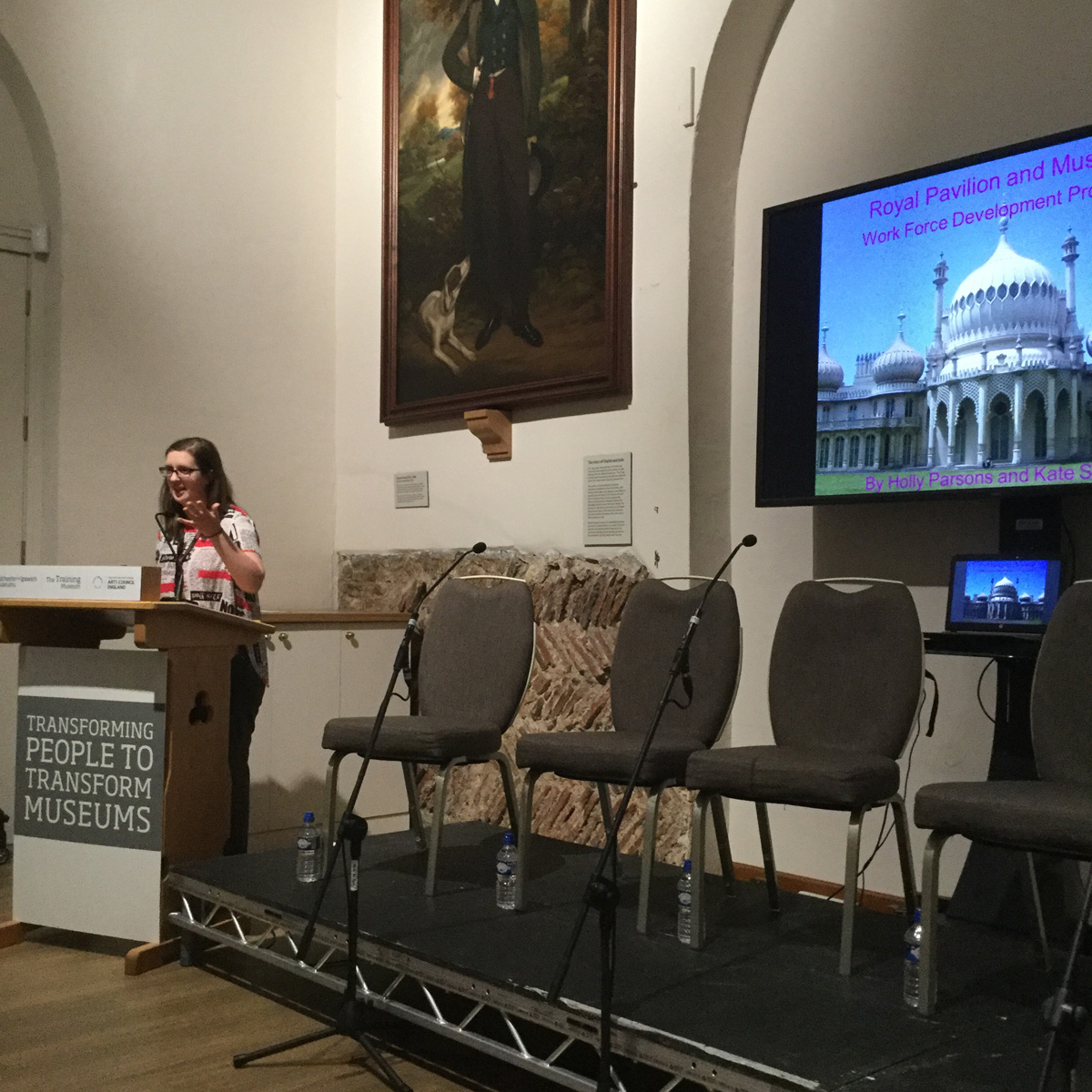
As part of the work we have been doing, last week we attended the Transforming People to Transform Museums, conference in Colchester. This visit had a dual purpose: firstly so the whole of the team could experience a museum conference and secondly, so Kate and I could present on the Royal Pavilion & Museums’ Workforce Development programme, not only to share the experiences but to promote the conference.

The opening talk was from John Orna-Ornstein from the Arts Council and argued that museums’ opening and the visitor experience are reliant on frontline staff, and to maintain frontline services at a high standard, museums and heritage organisations should be investing and focusing on the development of frontline staff including volunteers. For all the team, especially Nick, this was a powerful message to bring back.

img_0074

Holly presenting in Colchester


Despite having done talks before, I was still nervous. However, the weeks of preparation and practice paid off and the talk went without a hitch. Both Kate and I were involved in the following panel discussion and although a few of the questions threw the whole panel there were no major disasters. And I received positive comments about my presentation from other delegates during the day.

The day was also useful for hearing about some new projects which other museums have been working on. In the morning there was a talk from Colchester and Ipswich Museums about their project that aims to inspire staff to make changes. This includes helping with funding bids and has led to an object trolley being developed for frontline staff at Colchester Castle to help visitors interact with objects and costumed characters in Ipswich Museum.

In the afternoon one workshop was run by Oxford Museums Sensing Culture partnership working with the RNIB to make museums and heritage sites more accessible to the blind and partially sighted. As part of the session each participant was given a blindfold and an object to feel. The session aimed to explore the best ways to support blind and partially sighted visitors in museums with some tips on how museums could approach this.

Overall the day and experience was great fun and the team felt they benefited from the experience. Now, with less than two months left, our own conference planning is full steam ahead.

Holly Parsons, Visitor Services Officer


“We are surviving without a dream” Kachin refugees in Kuala Lumpur

This is a legacy story from an earlier version of our website. It may contain some formatting issues and broken links.

Helen Mears, Royal Pavilion & Museums’ Keeper of World Art, reports from a recent trip to Malaysia undertaken as part of her doctoral research at the University of Brighton into the use of heritage amongst overseas Kachin communities. Brighton Museum & Art Gallery is the caretaker of a rare collection of photographs and textiles relating to the Kachin minority in northern Myanmar.

An estimated 1,500 Kachin asylum seekers and refugees live in Kuala Lumpur (KL), Malaysia. Displaced by conflict, especially that which erupted following the breakdown of a ceasefire agreement between the Myanmar government and Kachin Independence Organization in 2011, most undertook dangerous journeys to the city in pursuit of safety and, hopefully, the opportunity of resettlement in a third country. In KL they joined one of the world’s largest urban refugee populations.

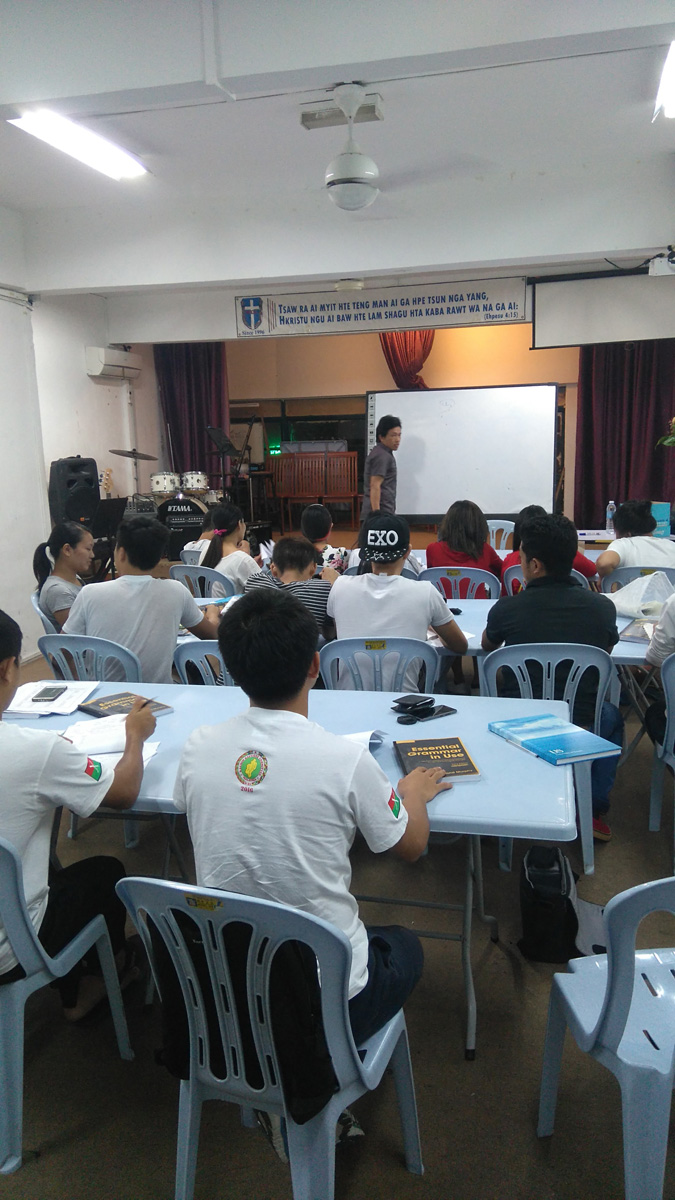
Kachin youth attend an English language class run by a volunteer teacher. The class starts at 11pm to accommodate those in employment.

Kachin youth attend an English language class run by a volunteer teacher. The class starts at 11pm to accommodate those in employment.

Registration with the United Nations High Commissioner for Refugees (UNHCR) at the organisation’s KL office provides little protection to refugees in Malaysia. Malaysia is neither a party to the 1951 Refugee Convention nor its 1967 Protocol and lacks a legislative and policy framework for refugees. Asylum seekers and refugees are treated as illegal migrants and are vulnerable to arrest, extortion and detention. If arrested and unable to pay the fine levied refugees run the risk of being sent to one of the country’s twelve immigration detention depots. Conditions at some of these have been described as amongst the worst in the world.

My doctoral research at the University of Brighton on overseas Kachin communities led me to KL where a third country resettlement programme run by the UNHCR has seen several thousand Kachins, and members of other Myanmar ethnic groups, resettled in the US, Canada, Australia, New Zealand and northern Europe. During my stay I interviewed Kachin asylum seekers and refugees. Like others of similar status in Malaysia they are prohibited from working and from accessing state healthcare and their children are denied access to government-funded public schools. Most refugees, inevitably, have to work to survive. Their employment choices are limited to insecure and low-paid jobs in restaurants, retail and construction where they work under the constant threat of arrest. A lack of recourse to legal protection also leaves refugees vulnerable to becoming victims of crime and abuse.

Lack of legal recognition not only brings the immediate danger of arrest, extortion and detention. It also is life-inhibiting in other ways, including by preventing refugee access to the Internet, to mobile phones and to banking facilities. For most Kachin refugees the lack of access to education is amongst the greatest of their frustrations, making their time in the city feel ‘meaningless’. Whilst the Kachin community runs two learning centres for refugee children, they are dependent on the efforts of volunteer teachers and, without access to funds, no opportunities for tertiary education exist in KL.

Like all Myanmar refugees in Malaysia, the Kachin must endure a cruel waiting game. UNHCR-administrated resettlement places have dried up for all but the most vulnerable and, at this point, the UNHCR’s other two durable solutions for refugees – local integration or voluntary repatriation – remain unviable; the lack of legal recognition and protection preventing the former and the ongoing conflict in the Kachin region the latter. Even the registration of asylum seekers and refugees can take several years as the UNHCR is facing a significant administrative backlog. 800 Kachin people are still waiting for a UNHCR identity card.

While the situation facing Kachin refugees in KL is perhaps less dire than that facing the near 100,000 Internally Displaced People (IDP) living near the Myanmar-China border, both communities have suffered from a lack of international attention. Conditions for both are also worsening, as the already limited international aid directed to the IDPs reduces to a trickle and Malaysia adopts new legislation which is likely to make life even more unbearable for refugees seeking its protection. While Kachin-led civil society organisations actively campaign for greater awareness around the challenges currently facing Kachin people, international agencies must do more than just watch and wait.

Helen Mears, Keeper of World Art

Helen’s visit to Malaysia was generously funded by the University of Brighton’s College of Arts and Humanities and supported by the Malaysia Kachin Baptist Church (MKBC). She is currently exploring the viability of establishing an educational fund to support Kachin refugees in Malaysia. Contact her (h.mears@brighton.ac.uk) for more information.

A look back and forwards at Fashion Cities Africa

Fashion Cities Africa

This is a legacy story from an earlier version of our website. It may contain some formatting issues and broken links.

How on earth have we hit October already? It feels like only a few days ago that hundreds of us were crammed into every nook and cranny of Brighton Museum to celebrate the grand opening of Fashion Cities Africa on Friday 29 April; but apparently that was five months ago now!

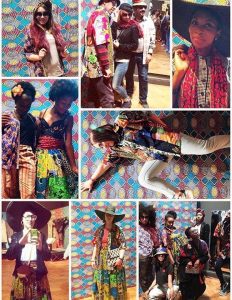
Collection of gallery selfies taken at Fashion Cities AfricaSince that applause and bubbly-soaked evening, so much brilliant stuff has happened; both for Fashion Cities Africa and for myself, the voice behind our social media activity for the exhibition. At the end of May, South African fashion legend and brain behind the Leopard Frock label, Marianne Fassler, jetted all the way from Johannesburg to see Fashion Cities Africa in the flesh and host a public discussion about her experiences in designing and mentoring.

In June we were joined in Brighton by stylist, fashion consultant and key member of Nairobi’s creative powerhouse The Nest Collective, Sunny Dolat, and designers Katungulu Mwendwa and Kepha Maina; who worked together to host a relaxed evening in our fairly new Museum Lab space, chatting about their experiences of Nairobi’s diverse fashion landscape over wine and nibbles.

2ManySiblings at Fashion Cities AfricaAlso representing Nairobi later on in June came Kenya’s best-known style blogging pair, 2manysiblings. The brother-sister duo, also known as Velma and Papa, hosted their very first UK Thrift Social at the museum: a well-attended party which saw a thrift sale, dancing, drinking, eating, clothes swapping, up-cycling, fabric printing and live music into the night. A few days later, the siblings then appeared once more at the museum to chat with Hannah Pool, Helen Mears and a public audience (one of whom was my little sister, who loved her first museum event!), about their forays in art, blogging, fashion and style.

Pride weekend was celebrated with a Friday night private view of Fashion Cities Africa and a screening of Stories of Our Lives, a controversial Nest Collective film characterising the queer experience in Kenya, a country where LGBTQ rights are still very few and far between.

A fairly quiet stretch for Fashion Cities Africa then ensued, with myself and my colleagues utilising this time to pack our bags and head off on a few lovely holidays (sigh – where has that summer gone?)

A solid month of festival-attending, ray-catching and cocktail-sipping down the line and here I am, realising it’s probably time to get my serious on and get back down to business again. This week I started at the University of Sussex, with three years of studying for a degree in English Language & Linguistics ahead of me. So far so good, as far as first impressions go, and I’m really looking forward to finding out what the next few years have in store (besides a student bus pass, discounted clothes and ridiculously cheap weekday nights out). Unfortunately this lifestyle change will mean I’m no longer spending as much time in the museum as I once did – though there’s still a long while yet until Fashion Cities Africa is over and I’ll be continuing to stick my nose in given any opportunity!

We were recently joined by ground-breaking Johannesburg creative collective The Sartists, who’ll be discussing their explorations into fashion and style in a post-apartheid South Africa. As a bit of a fan of theirs, I wassuper excited to meet them! The end of October will then boast the Africa Arts Festival, a weekend celebration of African fashion, film, food, music and literature in and around Brighton Museum. This weekend will offer up all sorts of fun and games, from a creative writing workshop to various Q&As and talks featuring Hannah Pool to screenings of short films such as The Importance of Being Elegant.

So, as the long, lazy summer days draw to a close and we prepare ourselves for months of dark mornings and cold hands, we can also look forward to a fresh chapter, filled with new opportunities and exciting plans.

Thank you as ever for reading, guys and gals. I hope your autumn gets off to a wonderful start and that we see some of your faces at our Fashion Cities Africa events over the next few months!

Ruby McGonigle (Front of House staff member at the Royal Pavilion & Museums)

Slow time photographs in Silver Portraits

Silver Portraits at Hove Museum

This is a legacy story from an earlier version of our website. It may contain some formatting issues and broken links.

Step back into early photography and discover images outside time in the exquisite exhibition Silver Portraits at Hove Museum.

It’s a unique look, and often has imperfections from the old lens and from tiny variations in the chemistry and technique. I think most people find imperfection much more interesting than perfection”. Sean Hawkey 2016

img_3030_photo_martina-bellotto

In the middle of the perfection and speed of the digital age it is fascinating to talk about the imperfection and slowness of old equipment and chemical reactions. It brings us back to the passage of time and shows us the potential and the charm of analogue photographic methods.

Sean Hawkey is a photojournalist who normally uses digital equipment but over the last three years he has experimented with a technique that uses silver in its process. The exhibition Silver Portraits at Hove Museum shows the fascinating results of his adventures into this technique.

The wetplate collodian method was invented in 1851 and already obsolete by the 1870s. This technique involves coating a metal, or glass, plate with silver nitrate, therby creating a light sensitive surface. The plate is exposed to light by the simple removal of the lens cap and the image of the subject is captured on the plate. There is no negative and the image is therefore reversed, as in a mirror.

In using this very special technique for his project Hawkey is producing photographs as a craft and is keeping himself distant from the use of the computer and any digital technology. There are no Photoshop effects or Instagram filters.

img_3017_photo_martina-bellotto

In 2014 Hawkey traveled to Peru to take photographs of the Sotrami silver and gold miners as part of the Fairtrade Foundation Campaign, I Do, which encourages couples to buy Fairtrade silver and gold wedding rings. He learned how to use collodion specifically for this project and trained in his home town, Brighton, through taking portraits of local people. He shoots contemporary images with a taste of the past. His portraits capture our imagination around the stories hidden behind the faces.

From the series “local faces” in Silver Portrait exhibition:

img_3032_photo_martina-bellotto

“[…] And because the chemicals are sensitive only to warm light and UV – not the light spectrum we see with our eyes – the picture is never the same as what we see. It is always slightly surprising. So, before you say there’s an app for it, these images really can’t be made with an app”. Sean Hawkey, 2016 

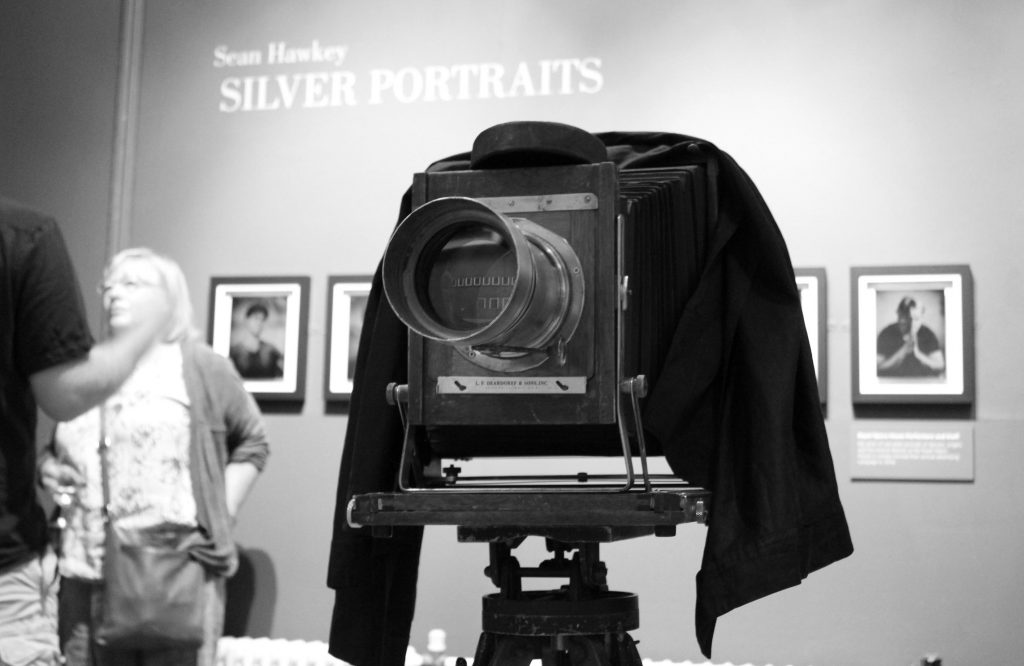
Hawkey uses a field view camera made of wooden bellows and the lens is one of the early British lenses from 1872, that presents some imperfections and aberrations. These defects make the final images unique as they give them a visual aesthetic that is not possible to reproduce with any sort of digital technology.

img_2976_photo_martina-bellotto

The use of old equipment is certainly an amazing way to obtain unique and captivating images. I can imagine the amazement of the Peruvian miners when they first saw Hawkey arriving with his heavy antique camera and lights. He also had to bring a mobile darkroom and laboratory as the wet plates have to be developed straight away before they dry. In Britain the development process has to be done within 10 minutes of taking the pictures but in the middle of the Andes Hawkey only had 90 seconds due to the temperature. A real challenge!

The silver used for the Peruvian portraits was the silver nitrate from Sotrami’s mines laboratory. Hawkey incorporated into his project not just the mine workers’ faces and stories, but also the product of their labors.

Each image in this series has a soul and deep eyes that seem to communicate the strength of these men who dig the earth for as little as one dollar a day, risking their lives in what is considered the world’s most dangerous industries. The miners prematurely-aged faces give us the sense of the quality of their lives. The exposure time of about 10-15 seconds heightens the intensity of their look.

“A ten second exposure records as much of a person as a ten second video. Although it’s a still, I think you can see that more is captured in the image. The results are typically soulful, intense, revealing portraits”. Sean Hawkey, 2016

The miners are not the only subjects in this series. One night in Peru some policemen knocked on Hawkey’s door – not for security issues as he believed, but to request a portraits of themselves!

From the series of portraits taken in Peru:

img_3033_photo_martina-bellotto

The latest work Hawkey has undertaken using the wet plate technique was a series of portraits of dancers, singers and musicians at the Royal Opera House in London. These portraits formed the RHO annual advertising campaign in 2016. The images evoke a deep exploration of the artists and show the soul and the passion for their creative work.

Images from the Royal Opera House series in Silver Portrait exhibition:

img_3175_photo_martina-bellotto

The three series of portraits “Local Faces”, “Peruvian Miners” and “Royal Opera House Performers and Staff” are exhibited in Hove Museum until the 15th of November 2016. Each one with its intensity, spirituality and drama.

Discover more about Sean Hawkey photographer in his website

Take a look at the Silver Portrait image gallery on our website

Silver portraits
Hove Museum, 8 September – 15 November 2016
Opening times:
Monday, Tuesday, Thursday, Friday and Saturday: 10am-5pm
Sunday: 2-5pm, Closed Wednesdays (except Bank Holidays)

Martina Bellotto, Hove Museum Assistant