Story Category: Legacy

International Women’s Day, The Things Women Do To Feel Beautiful

Two Chinese ‘lotus’ shoes (not a pair)

This is a legacy story from an earlier version of our website. It may contain some formatting issues and broken links.

International Women’s Day is a worldwide event which celebrates the achievements of women, while also calling out for gender equality.

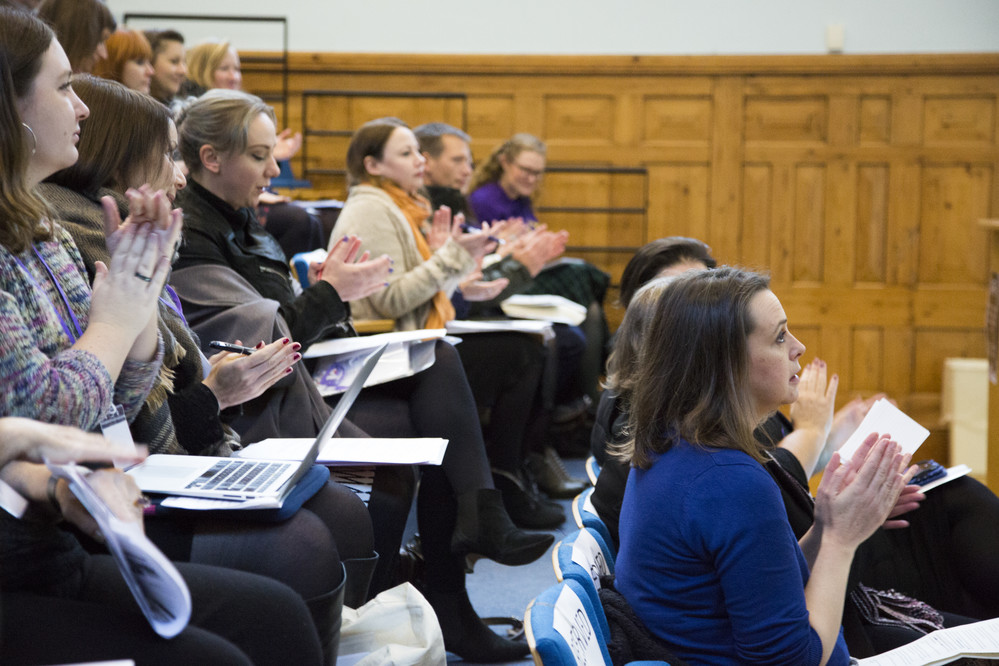
On Monday the 13th of February a group of young women collaborated with Brighton Museum to explore issues such as ‘the things women do to feel beautiful’ ahead of International Women’s Day and to look at the way women are represented in today’s society.

The group was a combination of different cultures, languages and backgrounds. Everyone had strong opinions on what they felt was right, or not, when it came to changing yourself to be beautiful. For the majority of the girls it was their first time meeting each other. We spent the morning learning each other’s names and finding out things we had in common. A couple of girls were thrilled when they found out they were both from the same part of the world, other girls were shocked about how similar their taste in music was despite having completely different lives.

We had the chance to look at some objects which the Museum brought out of storage. These included tiny shoes and a corset. When the young women were asked who they thought the shoes were designed for, they said children, or possible china dolls. It was a sensible assumption because of the size, but the shoes were actually designed for Chinese women who had bound their feet.

Two Chinese ‘lotus’ shoes (not a pair)

After learning what ‘foot binding’ involved, the girls look mortified. Everyone was shocked by the amount of pain and suffering those women went through just to be considered beautiful. It was a difficult subject to talk about, everyone was in agreement that it was wrong but it was also mentioned that, if the women wanted to bind their feet, then who were we to say that they couldn’t.

We discussed the reasons the women might have wanted to look that way; to seem more attractive to men, to show they were wealthy and didn’t need to work, or to be the same as the other girls who had ‘lotus feet’. Despite these reasons the group was in agreement that it wasn’t right.

In the same way some Chinese women bound their feet, Victorian women in England wore corsets to make their waists smaller. Despite the risks and the discomfort they caused, it was almost mandatory to wear one. It was believed to make women seem more sexually appealing to men, made them appear thinner and their busts larger.

In groups we made lists of all the things modern day women do to change their appearance. We only had several minutes but the lists seemed to be endless. Ranging from makeup to surgery, it seemed insane how many different things women would put themselves through just to feel what is considered, to many girls nowadays, as… normal. Looking at the lists we realised not much has changed since the times of corsets and foot binding, women haven’t stopped altering their appearance, the methods haven’t become painless or risk free, they have just become more widely available and are viewed as nothing out of the ordinary.

Just some of things women do to change their appearance

The girl’s discussions and thoughts were recorded throughout the day. As they wandered around the Fashion and Style gallery at Brighton museum they discussed which outfits were most beautiful or most comfortable, they talked about what was the most conformist and the most outgoing. All the discussions, thoughts and opinions from the activities were saved so they could be made into a ‘sound loop’ to be played on International Women Day.

We ended the day making music out of sounds. It was very strange, someone sticking a microphone in your face saying “make noise”. If we had started the day with this activity I don’t even think I would have be able to join in but after a whole day of getting to know each other and laughing and sharing thoughts, we all felt completely comfortable. It was the best part of the day in my eyes. Everyone went straight for it, everyone had fun and the piece of ‘music’ we made at the end was absolutely brilliant.

You can hear the soundscape in Fashion & Style Gallery at Brighton Museum as part of the International Women’s Day Celebrations on Saturday 4th March. Find out more about what is going on here.

Don’t worry if you miss it you can also visit it on the 5th, 11th and 12th of March.

Ellen Hall, Learning Museum Trainee

A Day in the Life of a Booth Volunteer

Tortoise shell and skull

This is a legacy story from an earlier version of our website. It may contain some formatting issues and broken links.

I have been volunteering at the Booth Museum since October 2016.

So far I have been cataloguing bird skins, which means cataloguing on to the database many of the birds that have been preserved and archived in the Museum. It has been a very helpful way of increasing my knowledge on birds and enabled me to see what some birds actually look like close up – birds being notoriously hard to get close to! It has also been interesting to see when the birds were collected and where. Many specimens have been preserved in pretty good condition since the end of the 1890s. Some birds were given as a gift to the museum from other parts of the world, namely Japan, Holland and Norway. You can see photos and find further information on these birds on the Museum website.

I have also tried my hand at photographing the birds and the training on object handling that we had really helped with manoeuvring the birds in to position.

But it’s not just the tasks you are given which is so interesting about working at the Booth it is the things that happen around you. On my first day volunteering just by chance someone returned a piece of meteor which they had borrowed from the museum. The meteor was found in Argentina sometime in the early 1500s – around the time of Henry VIII reign! What’s more it was really heavy. I don’t think I have ever thought about how much a meteor would weigh! But the fact that I was holding a piece of meteor found in the early 1500s to me was slightly mind blowing!

Last week I came to do my weekly volunteering session at the Booth museum and the writer in residence Mick Jackson (who had worked here the year before researching the Booth) showed us several books he had found which were handmade, written and illustrated by a Collectors wife in 1930. The books were works of art not only in their description of a bike ride through the Sussex Downs in 1930s rural Britain but also in their illustration, through hand painted drawings, of the wildlife she saw on her journey. A particular highlight being an inventory of the birds she saw every morning on waking and her absolute delight in encountering a moorhen that was nesting on the ground nearby. I was also fascinated by the menu she had included of what they ate and drank throughout their tour. Ryvita being a particular favourite snack (I didn’t realise Ryvita existed then!) It was an incredible example of someone’s personal and beautiful account of the natural world around them which has since become part of our natural history.

As I sit writing this I am sitting opposite a tortoise shell and skull of the tortoise head which is still all intact. Never having seen this before I look at the tortoise skull and observe the back bone goes from the base of the skull down to the shell where the vertebrae fuse to the shell almost immediately underneath the topside of the shell. As a child I had often wondered whether tortoises could separate from their shell I now know for certain they cannot! Something I may tell my son later on today.

My tasks next week are to work with the paper butterflies. I will be learning how to photograph, catalogue, preserve and display them. Every week I look forward to coming and when I arrive my supervisor, Grace, who is very knowledgeable and friendly, fills me in on the tasks for the day. Now I’m just going to take a look at the tarantula sitting behind me…!

Catherine, Booth Museum Volunteer

The World’s First Trackless Train comes to Brighton in 1926

This is a legacy story from an earlier version of our website. It may contain some formatting issues and broken links.

Preston Manor staff and Royal Pavilion & Museums conservation team and volunteers used the February half-term last week to give the rooms and furnishings a thorough overhaul.

As part of the general tidy up and deep clean a filing cabinet was opened to reveal a collection of photographs that were once the property of Mr Henry Roberts, the first curator of Preston Manor when it became a museum in 1933.

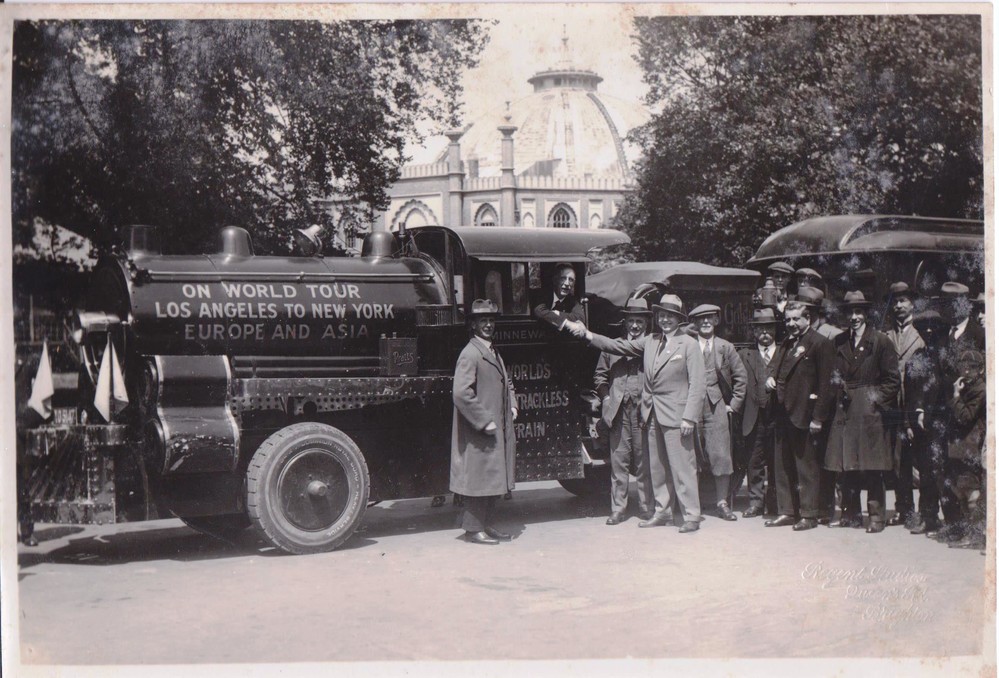
Photo showing several men gathered around a large trackless train. Brighton Dome visible in background.

World’s First Trackless Train in Brighton, 1926

One photograph in particular stood out. It shows 56 year old Henry Roberts sitting in the cab of the World’s First Trackless Train – the vehicle parked outside the Royal Pavilion showing the Brighton Dome in the background. Henry is shaking hands with an unknown man whose suit, jaunty hat and general demeanour suggest he might be one of the representatives from the Metro-Goldwyn-Meyer film company. MGM used the ‘train,’ which is actually an articulated rubbed-wheeled road vehicle faked as a train, to promote the film company.

Wherever it went the train caused a sensation and bought out huge crowds, and there was plenty to marvel at: an engine and single Pullman coach with six berths, kitchenette, diner and observation platform all lighted and heated by electricity.

The first ‘trackless train’ was manufactured by the Henry O McGee Manufacturing Company, Indianapolis in 1917 as a new venture in transport, a precursor perhaps of ideas one hundred years on about driverless vehicles.

McGee’s trackless train, as seen in this photograph, was leased by Metro-Goldwin Pictures in 1925 ahead of a three year world tour, travelling first to the US and Canada, and then in Europe, Australia, Mexico and Central and South America.

Moving images of the train visiting London and being admired by crowds and whizzing past a sedate tram can be seen in the British Pathe film archives.

[arve url=”https://www.youtube.com/embed/jepegBJDQvs” align=”center”/]

The train came to Brighton in the summer of 1926, possibly June, as it was in Guildford in Surrey on 18 June where it broke down outside the Guildhall.

Although clearly summer by the full foliage on the trees note the three piece suits, ties and stout overcoats worn by the men and the school cap and blazer worn by the boy on the right – and the highly-polished shoes and hats worn by all but one bystander.

In 1926 there was a through road between the newly built India Gate (1921) and the William IV Gate with traffic passing close to the building, and part of this road is visible in the photograph. Henry Roberts was, at this time, Director of the Royal Pavilion Estate and busy overseeing the restoration of the Pavilion following its use as a military hospital between 1914 and 1920. Perhaps he hoped the appearance of the famous vehicle would draw attention to the restoration needs of a building much bruised by war use.

The train returned to the US in April 1928 after its tour thrilling the world. However, the trackless train idea never took off and the train in this picture returned to Metro-Goldwyn-Meyer and was used as a travelling motion picture studio before being sold for scrap in the build up to the Second World War.

Paula Wrightson, Preston Manor Venue Officer

Taking down Fashion Cities Africa

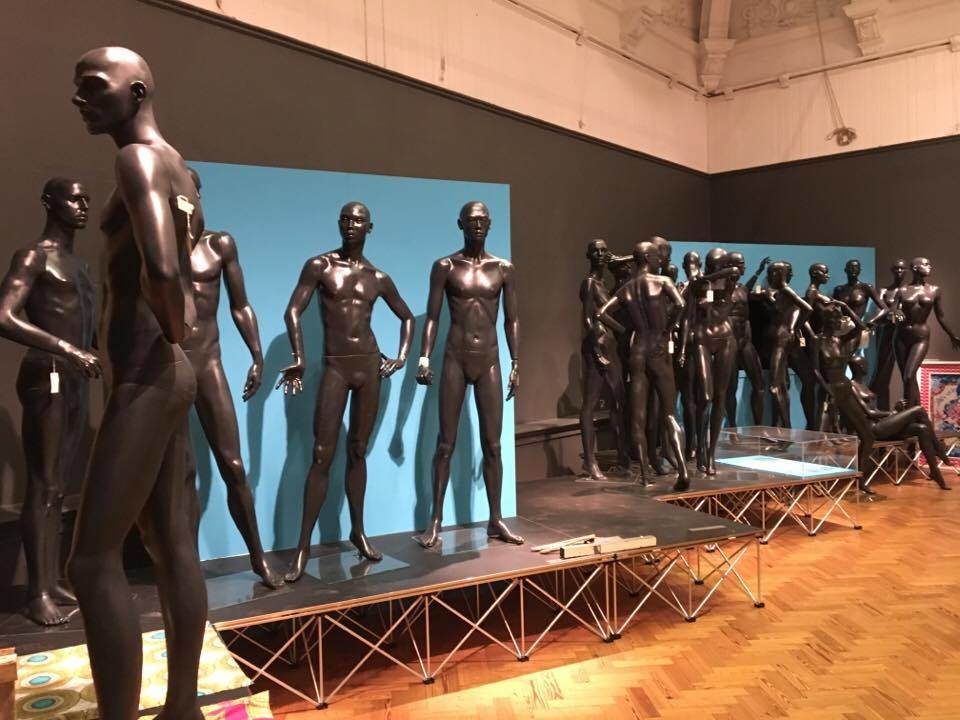
Naked mannequins in the gallery

This is a legacy story from an earlier version of our website. It may contain some formatting issues and broken links.

Since Fashion Cities Africa closed its doors for the final time on 8 January, it’s been a busy month. Deconstructing a major exhibition is no mean feat!

Photo of chalkboardThe take-down began with the mass ordering of all the kit required for the job; bubble wrap, textile boxes, wrapping tape, and so on. Then, with all equipment on-site and ready to use, the first job for Curator of Fashion & Textiles Martin Pel and Collections Assistant Stephen Kisko was to photograph all of the mannequins fully-dressed and in position, labelled with chalkboards. The ‘M’ on the chalkboards stands for ‘mannequin’ with the ensuing numbers corresponding to the physical order of the mannequin in the exhibition. Next, all garments were labelled and photographed in a similar fashion, this time using a slightly more complex numbering system. The ‘C’ on the board stands for ‘clothes’, with the first number corresponding to the mannequin number and the decimal point representing the particular accessory or item of clothing in the ‘order’ in which it appears on the mannequin’s body. And this is only the beginning!

Then of course came the Mannequin Challenge, the day when museum staff came together to fit in with the stars of Fashion Cities Africa by channelling their inner mannequin. This footage is in the process of being chopped up and polished as we speak and we hope to have the finished product with you very soon – keep your eyes peeled!

Photo of folded textilesMartin and Stephen’s next task was to carefully remove the clothes from the mannequins and write condition reports on each and every garment, noting any faults or wear. Luckily, the damage overall was extremely minimal and the majority of the pieces have perfectly withstood their nine months of air time. Along with the condition reports, Martin and Stephen have also written instructions on how best to dress and style the mannequins – this scarf is draped towards the front and not the back! This trilby should be worn slightly tilted! All of this literature will be passed on to Amsterdam’s Tropenmuseum, where the exhibition is moving next, to help them perfectly reconstruct the show for their visitors.

All non-creasing garments were then wrapped in tissue paper and folded up into textile boxes, whilst the pieces more likely to crease over time have been left hanging on a clothes rail for the time being. Any other clothes that are in need of dry cleaning or minor repair have been stored in plastic boxes.

Photo of mannequins in gallery

Now, we are left with a room full of slightly startling naked mannequins. These nude figures were photographed, again labelled with their existing chalkboards, so that the Tropenmuseum will know exactly which mannequins are meant for which outfits. Next, they were deconstructed, each into seven parts, with each body part carefully labelled with its mannequin and part number. The mannequin number comes first, whilst its part is listed as a decimal point – the head and torso is listed as .1, .2 is the legs, .3 is for the left arm, .4 for the right arm, and… You get the picture! Such time and care was taken in cataloguing the mannequins because we will be retrieving them from the Tropenmuseum once Fashion Cities Africa is over so that we can rent them out to other museums and public spaces in the future.

Photo of mannequin parts in bubble wrapThe mannequin parts were then wrapped in bubble wrap, with some parts stored in plastic boxes and others simply stacked up in the galleries. Admittedly, large piles of severed hands and limbless torsos are a fairly sinister sight! In the meantime, members of the Programming and Design teams such as Creative Programming Curator Jody East and 3D Designer Alex Hawkey have been deconstructing and whisking away the exhibition’s staging and set work.

So, whilst none of this sounds like a walk in the park, I was intrigued to find out whether there were any processes that were particularly challenging. ‘None of it’s been easy – it has been a bit of a logistical nightmare,’ Stephen admitted. By all accounts, devising and deciding on the most effective systems for cataloguing the mannequins was tough – in fact, working with the mannequins in general was way more challenging than working with the textiles. ‘A lot of stuff we’ve just had to deal with and plan for as we’ve gone,’ Stephen told me. ‘The goat skull headdress featured in To Catch a Dream needed to be packed really carefully so I had to hand-make some packaging for the inside of a box, complete with moulds for the horns and everything.’ So, if winging it isn’t your style then taking down an exhibition perhaps isn’t for you!

The Constable and Brighton exhibition opens in April but will only take up two thirds of the gallery space. The third gallery room will be used to store all Fashion Cities Africa paraphernalia until July, when it will then begin to be packed up and shipped to Amsterdam. There’s currently some talk of Brighton Museum staff potentially nipping over to Amsterdam with the kit to help the Tropenmuseum with putting the exhibition together – but that’s yet to be confirmed. The Tropenmuseum’s doors are due to open on Fashion Cities Africa in September 2017.

So, there you have it – a full account of what exactly has been going on behind the scenes here at Brighton Museum! We’ll be sure to keep you updated on the ongoing work and how Fashion Cities Africa is getting on in Holland.

Thanks for reading!

Ruby McGonigle, Retail and Bookings Office Assistant for the Royal Pavilion & Museums

Workforce Development conference from the eyes of those behind it all

Maria Foy giving her speech.

This is a legacy story from an earlier version of our website. It may contain some formatting issues and broken links.

So it is over, a month since the workforce development conference and it seems like a good time to reflect.

The conference team, Nick, Alice, Kate, Ellie, Helen and I had two days to make the final preparations including making the name badges, the delegate packs, designing the signage and ensuring everything was in place ready for the off. Typically for the end of November, there were germs going round with half of the conference team feeling the sniffles.

Eventually the big day came and despite all of our preparations there were unforeseen hiccups that we could not have prevented. A TV screen which we planned to use and had tested would not work, and we could not find an extension cord and worst of all one of our workshop speakers called to say he might not be able to make it in. But our weeks of planning and preparation had prepared us for this, so we were ready. The TV was turned off and on again, two extension cords were located just for good measure, and with the support from Nick and Kate the speaker was able to do his session.


Maria Foy giving her speech.


The conference was held in a rather cold Old Courtroom, part of the Royal Pavilion Estate just across the road. The Mayjor of Brighton & Hove opened the day, followed by Helen Graham, leader of the Workforce Development programme; Abigail Thomas, line manager of the staff involved; and Maria Foy, an ex-staff member who developed skills in the programme to set up her own company. We then heard from some external speakers including London Museum Development on innovative training approaches to cross-departmental working; Norwich Teaching Museum, Extend (engage) on Co-production: Nothing About Us Without Us; and the Museums Association on the Transformers programme.

After a lunch break the first of two workshop sessions started. I was quite disappointed that I was not able to watch some of these sessions because I had my own workshop to run on the Pavilion Tales programme. The session included a short tour round the building, including some of the areas the tales have focused on, a talk from Maria Foy who set up the programme and me on taking over since Maria left. I have given talks to the public before, but there is something more nerve wracking when the talk is to peers. Despite starting off nervously I managed to get into the swing of it even answering all of the questions with only a little difficulty.

One of our workshop signs.


After my own workshop Nick and I swapped places between steward and presenter for the session he was presenting with Ted on their work with the conservation department. When it had been uncertain if Ted would be able to make the session through other commitments, Nick had organised for Gaye the conservation manager to present with him. The session turned into a medley of Nick’s experience of working with the conservation team; Gaye’s management perspective of how it has helped the under staffed department; and Ted’s wealth of knowledge on the history of the copperware that they have been working on.

Photo of John Orna-Ornstein of Arts Council England

John Orna-Ornstein of Arts Council England

Back in the Old Courtroom for the last part of the day it had warmed up from the introduction of heaters which we had borrowed from other parts of the estate. John Orna-Ornstein, Director of Museums at Arts Council England, closed the day discussing the importance of programmes like Workforce Development and how he had been helping develop a museum course for local college students that same day. During his talk he remembered my presentation I gave at the Transform People to Transform Museums conference in Colchester a few months before on the ways in which Workforce Development helped me to gain skills I needed to be able to secure the job I was not ready for earlier this year. I was rather humbled and embarrassed that he remembered such a story but it also made me remember how far I have come in such a short year.

Alice and Nick closed the day by summing up their experiences of the Workforce Development programme and the day. Neither of them had experience of public speaking and it took a lot of guts for them to get up and talk. Although I was rather jealous, it used to be that presenting at a conference was a rare thing — now it feels like everyone has done it!!!

Alice and Nick presenting to close the conference.

As part of their talk Alice and Nick reminded people of the drinks reception and Fashion Cities Africa gallery talk given by Curator Helen Mears and we all headed over to Brighton Museum. The gallery talk gave the rest of us enough time to run around putting out popcorn and filling glasses. Although there were more staff than delegates at the reception it was a great way of thanking the staff who had worked so hard on the day and before, for preparing their presentations, and a lovely way of carrying on the conversations.

We were locally trending on Twitter

Overall the day was a major success despite the cold temperatures. We even managed to be locally trending on Twitter for a bit. If you had asked me that morning if I would run another conference, I would have said NO, not ever. Ask me now and I say bring it on!

Holly Parsons, Visitor Services Officer


Ch-ch-ch-changes: the South Gate of the Royal Pavilion through the ages

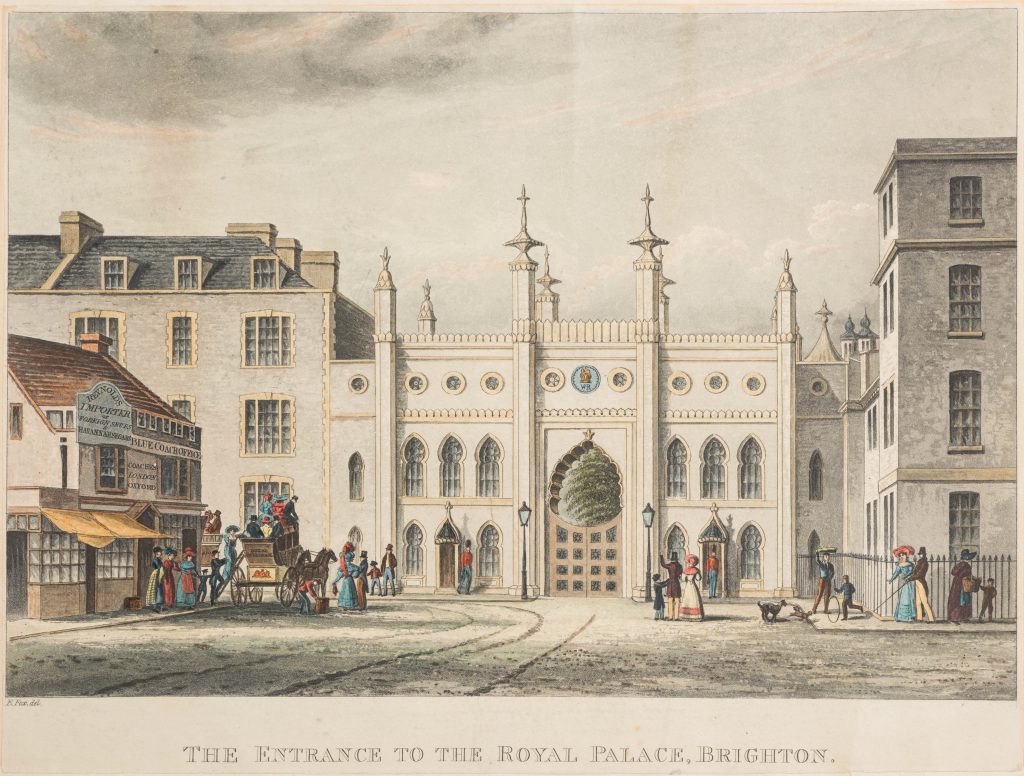
Print showing south entrance to Royal Pavilion Estate

This is a legacy story from an earlier version of our website. It may contain some formatting issues and broken links.

The gateway at the southern entrance to the Royal Pavilion estate has gone through many transformations. The existing India Gate dates from 1921 and was designed by Thomas Tyrwhitt in a simple Gujarati style. It was erected as a gift from the people of India to the people of Brighton to commemorate the Indian soldiers wounded during the First World War who were tended in the military hospital established on the Royal Pavilion estate. But what did the south gate look like before 1921?

Surprisingly, we know very little about the design of the south gate in the late 18th and early 19th centuries. In architect John Nash’s ground plan from 1826 it is called a ‘lodge’ and depicted as two small square brick structures:

The much more substantial gate house in this print from c1835 (a lithograph by T Cooper after a drawing by Edward Fox) was built in 1831 at a cost of £3437 10s.

After Edward Fox: The Entrance to the Royal Palace, Brighton, c1835. Lithograph by T Cooper for ‘Views in Brighton’

It was designed by the architect and surveyor Joseph Henry Good, who also created the North Gate, which survives. Among Good’s architectural plans in our collection there are at least twenty that show various proposed designs for the South Gate. He drew it from different angles and perspectives, outlining each storey, indicating how rooms in the lodge could be used, and provided suggestions for external ornamental detail.

Architectural plan of the South Gate by J.H. Good, 1831.

The version that was built had two stories containing a number of staff rooms and bedchambers for staff and possibly guests, and a third attic-like storey without fenestration. It was linked via narrows halls and stairwells to a large steward’s room and laundry areas to the east and a servants’ dormitory block to the west, resulting in a much more enclosed look than the earlier gate, but creating valuable work and living space.

Architectural plan of the South Gate by J.H. Good, 1830.

In the Cooper lithograph we can see royal guards in and next to their sentinels to the left and right of the gated carriage entrance. Fashionably dressed figures and the Blue Coach office advertising a coach service between Brighton and London add to the impression of a busy and thriving town. However, in the first complete descriptive account of the Royal Pavilion by E. W. Brayley (1838) the author criticises the look of the new entrance: ‘The South Lodge, which has more resemblance to a gate-house prison than to any object of architectural beauty, is utterly unworthy of description.’

The South Gate to the Royal Pavilion. Coloured postcard dating from c.1904.

After the purchase of the Royal Pavilion from the crown by the town commissioners in 1850 the South Lodge was demolished, the bricks sold for their material value, and replaced with a much more open and lower structure, comprising two arches resembling the main porte cochère of the Pavilion, on a much smaller scale. This first municipal South Gate can be seen in many late Victorian and Edwardian postcards and was eventually replaced by the India Gate.

Volunteer 3D modeller Colin Jones has been re-creating the different appearances of the South Gate in 3D-images. Here are some examples:

3D image by Colin Jones of the later 19th century municipal gate.

3D image by Colin Jones: Aerial view of the south end of the Royal Pavilion estate in c.1832

3D image by Colin Jones: View of the South Gate, c.1835, with water and clock tower visible to the right.

The Cooper lithograph, the Good plans and many other lesser known and unusual images of the Royal Pavilion Estate will be shown in a new display titled Visions of the Royal Pavilion Estate at the Prints & Drawings Gallery in Brighton Museum, 14 March 2017 to 3 Sept 2017. Over the next few months I will focus on more highlights from the display in the free local magazine Viva Brighton.

Alexandra Loske, Curator, Royal Pavilion Archives

More information

Martha Gunn: collection records

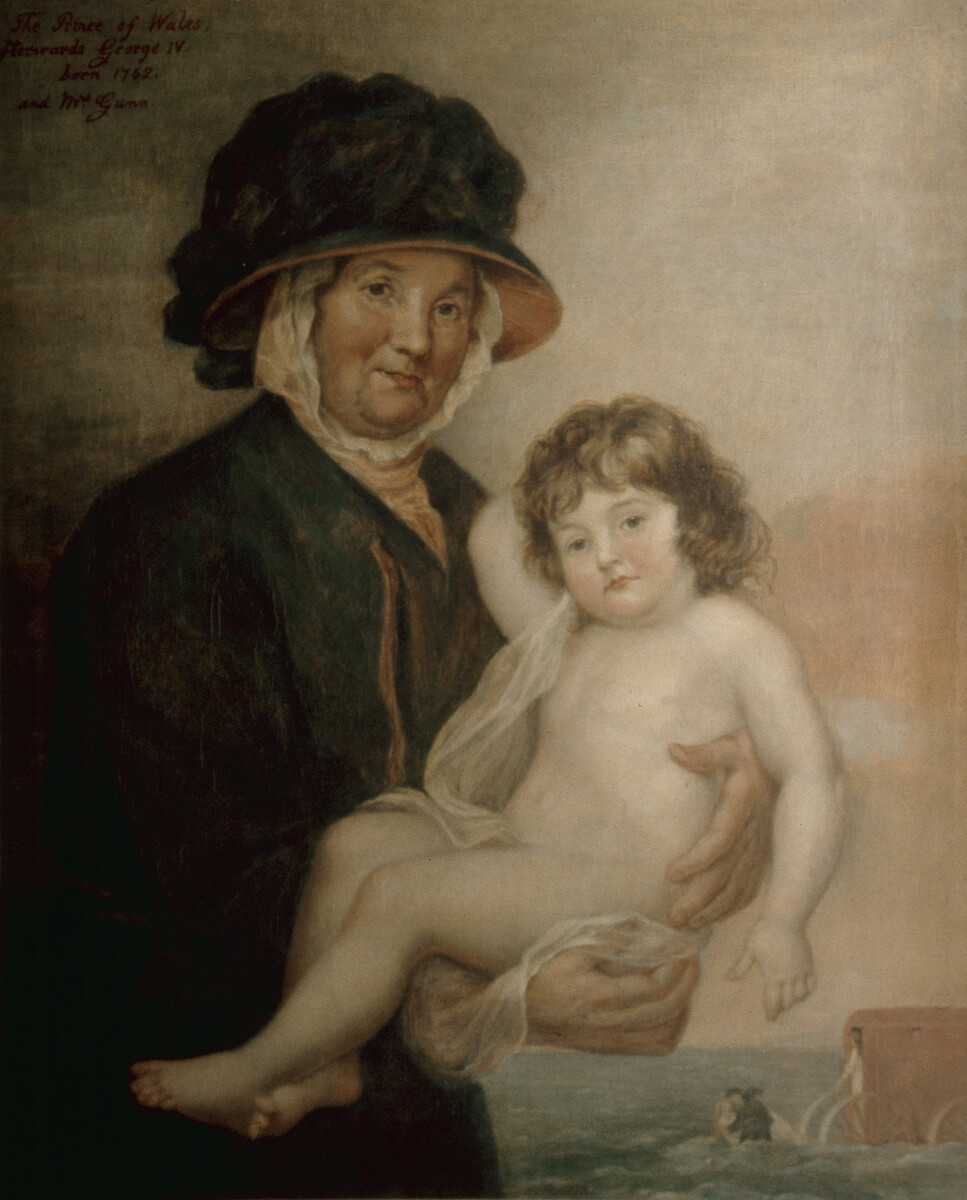
Portrait of Martha Gunn holding a baby George IV

This is a legacy story from an earlier version of our website. It may contain some formatting issues and broken links.

Collections related to Martha Gunn.

The images and text in this collection are all available for free re-use by schools.

[collectionsbase_lite partner =”BTNRP” images = “true” query = “Martha Gunn”]

The Victorians: collection records

This is a legacy story from an earlier version of our website. It may contain some formatting issues and broken links.

Collections related to The Victorians.

ha922888_d01The images and text in these records are all available for free re-use.

[collectionsbase_lite partner =”BTNRP” images = “true” query = “The Victorians”]

Ancient Egypt: collection records

This is a legacy story from an earlier version of our website. It may contain some formatting issues and broken links.

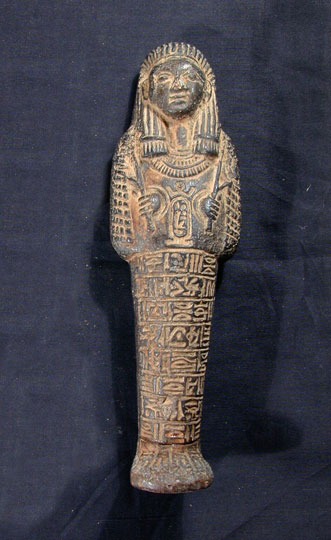
Illustrated records of items in our Ancient Egypt collections.
[collectionsbase_lite partner =”BTNRP” images = “true” query = “Ancient Egypt”]

New Year, New Dimension: the Royal Pavilion Estate in VR

This is a legacy story from an earlier version of our website. It may contain some formatting issues and broken links.

It’s always good to kick off a New Year with something new, so I’m delighted to introduce the Royal Pavilion & Museums first venture into virtual reality (VR).

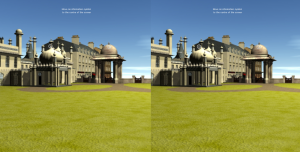
Screen grab of VR version of Royal Pavilon Estate model

VR version of Royal Pavilon Estate model — when viewed without a VR viewer

Volunteer 3D modeller Colin Jones has produced a model of the Royal Pavilion Estate that allows you to explore some of the buildings from a central point in the Pavilion Garden. All you need to access it is a smartphone and a Google Cardboard style VR viewer.

To use the model, simply go to http://brightonmuseums.org.uk/VRPavilion on your phone browser, then pop the phone into your viewer. You will now be able to use the viewer to explore the estate with a turn of your head.

Colin has also produced another version of the model which can be used without a VR viewer: http://brightonmuseums.org.uk/3DPavilion This version features an audio commentary by curator Alexandra Loske and should be accessible on any computer, tablet or smartphone with an internet browser.

The model can be sampled below, but is best viewed in full screen.

Going 3D

This is likely to be one of several uses of 3D digital technology we will be experimenting with this year. Colin is working on further models of the Royal Pavilion Estate at different stages in its history, and we plan to showcase some of these in our forthcoming Visions of the Royal Pavilion Estate exhibition in Brighton Museum.

We have also been exploring 3D digitisation with the University of Brighton’s Cultural Informatics Group. Some of these digitised models are available online, and we are currenlty working with them to publish 3D images of coins and other items in our numismatics collections online.

You can also find some other examples of digital 3D technology on our website, produced in partnership with digital agency MOHARA. These include Murder in the Manor, a recreation of Preston Manor as a murder mystery game; Tales of the Pavilion Hospital, a fictional exploration of the building’s use as a WW1 military hospital; and our virtual tours of the Royal Pavilion.

Why 3D?

You may wonder why we are investing so much time in exploring 3D. Although there is quite a buzz around VR at the moment, there are deeper reasons behind using this technology.

First, the move to 3D is a logical extension of the digitisation work we have been carrying out for several years. Like many museums, we have been digitising our collections since the early 2000s, but it’s always been a fundamentally unequal process. The word ‘digitisation’ is generally taken to mean the conversion of a physical object into an electronic copy; in practice most museum digitisation is a case of taking a photograph or scan of an object and presenting the image with its related catalogue data online. In the case of a 2D work like a painting or a photograph, that image can act as a reproducible copy of the original. In the case of a 3D object, like a pot or a handaxe, the digitised work is at best a series of partial views of the original object.

In short, this feels like a copy:

Photo of The Raising of Lazarus, Jan Lievens 1631

The Raising of Lazarus, Jan Lievens 1631

And this feels like an illustration:

Photo of Pot with lid, 18th-19th entury.

Pot with lid, 18th-19th century


From this perspective, the ability to digitally reproduce objects as 3D models is a solution to that problem. It also opens up the possibility of creating physical replicas through 3D printing.

The complication is that even in its simplest form, digitisation is a labour-intensive and time-consuiming process. Producing 3D models, whether by scanning or photogrammetry, takes far more work.Rendering those models online is also much more complex than dropping an image file into a database. It’s an important area of exploration — and one where the University of Brighton’s Cultural Informatics Group are leading the way — but the days of mass 3D digitisation are probably still some way off.

3D Storytelling

A second reason for exploring 3D is that it opens up new opportunities for storytelling. The combination of rich narratives and a navigable space can create compelling and immersive experiences. Our Murder in the Manor website is a great example of that: although it receives a modest number of users, it still receives by far the longest dwell time from its users of any microsite or digital experience we’ve created.

But this capacity for 3D storytelling goes beyond simply creating a sense of immersion. 3D technology allows a user to explore an object or a space from a variety of viewpoints; that variety of viewpoints can allow for a variety of talking points.

As an example, take this view of the Royal Pavilion Estate from another of Colin Jones’ models:

3D model showing Northgate House on the Royal Pavilion Estate, c1832.

This shows the northern edge of the estate in the early 1830s, shortly after the death of George IV. Although the model is based on contemporary sources, such as maps and topographic prints, it presents a view that does not exist in any record of the estate from that time.

When I first saw this image I was struck by how well it illustrated one particular story about the Pavilion Estate. Late in life, George constructed a tunnel beneath the garden, connecting the Royal Pavilion to the Dome, his stable complex. One of his motivations for creating this expensive tunnel was that he was fond of his horses, and wanted to visit them without having to cross open ground. At a time when he was deeply unpopular with his subjects and grossly overweight, he apparently feared the reaction of people who might spot him in the garden.

It’s hard to tell this story in the Pavilion itself, or even the garden, which now has the later William IV gate providing a more secluded view. But this model shows just how exposed the northen side of the estate was at this time. Indeed, it’s not hard to imagine crowds of people peering or jeering over the low wall.

With thanks…. and over to you

Of course, my thoughts about 3D are fairly irrelevant if there’s no wider interest in this. One of my ambitions in launching these models is to try and learn what people think of them.

This is something we explored with our Three Ways to 3D History event in last year’s Brighton Digital Festival. The reactions then were positive, perhaps surprisingly so, but there are a whole host of questions to be answered. Does VR provide an engaging way of exploring spaces? Do 3D models really provide a platform for richer storytelling? What potential is there for 3D to be used as a teaching tool? Is it fun? I’d love to hear of any reactions or observations in the comment box below.

Finally, my sincere thanks must go to Colin Jones for his work in producing these models, all of which has been on a voluntary basis. This is an area of work we simply would not have the resources to pursue if it was not for his generosity and dedication. Digital innovation is often expensive and risky, so partnerships with committed volunteers like Colin and organisations like the University of Brighton provide vital support as we look for new ways in which we can tell stories about our collections and buildings.

Kevin Bacon, Digital Manager