Story Category: Legacy

See Portraits Be Portraits

This is a legacy story from an earlier version of our website. It may contain some formatting issues and broken links.

This lovely photo shows pupils from St Luke’s primary school in Brighton who enjoyed a fun session at the See Portraits Be Portraits show at Brighton Museum & Art Gallery.

Courtesy Simon Dack

The show features a range of portraits from our collections which were chosen with the help of teachers from local schools.

In this blog post for Understanding British Portraits Senior Learning Officer Su Hepburn describes the process and how they have made the space a fun place for children to hang out.

See Portraits, Be Portraits, Brighton Museum, 9 October – 28 July 2019

The National Gallery Masterpiece Tour 2018, Hans Holbein the Younger, A Lady with a Squirrel and a Starling, Brighton Museum, 13 October 2018 – 6 January 2019


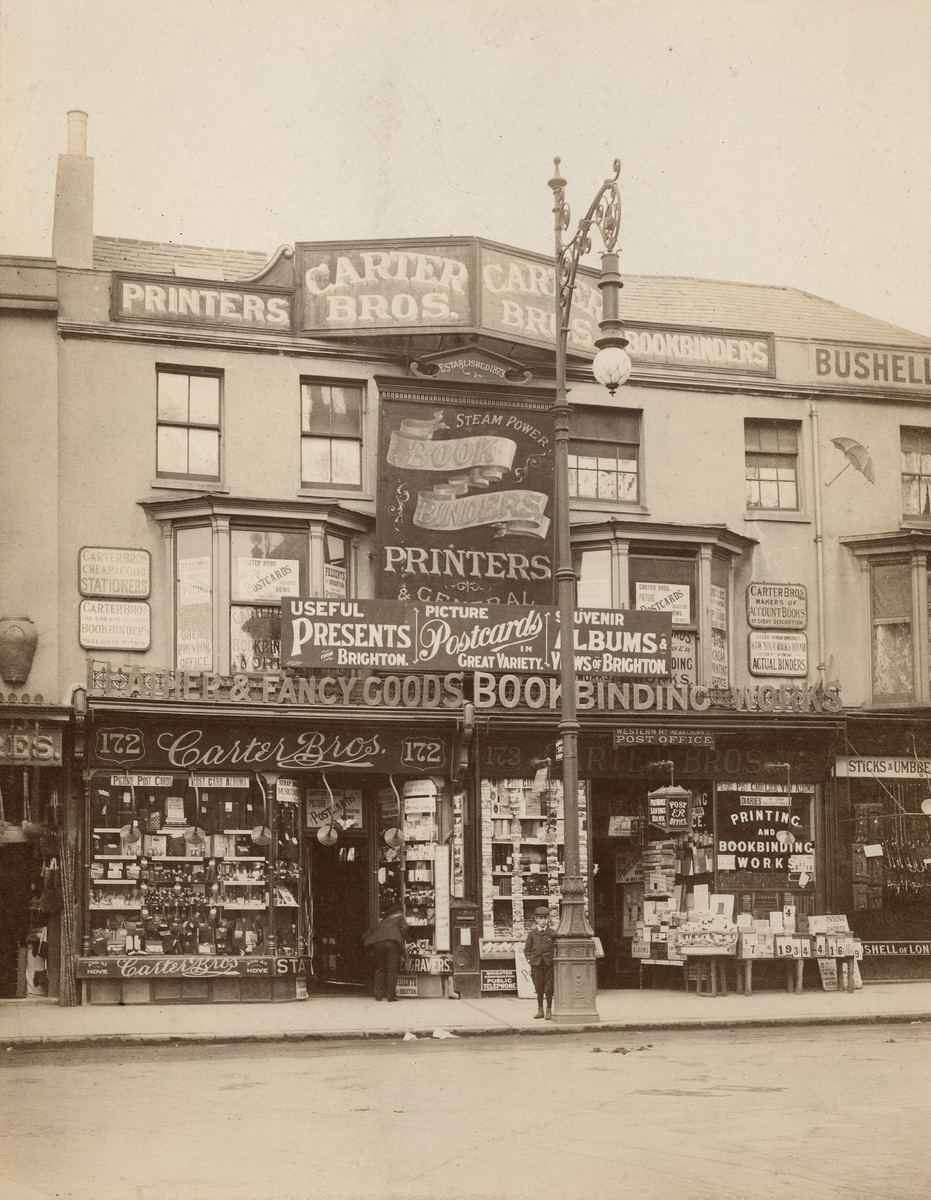
Carter Bros, Western Road, c1910

This is a legacy story from an earlier version of our website. It may contain some formatting issues and broken links.

Image of the Month: November 2018

As shoppers hit the high streets and online for Black Friday, here’s a reminder of when a trip to the shops might include a visit to a Fancy Goods and Bookbinding store.

Carter Bros, Western Road, c1910

This image can be downloaded for free from our Digital Media Bank.

Behind the Scenes with Father Christmas at Preston Manor

This is a legacy story from an earlier version of our website. It may contain some formatting issues and broken links.

When you get to springtime and the Christmas tree and baubles are long packed away and your only thoughts are for the summer ahead, set a moment aside to think of the Father Christmas event organiser.

In late April I am to be found poring over grotto gift catalogues ordering Christmassy gifts for the 200 children per day that visit Father Christmas at Preston Manor over six days in December. Placing an early May order is essential for the arrival of over a thousand ready-wrapped gifts in mid-November.

I’ve been running a Father Christmas event for Royal Pavilion & Museums every year since 2008. The event started at the Royal Pavilion that year transferring to Preston Manor from 2014. Making Christmas in a historic house a magical experience is a varied, complex and demanding job. I quite literally dream about Christmas throughout the whole year. It goes without saying the event wouldn’t happen without the unseen heroes working front-of-house or back-office dealing with bookings and enquiries.

What are the essentials of a perfect event? You need a fabulous Father Christmas and Elf combo (tick) you need an enchanting room to act as a grotto (we’ve got those!) and you want some simple yet engaging seasonal activities for small children, so a themed trail or dressing-up goes down well. Add a fabulous museum to the mix and you have yourself a winner.

Children do not visit Father Christmas individually. If they did we’d be here until Easter so great is the demand. The event works as ‘An Audience with Father Christmas’ with groups of up to twelve families entering the grotto aka Lady Ellen’s gracious Drawing Room decorated for the season. Children sit on a cosy carpet at the great man’s feet and are spoken to individually in turn when presented with their gift. Honed over the years this system works well especially for the shyer child for whom the experience can be overwhelming.

Christmas is a stressful time for adults, so our job at Preston Manor is to provide escapist peace and harmony. My vision for Preston Manor is ‘step into that nostalgic glittery Christmas-card picture you have in your head but never quite find in the real world’.

At Preston Manor you really can leave the 21st century behind and wallow unashamedly in the glorious yuletide fantasy Mr Charles Dickens created.

Many children come to the event with a letter for Father Christmas and these make wonderful reading, and each year I archive a selection; if Preston Manor exists in 100 years’ time these lists of toys of the moment will read as quaint relics of a past-age.

“I have been good this year” is a recurrent statement, as is “I have brushed my teeth”. This line occurs so many times I wonder if Father Christmas spends the rest of his year working in dentistry.


Paula Wrightson, Venue Officer, Preston Manor

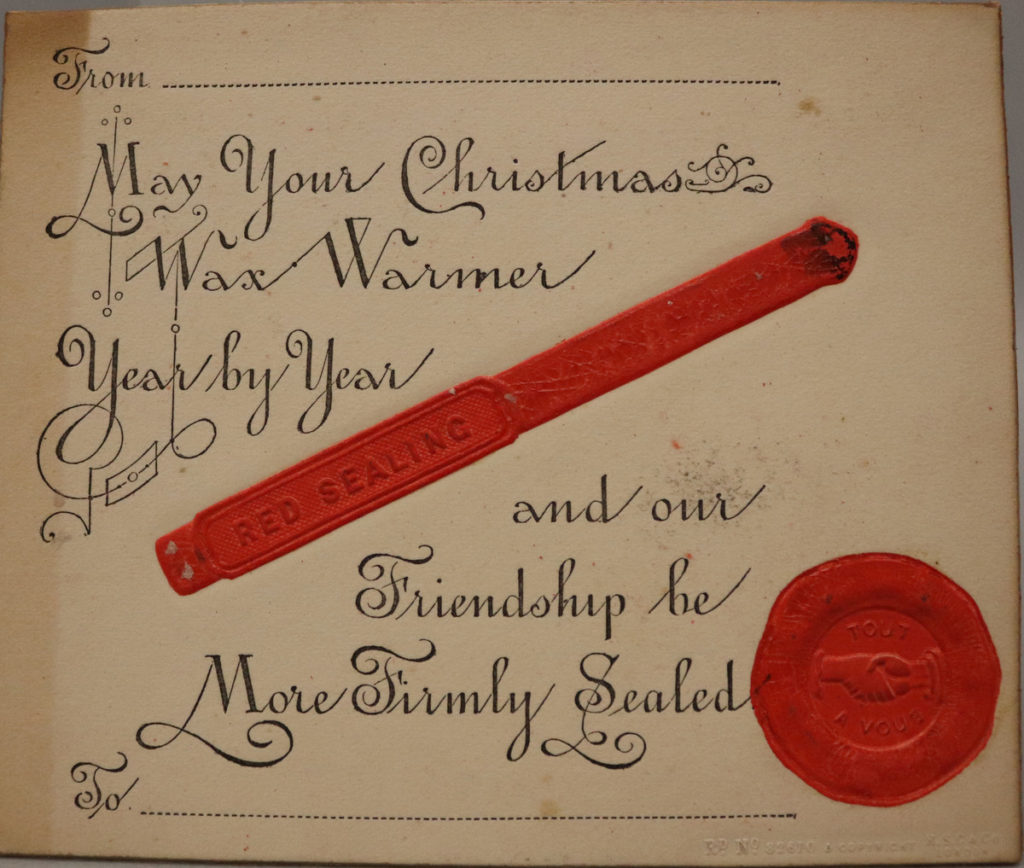
Working with Victorian Christmas Cards

A Victorian Christmas card

This is a legacy story from an earlier version of our website. It may contain some formatting issues and broken links.

A new display opens on 17 November 2018 at the Royal Pavilion showcasing Victorian Christmas cards. In this post, Marcus Bagshaw talks about his work behind the scenes and the thrill of being given access to the Royal Pavilion & Museums’ extraordinary collections.

Victorian Christmas Card is a quirky display showcasing illustrations that are far from the traditional festive scenes we are familiar with today.

As someone who is interested in social history and the development of Christmas as a family celebration over the last 170 years, it has been really exciting for me to work on this new display as part of my time on our Arts Council England funded Workforce Development programme. It has enabled me to not only utilise existing knowledge, but it has also been a wonderful opportunity develop new skills as well!

It has also proved to be a tremendous learning curve. Not only do I now have a better understanding of the development of the Christmas card, I have now seen ‘behind the scenes’ of a new area of work, which has given me a real appreciation of all the different elements and people required in putting together displays and exhibitions.

The Workforce Development programme has given me the opportunity to work in areas of the Royal Pavilion & Museums that have always interested me but ordinarily would not have been part of my job description. It has been really rewarding to be able to diversify from my usual role as a Visitor Services Officer.

Following six weeks of activity involving research, cataloguing, digitisation and selecting and mounting objects, it was really satisfying to finally install the Victorian Christmas Card display. Doubly exciting, if a little nerve wracking, was installing the display while broadcasting to Facebook Live!

I have selected a further 25 cards to form an online advent calendar during December 2018 which will appear on Royal Pavilion & Museums’ Twitter. This too is pretty exciting as it enables me to share some of my other favourite cards that didn’t quite make it into the display. There has certainly been plenty to choose from: the collection numbers around 250 in total. Whittling this down to the nine on display and those in the advent calendar has been quite a challenge. So many are ornate, intriguing or simply bizarre!

Other examples of our strange, early Christmas cards from Victorian era can be viewed on our Digital Media Bank.

Marcus Bagshaw, Visitor Services Officer

Who is the man in the mirror? A mysterious photo from Preston Manor

This is a legacy story from an earlier version of our website. It may contain some formatting issues and broken links.

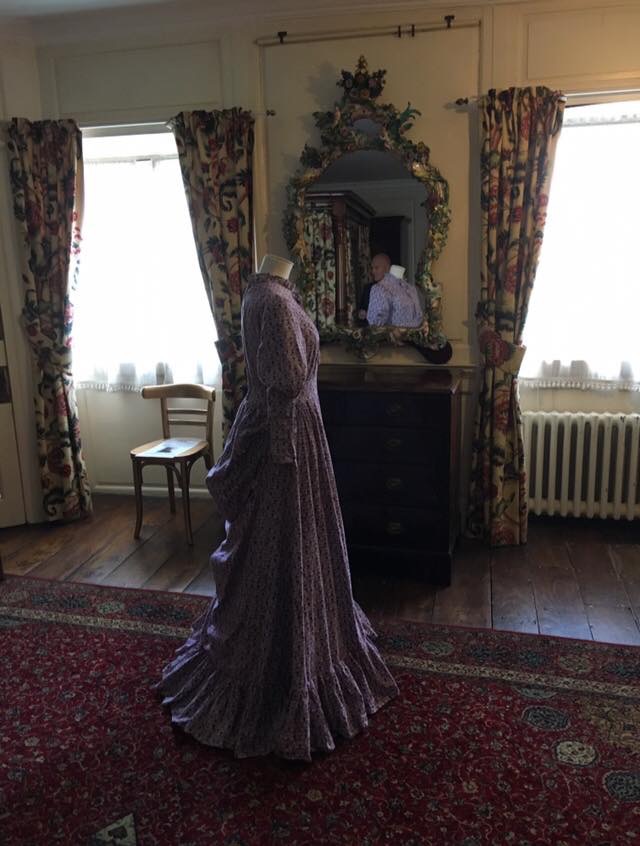
Have you ever been startled by an unexpected reflection in a mirror? One of our volunteers at Preston Manor recently took a photograph that captured an unexpected guest.

If you look carefully at the image you may see the face of a man reflected in a mirror. Given Preston Manor’s reputation as a haunted house, some have speculated that this could be the image of a ghost.

A more obvious explanation is that this is a visitor to the manor captured by accident. But the volunteer had carefully checked that no one else was in the room when taking the photograph, and it has proven surprisingly difficult to replicate the photograph in subsequent attempts.

What do you think? This is certainly not the first time a mysterious figure has appeared on a photograph in Preston Manor. Back in 2010 a visitor captured the apparent image of a young boy in a photo he shared with us.

The manor may be closed to most visitors during the winter season, but perhaps we have more guests than we realise…

Nicola Adams, Digital Marketing Officer

You might also enjoy…

if you are looking for more spooky images and tales for Halloween, check out the following links on our website.

The Music Room of the Royal Pavilion as a Hospital for Indian Soldiers

This is a legacy story from an earlier version of our website. It may contain some formatting issues and broken links.

Image of the Month: October 2018

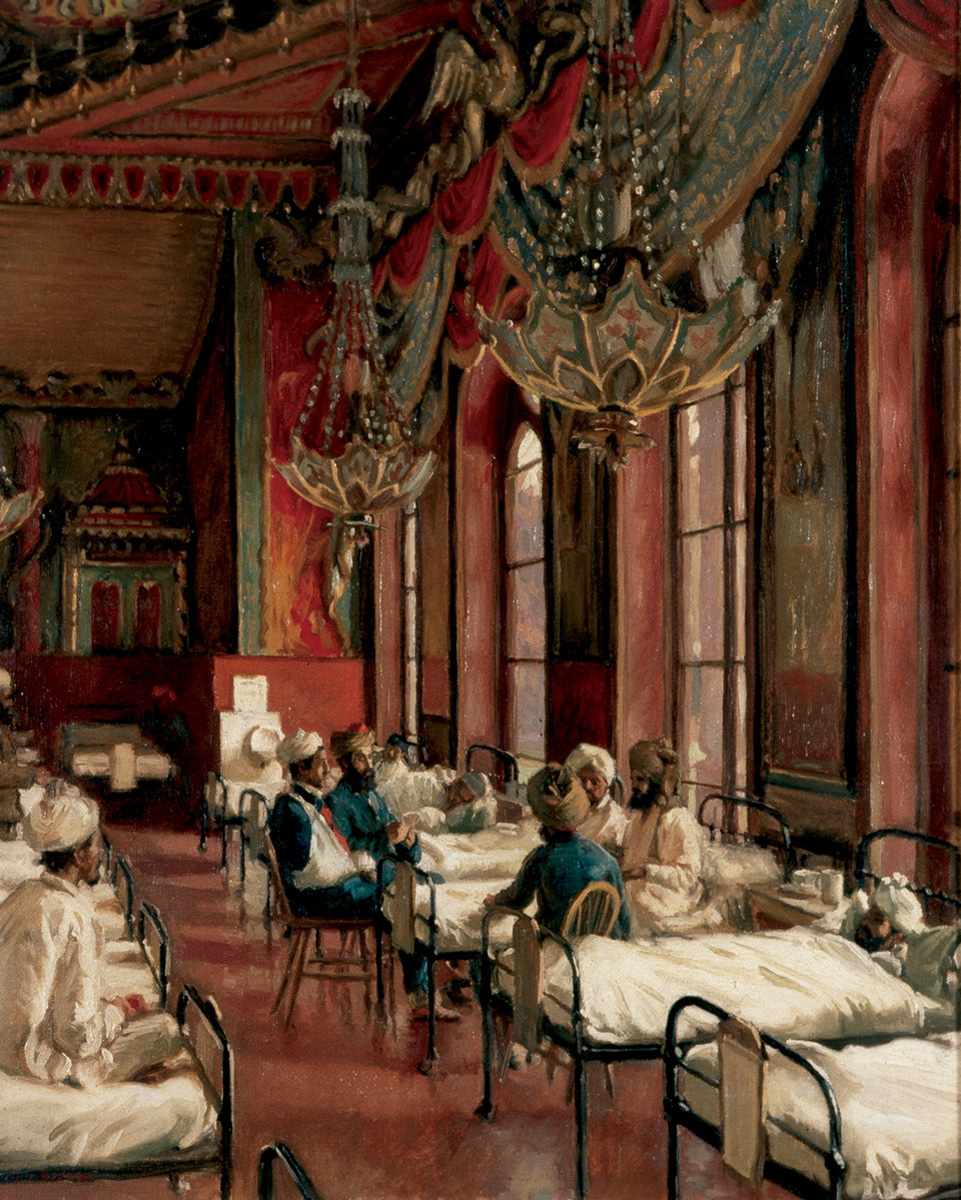
Oil painting showing rows of beds with Indian patients wearing hospital blues and turbans.

The Music Room of The Royal Pavilion as a Hospital for Indian Soldiers


As we head towards the centenary of the armistice that ended the First World War, the story of the Royal Pavilion’s use as an Indian hospital is receiving fresh attention. This unique story has led to the Pavilion’s inclusion as a partner site for the Royal British Legion’s 2018 Poppy Appeal launch.

While the hospital was frequently photographed at the time, these images are all monochrome. This is whythree oil paintings by Charles Henry Harrison Burleigh provide such a striking record. This painting of the Music Room captures many details absent from the photographic record, from the variety of turbans worn by the patients to the gleam of the red linoleum floor.

Although the Pavilion would have been a gloomy and shabbier building than the restored palace visitors enjoy today, it would still have been an unusual spectacle of colour for a military hospital.

Burleigh painted two other paintings of the Royal Pavilion hospital. One painting of the central Dome ward can be seen alongside the Music Room painting in the Indian military hospital gallery in the Royal Pavilion. The other, a view of the Banqueting Room, is held by the Imperial War Museum.

You can download a hi-res version of this image from our Digital Media Bank.

Kevin Bacon, Digital Manager


A famous propeller and an introduction to the whirl of museums

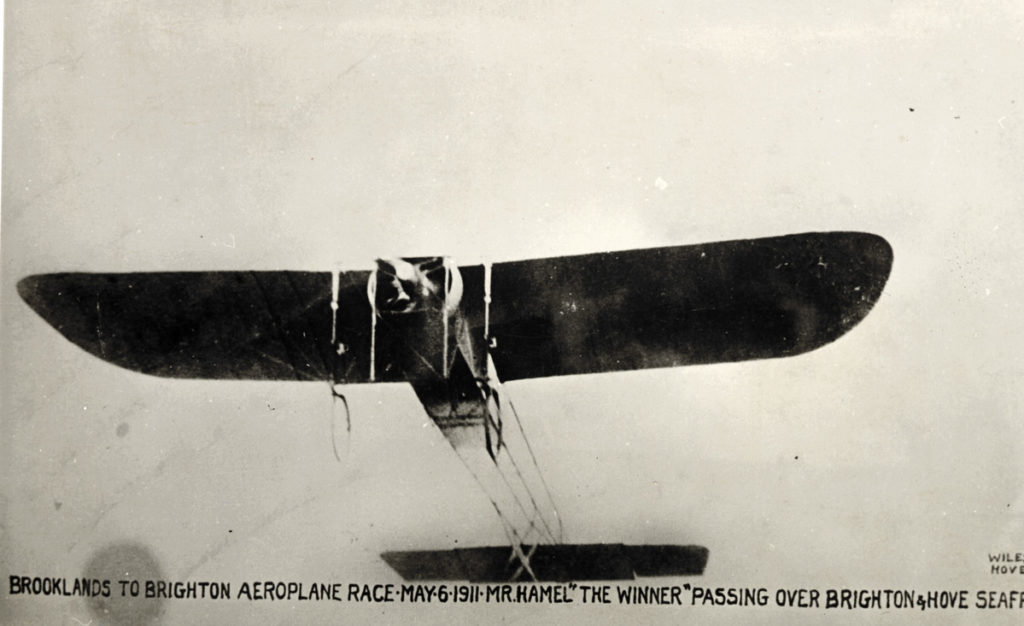
Plane competing in Brooklands to Brighton Aeroplane Race, 1911

This is a legacy story from an earlier version of our website. It may contain some formatting issues and broken links.

On 25 July 1909, Louis Blériot made the first flight across the English Channel in his heavier-than-air aircraft the Blériot XI. The event caused a major reappraisal of the importance of aviation, especially in Britain. When reporting on the story, the Daily Express led with the sensational headline ‘Britain is no longer an Island’.

Plane competing in Brooklands to Brighton Aeroplane Race, 1911

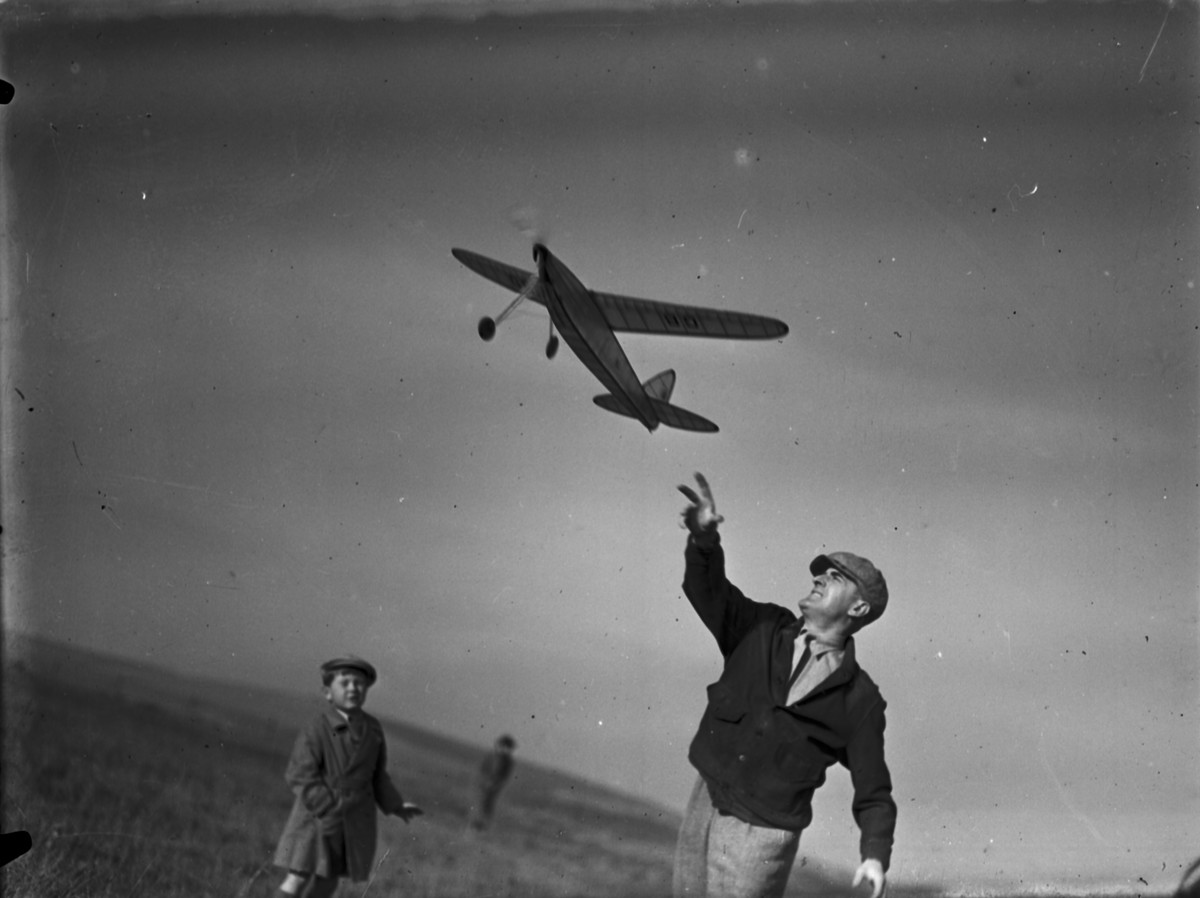
Brighton, together with Hove and Shoreham, became a notable centre for early aviation in Britain. On 4 July 1911, Horatio Barber flew a box of Osram light bulbs to Hove, landing on Hove Lawns. This was the world’s first recorded cargo flight, and not a single light bulb was broken.

The first London to Brighton flight was undertaken by Oscar Morison in his Blériot XI monoplane, flying from Brooklands Aerodrome near Weybridge on 15 February 1911. He mistakenly landed on the beach near the Banjo Groyne and smashed his aircraft’s propeller at either end on the shingle. Though broken, the propeller would quickly find a new home.

Oscar Morrison’s propeller

Menu card autographed by Morison

Menu card autographed by Morison

Harry Preston, a local businessman and keen supporter of aviation, sailing and motor sport in the town, hosted a banquet at his Royal York Hotel to celebrate Oscar Morison’s feat. A brochure in our collections details the celebratory dinner held in Mr Morrison’s honour. It appears Harry Preston requested to have the broken propeller as a souvenir – being an entrepreneurial sort, perhaps he spotted an opportunity to entice people into his hotel.

The propeller eventually became a memento of the Brighton branch of the Royal Air Force Association. They kindly donated the item to Royal Pavilion & Museums in 2008. Its repurposing for display on a wall can be seen by the brackets at the back.

Museum Futures

Earlier this month we took the propeller out of storage to show to a group of young people who had come to Brighton Museum to learn more about the digital work that goes on behind the scenes here. The event was a Taster Day held as part of a recrutiment programme for a new trainee funded through the Museum Futures programme, supported by the British Museum and the Heritage Lottery Fund.

We used the propeller for a simple ice breaker exercise. We presented the propeller as simply a ‘brown thing’ and invited the participants to think of two questions they would ask the curator to learn more about the object.

This might seem like a strangely analogue way of introducing digital work in museums, but this task touches on the importance of data. The data we use to catalogue our collections is the first step in making them meaningful. Whether an object eventually becomes rendered in 3D, or the topic of a longread story, that work is usually built on the foundations of good data.

Our Museum Future trainee should be in post by January next year, and one of their first tasks will be to help us collect and manage that data, so that objects like Oscar Morison’s broken propeller can be made meaningful to more people in the future.

We are still working through the recruitment process but we look forward to welcoming our new trainee to our museums next year.

Dan Robertson, Curator of Local History & Archaeology & Kevin Bacon, Digital Manager

Museum Mentors inspired by Holbein masterpiece

Starling with squirrel by Terry Pellett

This is a legacy story from an earlier version of our website. It may contain some formatting issues and broken links.

Museum Mentors is a collaborative and inclusive group of artists. Marginalised artists can greatly benefit through support and mentoring. Access to the museums’ collections provides the group with rich opportunities for inspiration and creativity.

The 27 artists share a collective sense of creative passion bringing their own unique style, energy and ideas to the group. Each artist is inspired to express and represent visually, with the ultimate aim of connecting with an audience.

Hans Holbein the Younger A Lady with a Squirrel and a Starling (Anne Lovell?), about 1526-8 Oil on oak 56 x 38.8 cm © The National Gallery, London. Bought with contributions from the National Heritage Memorial Fund and The Art Fund and Mr J. Paul Getty Jnr (through the American Friends of the National Gallery, London), 1992

Hans Holbein the Younger A Lady with a Squirrel and a Starling (Anne Lovell?),
about 1526-8
© The National Gallery, London. Bought with contributions from the National Heritage Memorial Fund and The Art Fund and Mr J. Paul Getty Jnr (through the American Friends of the National Gallery, London), 1992

For this project the Museum Mentors artists looked at historical portraiture and undertook detailed research into Holbein the Younger’s masterpiece to produce individual miniature artworks which can now be seen on display in the temporary exhibition gallery. They worked in the museum art room with RPM staff Debbie Bennett and Sally Welchman.

Over nine months, the group worked together with museum staff to form an understanding of portraiture. They were particularly interested in the symbolism that Holbein the Younger used in his work. They researched the clues that hint at the identity of the sitter in A Lady with a Squirrel and a Starling (Anne Lovell?).

Starling with squirrel by Terry Pellett

The starling is thought to symbolise the former estate of East Harling Hall in Norfolk, which was bequeathed to the Lovell family in the early part of the 15th Century. The squirrel was a heraldic emblem of the Lovell family, and can be seen on a stained glass window in East Harling church. Members of the group found the history and artefacts of this church particularly inspiring.

Artist Mike Wheelan said; “Holbein’s paintings appear to have a psychological depth that would have been very uncommon for the age he lived in. Although very detailed in terms of realism, they have a very light, lively quality. More importantly, beyond anything else – Holbein was extremely nifty with a paint brush.”

Artist David Hayler said; “This is my very first miniature, I would have never had these ideas by myself, amazing.”

Museum Mentors is funded by the Arts Council, England. This project has been additionally funded by the National Gallery and Christie’s as part of the National Gallery Masterpiece Tour 2018.

Behind the scenes of a royal visit

Press waiting for royal couple in Music Room

This is a legacy story from an earlier version of our website. It may contain some formatting issues and broken links.

On 3 October, the Duke and Duchess of Sussex came to visit the Royal Pavilion. As one of the most famous newly-wed couples in the world, images of Harry and Meghan at the Pavilion were shared internationally.

Southern News & Pictures (SNAP)

But what work goes on behind the scenes to make such a high profile visit run smoothly? Our Media & Press Officer, Caroline Sutton, tells all.

Photo of Royal Pavilion shrouded in early morning darkness

Royal Pavilion at 6am

It’s 6am and the Royal Pavilion looks beautiful bathed in lights against the dark sky. It’s not the usual time I start work as the Press & Media Officer for the Royal Pavilion & Museums but today is a Very Special Day.

In case anyone actually missed it, the new Duke and Duchess of Sussex, otherwise known as Prince Harry and his new wife Meghan, came to visit their new dukedom last month.

Photo of TV presenter speaking to camera

Carol Kirkwood at the Pavilion

Despite the hour the Royal Pavilion and the garden are bustling with activity. BBC Breakfast’s Carol Kirkwood looks as fresh as a daisy as she presents the weather from the East Lawns. Outside my office the streets are being swept, scrubbed and cleaned by council staff.

As the sun rises, I take one of my many trips that day through the garden to liaise with the press, RPM and council staff. I can’t nip through the stunning Royal Pavilion as usual – it’s on total lockdown in preparation for the Royal visitors.

Woman and man speaking with man holding the dog by a lead

Sniffer dog in the Royal Pavilion grounds

I stop to chat with the police sniffer dog team. The dogs are also excited about the day, barking to get going and have a good sniff around the grounds. Gardener Robert is primping the garden which looks glorious in the sunshine.

Later that morning I attend my second security briefing. The safety of the Royal couple and the crowds coming to see them were paramount and everything had been planned in fine detail by the Sussex Police and our in-house teams.

Back in the office, the crowds start to form outside the office window. Street furniture is removed, fencing put up and the temperature is rising. It’s going to be a sunny day. Phew!

Behind the scenes, senior council staff, Royal Pavilion management and the police have regular briefings on security, traffic and crowd control as the Royal couple travel closer. Everyone is in a great mood but there is a lot of activity going on behind the scenes and some people getting quite frazzled. I’m gasping for a cuppa but not got time to stop.

While the Royal couple are setting off for their first stop in Chichester, I’m with BBC South East as they interview the Keeper of the Royal Pavilion David Beevers.

Then it’s back to the office to take more calls, help organise some posters for the press ‘pen’ which will hold the many journalists who will report on the visit. A welcome cup of tea while discussing the wrapping of the beautiful silk scarf inspired by the Saloon carpet, we’ll be presenting to Meghan and a catch-up with the team who are watching the proceedings from our office which has a fantastic view.

Finally lipstick and heels go and it’s time to take position inside the Royal Pavilion. As press officer, my role is to escort a select number of press and media following the Royal couple on their visit.

Waiting nervously in the Royal Pavilion are the members of staff who are meeting Meghan and Harry including the director of the RPM Janita Bagshawe, Royal Pavilion site lead Abigail Thomas, the Keeper of the Royal Pavilion David Beevers and curator Alexandra Loske. With us are the Lord Lieutenant of East Sussex, Peter Field, the Mayor Cllr Dee Simson and the High Sheriff Major General J D Moore-Bick CBE DL, wearing a fetching pair of velvet britches, who all seem much more relaxed.

As we peep out the windows of the Pavilion looking at the crowds a huge roar goes up and we know they’ve arrived. Duty manager Graham swings open the door for them and they sweep in to be greeted by the welcoming party.

Photo with cameramen gathered on right waiting arrival of royal couple

Press waiting for royal couple in Music Room

The press are ushered through the Pavilion rushing along carrying heavy equipment so I’m keeping an eye on them and making sure they don’t knock over any priceless items in the state rooms. Harry and Meghan walk along with Janita and the Lord Lieutenant looking interested, calm and engaged despite all the shuffling, clicking and whirring going on just feet away by the press and photographers.

Southern News & Pictures (SNAP)

They both stare in amazement at the amazing dragon chandelier in the Banqueting Room and their faces light up when they reach the newly renovated Saloon with its vibrant colours. They meet Alexandra, Abigail and David who tell them about the history of each room.

Southern News & Pictures (SNAP)

Group of people gathred in front of the entrance to the Royal Pavilion

Relieved staff after the visit

All too quickly the party are heading out the door. Staff member Sarah quickly hands Janita the Saloon scarf which she presents to Meghan who said it was beautiful. Meghan looks over at me and my colleague Jemma and says thank you to us and we both give her huge grins back. They are whisked out of the door and everyone in the room breathes a huge sigh of relief and starts chattering about who said what to whom.

The press immediately ask for interviews with everyone the Royal couple spoke to and without delay I set up some interviews with our staff. The media requests carry on through the afternoon with the local news channels all finishing the evening live broadcasts from the Royal Pavilion Gardens. They’ve changed teams but I’m still here, so I head off home to put my aching feet up. My evening viewing is spent watching the many news reports showing the lovely Harry and Meghan when they visited our palace.

Caroline Sutton, Media & Press Officer

Image Gallery


Looking Back Through Time

The first bulldog exhibition in the world!

This is a legacy story from an earlier version of our website. It may contain some formatting issues and broken links.

A post from Collectibulldogs blogger Eiffion Ashdown, new volunteer at Brighton Museum & Art Gallery.

Hi readers of the Royal Pavilion & Museum [RPM]’s amazing blog section. I’m Eiffion or Ave to most and I’ve blogged before so this is my second for RPM.

First, a little bit about me. I am a local resident and founder/ creator of Collectibulldogs.

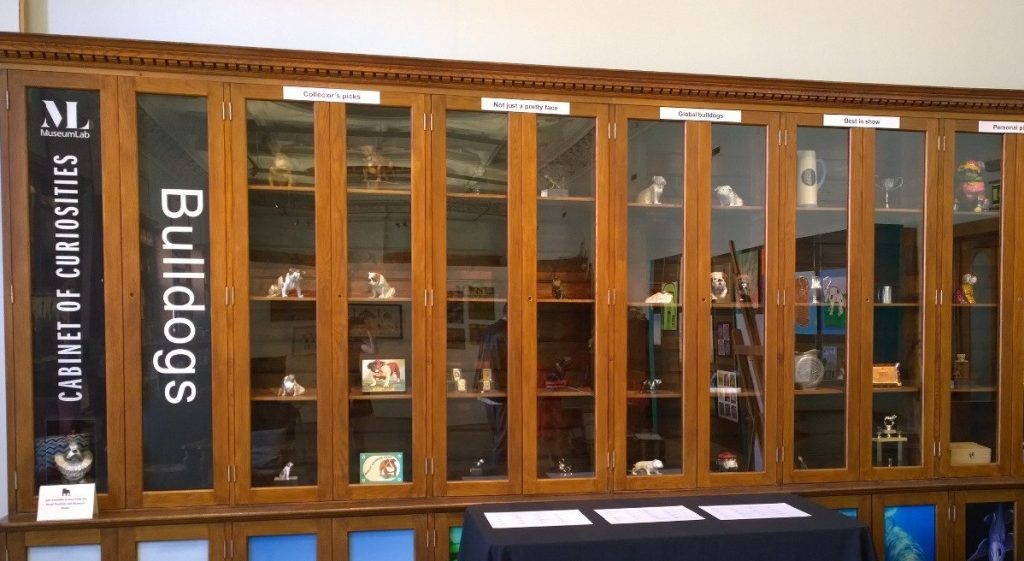
Starting in 2009 the collection has grown since and it is now one of the world’s best curated bulldog collections with pieces chosen from all forms of material and age related to this breed. My collection stayed a well-kept secret in Brighton until some of it became part of an exhibition by a local group Museum Mentors at Brighton Museum. My collection stayed up from May till October 2017 making it the first bulldog exhibition in the world.

The first bulldog exhibition in the world!

The first bulldog exhibition in the world!

This blog is all about my brand new volunteer placement at Brighton Museum graciously given to me by RPM.

I’ll start with my manners and thank all those that turn those cogs and have put trust in myself and self worth as well as my own skill set. I hope that my first decade in collecting will be able to be useful as I move forward assisting the curators in all they do.

My first day

Ok so it’s not every day that I go out, let alone get a haircut, buy new shoes and coat and try and look as dapper as possible without over stating myself. The fact I got this role empowered me to have the self-confidence to do all that and with a spring in my step. I believe in first impressions but could of worn any clothing. I wasn’t instructed to and the only stipulation was to be aware of belt buckles, zips and watches and the damage they could cause by scratching objects.

I arrived early at Brighton Museum and first went to the security area to sign in. I made my way up to the Museum Lab to meet “Lucy the pupil’s master” (a joke for my Collections mentor).

We started straight away on the Dos and Don’ts mainly around holding objects, what gloves to wear and, as always, finding out the important areas, such as where the tea is – please note, only jesting. I have had my induction about the really vital things to know such as fire safety.

After the chat, the introductions and a look at the museum’s huge collections database, Mimsy, it was time to get to work.

My first task involves re-packing and cataloguing a collection of spectacles. The Local History and Archaeology collection has over 80 examples, dating from the early 20th century.

An example of the spectacles

An example of the spectacles

They have different styles and materials and quite a few are broken. Many were given to the museum by one donor who worked for the British and Overseas Optical Missions, an organisation that would take unwanted spectacles and refurbish them for people who could not afford new glasses, in countries such as Nigeria and Ghana.

The spectacles, like all objects in the museum collections, each have their own register or accession number.

My responsibility at the moment is to replace the old paper numbers, that have been glued on the spectacles, with new little cotton and card tags.

Nowadays, where ways to conserve have changed for the better, some old systems need to change where they can. For example, there’s an ostrich-egg stand in the Museum Lab cabinets where collectibulldogs.com held the bulldog exhibition. This object has its accession markings done (and in red) where it cannot easily be removed without maybe having to damage the piece. So it’s important to get these changes underway ASAP on the objects in the museum that can and warrant this, so I’m looking at old spectacles taking the number, adding a tag and placing in a bag for protection.

They say if you love what you do it’s not work and I realised this for the first time in my life on the first day of my volunteering. As I like to play with words, I used time in the title. This is because it went so fast even my disorder (for a better understanding please follow this link https://www.ocduk.org/) kicked in thinking it was a first timer’s practical joke or I wasn’t really wanted at the museum. Obviously the opposite had happened and I loved what I was doing so much, the time had just scooted past me and before I knew it I was back in the security area signing out. BUT this time with a massive grin from ear to ear. I had not let anything ruin my first day back at work and it went as one would say “according to plan”.

Spectacles packaging before and after

Spectacles packaging before and after

Fingers crossed for me please

Knowing I’ve just started I’d be a fibber if I didn’t say I’m worried already about my first review. I feel my two month start will be all the learning I’ll get from this role. I’m wishing with all my might that the review is just to see if I like what I’m doing and carry on. I believe my time, effort and skill set has its own merit and hope that I can stay eventually, becoming a known face around the grounds.

I’d also like those fingers crossed for any upcoming opportunities regarding my own collection of bulldogs. I won’t bark on about it but wouldn’t it be great if collectibulldogs could arrange it so that a pop-up museum could be installed in one of RPM’s museums and this has been talked about, so another dream could eventually become reality.

Pop in and say hi

The Museum Lab is the old reference library and History Centre (upstairs in Brighton Museum) and I’m often there Friday afternoons for now, so come and say hello but please check Museum Lab opening days and times.

Museum Lab

Museum Lab

One could hope for more hours eventually so hopefully if that happens I can get to meet even more of you guys and gals and you can come see (no pun intended about the spectacles) what I’m doing with the work I’m on and even meet Lucy too, one of Sussex’s best Collections Assistants (they all are but I work with Lucy).

I will be advertising independent of the RPM brand yet the publicity is for them and to hopefully help get more visitors to come and see not just the collections but a standing icon of the south (the Royal Pavilion). You can find other blogs on the museum on my own website and the content will of course be different.

Thank you and lastly

Thank you all for reading my first day back at work. Sorting through old spectacles and re-registering them maybe mundane but I absolutely loved my fleeting work time and cannot wait for next week to come around so I can discuss more working time with my actual life mentor. Maybe I could swap my art group hours at Museum Mentors, I would give someone else on the waiting list my placement whilst still having my mentor there to oversee and trouble shoot.

A few words from Debbie the Project Co-ordinator
Museum Mentors project now in its 7th year is funded by the Arts Council. Group work sessions offer safe supported therapeutic activity, engaging up to 30 adults who live with disabilities. Our aim is to facilitate access to the amazing array of; objects, collections, stories and opportunities. To promote good health & wellbeing. Minimising where possible the stress and isolation often experienced by the vulnerable adults we work with. A great outcome is all the wonderful art that our members produce.

A busy Museum Mentors afternoon

A busy Museum Mentors afternoon

As this gets proof read before submitting by a member of the digital team who is also our fire warden (see I’m learning lol) I’m hoping, if I ask nicely enough, that they may guest blog for our website Collectibulldogs, just 300 words. A kind of review would be magic but let’s see as bureaucracy can be a pain. Before I go I’d like to reach out to any local bloggers please. My website is a domain authority of 45 and a page ranking of 48 which is amazing for such a young site and I’ve put lots of work into it. For anyone who wants to come guest, it’s totally free – and you get a great dog and antiquing loving audience.

Ps: you can find us on twitter at @collectibulldog now with 152 thousand followers.

All the best for now Brighton and beyond and be on the lookout for an upcoming article on the fine arts of the Thursday and Friday Museum Mentors groups, which run at the museum every week.

Until next time stay safe Eiffion