Story Category: Legacy

The Lambretta Scooter, Mods and Rockers in Brighton Museum

This is a legacy story from an earlier version of our website. It may contain some formatting issues and broken links.

In the first of a series of guest posts by History of Art & Design students at the University of Brighton, Amy Matthews discusses the iconic Lambretta scooter and the story of the mods and rockers who fought in 1960s’ Brighton.

Tucked in the corner of Brighton Museum and Art Gallery’s Images of Brighton gallery is an original model of a red Lambretta Li 150. This scooter tells a story of Mod culture in the 1960s and the infamous ‘Battle of Brighton’ that took place there in 1964.

Photo of Lambretta scooter in gallery with photo of fighting Mods and Rockers behindThe scooter has a red and white body, attached are many wing mirrors. It has various stickers on the front and a headlight and visor with a small GB flag printed on to it. Displayed behind the scooter are two enlarged black-and-white photographs. One shows a group photograph of Rockers standing together and the other depicts a mass of Mods on Brighton beach.

The Mods and Rockers were two rival youth culture groups in the 1960s. Mods dressed sharply, they rode scooters such as this one and they cared about their appearance. Their name derived from Modern Jazz, a new musical genre. Rockers, who also cared about their appearance, wore leather jackets, liked 1950s Rock and Roll and rode motorbikes rather than scooters.[1]  Not only did the two groups’ vehicle of choice differ, but also their tastes in fashion and music.

The so-called Battle of Brighton was a violent clash between Mods and Rockers. The events inspired the 1979 cult classic film Quadrophenia, filmed in Brighton. The film follows an angst-ridden London youth, Jimmy Cooper, who escapes the drudgery of his job as a postal worker by becoming a member of the Mods, riding his scooter to Brighton and taking part in the fighting that occurred.[2]

The Battle occurred on 17 and 18 May 1964, a Bank Holiday weekend in the Whitsun holiday. Saturday was relatively peaceful, with only a few scuffles, but Sunday saw fierce fighting as the town was ‘invaded’ by an estimated 3000 youths.[3]  Brighton police were prepared for trouble as there had been clashes at other seaside towns such as Clacton and Hastings during Easter.

In Brighton, fighting centred on the beach and the seafront near the Palace Pier (now known as Brighton Pier). Violent scuffles took place between the police and the rioting groups, windows and deckchairs were smashed and some 26 youths were apprehended and sentenced to juvenile prison. Nothing on this scale was ever repeated, and although the media massively exaggerated the goings-on, Mods and Rockers will always be remembered for their violent clashes on Brighton beach that year.

The scooter not only reminds us of the Mods and Rockers, but of Brighton itself. Large numbers of scooters and motorbikes still flock to Brighton, lining the seafront on weekends and bank holidays.[4]  It is certain that ‘bike culture’ is part of Brighton’s cultural identity; therefore the Lambretta scooter in Brighton Museum is important, as it not only tells a story about a legendary event in the 1960s, but it also illustrates the story of Brighton as a ‘Mod town’ to this day.

Amy Matthews, student on BA (Hons) History of Art & Design, University of Brighton

References

Carder, Timothy. The Encyclopaedia of Brighton. East Sussex, 1990. Print.

Mark Le Saux, Richard. “Mods and Rockers,” Images of Brighton Gallery, Brighton Museum and Art Gallery.

Quadrophenia. Dir. Franc Roddam. The Who Films, Universal Pictures, 1979. DVD.

[1] Richard Mark Le Saux, “Mods and Rockers,” Images of Brighton Gallery. Brighton Museum and Art Gallery.

[2] Quadrophenia, dir. Franc Roddam (The Who Films, Universal Pictures, 1979).

[3] Timothy Carder, The Encyclopaedia of Brighton (East Sussex, 1990) 104.

[4] Carder, The Encyclopaedia of Brighton, 104.
Digitising the Pavilion Review

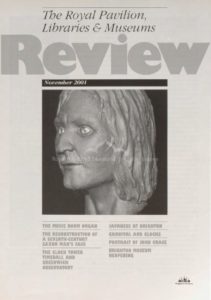
November 2001 issue, ‘The Reconstruction of a Seventh-Century Saxon Man’s Face’ about a facial reconstruction

This is a legacy story from an earlier version of our website. It may contain some formatting issues and broken links.

One of my first projects as Museum Futures Trainee was to digitise and publish the Pavilion Review, the Royal Pavilion & Museums newsletter which ran from 1984 to 2008.

This archive of 42 issues contains an incredible amount of insider knowledge and behind the scenes stories which very few people have had the opportunity to read. This limited audience is the exact reason why I was so eager to publish them, to make this wealth of knowledge accessible to the public.

The list of Pavilion Review issues are on our website. They link through to an index of each issue, describing the contents of every article. These then link through to the archive on our Digital Media Bank, a public space to view and download our collections.

During the scanning process, I made an index of the content of the articles as I went along. Not only was this useful information to put on the website but it was fascinating getting to read stories of Brighton’s history that I knew nothing about, despite growing up in the city.

Hubert de BurghOne case of this was reading an article entitled ‘Hubert de Burgh and Portslade Manor’ in the February 2006 issue. Having an interest in medieval history, the name de Burgh immediately caught my eye. Hubert was a medieval nobleman and 1st Earl of Kent who inherited many castles in the South East, including Portslade Manor. He was later appointed Chief Justiciar of England (arguably the highest ranking position in the country under the King) in 1215 under King John and continued this role into the reign of Henry III. The manor fell into ruins during the Victorian era and the remains can now be seen next to St Nicholas Church. I was very intrigued by this so I decided to go see the ruins for myself. Immediately, I was surprised by how much was still standing considering its impressive thousand-year-old history.

Pavilion Review 1989, issue 2Following on with this medieval theme, another article which caught my eye was the cover story ‘Treasures from Sussex Churches’ in the 1989, Number 2 issue. It details the history of a selection of churches in Sussex in relation to a previous exhibition at Brighton Museum of the same name, as well as the cultural significance and historical importance of the Christian Church in the Middle Ages. I was immediately drawn to this article because I, personally, would have found this gallery fascinating. Being able to read about it gives a great insight into a gallery, which I wouldn’t have otherwise known about.

Pavilion Review November 2001Perhaps my favourite article was from the November 2001 issue, ‘The Reconstruction of a Seventh-Century Saxon Man’s Face’ about a facial reconstruction Side-by-side view of Stafford Road Man facial reconstruction and Pavilion Review issue with a previously-made facial reconstructionmade of a skeleton excavated in Stafford Road, Brighton. This same skeleton has had another facial reconstruction made more recently by Oscar Nilsson which is currently on display in the Elaine Evans Archaeology Gallery at Brighton Museum & Art Gallery. To the left is a side-by-side comparison which really brings to light the advances in facial reconstruction technology.

'Below Stairs' at Preston ManorFor those interested in a look behind the scenes of Preston Manor, I would suggest reading the 1987, Number 2 issue which features an article entitled ”Below Stairs’ at Preston Manor’ and gives a detailed account of how the Stanford family home was run and the purposes of each room in 1906. It covers the use of the attic and basement at Preston Manor as well as a look at how the servants of the house would have lived, including their work life, bedrooms and dinner routines.

Tasha Brown, Museum Futures Trainee

The Chattri and the Royal Pavilion Indian Hospital

This is a legacy story from an earlier version of our website. It may contain some formatting issues and broken links.

Last summer, I gave an interview to the British Forces Broadcasting Service about the Royal Pavilion’s use as an Indian military hospital during WW1. This was on the morning before the annual memorial service at the Chattri, which is held to remember those Hindu, Sikh and Muslim soldiers who died in Brighton’s three Indian hospitals.

Forces TV have now made the film available on YouTube, and it’s worth watching for the drone footage of the Chattri alone.

[arve url=”https://youtu.be/eVFkZOizGNA” align=”center” /]

The film also features interviews with some of those attending the ceremony, including Kiran Sahota, a researcher who brought a group of young people all the way from Birmingham to attend.

If you are interested in attending this year’s ceremony at the Chattri, it will take place Sunday 9 June 2019.

Kevin Bacon, Digital Manager

More information

George’s Marvellous Milliner

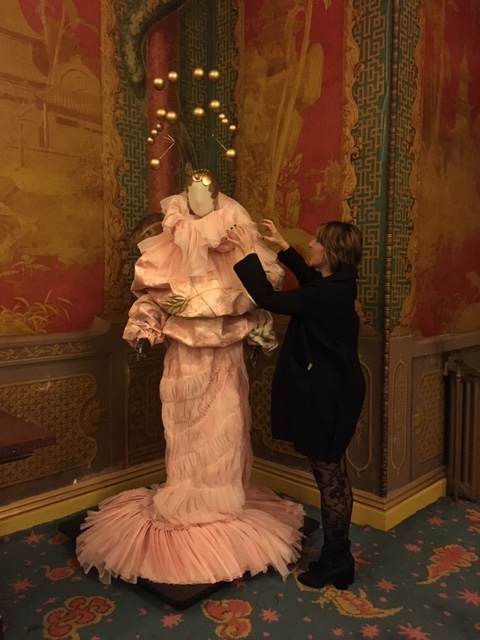
Sue Winkett, Visitor Services Officer works on the Stephen Jones Hats installation.

This is a legacy story from an earlier version of our website. It may contain some formatting issues and broken links.

As a Visitor Services Officer at the Royal Pavilion and Museums I hadn’t expected to be given the opportunity to work on such an exciting and significant fashion project. But with the Workforce Development Programme I was given such a chance.

Workforce Development offers staff the opportunity to develop and learn new skills in other departments of the Pavilion and Museum and for this one I was recruited to assist Martin Pel, the fashion curator, on the Stephen Jones Hats installation.

My role was to help with the installation of the hats in the week prior to opening. It turns out that this was a very busy but exciting week!  There were many aspects of the exhibition to pull together in that week, such as the stands for display, Dior outfits still to arrive, hats to be wired for display mounts, mannequins to be altered and installed, hats to be collected and the small task of putting over 160 hats into an historic building, all within a few days. Just moving the hats around the building and between the Pavilion and Museum was a big task, with there being so many and requiring such careful handling.

I should point out at this stage that it soon became apparent the fashion world and historic buildings occupy a completely different universe. The Pavilion requires a huge amount of planning when any kind of activity takes place there to ensure the objects and environment are preserved and not damaged, which takes time and manpower. The fashion world however thrives on a quick turnaround and fast pace. Martin and Jody (Creative Programming Curator) managed it brilliantly to ensure the installation happened carefully and on time. This contrast made for some nail biting moments, but I thoroughly enjoyed the buzz!

Prior to the exhibition I helped Martin display the hats for the photographer, where I was able to watch the skilled process of altering lighting and angles to get the best pictures. It was a fast process and we had to handle the hats with great care. I then moved on to helping Martin configure the display for the Entrance Hall, positioning hats for the greatest impact as people walk into the Pavilion. It was fantastic to have input and that Martin valued my opinions.

At the start of the final week there was a lot of delivering and fetching of hats from the conservation studio where they were tweaked and mounted. Many of the hats have been loaned to the Pavilion by their owners so the hats needed to be made display-ready. It was fascinating to see a conservation studio where the work is painstaking and meticulous.

I was tasked with cutting the protective layers for the stands where they sit on the furniture and then sewing the cloths for the kitchen display. Some finishing touches of steaming and cleaning of display materials before finally installing the hat stands and hats.

Stephen Jones was very much involved in the finishing touches to the hats to ensure they looked exactly as he envisaged. It is a requirement of the building that anyone going behind the ropes is escorted, so I escorted him around the building, watching as he added hats to the display and while the press took photographs, filmed and interviewed him. His pleasure at having his work installed at the Pavilion was great to see. I even had my photo taken by the press showing me working with the hats, though sadly I didn’t make it into the final edit!

My last task was to be there for the opening evening where guests of Stephen Jones and Harvey Nichols, the sponsors, were invited to view the hats. It was an incredibly exciting and successful evening, with many high profile fashion journalists taking in the installation. I was in the music room to talk to guests about the beautiful display of Stephen’s hats worn with Dior outfits. The visitors were extremely positive and loved both the installation and the setting, so it was great to talk to them about how George IV would have loved it too. The exhibition was going down really well and there was a real buzz about the whole evening. On a personal level, I was incredibly excited to meet Giles Deacon, whose outfits are part of the display. Meeting both Giles and Stephen Jones in one week was something of a high for me!

I was very fortunate to be involved in such a busy week and experience some of the hugely varied aspects of a high profile fashion installation at the Pavilion. I’ve witnessed at close quarters what it’s like to curate and install an exhibition, how they managed so many other parties involved in it and constant problem solving. It’s an experience I would very much like to repeat given the opportunity!

Sue Winkett, Visitor Services Officer

Hear My Voice | Young Women | 2019

This is a legacy story from an earlier version of our website. It may contain some formatting issues and broken links.

To celebrate this month’s International Women’s Day on the 8th March young women explored objects in Brighton Museum’s collections and exhibitions, and then discussed their impact on women, society and themselves:

“It was empowering and fun and I learnt some facts about history before feminism.”

Using these discussions and their own life experiences the young women created animations with a message they wanted to give:

“It gave me a chance to learn something new, try something new and has inspired me to do more. We discussed issues that effect women negatively and hope to help society stop that.”

But “it was really fun! – I’ve never done stop animation before. I learnt about feminism and what it means and I liked looking at the exhibitions”

And we “learnt a lot about animation!”

This workshop was facilitated by Remix the Museum and Royal Pavilion & Museums’ Youth Engagement.

Find more information on Brighton Museum’s Free Day: International Women’s Day here.

#BalanceforBetter   #IWD2019

Sarah Pain, Youth Engagement Team

Pavilion Review 1992

Pavilion Review 1992, issue 1

This is a legacy story from an earlier version of our website. It may contain some formatting issues and broken links.

Index to articles published in the Pavilion Review in 1992.

Number 1

Pavilion Review 1992, issue 1

Pavilion Review 1992, issue 1

The Restoration Of The South Galleries At The Royal Pavilion

A detailed account of the process of the reconstruction of the South Galleries at the Royal Pavilion. The article also bears reference to its original use by the Prince of Wales and his guests.

‘The Hope Of The House’: The Life And Death Of The Last Of The Stanford’s Of Preston Manor. Part One

Focuses on the experience of Vere Fane-Benett-Stanford (1894-1922), the last of the Stanford’s of Preston, during World War I.

Brighton’s Unsung Heroines: Women Working In The Town In The Nineteenth Century

Considers the evidence found in contemporary trade directories, visitor guides and newspapers which points up the extent to which women formed part of the employment force during the nineteenth century in Brighton.

Wringing Fact From Fiction 

Covers the process of cleaning clothing during the nineteenth-twentieth century in Britain. The focus is placed on whom did the laundry and the amount of hard work that was involved in the process. The author incorporates nineteenth-century novels as a source of evidence.

Number 2

Pavilion Review 1992, issue 2

Pavilion Review 1992, issue 2

Angelica Kauffman: A Continental Artist In Georgian England

Provides a critique of an exhibition of the work of Angelica Kauffman (1741-1807) with the aim to emphasis her work as an artist rather as a decorator.

Garden Restoration At The Royal Pavilion

Considers the research and work involved in the process of the restoration of the gardens at the Royal Pavilion, in accordance to Nash’s designs.

‘The Hope Of The House’: The Life And Death Of The Last Of The Stanford’s Of Preston Manor, Part Two

Provides a continuation from 1992 No. 1. The author focuses on the reasons of the death of Vere Benett-Stanford in relation to the social mores of the time.

Sketches Of Brighton Life

Centres on the acquisition of a number of drawings by the nineteenth-century artist J. Watkins. The focus is placed on their value of providing a pictorial documentary history of Brighton that is concerned with the working classes. However, the author notes that women workers have tended not to be recorded by Watkins. Focuses on the coach trade, policemen and law-breakers and the workhouse.

Chinese Robes In The Ethnography Gallery

Focuses on a recent donation of a number of items of clothing of traditional Chinese costume in relation to the issue of symbolism incorporated into their designs. This visual language is discussed in terms of social systems.

Moths At The Booth Museum 

Describes the importance of a recent acquisition of a collection of Sussex butterflies.

My Leadership Experience for my Gold Arts Award at Brighton Museum

Charlie’s Talk

This is a legacy story from an earlier version of our website. It may contain some formatting issues and broken links.

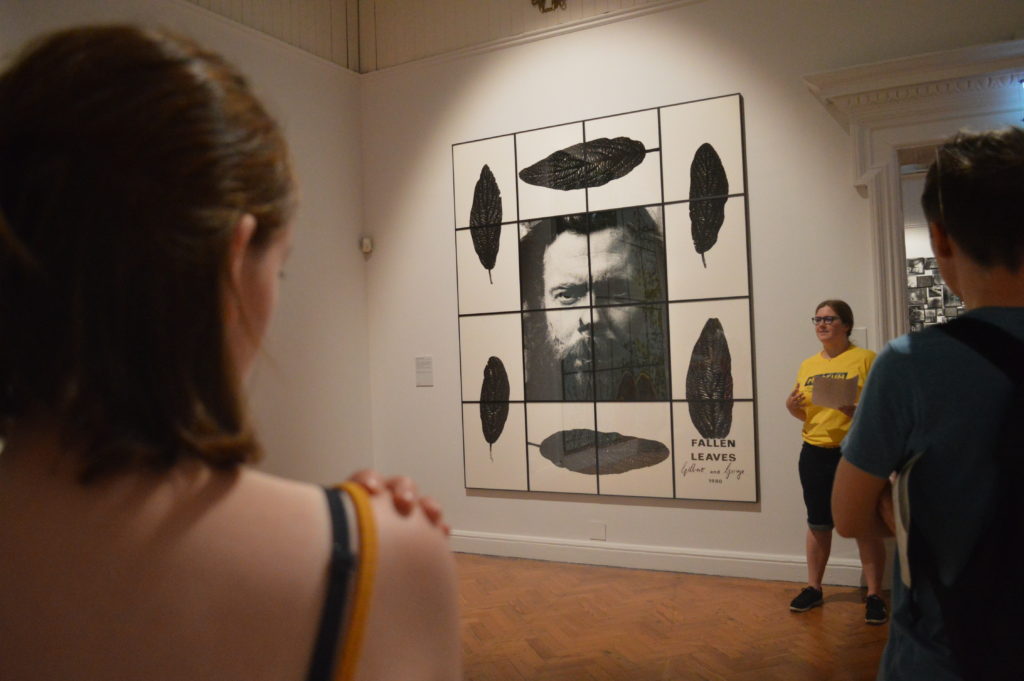
I have been part of two different projects that happened at Brighton Museum, Photography Club (co-lead with Photoworks) and ARTIST ROOMS Gilbert & George exhibition.

I used both of these as evidence for my leadership skills for my Gold Arts Award. The Gold Arts Award is a level three National Qualification with UCAS points.

For the Photoworks project I was part of a young person’s photography club. I took pictures of other young people, always obscuring their face in some way in each picture. We also went to different events in museums in London such as the Barbican and The Tate.

At the Barbican I was part of a group of people from Photography Club who lead on taking pictures of the different people attending a special event for a new photography exhibition there. We took their pictures and printed them there, giving the participants the option to either take the pictures with them or leave them there so we could put them on the wall.

During a book event at The Tate we set up a photo booth area for people to use, with four different backgrounds and props for people to use. The participants could either take their own pictures or have us take pictures for them and we asked them to use a hashtag for the photographs they posted on social media so we could have an online photo album for the event.

Leading these two projects was daunting at first, since I am quite a shy person but I found that once I got there and got into the projects it was a lot easier to be able to lead and talk to the public.

Once we were finished with our photoshoots and we had chosen the best photographs, we then had our pictures shown on the balcony at Brighton Museum.

During this project I learnt a lot about photography, mostly how to have an appreciation of it. Before this project I honestly didn’t really care for photography much, ‘anyone can take a picture’ I thought. Although it is true that anyone can take a picture, good photography is actually a lot harder than it looks: angles, lighting, location, models, etc. It can be a hard task to take great photographs.

I found the project really rewarding, through it I acquired a new appreciation for an art form and started to learn how to become skilled in it myself. That doesn’t mean it wasn’t also hard, many times I had photoshoot days where I didn’t like any of my photographs and that made my part in the project feel hopeless. But it was worth it in the end, to see my work displayed next to my friends and to have been part of something I greatly enjoyed.

With the Gilbert & George exhibition, The Museum Collective for Brighton Museum put together two different events for the exhibition.

We spent a while researching Gilbert & George’s work and lives and event planning. We went to The V&A Museum in London to observe one of their Late Events so we could understand how they worked better and become inspired by it.

Charlie's Talk

Charlie’s Talk

Once the exhibition was open we had our Free Day, which was a day event at the museum where we put on free different activities. We had Deadly Serious Sewing were people could sew a patch for the quilt we made for the exhibition. We also had the Collective member Charlie do a talk in the exhibition about the works and also another Collective member, Colin, did a dance inspired by Gilbert & George in the exhibition and in the 20th Century Gallery. I was in charge of photography and filming for the event where I photographed Charlie’s talk and the sewing and then I also filmed Colin’s dance. From the Free Day I learnt a lot about event planning and leading in being in charge of photography. With Photography Club although I was leading there were also other people doing that same thing as me, whereas with this I was solely in charge of photography and was the only photographer there. Being the only photographer was definitely daunting but again I found it easier once I got more into it and it let me feel more confident in my leadership skills.

Then we had our Late Event, #TITILate. This event took place after the museum was usually closed and at this event we had many different activities such as a silent disco, a quiz, photo booth, talks, sewing, etc. For this I was in charge of photography and filming again. I helped document the event for the museum. This time I had had more experience with being in charge of photography for an event and although this event was a lot bigger than the Free Day I wasn’t so nervous about it this time. Photographing the Late was a lot of fun and helping be a part of the event was great.

Silent Disco

Silent Disco

During this project I learnt a lot about event/activity planning. It helped me learn what works and doesn’t work for events like these. Such as at #TITILate not so many people brought any drinks and instead opted for the free water, so now I know that it’s probably better to have a small selection of drink available for people.

While I did really enjoy taking part in this project I also did have some problems. Such as not many people going to Charlie’s talk on the Free Day or sometimes we had difficulty coming up with activities that could work.

Overall from being a part of these projects I learnt a lot about being more confident, both in myself and my skills as both a photographer and a leader. Working on these projects was a great experience that I enjoyed so much and would love to do again.

Jacob Burbidge, Museum Collective member

Pavilion Review 1990

Pavilion Review 1990, issue 1

This is a legacy story from an earlier version of our website. It may contain some formatting issues and broken links.

Index to articles published in the Pavilion Review in 1990.

Number 1

Pavilion Review 1990, issue 1

Pavilion Review 1990, issue 1

New Acquisition: Sir William Beechey’s Portrait of William Porden

Recounts the secured acquisition of a portrait of architect William Porden (1775-1822), by Sir William Beechey. Porden was appointed as architect to the Prince of Wales in 1802.

The Entrance Hall Clerestory Windows by Anne Sowden

The author provides an account of the process of restoring the decorative windows in the entrance hall at the Royal Pavilion. The article also points up the meaning of the symbols incorporated into the design in relation to Chinese mythology, specifically the use of the dragon and particular types of fish.

The Chinese Connection

Recounts the donation of a number of teapots, which had been displayed at Brighton Museum. The article considers the introduction of tea to Britain and its relationship to issues of design, including the connection between related tea artefacts with chinoiserie.

The Stanford Estate in Brighton and Hove

An article that follows the financial aspect of the Stanford family in relation to Preston Manor. The article bears out the family’s legacy within Brighton and Hove.

Number 2

Pavilion Review 1990, issue 2

Pavilion Review 1990, issue 2

One Hundred and Not Out!

Recounts the celebration of the centenary of the Booth Museum, and considers the Museum’s development as well as its relevance to Brighton and Hove.

Honey-Bees Galore

The article explores the recent growth in population of bees and also considers their life patterns.

Wildlife Beneath the Waves

As part of Brighton’s Wildlife & Habitat Survey, this article focuses on the investigation into the local coastline, specifically the Marina.

Stamp Bugs at the Booth!

Recounts the effects of a recent donation of a stamp collection and its relationship, specifically, to the identification of butterflies at the Booth Museum.

Redecoration of the 20th Century Gallery

The article recounts the redecoration of the twentieth-century gallery at Brighton Museum to its original colour scheme, emphasizing the process of redecoration as well as recounting a number of the previous uses of the building itself.

Treasures from the deep

Recounts the donation of a collection of shells, some of which are on display at the Booth Museum.

William Moon – a Forgotten Pioneer

Recounts the achievements of William Moon, a resident to nineteenth-century Brighton, who created a more accessible system of Braille. Donations relating to his life and work have been given to Brighton Museum.

New Acquisition for Preston Manor: Percy Macquoid’s Portrait of Theresa Dent

Recounts the recent donation of a portrait of Theresa Dent by Percy Macquoid to Preston Manor. The article provides an account of the couples’ relationship to the arts as well as to Brighton and Hove.

The Graces : Royal Decorators 1768-1899

Recounts the interiors, by the Crace family, during the nineteenth-century with regards to the decorative schemes of a number of country houses and palaces, including their work at the Royal Pavilion. The interior schemes by the Crace family provided the theme for a recent exhibition and series of seminars.

Number 3

Pavilion Review 1990, issue 3

Pavilion Review 1990, issue 3

New Acquisition: Sake Deen Mahomed’s Silver Cup

The article recounts the life of Sake Deen Mahomed, both personal, and his influence on Brighton as a place to visit for health reviving properties.

Princely Papers: The Regency Revival of Chinese Wallpapers

Recounts the fashionablity of Chinese wallpapers during the Regency period. The article acknowledges the influence of the Prince Regent and the Royal Pavilion and details the history of wallpaper as an export trade.

Harry Morley, The Judgement of Paris

Describes the recent acquisition of The Judgement of Paris, 1929 in relation to contemporary art movements at the time (specifically that of modernism) as welt as exploring the painters attitude to the relation of art to the past.

Willett Collection – Loans Abroad

Recounts the incorporation of artefacts from the Willett collection within exhibitions abroad; one, with the exhibition theme of the British reaction to the French Revolution of 1789, the other takes the theme of sports and entertainment.

George Tinworth (1843 – 1913)

Recounts the life and works of sculptor and modeller George Tinworth, focusing on his relationship with Daulton and the exhibition at Brighton Museum.

Gideon Algernon Mantell (1790 – 1852) Doctor of Medicine and Dinosaurs

Recounts the life and work of the Sussex geologist and Doctor of Medicine in relation to an exhibition and three-day symposium held in relation to the Booth Museum as part of the bicentenary celebrations.

Pavilion Review 1984

Pavilion Review 1984, issue 1

This is a legacy story from an earlier version of our website. It may contain some formatting issues and broken links.

Index to articles published in the Pavilion Review in 1984.

Number 1

Pavilion Review 1984, issue 1

Pavilion Review 1984, issue 1

Pavilion Under Wraps

Discusses the issue of restoration to the exterior of the Royal Pavilion, including a brief history as well as referring to work that was currently being carried out.

Superglass

Critique of Studio Glass Since 1945, an Exhibition of two hundred pieces of glass, made in Europe and America covering a forty-year period.

King George IV revisits Brighton

Reports on the making of caricatures, based on the prints of George Cruickshank as part of the children’s activities organized by the Museum’s service.

New Audio-Visual Display

A report on the recently installed slide-tape presentation on the pictorial history of the Royal Pavilion.

Dinosaurs on Computer

Scheme involving 27 trainees whom have produced a computer-based catalogue of the collections.

Art Deco: a New Catalogue

Promotion of the book, Art Nouveau, Art Deco and the Thirties. The article emphasizes that the twentieth-century decorative art Gallery was the only permanent major display, until the opening of the galleries at the V&A Museum during 1983.

Shocking Pink

Discussion of The Face of Mae West (usable as a surrealist apartment) by Salvador Dali and the ordering of five models of the ‘Mae West’s lips’ sofa by Edward James.

Number 2

Pavilion Review 1984, issue 2

Pavilion Review 1984, issue 2

The Prince Regent’s Chef Honoured

Covers the celebratory meal held at the Royal Pavilion in honour of the birth of the chef, Antonin Carême, whom had worked for the Prince Regent.

‘Brighton’s Heritage’

Recounts the opening of three new displays at Brighton Museum; one display was concerned with Brighton’s most influential citizens, a second, Brighton’s architecture (including the rescued ‘Cork Factory’) and lastly, the theme of entertainment.

Art Workers’ Guild: A Centenary Exhibition

Background information concerning the Art Workers’ Guild in relation to an exhibition to be held at Brighton Museum entitled ‘Beauty’s Awakening’ .

China Through Chinese Eyes?

Recounts the contemporary interest in ‘Chinese export pictures’, focusing on the work of Howqua.

Designs for the Pavilion: a New Book

Examines Designs and Drawings: the Making of the Royal Pavilion, Brighton. Written by John Morley, the book reproduces all the important surviving designs for the exterior and interior of the Pavilion, whether used or not.

Restoring the Pavilion Gardens

Provides a brief history of the Gardens in relation to the notion of the ‘picturesque’ and discusses how the project was to be put into practice.

A Settee Revived

Recounts the process of upholstering the settee in the entrance hall at Preston Manor.

Music Room Drawing

Discusses the detailed drawing recently bought at auction of the Music Room in the Royal Pavilion by Augustus Charles.

Rowlandson by the Sea

Critique of an exhibition of the engravings of Thomas Rowlandson. The exhibition looks at Rowlandson’s work during his time in Brighton in the reign of the Prince of Wales.

A Well beneath the Walls

Discovery of the remains of a well, which was found as a result of restoration work amid the foundations of the Royal Pavilion. This article details the well’s contents as types of rubble.

Number 3

Pavilion Review 1984, issue 3

Pavilion Review 1984, issue 3

The Unexpected Tissot

Examines the jardinière, which had recently been acquired by Brighton Museum, which formed part of an exhibition on Tissot’s work at the Barbican Art Gallery.

Lawrence Portrait on View

Discusses the work of Sir Thomas Lawrence, specifically the recently acquired Emily and Harriet Lamb as Children (painted in 1792) held in Brighton Museum.

The Chinese Room at Burton Constable

Describes the relationship between the interior and artefacts at Burton Constable near Hull with that at the Royal Pavilion.

Fashion Gallery Wins Award

The article celebrates Brighton museum winning the ‘Museum of the Year’ award, and emphasizes the social history aspect of the recently assembled Fashion Gallery.

Geological Society Formed

Discusses the establishment of a new society, the Brighton and Hove Geological Society, with its focal point being the Booth Museum of Natural History.

Visions of War

Examines the section of watercolours displayed at Brighton Museum in relation to the question ‘What is a War Artist?’

Peter De Wint, 1784-1849

Critique for a forthcoming exhibition at Brighton Museum of the watercolours by Peter De Wint.

A Nash Conservatory for the Gardens?

Plans found at the Royal Library, Windsor, for a conservatory at the Royal Pavilion, and the possibility of its being built.

Pavilion Review 1985

Pavilion Review 1985, issue 1

This is a legacy story from an earlier version of our website. It may contain some formatting issues and broken links.

Index to articles published in the Pavilion Review in 1985.

Number 1

Pavilion Review 1985, issue 1

Pavilion Review 1985, issue 1

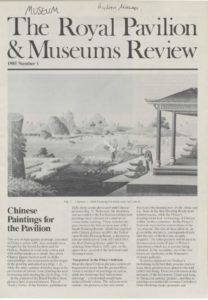
Chinese Paintings for the Pavilion

Discusses the recently acquired sets of paintings, from China dating around 1800, by the Brighton Museum and Art Gallery. The article points up the paintings’ subject matter in relation to issues of trade. The forthcoming exhibition concerned with China trade us also promoted.

Architect of the North Gate

The article takes the architect, Joseph Henry Good as its focus and the recent acquisition of his portrait by an unknown artist.

Norman Hartnell – Royal Dress Designer

The article focuses on the lifetime’s work of fashion designer, Norman Hartnell, with specific reference to his royal clients as well as his designs for Bekertex.

The Pride of Brighton

Provides a brief outline of the development of the building of Brighton Museum and Library.

Comedy Characters for the Brighton Festival

Recounts the exhibition held at Brighton Museum on the issue of Harlequin, Punch and Pierrot that coincided with the theme of Brighton Festival during 1985.

Number 2

Pavilion Review 1985, issue 2

Pavilion Review 1985, issue 2

Beating Time

Discusses the recently acquired ‘Chinese drummer-boy’ clock in relation to a very similar clock known to be at the Royal Pavilion at the time of George IV.

Treasures from Sussex Houses

Critique of an exhibition held at Brighton Museum of artefacts from collections around East and West Sussex (mostly from country houses). The article focuses on a number of objects, an ‘Adam and Eve’ font, a silver wine-cistern, or cooler, a suit of armour, a 44-pound salmon caught by Millais and a number of paintings, specifically by Pre-Raphaelites, including the portraits of Burne-Jones’ wife and daughter.

Bringing up the Whale

Discusses the process of retrieving the skeleton of a Fin Whale, which had been washed up at Bexhill, for a museum piece at the Booth Museum.

Heading for the Med

In connection with a new display of watercolours at Brighton Museum, the article explores the tradition of a number of British artists who travelled to the Mediterranean in search of subject matter.

From Classroom to Museum

Recounts the Community Programme of supplying ‘resource packs’ to local school to link up with visits to the museum, which formed a display at Brighton Museum, as well as a future project involving oral history.

Booklet for Young Visitors

Promotes the new booklet. The Royal Pavilion Young Visitors’ Guide and an accompanying poster.

Number 3

Pavilion Review 1985, issue 3

Pavilion Review 1985, issue 3

The China Trade: Exhibition Review

Critique of the exhibition held at Brighton Museum focusing on the ‘export art’, tea, porcelain and silverware in relation to trade. Lacquer and bamboo works / influences are also considered in context. The provenience of artefacts (in terms of where they were made) is explored in relation to issues of consumption.

A Princely Table

Recounts the recent acquisition of a Boulle writing table, the work of Louis Le Gaigneur, and its relevance to the Royal Pavilion.

The Wreck of the Amsterdam

The display of numerous artefacts, including bones at the Booth Museum, found on the wreck of the Amsterdam, a Dutch East Indiaman wrecked at Hastings over two centuries ago.

Portrait of an Aesthete

Discusses the portrait of David Horner recently presented to Brighton Museum. The article discusses Horner’s connection with Osbert Sitwell, and also the artist of the portrait, Philip Steegman.

Bloomsbury Portrait

Discusses the use of various mediums and the involvement of numerous relatives and connections in the production of a piece of work by a Bloomsbury Group member. The article focuses on photography and its use as a source in painting.

Book Fair and Conference 

Promotion of the Association of Art Historians 7th International Art Book and Journal Fair, to be held at Brighton.