Story Category: Legacy

Elaine Evans and our new archaeology gallery in Brighton Museum

Elaine speaking at the gallery opening

This is a legacy story from an earlier version of our website. It may contain some formatting issues and broken links.

Our new archaeology gallery opened in Brighton Museum last month, helping young and old learn more about Brighton’s prehistory and earliest inhabitants. A key figure behind the gallery is Elaine Evans, whose name greets visitors above the door to the gallery. In this post, we profile Elaine and discover what motivated her to support our work.

Elaine was originally born in Middlesex but moved to Hove when she was 11. She started the East Sussex School of English, a summer school for teenagers in Hove, in 1972 and ran it for 27 happy years. She has been interested in the arts, history and languages since childhood. She received the British Empire Medal in the Queen’s Birthday Honours list in 2014 for services to the arts in East Sussex.

Woman speaking into a microphone in a museum gallery

Elaine speaking at the gallery opening

Elaine is a committee member of Hove Civic Society, supports the Actually Gay Men’s Chorus and sits on the Brighton & Hove Commemorative Plaques Panel.  She is a member of the Brighton & Hove Archaeological Society and was a founding member of the Royal Pavilion & Museums Foundation patrons’ scheme in 2009. Over the years Elaine has written articles on local history and archaeology and interviewed historians, academics and architects to capture and share their stories and expertise. Elaine is the British Patron of Vilamuseu, an award-winning museum in Villajoyosa, near Alicante, Spain.

Elaine Evans seated with young boy in archaeology galleryShe said, “For many years history and archaeology have fascinated me. One marvellous day I spotted a Stone Age flint blade by chance in my back garden in Hove. It had been brought to the surface by worms. I was the first person to hold it since it was dropped by a hunter-gatherer thousands of years ago: the blade was still sharp. I love my precious flint!”

Elaine wrote several stories as a child. One, when she was 9, was about three children who found a treasure hoard. ‘Thanks to you,” said their father, “the collection is being sent to the museum.’

“Who would have guessed that many years later I myself would be so closely involved with Brighton Museum?

“My late husband Steve and I used to enjoy visiting historic houses and sites such as stone circles and Roman villas.  We helped out on an archaeological dig in the 80s in a car park in Dorchester – Steve found a Roman tunic fastening and two coins.

“I’ve been involved with Brighton & Hove Archaeological Society for years and helped collect signatures for their petition to the council asking for a new gallery. When we got the go-ahead, the sad thing was that there was no money available from the council. I was leaving a sum to the museum in my will, but decided it would be much better to give it to them now for the new gallery.

“I’m not wealthy but I wanted to do what I could for a project which will bring so much interest and education to so many people. It’s wonderful that the museum will bring history alive to visitors young and old.”

Young woman looking at reconstruction of human head

Caroline Sutton, Press Officer

Why does ‘Whitehawk Woman’ have dark skin?

This is a legacy story from an earlier version of our website. It may contain some formatting issues and broken links.

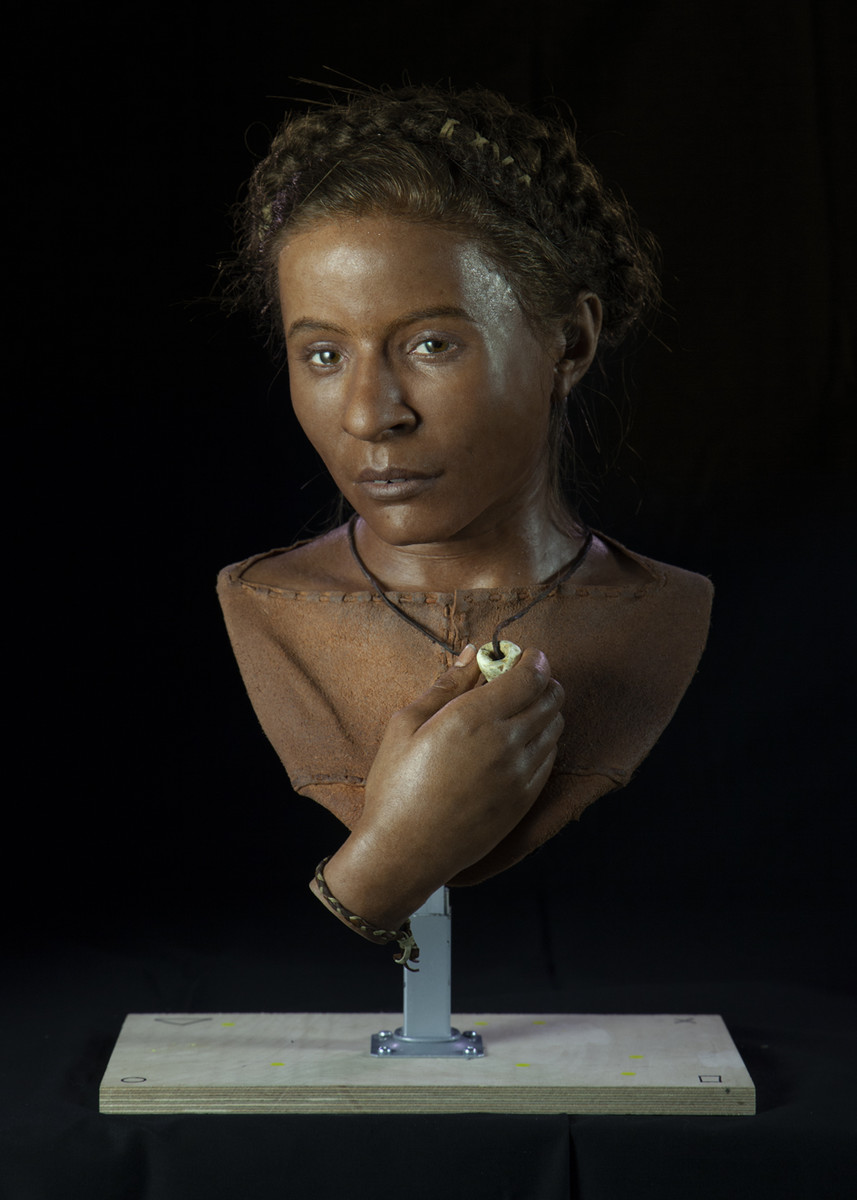
Since the opening of our Elaine Evans Archaeology Gallery last month, some people have queried why the facial reconstruction of ‘Whitehawk Woman’ has dark skin. Below is an explanation of some of the research and advice that supported the creation of this reconstruction.

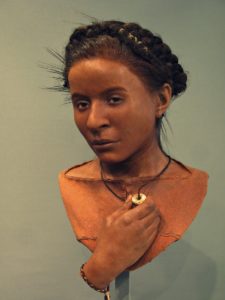
Photo showing reconstructed head and neck of Neolithic woman. She has dark skin, black hair and plays with a necklaceBrighton’s ancestors are central to the interpretation of the Royal Pavilion & Museum’s new archaeology gallery which opened to the public on 26 January 2019. The remains of five individuals are displayed alongside facial reconstructions created by a forensic artist.

During the research phase in the run up to the opening of the gallery, the human remains were studied by a number of scientists across several scientific disciplines.

All of our individuals were included in a project based at the Natural History Museum in London, which aimed to establish and interpret information about our European ancestors from ancient DNA. The same team of scientists released results of research to the public in 2018 about ‘Cheddar Man’, a ten thousand year old modern human from the Mesolithic Period, whose ancient DNA demonstrated that he was dark skinned.

While DNA could not be retrieved from Whitehawk Woman, the ‘Cheddar Man’ team advised that she would probably have had dark skin of a southern Mediterranean/Near Eastern/North African colour, brown hair and brown eyes. This is based on the genetic analysis of ancient individuals dating to the Neolithic from around Europe as well as from Britain specifically. This information was passed on to our forensic artist who included it within the facial reconstruction on display in the new gallery.

The same analysis produced predictions of lighter skin for other individuals included in the gallery and these predictions were also included in their facial reconstructions.

In each instance where ancient DNA was not recoverable from our individuals, we followed the same scientific advice on likelihood of their physical characteristics.

Faces of the Elaine Evans Archaeology Gallery

Stafford Road man from the Saxon times

This is a legacy story from an earlier version of our website. It may contain some formatting issues and broken links.

A who’s who of the faces featured in the Elaine Evans Archaeology Gallery in Brighton Museum.

For the new archaeology gallery, Dr Paola Ponce from Archaeology South-East at the Institute of Archaeology, UCL, examined the remains of five individuals who lived and died in Brighton.

Her findings reveal a lot about their way of life.

Whitehawk woman from the Neolithic period

Photo showing reconstructed head and neck of Neolithic woman. She has dark skin, black hair and plays with a necklace

  • Dates from: 3650–3520BC (95% confidence).
  • Date found: 1933 as part of the excavations undertaken prior to the lengthening of the racecourse run-off.
  • Location found: at the western end of one of the ditches forming the 3rd outer ring of ditches/banks. It was probably the southerly entrance to the enclosure, which might have been a prestigious place to be buried.
  • Size, height and age: age 19-25; height 1.45m, which is small even for a Neolithic woman.
  • How she died: Her general health seems good, but the bones of a neonatal baby nestling in her pelvis point to the probability that she died in childbirth.
  • Interesting fact: Based upon isotope ratios from her teeth, it is probable that Whitehawk woman was not brought up locally and may have come from an area as far away as Hereford.
Ditchling Road Man from the Bronze Age

Ditchling Road Man from the Bronze Age

Ditchling Road man from the Bronze Age

  • Dates from: 2,287-2,125 BC (83% probability).
  • Date found: June 1921 by workmen whilst road widening.
  • Location found: Ditchling Road, about 300m south of Old Boat Corner.
  • Size, height and age: age, 25 – 35; height 1.71m, which was slightly below average – he was not very muscular or robust.
  • How he died: there are no obvious signs as to how he died, but we do know that at various times he suffered serious malnutrition and that he was probably pale and sickly. He may not have had a very strong constitution and was therefore more susceptible to disease.
  • Interesting fact: from the osteological review, we know he suffered from a loss of teeth (both first molars) and tooth decay. In addition, some areas of porosity in his bones point to him being anaemic.
Slonk Hill man from the Iron Age

Slonk Hill man from the Iron Age

Slonk Hill man from the Iron Age

  • Dates from: 393-206 BC (95% probability).
  • Date found: 1968 during a rescue archaeological dig by Brighton and Hove Archaeological Society in advance of the diversion works to the A27.
  • Location found: immediately north of the Shoreham Bypass and about 1km west of the Holmbush Shopping Centre.
  • Size, height and age: age 24 – 31; height 1.71m, which was slightly above average — he was muscular and robust.
  • How he died: there are no obvious signs as to how he died. Analysis of his dental plaque showed the presence of smoke and charcoal, He was working or living in very smoky conditions; he may have been a metalworker, which might have affected his lungs.
  • Interesting fact: he has very high cheek bones, a cleft chin and although generally good, a few of his teeth were congenitally joined. It would have given him a very distinctive look and smile.
Patcham woman from the Romano-British era

Patcham woman from the Romano-British era

Patcham woman from the Romano-British era

  • Dates from: 210 – 356AD (89% probability).
  • Date found: June 1936, whlie workmen were digging ditches for laying drains.
  • Location found: in Patcham, about 20m west of Overhill Road and 50m south of Ladies Mile Road.
  • Size, height and age: age: 25 – 35; height 1.59m, which was average height — she was petite and slender.
  • How she died: generally there are no obvious signs from her bones as to how she died. However, around the time of death, a nail got impaled in the back of her head.
  • Interesting fact: from the osteological review, her spine shows signs of stress (bending and lifting) and there is joint disease in her right knee and lower spine. She obviously lived a hard physical life.
Stafford Road man from the Saxon times

Stafford Road man from the Saxon times

Stafford Road man from the Saxon times

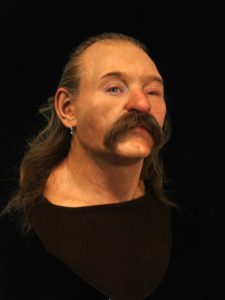
  • Dates from: 424 – 570 Ad (95% probability) He was an Early Saxon after the Roman army left in 410AD.
  • Date found: August 1985 during a rescue archaeological excavation after skeletons were uncovered during private building works.
  • Location found: somewhere in the gardens of houses in Stafford Road.
  • Size height and age: age 45+; height 1.75m, which was taller than average — he was muscular and robust.
  • How he died: there are no obvious signs as to how he died, but the dental abscesses that he had and in particular, the huge abscess in his front upper jaw, could have given him fatal blood poisoning or triggered a heart attack.
  • Interesting fact: the review points to him being strong and muscular and living a very active lifestyle, which was causing signs of disease (arthritis) in his spine, shoulders and hips. He at one time suffered a broken rib and had suffered a severe blow or trauma to his left thigh bone. Given the probably poor diet, a not terribly sanitary environment, disease and it being dangerous times, Stafford man had lived a comparatively long life.


WW2 Brighton beach barricades, 1944

This is a legacy story from an earlier version of our website. It may contain some formatting issues and broken links.

Image of the Month: February 2019

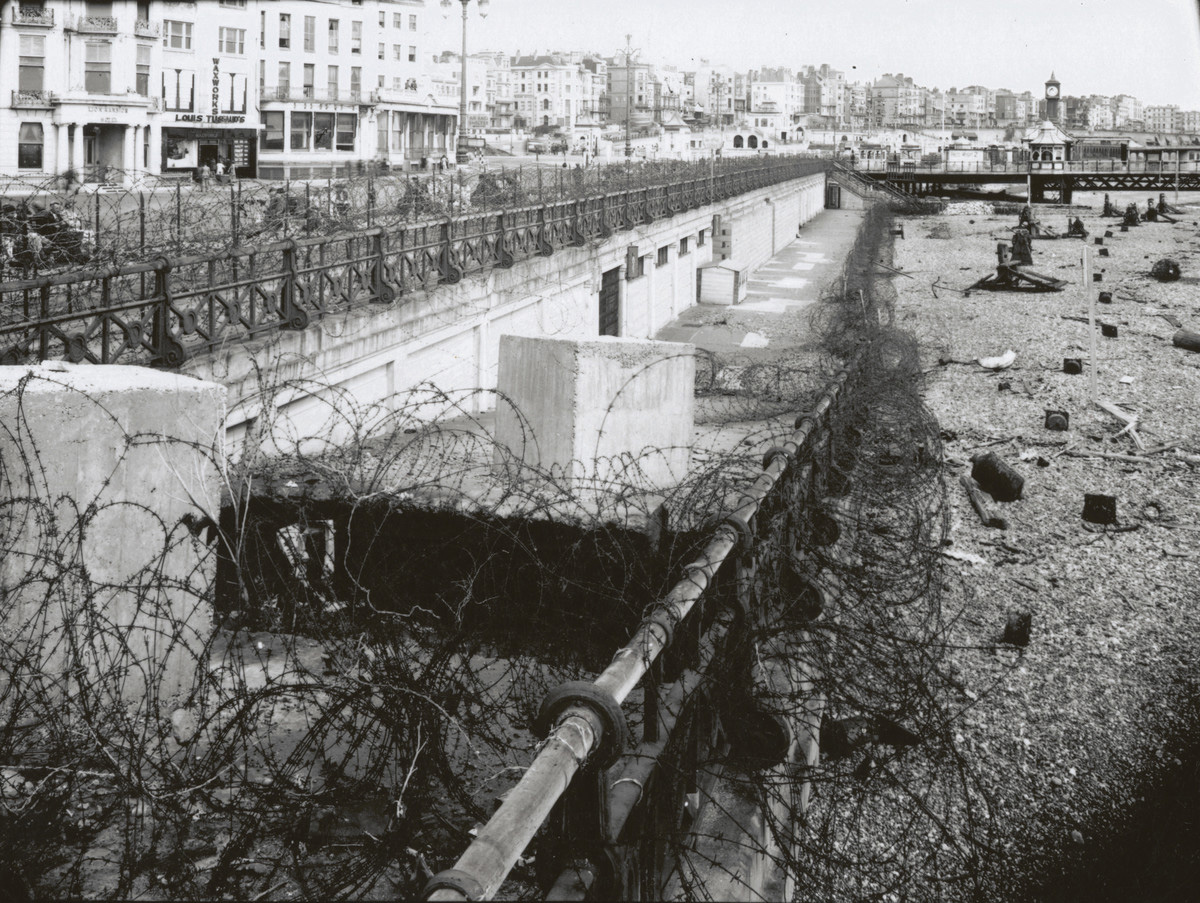
February’s image of the month is a black and white photograph showing barricades used on Brighton beach during World War II.

Barbed wire on Brighton Beach

Wartime barricades on Brighton seafront, 1944

It was taken from the slope leading down to King’s Road Esplanade and shows a view looking East towards the Palace Pier, which was closed down during the war.

Barbed wire has been wrapped around the railings, and two cement blocks have been placed on the slope.

After the British retreat from Dunkirk and the French surrender of June 1940, the south coast was left dangerously exposed and Brighton’s beaches were closed at 5pm on 2 July 1940. Defence measures were put in place along the beach including mines, barbed wire and barricades.

150th Anniversary of the First London to Brighton Bike Ride

150th Anniversary of the First London to Brighton Bike Ride

This is a legacy story from an earlier version of our website. It may contain some formatting issues and broken links.

London to Brighton races of all kinds have been contested over the years including those by air, foot and ball! Perhaps the most famous of all after the Veteran Car Run is the London to Brighton Bike Ride.

Sunday 17th February 2019 marks the 150th anniversary of the very first London to Brighton ride.

Mrs Mimi Reynolds recently contacted the Royal Pavilion & Museums about the anniversary. Her relative, John Mayall Jnr, was the first person to reach Brighton from London by velocipede.

Mayall was the third son of the famed photographer and former Mayor of Brighton John Jabez Edwin Mayall. His father was responsible for making the first carte-de-visite photographs of Queen Victoria.

Cycling magazines in Mrs Reynold’s possession mention that John Mayall Jnr became interested in the cycling after witnessing newly acquired velocipedes being unveiled at a gymnasium owned by Charles Spencer in Old Street, London. They had been purchased by Rowley B Turner who had seen them in action in France.

Early trials of his velocipede were undertaken in Trafalgar Square, Portland Place, Regents Park and Islington. An attempt on Brighton was made soon after which is described in The Brighton Road (1892) by Charles Harper. After a ride of 17½ miles to Redhill, Mayall gave up, exhausted, but not before “he rode about the platform, dodging the pillars, and narrowly escaping a fall on to the rails, until the London train came in”.

On Wednesday 17th February 1869, Mayall, Spencer and Turner set off from Trafalgar Square for Brighton. Undertaking such a journey in winter and on dreadful roads must have seemed mad, as Mrs Reynold’s comments in her correspondence, but to be the first to accomplish the feat must have been highly motivating.

The 53 miles were completed by Mayall in a speedy 12 hours, managing speeds of up to 8 miles per hour! He arrived “in time and in good condition for dinner and the second half of Kuhe’s concert in the Grand Hall”.

Today, the London to Brighton Bike Ride is arguably the British Heart Foundation’s most notable fundraising event. Established in 1976, it takes place each summer and in recent years has attracted an estimated 30,000 cyclists.

Several copies of The Brighton Road (1892) by Charles Hooper are available to view at The Keep.

Dan Robertson, Curator of Local History & Archaeology

Preparing for Stephen Jones’ Hats in the Royal Pavilion

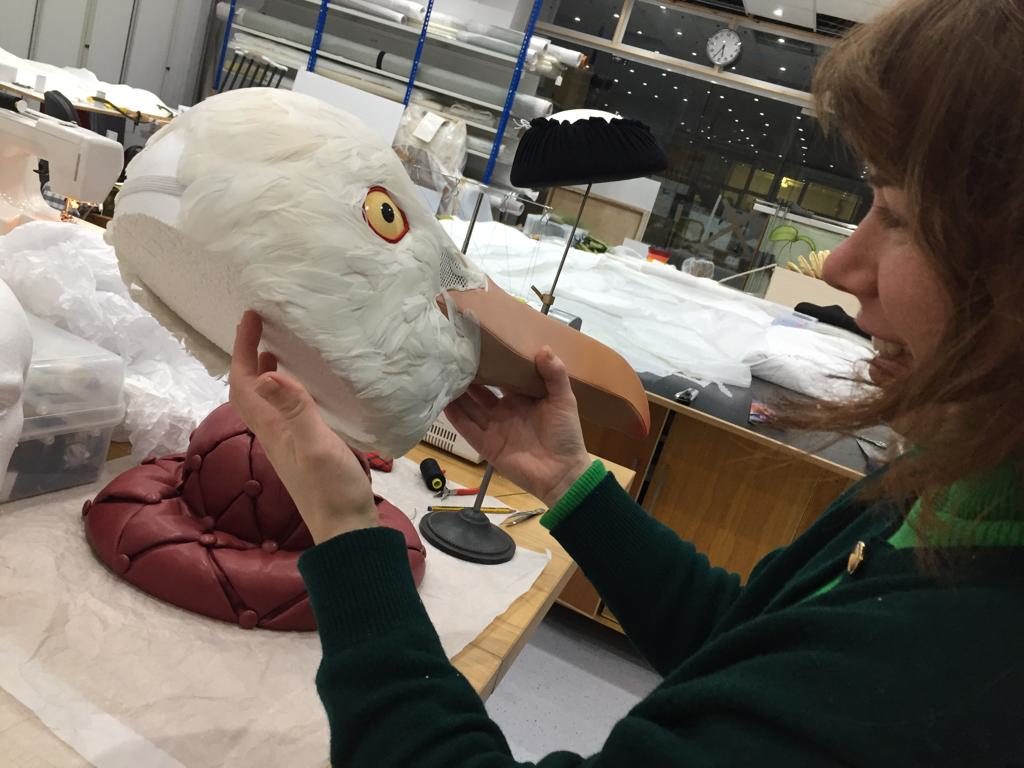
Preparing for Stephen Jones’ Hats in the Royal Pavilion ©Zenzie Tinker Conservation

This is a legacy story from an earlier version of our website. It may contain some formatting issues and broken links.

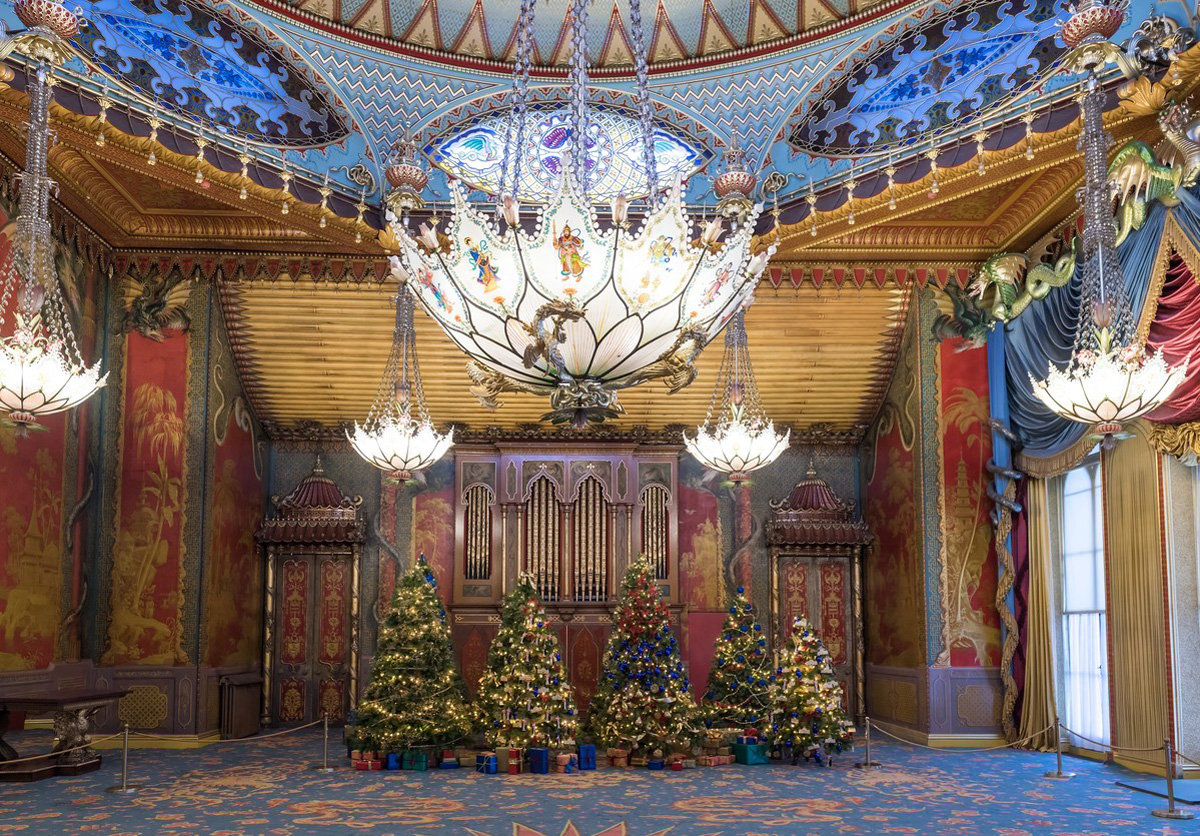
The Royal Pavilion is getting ready for the installation of over 160 hats designed by milliner Stephen Jones. The installation is the culmination of weeks of work behind the scenes to figure out how each individual hat will be mounted and displayed across the diverse rooms of the Royal Pavilion.

©Zenzie Tinker Conservation

We’ve been working with mount maker Panotechnia Ltd and textile conservator Zenzie Tinker and her team to ensure each hat is shown safely and at its absolute best.

For Zenzie Tinker, ‘it’s been a really wonderful contrast to the 17th and 18th century tapestries and wall coverings we are currently conserving, and all the costume we regularly work on.’

©Zenzie Tinker Conservation

Mounts vary from polystyrene heads covered with wadding and jersey, to carefully crafted metal alice bands, to steel frames secured in a hat with nylon wire. Each hat then has its own stalk, shaped to hold the hat at the correct angle specified by Stephen Jones.

Watch out for more behind the scenes images and videos in the coming week!

Jody East, Creative Programme Curator

Gallery

OUTing the Past Festival of LGBT History at Brighton Museum & Art Gallery

A selection of campaign badges against Section 28. Photo, Melita-Dennett

This is a legacy story from an earlier version of our website. It may contain some formatting issues and broken links.

A History of Queer Activism & the Activism of Queer History

For Brighton’s first OUTing the Past Festival programme I wanted people to reflect on what makes someone an activist. I chose speakers who made me think, not only about the history of LGBTQ activism, but about creating history itself as a political act. I want us to consider which points of view are privileged and imposed on us by a history that is written for us. I also hope people will come away thinking about the need to make space for multiple histories where the facts are obscured, contested or erased.

As an LGBTQ staff member working for the Retail &Trading team, I am extremely grateful to the management of Brighton Museum for allowing me to curate both the OUTing the Past Festival and the LGBT History Month Free Day. I have been programing one-off LGBTQ events at Royal Pavilion & Museums for several years and have always felt supported by my colleagues to develop and share my understanding of LGBTQ heritage. I hope the OUTing the Past Festival will become an annual opportunity for our local people and historians to experience that same support.

Photo Melita Dennett

Melita Dennett

Section 28: Promoting Prejudice

Melita Dennett, local radio broadcaster, provides an insight into life as a former member of the Brighton Area Action against Section 28. Looking at the context leading up to the introduction of the legislation in 1988 including AIDS, media homophobia and the Tories’ attacks on progressive Labour policies; Melita gives an insider’s perspective of how Brighton’s LGBTQ community came together to fight the clause with some audacious actions and plenty of wit and humour.

This presentation reflects on the urgency of remembering the campaign which made Brighton the place it is today. She reminds us that we need to be vigilant in a world shifting to the Right to ensure that legal and social protections for LGBTQ people are not undermined.

Dr Sharon Webb & Prof Kate O’ Riordan

GaySoc and Campus Life: Activism, Politics and Experience

A look at the fragmented, and often incoherent histories of Sussex University’s LGBTQ+ Society that shares events and insights drawn from oral history testimonies and archives. Since the late 1960s the Society has acted as a powerful lobbying group for a litany of gay rights and broader civil rights issues. This presentation will describe the political rallies and forms of protest used, including the Society’s involvement with Brighton Gay Pride, and consider the Society’s impact on campus life and their presence in Brighton more broadly.

Neil Bartlett & Stuart Marshall PEDAGOGUE, 1988 © courtesy of the artists / LUX

Neil Bartlett & Stuart Marshall PEDAGOGUE, 1988 © courtesy of the artists / LUX

Susan Eskdale & Neil Bartlett

PEDAGOGUE, Clause 28 and the 1980s

Neil Bartlett is an author, playwright and civil rights campaigner. In 1988 Neil was an out gay man working as artist in residence on the BA Fine Art Course at what was then Newcastle Polytechnic. Susan, who now works for Brighton Museum, was an art student keen to explore all creative options. PEDAGOGUE a short film, features performances by Susan and her fellow students, exploring in comic style the possible implications of Clause 28. This presentation, exploring how and why the film was made, will be followed by a screening of the piece.


Jane Hoy & Helen Sandler as Mary Lloyd and Frances Power Cobbe, Photo Alan Hale

Jane Hoy & Helen Sandler – Living Histories Cymru

“The oldest New Woman and her incorrigible Welsh friend”: Miss Frances Power Cobbe and Miss Mary Charlotte Lloyd in conversation.

The history of women’s suffrage often ignores the mid Victorian campaigners who blazed a trail for 20th century feminists. This performance throws light on the contribution of ‘women loving women’ to the early women’s suffrage cause. It follows a lively conversation in costume with Frances Power Cobbe (b.1822), an Irish feminist, theologian, journalist and political activist, and her partner Mary Charlotte Lloyd (b 1819), a Welsh artist and sculptor. From beyond the grave, the couple reminisce about how they met in Rome through ‘Charlotte’s Web’ (a group of women loving women), and a lifetime of campaigning for women’s suffrage and animal rights.

The Sugar Loaf Follie in Brightling, East Sussex (1820s) photographer unknown, Piéce Montée- Sugar Sculpture from the Cookbook of Jules Gouffé (1853), Their Dances Which They Used At Their High Feasts Theodor De Bry (1528 – 1598) illustrations from the book “A Brief and True Report of the New Found Land of Virginia”.

Ven Paldano

Decolonising the Legacy of Local Regency & (Black Indigenous People of Colour) Gender Narratives

Ven Paldano, Local Architectural Assistant and community organiser within QTIPoC Narratives Collective, unravels the heritage of 162 East Sussex slave owners. This visual essay looks at Georgian wealth and extravagance from the perspective of the people who paid for it. It examines the impact of British colonial laws on Queer people of colour, laws that wrote indigenous non-binary gender identities out of history. The talk examines how these past injustices still cause shame and hardship for many Queer people of colour today and how this relates to current LGBTQ immigration struggles.

Picture of Aaicha (1954) from private collection

Alex Bakker

Transgender Pioneers of the Fifties: a secret history

In December 1952, Christine Jorgensen, a former GI from New York, caused a media sensation by undergoing sex reassignment surgery in Denmark. This marked a time when many transgender people started searching for medical help to transition.

Sex reassignment surgery was officially prohibited in most countries and the Danish government quickly banned helping foreigners. However, through an international network of doctors, the Netherlands temporarily became a secret place of refuge for American and European trans women.

Alex Bakker, an expert in Dutch transgender history, looks at the difficulties faced by these trans pioneers of the fifties. He uncovers how the relationships between transgender persons and doctors developed and the ethical issues raised by this new medical approach to what many regarded as mental illness.

Watercolour of Knockaole Camp by Internee George Kenner -® George Kenner and Roy Karl Bedford CC-BY-SA 2.0

Dr Kit Heyam

Gender nonconformity and trans possibility at Knockaloe First World War internment camp 

From the outbreak of the First World War, and particularly following the sinking of the Lusitania in May 1915, Britain imprisoned nationals of enemy countries who were on British soil. These vast camps have frequently been written about as ‘all-male environments’ as only those of military age, who were assigned male at birth were sent there. However, investigation reveals some people lived full-time as females within them. How should we interpret evidence of historical gender nonconformity when we lack first-person accounts of how it related to identity?

This talk discusses Knockaloe, a camp on the Isle of Man which at its peak held 24,000 people. Using photographs and diaries from the camp alongside the testimony of early 20th century trans people, it argues for the importance of acknowledging the possibility of trans identity in history.

Kelly Boddington


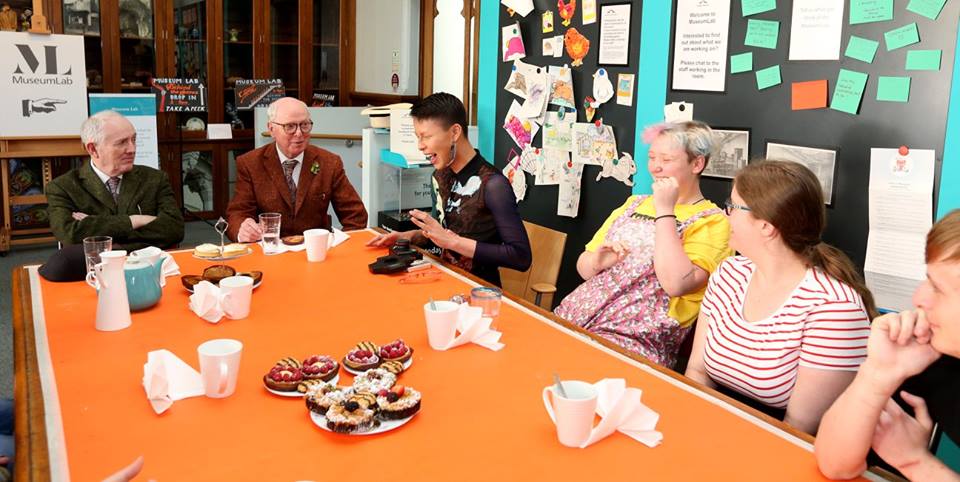
When the Museum Collective met Gilbert & George

This is a legacy story from an earlier version of our website. It may contain some formatting issues and broken links.

One of our highlights of 2018 was the Artists Rooms: Gilbert & George exhibition.

In this new video, members of our Museum Collective look back at their time working on the exhibition and meeting the artists.

[arve url=”https://youtu.be/5IJMIJIRt_U” align=”center” /]

How our new archaeology gallery tells history in exciting new ways

3D facial reconstruction of a Neolithic woman from Whitehawk

This is a legacy story from an earlier version of our website. It may contain some formatting issues and broken links.

Our new Archaeology Gallery explores exciting ways of telling history to entrance visitors.

Colour image of a reconstructed woman's face from the Neolithic era. Woman has brown skin and brown hair and is playing with a necklace that hangs around her neck.

3D facial reconstruction of a Neolithic woman from Whitehawk

A fascinating mix of new technology and ancient finds is set to transform the world of archaeology for thousands of visitors to Brighton Museum.

The opening of the new Elaine Evans Archaeology Gallery on Saturday (26th) is the first in Britain to provide visitors with an all-round experience of the period, by reconstructing the faces of early residents and recreating the atmosphere of the past using sound, film and images.

The new cutting edge gallery focuses on seven people, five who were early residents of Brighton & Hove, who lived from the Ice Age to the Saxons. 3D reconstructions using scientific research from their remains have been recreated to show what they may have looked like.

View of archaeology gallery, showing cases and a woodland backdrop behind.

The science behind the facial reconstructions provides an instant understanding of how our ancestors looked over a 600,000 year period. DNA analysis has helped us understand skin, eye and hair colouring. It shows that different people from a variety of backgrounds and geographical origins have settled in Sussex through history.

As the newest archaeology gallery in the UK, the space has been designed to get away from the traditional glass cases full of pots and flints.

Instead the gallery has been especially designed to appeal to children who study the time period as part of the National Curriculum. Teachers and education specialists have been involved in the creation of the new gallery from the beginning.

Colour illustration of two Ice Age humans seated by a fire

Royal Pavilion & Museums

There has not been an archaeology gallery in the museum for twenty years. Members of the Brighton & Hove Archaeological Society petitioned the Council for a new one and have also worked with the museum team as part of a gallery advisory group.

Rather than overwhelm visitors with lengthy historical text, the gallery is designed to provide an ambient effect using sound, film and images set in a woodland clearing to interpret the earliest evidence of people in Sussex to the Saxon times.

As visitors enter the room, they will see the walls adorned with trees to echo a small clearing on the Sussex coast. There will be the sound of people working, cooking and chopping trees down – just how it would have been for early people.

Short films through the space illustrate ancient technological processes and demonstrate how our ancestors made fire, smelted bronze and processed raw materials for cloth-making.

Caroline Sutton, Press Officer

My first week as a Museum Futures Trainee

This is a legacy story from an earlier version of our website. It may contain some formatting issues and broken links.

This week I started a Museum Futures traineeship at Royal Pavilion & Museums.

Young woman standing outside museum entrance wearing a coatMuseum Futures is a year-long programme hosted by the British Museum and funded by the Heritage Lottery Fund with eight participating museums across the country, including Royal Pavilion & Museums, in which trainees aged 18-24 receive on-the-job training to help digitise their museum and will receive a Level 3 diploma in Cultural Heritage.

I was first interested in Museum Futures because I have a passion for history, having finished history A-Level last summer, and was searching for a history-related job so working in a museum was ideal for me. With no previous experience in the museum sector or working with digital technology, a traineeship seemed like the perfect place to start.

Along with the digital team I will be working on the digital preservation of collections for future access, digitalising visitor experience within the museum, digital publishing and improving existing online systems (such as the website and the Digital Media Bank).

Throughout the course of the year I will be travelling to the other participating museums to attend monthly training sessions in which all eight trainees will share their experiences, ideas and achievements, including one at Brighton Museum which I will help coordinate and host. The participating museums are:

  • Royal Pavilion & Museums
  • The British Museum
  • South West Heritage Trust
  • York Museums Trust
  • Norfolk Museums Service
  • National Museums Liverpool
  • Museum of East Anglian Life
  • Garden Museum

Most of my week has been spent familiarising myself with the Museum and its online systems (mainly the Digital Media Bank), contributing to the January edition of the Insider e-newsletter and meeting some of the people I am going to be working with over the next year.

I am really looking forward to expanding my digital skills, gaining experience of working in the museum sector and learning how to use new digital technology over the course of 2019.

Tasha Brown, Museum Futures Trainee