Story Category: Legacy

Model plane flying on Devil’s Dyke

This is a legacy story from an earlier version of our website. It may contain some formatting issues and broken links.

Image of the Month, September 2018

Black and white photo of a man and boy flying a model planeA man and boy play with a model aircraft on Devil’s Dyke.

Photograph produced by the Brighton & Hove Herald newspaper, 23 September 1937.

You can view and download this photograph from our Digital Media Bank.

Hoppy success at Preston Manor

This is a legacy story from an earlier version of our website. It may contain some formatting issues and broken links.

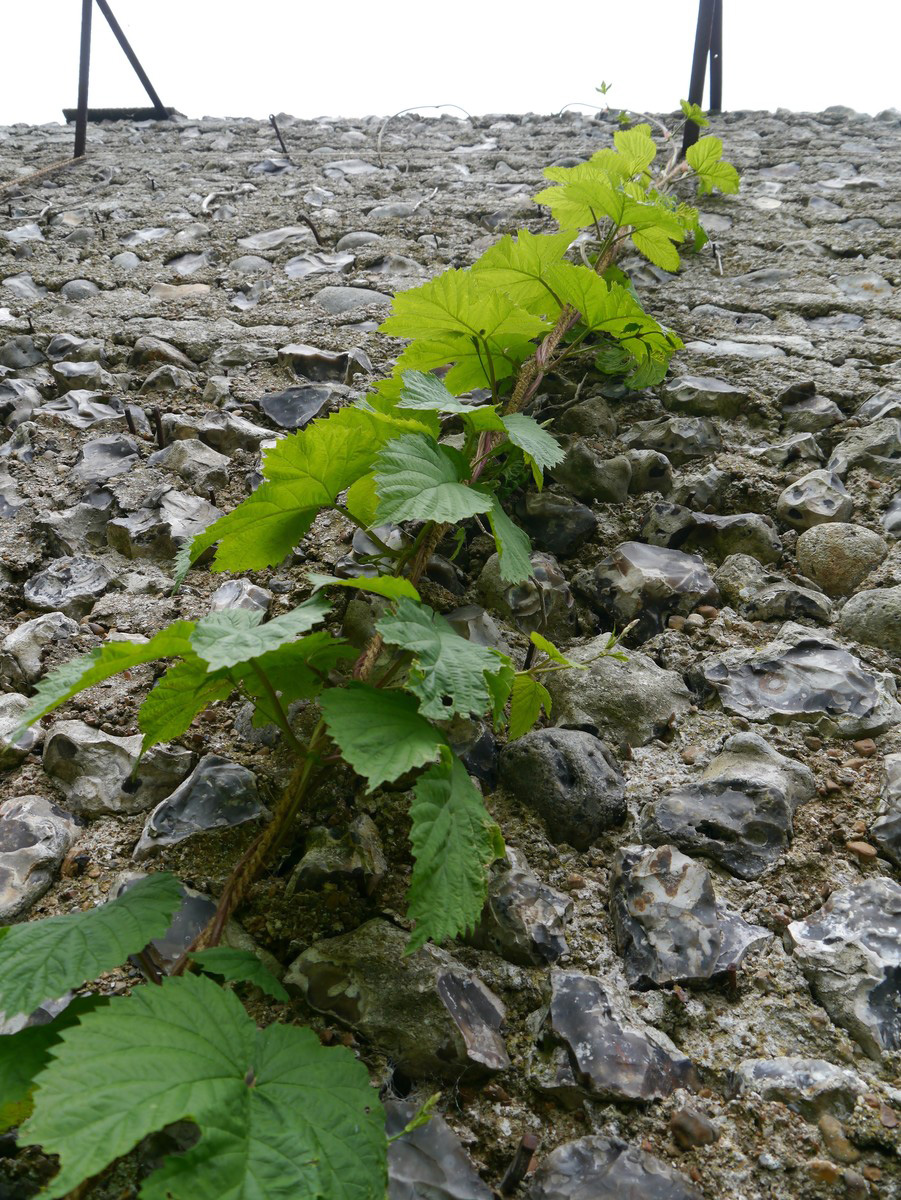
Following a fantastic summer, there has been a bumper crop in the first year of the Brighton Hop Project at Preston Manor.

Hops growing at Preston Manor, 2017

The volunteer-led community project crowdfunded to raise cash in 2016 for the purchase of hop plants which have been planted around Brighton & Hove.

Around 40 plant rhizomes and start up materials were distributed among 11 different growing ‘farm’ sites in various venues.

Preston Manor walled garden was the biggest site with ten plants in all. Museum garden staff worked to care for the plants.

Development and Operations Manager, Preston Manor Chris Drake said; “ We didn’t expect there to be a useful crop this year, but the plants have in fact been very productive and it appears a limited run beer can be brewed using hops from one of the two varieties grown here.”

The volunteers for the project have been talking to local brewers who hope to create a beer soon from the produce.

In addition, the project has inspired a number of art projects by the organiser Matt Redman. To find out more visit the Brighton Hop Project website.

Caroline Sutton, Press Officer

Slow down for the snails

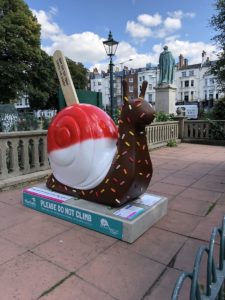
The FABtastic snail who looks like a delicious ice-cream, outside Brighton Museum & Art Gallery

This is a legacy story from an earlier version of our website. It may contain some formatting issues and broken links.

We’re very excited to be overrun with snails this autumn as we’re taking part in Snailspace to raise money for Martlets Hospice.

The Snail’s Pace trail has 50 large models of cheeky, brightly coloured molluscs all around the city of Brighton & Hove to raise money for charity. The sculptures follow the huge success of the Snowdogs by the Sea in 2016 which raised over £330,000.

Pop along to our museums to see a range of beautifully decorated snails designed by local artists, schoolchildren and organisations.

Photo of model snail made to look like an ice creamOn the Royal Pavilion estate, there are five snails attracting lots of attention from visitors.  We have Inca Snail, an Aztec inspired chap by Art + Believe by the Indian Gate.  By Brighton Museum & Art Gallery we have FABtastic who looks like a delicious ice-cream.

Inside the museum (don’t worry you don’t have to pay to see them) we have three very cute junior snails by Portslade Aldridge Community Academy, St Peter’s Primary school and nursery and The Towers School.

At Hove Museum, we have five junior snails by West Hove schools, Pumpkin Patch nurseries, Hangleton Primary and Hove Park School.

There are snails at the Booth Museum of Natural History decorated by St Christopher’s Prep school and Windlesham School and Nursery.

Photo of model snail

The Snail project is aimed at raising money for Martlets Hospice which offers care and support for people with terminal illness.

The idea behind #BeMoreSnail, is to encourage people to slow down, enjoy the moment and spend more time with the people they love. It resonates with the philosophy behind the life-changing care provided by the hospice, and, at the end of the event, the sculptures will be auctioned off to raise money for it.

Download a Route App or pick up a paper copy at venues around the city. It’s a great way to get out and about around the city, visit local landmarks and support a local cause.

Caroline Sutton, Press Officer

The OUTing the Past Festival of LGBT History

OUTing the Past logo

This is a legacy story from an earlier version of our website. It may contain some formatting issues and broken links.

Kelly Boddington introduces the OUTing the Past Festival, and Royal Pavilion & Museums’ role in supporting LGBT history.

Hello All,

I am very excited to share the news that Brighton Museum will be participating as a national hub of The OUTing The Past Festival of LGBT History next February. Whether you are a local historian, a student, lecturer or an activist, this is a fantastic opportunity to showcase new research to the public or to share your personal experience of a little known area of LGBT history!

Presentations only need to be 20 minutes long and might cover past local, national, or international events of relevance to the Human/LGBT+ Rights agenda and experience. It could be about a group, network, or a specific campaign you have researched or were involved with, or an account of a personal journey from a historical perspective.

OUTing The Past runs as a series of national and international events throughout February & March and this year it has secured 18 festival hubs all over the UK as well as in, the Republic of Ireland, Sweden, Norway, and New York. For the 2019 theme History II: Peace, Reconciliation, and Activism we are interested in presentations about key LGBT+ anniversaries, or offering an LGBT reading of key historical events that will be celebrated in 2019 e.g. the 100th anniversary of end of the WWI or the 50th anniversary of the Stonewall Riots. We are particularly keen to showcase presentations highlighting the LGBT experience of black and ethnic minority, disabled, and bisexual people as these perspectives are underrepresented.

Please find a link to the application form. All applications to present must be submitted to the Festival Gazette Coordinator, Caroline at Festival.Gazette@outingthepast.org.uk before 1st October. Applicants also need to submit a 200 word blog about the subject of their presentation that can be used to promote it on the LGBT History Month website before this deadline. If you have any questions about the Festival or the applications process please contact Caroline.

Post-presentation a £20 fee and any qualifying travel expenses will be paid to speakers by the relevant participating hub via OUTing The Past Festival.

OUTing the Past,

Now in its 5th year, The OUTing The Past Festival of LGBT History, is an initiative by the charity Schools OUT UK who established LGBT History Month in 2005.

The festival brings together academic scholarship and personal testimonies of this important but neglected part of our common past. It seeks to encourage and promote academic research, challenging embedded heteronormative teachings of history. It also aims to popularise the study of LGBT history, developing its audience and encouraging the collection, archiving, and preservation of its material evidence.

Sharing Content

Any presentations not ultimately selected by a 2019 hub may still be picked up elsewhere and the application includes an option to authorise sharing of content with third-party organisations expressing an interest in showcasing LGBT+ history, or to indicate if you would like your presentation submission to be placed on the LGBT History Month Website so others can contact you and book you for the month.

Schools OUT UK are exploring the possibility of making appropriate presentations into lesson plans, accessible on their online teacher’s resource The Classroom.

Kelly Boddington

Happy Birthday Ebenezer!

This is a legacy story from an earlier version of our website. It may contain some formatting issues and broken links.

Today’s amusing Google Doodle (16th August 2018) commemorates Ebenezer Cobb Morley’s 187th birthday. Featuring images reminiscent of the sportsmanship and footballing prowess depicted by Harry Enfield & Chums – the Arsenal team of 1933 against the Liverpool team of 1991, the latter ‘playing for the first time in black and white!’ – the ‘doodle’ perfectly illustrates Ebenezer’s contribution to the modern game.

Google Doodle commemorating Ebenezer Cobb Morley’s 187th Birthday.
Google LLC

A ‘Hullian’ by birth, Morley lived in Barnes, Surrey from 1858. He practised as a solicitor in London and became a justice of the peace, county councillor and the conservator for Barnes Common. Referred to as ‘the grand old sportsman of Barnes’, Morley was an accomplished athlete, yet it is football which he will be long remembered for.

He formed Barnes Football Club in 1862, a year before the Football Association of England (FA) was established. During these embryonic days before association football there were often disagreements about the way the game should be played. Whether the ball should be handled as well as kicked, or, should hacking an opponent be permitted or not, were often disputed. Diego Maradona and Ron “Chopper” Harris may have their own views on these…

One of the most infamous moments in World Cup history – The Hand of God.
giphy.com

Morley suggested that football needed its own set of rules in the way that cricket had – the earliest ‘Laws of Cricket’ were drafted in 1744. On 26 October 1863 at the Freemasons’ Tavern in Great Queen Street, London, the FA was formed. Morley drafted the first set of playing laws for football and was appointed as the organisation’s secretary, becoming the Association’s second president from 1867 to 1874.

Charles William Alcock (1842-1907), a contemporary of Morley’s and his successor as secretary, proposed in 1871 ‘That it is desirable that a Challenge Cup should be established in connection with the Association, for which all clubs belonging to the Association should be invited to compete’. This proposal led to the creation of the FA Cup, the oldest national football competition in the world. The inaugural tournament in 1871-72 was won by Wanderers, captained by Alcock, who beat the Royal Engineers 1-0. The trophy was presented by Morley.

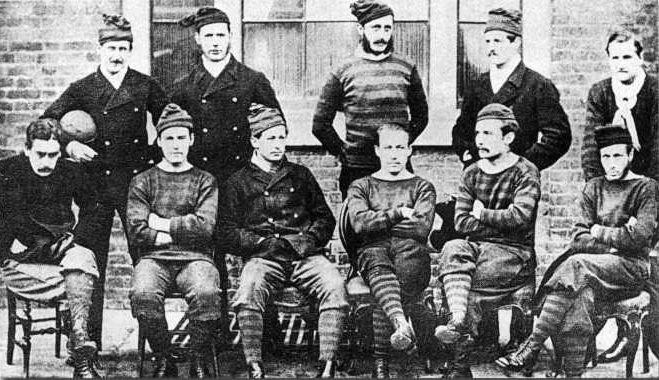
The Royal Engineers pictured in 1872. Back: Merriman, Ord, Marindin, Addison, Mitchell; Front: Hoskyns, Renny-Tailyour, Creswell, Goodwyn, Barker, Rich.
Wikimedia Commons / Public Domain

Morley remained in Barnes until his death at the age of 93 in November 1924, a year-and-a-half after the opening of Wembley Stadium. Alcock’s latter years were spent living at 7 Arundel Road, Brighton. He died in the town on 26 February 1907 aged 64.

Charles W Alcock as Secretary of the Surrey County Cricket Club (another hat he wore), photographed by E Hawking & Co., Brighton, 1897.
Wikimedia Commons / Public Domain

Detail of Pikes Brighton and Hove street directory for 1905 showing Charles William Alcock residing at 7 Arundel Road, Kemp Town.
Royal Pavilion & Museums, Brighton & Hove


Some commentators credit Morley as the father of football. Indeed, his playing laws have shaped a once unruly and often violent game played on urban streets and open fields into the world’s most popular sport. Although today’s game is not 100% perfect, video assistant referees (VAR) being the latest introduction in an attempt to reduce human error, it’s great to be reminded where it all started from.

By Dan Robertson, Local History & Archaeology Curator, Brighton Museum

New Royal Pavilion Garden trail for children

This is a legacy story from an earlier version of our website. It may contain some formatting issues and broken links.

With the summer holidays approaching (and sunny weather that shows no sign of stopping) plenty of people will be enjoying the Royal Pavilion Garden over the next few months. Thanks to two students from Patcham High School, families can now learn more about the garden with the help of a new trail for children.

Written by Halle & Scarlet from Patcham High School, the trail is full of fun facts and activities about the natural and historic features of the Royal Pavilion Garden. Available as a PDF that you can print out and bring to the garden, you can download it from the link below.

Waistcoat Wednesday

This is a legacy story from an earlier version of our website. It may contain some formatting issues and broken links.

‘A Voluptuary Under the Horrors of Digestion’ by James Gillray, 1792
The Prince of Wales sporting his waistcoat of choice…..

Yesterday (11th July 2018) was a bit of an historic day. The England Men’s football team had made the semi’s of the FIFA World Cup for the first time since 1990. 28 years ago. There was this strange feeling of hope, unity and positivity in the air. Whilst football fans were predicting the way the game might go, museums on the other hand were sparring over who might get to collect England manager, Gareth Southgate’s now famous waistcoat! Described as an item of cultural significance by the Daily Telegraph, the Museum of London and the National Football Museum, in Manchester, began a hilarious Twitter exchange over where the £65 M&S waistcoat should reside in future.

Beatrice Behlen, the Museum of London’s senior fashion curator said ‘Waistcoats were born in London in 1666, promoted by King Charles II. Now Watford-born Gareth Southgate is reviving that London tradition and bringing waistcoats home to the forefront of fashion.’ (The Daily Telegraph, 11/7/18)

Followed by the National Football Museum saying, ‘We’ve got quite a few quirkier items from football’s history, including Pele’s passport, and Southgate’s waistcoat would fit in perfectly.’ (The Daily Telegraph, 11/7/18)

There were suggestions of the museums having a game of football or a penalty shootout to decide!

#waistcoatwednesday became a trending hashtag with other museums giving examples of historical waistcoats in their collections, radio station Captital North East adding a waistcoat to the Angel of the North sculpture, and Star Wars UK pointing out Hans Solo as a fellow waistcoast lover. Plus the 1000s of fans sporting waistcoats to work in support of the England team.

Here at Brighton Museum we began the day with setting up an impromptu display showcasing some of the football memorabilia in the Collection, including a World Cup 1966 poster! We also put out a postbox where visitors could post their #footballmatters thoughts, memories and reminiscinces. Unsurprisingly, yesterday’s post was mainly shouts of encouragement for the evening game. People were definitely living in the moment, rather than looking back.

By Jody East, Creative Programme Curator, Brighton Museum

Museum Collective Interviews: Eliph’s Deadly Serious Sewing

Museum Collective Member Eliph

This is a legacy story from an earlier version of our website. It may contain some formatting issues and broken links.

While working on the Gilbert & George project, the Museum Collective have taken on various roles depending on our interests. Since everyone is working on different things, I thought it would be interesting to interview the other members of the Collective about what they’re doing. This interview is with Eliph, our artist in residence for the Gilbert & George project.

Eliph is working on a creative response to the ARTIST ROOMS: Gilbert & George exhibition and is keen to work with other young people and visitors of the museum on her project. She is creating a community quilt made up of squares inspired by symbols and references within Gilbert & George’s work. She had run drop in sessions for people to contribute with their ideas. Her project is called Deadly Serious Sewing and the final quilt will be exhibited in the Museum at the end of the summer.

I caught up with Eliph and asked her a few questions about what she’s been up to.

Museum Collective Member Eliph

What is Deadly Serious Sewing and how did you come up with the idea?
“My idea was to make a quilt because a lot of their work is made up of panels. I’ve been getting really into quilting lately, and I’d been working on one already that day, so I had quilting on the brain! They use a lot of symbols in their work and I thought that would be quite nice to use those. We got the name ‘Deadly Serious’ as Gilbert & George wanted to change the text of the What’s On guide from playful to deadly serious.”

How can people get involved?
“On the next museum free day, which is 7 July, visitors get the chance to have a say in what goes on the quilt and there will be squares that you can embroider. Then on 11 August I’ll be in the Museum Lab stitching all of the squares together with help from the Museum Collective. People can come and see what we’re doing, and have a chat about the project.”

One of the squares being embroidered

What’s been the best part of Deadly Serious Sewing so far?
“I got to visit Allsorts (A youth group for LGBTQU people under 26) and that was really nice because we had quite a few young people come and do embroidering. We actually ran out of squares! It was nice to chat to people while we worked.”

What’s been your favourite part of the Gilbert & George project?
“I want to say getting to meet Gilbert & George, but also all the trips that we do. I get to see how museums work and exhibitions are curated and displayed.”

Do you have a favourite piece in the exhibition?
“I like Existers (1984) because it doesn’t have loads of naked bodies. I also really relate to it as it’s pictures of young people.”

A collection of squares for the quilt

Join us at Brighton Museum on 7th July, the next Museum Free Day, to take part in Deadly Serious Sewing and chat about all things Gilbert & George!


Written by Museum Collective Member Charlie

Summer Arts Programme for Young People 2018

This is a legacy story from an earlier version of our website. It may contain some formatting issues and broken links.

In 2018 Royal Pavilion & Museums will be running another exciting summer arts programme for young people aged 13-19 (up to 24 years with additional needs).

A creative workshop will take place at each of our 5 sites across Brighton & Hove – all of them are free to attend and are inclusive of different abilities.

If you are interested, or know a young person who might be, then please contact Sarah Pain to book a space: sarah.pain@brighton-hove.gov.uk / 07833 483245.

The participants will have the opportunity to explore our buildings and collections, meet museum staff and work with professional artists to learn new creative skills in animation, drama-based movement and tactile art, photographic-collage, urban art and drama.

Summer Arts Programme for Young People 2018

Summer Arts Programme for Young People 2018

The programme is designed for young people who may not have visited the museums before and will be particularly targeted at young people who may be socially excluded.

Furthermore, if you know young people who are completing their Arts Award then these workshops can be incorporated into their awards.

The summer programme is a great opportunity to do something creative and fun in a supportive and inspiring environment. Participants can sign up for 1 workshop or all 5. Lunch will be provided.

Workshop details, all workshops will include a tour of the venue:

Fri 27th July at the Royal Pavilion 11am – 4.30pm

  • Animation: Marking the First World War Centenary, use original photographs, cartoons and soldiers stories to learn how the Royal Pavilion was used as a hospital for soldiers who had lost limbs. Then use these tales of comradeship, adjustment and strength as inspiration for your animation. You will have the opportunity to show your animations at Brighton Museum & Art Gallery as part of the Brighton Digital Festival 2018. Lead by digital makers, Remix the Museum. Please note we will meet at Brighton Museum & Art Gallery.

Wed 8th Aug at Brighton Museum & Art Gallery 11am – 3.30pm

  • Drama-Based Movement and Tactile Art: Inspired by the Fashion & Style Gallery you will create characters, stories and props for an exciting tale. This workshop is aimed at young people with moderate to severe learning difficulties. You will have the opportunity to have your artwork on display at Brighton Museum in September. Lead by theatre practitioner, Julia Box and artist, Sarah Pain.

Thurs 16th Aug at the Booth Museum 11am – 3.30pm

  • Curious Boxes of Birds: Inspired by Edward Booth’s collection of birds and Joseph Cornell’s surrealist boxes, design a diorama and create a curious world of birds in a box using photography, collage, drawing and found objects. You will have the opportunity to have your artwork on display at Hove Museum during September. Lead by artist, Lindsey Smith.

Tue 21st Aug at Hove Museum & Art Gallery 11am – 3.30pm

  • Urban Art: Create your own piece of urban graffiti art inspired by Aaron Blecha’s Aliens, Zombies and Monsters! exhibition. You will have the opportunity to have your artwork on display at Hove Museum during September. Lead by graffiti artist, Tom Goulden.

Wed 22nd Aug at Preston Manor 11am – 3.30pm

  • Drama workshop: use drama games, theatre techniques and period costume to explore the Manor’s history. You will have the opportunity to perform a short drama piece in-situ at Preston Manor that day. Lead by theatre practitioner, Julia Box.


Sarah Pain, Royal Pavilion & Museums Youth Engagement

Tea and Cake with Gilbert and George

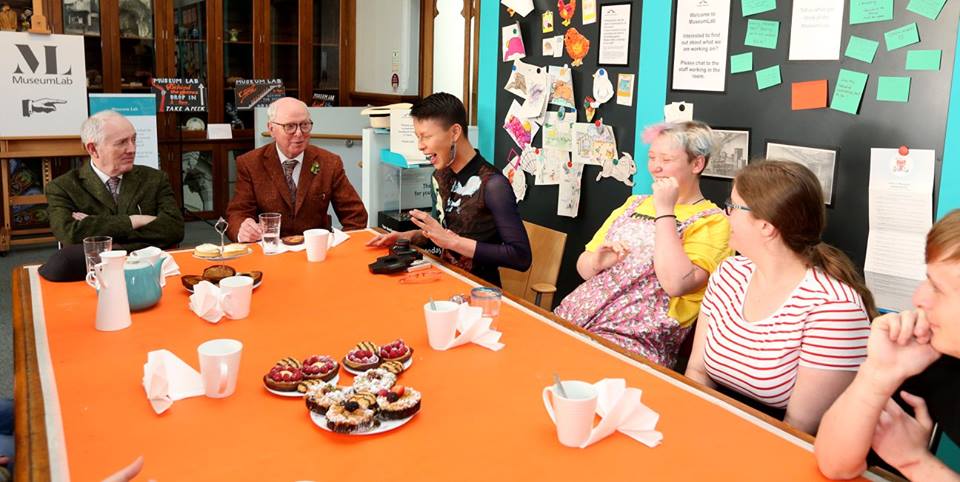
Gilbert & George having tea and cake with members of the Museum Collective

This is a legacy story from an earlier version of our website. It may contain some formatting issues and broken links.

As part of the Artist Rooms: Gilbert and George exhibition, Museum Collective member Charlie got to meet the artists when they visited Brighton for their ‘In Conversation’ event. 

Please note that this post contains language that some might consider offensive.

When Gilbert and George first said that they were coming to Brighton, everyone was rather excited about it. In the Museum Collective, we were even more enthusiastic about the potential visit as we weren’t the ones who had to organise it.

We knew that they wanted to hold an event in the evening, and that we’d have the opportunity to meet them beforehand. There were lots of different ideas about activities we could do, from playing board games to asking them for tattoo inspiration, but we decided on keeping it simple and having tea and cakes. It would give us time to talk, and who doesn’t like cake?

After what felt like months of talking about it, the day finally came and on the 9th May Gilbert and George visited their exhibition. It was a lovely sunny day, and I managed to get a brief glimpse of them having their photos taken as I sat in the Pavilion Gardens having my lunch. That was the moment that the excitement really set in for me; they were really here and I was going to get to meet them.

As they finished their press interviews, I was tasked with the job of arranging the delicious looking cakes. While I was doing this, other members of the Museum Collective arrived and there was definitely a buzz of anticipation in the air. There were butterflies in my stomach when they came into the Museum Lab. After months of working on the project and learning all about them, Gilbert and George were sat at the end of the table.

Gilbert & George having tea and cake with members of the Museum Collective

Everyone was a little nervous, and with such high profile guests coming to visit, we’d drawn a bit of a crowd of excited museum staff as well as a photographer capturing the moment. We got to ask them questions and they talked about their work, their past and life in general. Of course they were dressed in their signature suits and they even wore matching ties which was a nice touch.

Gilbert seemed particularly cheeky and mischievous, while George was slightly more reserved which was a surprise given that the two have a reputation for causing a stir.  Some of the things that they said were a bit more challenging than others, but I think that’s part of who they are. They are rebellious and controversial within their artwork, and that’s reflected in their character too.

There were three particular moments that I think will always stick with me. The first is their response when asked about their piece ‘In The Shit’ (1996) and in particular how they got some of their images that make up the work. Apparently they documented all of their bodily fluids and bowel movements for a period of time, and then chose the best ones to include. This means that somewhere, there are a bunch of negatives of their poo (and other things) waiting to be discovered.

The second was a discussion between George and one of the art students who was brave enough to ask (although we were all thinking about it). The student raised the question about what would happen if one of the pair was unable to make more work. To which George replied that this is something they always get asked when exhibiting in Germany, “what happens when one of you dies?” he said doing a German accent before adding, “it’s not like we carry around cyanide pills,”.

The Museum Collective with honorary members Gilbert & George

And the final moment that I will always remember is some advice Gilbert and George say that they give to up and coming artists. It came in two parts, but only the first is publishable here, so I’ll save that one for people who were present in the moment. The bit that is fit for print was George saying:

“When you wake up in the morning, sit on the edge of the bed and close your eyes. Don’t open them again until you can answer the question, ‘what am I going to say to the world today?’.“

It was inspiring to hear Gilbert and George talk about their work. They even performed part of their ‘Fuckosophy’ which was a dream come true for me as it’s one of my favourite pieces of theirs. I’m so grateful that I had the opportunity to meet them again, and to welcome them as honorary members of the Museum Collective.


Charlie – Member of the Museum Collective