Story Category: Legacy

George IV — Magna Carta abuser?

This is a legacy story from an earlier version of our website. It may contain some formatting issues and broken links.

800 years ago today, King John signed the Magna Carta, an event that’s often regarded as marking the beginning of modern democracy.

But did you know that King George IV was once accused of abusing this important agreement? A satirical print from 1820 shows the king presiding over a trial in which the Magna Carta has been trampled underfoot.

King Henry VIII, Act II, Scene IV, 1820

King Henry VIII, Act II, Scene IV, 1820

The print refers to the trial of George’s wife, Caroline of Brunswick, as part of the Pains and Penalties Bill then passing through Parliament. The Bill was an attempt to annul George’s marriage: the couple had long been separated, and having become king after the death of his father in January 1820, George was determined that his wife should not become Queen of England.

Caroline was put on trial in Parliament, with evidence presented of an alleged affair with her servant, Bartolomeo Pergami. The print compares the trial to Henry VIII’s annulment of his marriage to Catherine of Arragon. The bloated George is depicted as the Tudor king, while Lord Castlereagh, the Foreign Secretary, is portrayed as Cardinal Wolsey.

Having already ruled as Prince Regent since 1811, George was an unpopular king. Caroline’s cause was taken up by his many opponents, and her trial was presented as an abuse of long-standing English liberties. This is why we can see the great Magna Carta trampled beneath Castlereagh’s feet.

Although the Bill was eventually withdrawn, Caroline was refused entry to George IV’s coronation in July 1821. She died less than a month later on 7 August 1821.

Kevin Bacon, Digital Development Officer

An expert opinion on Sierra Leonean textiles

This is a legacy story from an earlier version of our website. It may contain some formatting issues and broken links.

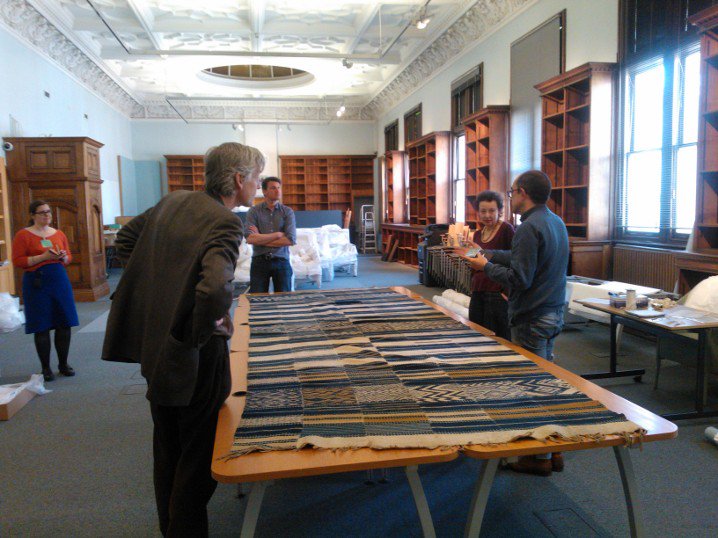
Last week, Duncan Clarke, an adire specialist and a dealer in West African textiles, visited Brighton Museum & Art Gallery.

He viewed some of our textile collections from Sierra Leone, and has written a post on his own blog about the visit.

Duncan Clarke viewing textiles from Sierra Leone in Brighton Museum.

Duncan Clarke viewing textiles from Sierra Leone in Brighton Museum.

Going the Extra Mile for Sikh History

Man running dressed as WW1 Sikh soldier with rifle

This is a legacy story from an earlier version of our website. It may contain some formatting issues and broken links.

angad running

Image:  Raj Gedhu

Hopefully you will have already checked out our recent World War One exhibition, War Stories, before it closed last month. This included the story of one of the Pavilion’s most interesting chapters, when it served a stint as the Indian Military Hospital.
Can you imagine what a strange, disorientating and moving experience that must have been for an Indian soldier, thousands of miles from home, gradually coming to after sustaining a war wound to find himself laid up in this spectacular Indian-style palace, on the damp and rainy English south coast of all places?
Many of the soldiers were delighted to be treated here, with some likening the experience to ‘having died and gone to heaven’ and one proclaiming that ‘the King has given us his palace.’

If that exhibition piqued your interest then you might like to hear that this particular project has got legs, literally!

Copyright Raj Gedhu

Copyright Raj Gedhu

Marathon Man

27 year old Angad Singh from Finchley, London, is raising funds for the UK Punjab Heritage Association (UKPHA) by running the Brighton Marathon in an authentic World War One replica uniform, complete with full turban.

He’s doing this to raise funds for the UKPHA’s Empire Faith & War, an ambitious social history project (funded by the Heritage Lottery Fund over 3 years) that’s working to collate and document the stories of thousands of ordinary Sikhs in Britain and the huge contribution they made to the war effort.

When thinking about the role of Indians in the British and Allied Forces, many people naturally think of the Gurkha regiment, but the Sikh presence was considerable too and should not be overlooked.

Sikh Soldiers

I didn’t know that a staggering 130,000 Sikhs were recruited by the British Army and while Sikhs accounted for just 1% of the British Indian population a century ago, they actually made up 20% of the armed forces in 1914. One in three soldiers who fought on the Western Front in the early months of the campaign were Indians, with Sikhs being credited with filling a crucial gap in the ranks which delivered victory for the allies.

These soldiers’ stories have been largely untold until now, with the charity confident that there are many more to uncover. These are stories of phenomenal heroism and sacrifice, such as that of Manta Singh, who featured in our exhibition and died saving the life of a British officer.

Project Plans

The project comes on the back of last summer’s exhibition at London’s School of Oriental & African Studies and UKPHA will use funds to create education packs, produce a documentary film, run a short film competition and a special publication, to be distributed for free. They’re building a database of stories, effectively making new history and helping Sikhs trace their family’s story, creating a network of ‘Citizen Historians’ in the process.

IMG_4185

I caught up with Angad to get the skinny on his march into Sikh history…

Tell us a bit about yourself Angad

I’m co-founder of Equal Education, a social enterprise which improves the educational outcomes of children in care. This, along with running and training, has been taking up all my time!

How did you first get involved with the UKPHA?

I signed up with the UKPHA to become a core citizen historian, as part of their Empire, Faith and War project. I was inspired by previous projects, like the Golden Temple exhibition and the books they publish. The depth of their historical research appealed to me.

Prior to volunteering I had sat down with my uncle and mapped my family tree, going back seven generations, but there was no mention of any direct involvement with WW1.

Through volunteering I slowly learned and appreciated the scale of the British Indian Army to the war effort. It was astounding to realise that some 1.5 million soldiers from the Indian Subcontinent saw service for the Great War. Despite attending many workshops, I still felt like a spectator or a consumer of the project, at least until we had a workshop on the CWGC….

What piqued your interest in the project?

In this workshop I discovered a personal connection to the Great War.  I discovered records citing those who had gone from my small ancestral village, who had fought and died in Gallipoli. Jivan Singh from the Malay State Guides would have been a contemporary of my great grandfather. This stirred a much bigger interest in World War 1 and its history.

The EFW project massively increased my awareness and I wanted to do something to give back. I enjoy running and have run half marathons in the past to support Great Ormond Street Hospital, so I decided to take on my most ambitious run to date: a full marathon in WW1 uniform!

Why did you pick the Brighton Marathon for this bold challenge?

Brighton seemed the obvious choice, given the Pavilion’s history as the military hospital and the Chattri Memorial. It was uncanny that we were able to secure places, with the marathon being exactly 6 months from the date I decided I would train for a marathon!

With less than a week to go I’m slightly apprehensive and excited at the same time. The public support has been overwhelming. It is an honour to represent the community and a relationship between Sikhs and Britain.

[iframe id=”https://www.youtube.com/embed/aQ3Nb7g3x10″ align=”center”]

Support Angad and Sikh History
Please do come along on the day to cheer on Angad and look out for a series of related talks over the Marathon weekend too.
Want to support him? Here’s Angad’s Just Giving page.
You can find the UKPHA’s Sikh history project Empire Faith & War on facebook and twitter: @gt1588

Jools Stone, Blogger in Residence

Look out for…

Meet the UK Punjabi Heritage Association Team

Brighton Museum

Saturday 11 April 12-4pm

Further resources

From Neuve Chapelle to Brighton

Photo showing Mir Dast being awarded Victoria Cross

This is a legacy story from an earlier version of our website. It may contain some formatting issues and broken links.

Today marks the 100th anniversary of the Battle of Neuve Chapelle. The battle was fought between 10 and 13 March in the Artois region of France. Over the course of three days, over 30,000 British and Indian troops succeeded in recapturing the small village of Neuve Chapelle, and forced the German lines back by 2km.

The battle was the first British led offensive of the First World War. Although the British had been fighting in France and Flanders for over six months, previous engagements on the Western Front had been largely defensive or small counter-offensives in response to German attacks. After a winter of static trench warfare, Neuve Chapelle marked the first planned attempt by the British to break through the German lines.

The battle is also a reminder of the important role played by the Indian Army on the Western Front at this time. Over half of the attacking force at Neuve Chapelle was made up of Indian troops, and the Indian Army suffered over 4000 casualties during the course of the battle.

The Indian contribution is remembered by a beautiful memorial at Neuve Chapelle. Unveilved in 1927, the memorial commemorates over 4,700 Indian men who were killed on the Western Front but have no known grave. Designed by Sir Herbert Baker, the memorial borrows from many Indian architectural styles and is reminiscent of the Chattri in Brighton.


Many of the Indians wounded at Neuve Chapelle were hospitalised in Brighton. By this time all three of Brighton’s Indian hospitals were in operation; although the Royal Pavilion and York Place hospitals had been running for several months, the former workhouse had opened as the Kitchener Indian Hospital just a few weeks before.

The Neuve Chapelle wounded arrived at a time when the relationship between Brighton’s Indian patients and local people was beginning to change. In a recent article published in History Today, Suzanne Bardgett describes how the Indians enjoyed relative freedom in the town during the first few weeks after the opening of the Royal Pavilion hospital, but this became much more restricted with the opening of the Kitchener in late February 1915. Dr Bardgett highlights the military authorities’ concerns about relationships developing between Indian men and white British women, but the British had other worries too.

Strenuous efforts had been made to accommodate the religious and cultural needs of Brighton’s Muslim, Sikh and Hindu patients, yet there were organised attempts by local Christians to convert the men. In early 1915 Sir Walter Lawrence, the Commissioner for Sick and Wounded Indians who had set up the Brighton hospitals, complained to Lord Kitchener about local missionaries.

‘I have seen vernacular translations of the gospels at the Pavilion, and I have orders that these should be strictly excluded…  Questions arise every day with clergymen and missionaries who wish to be admitted to the hospitals… if it is abroad that any attempt has been made to proselytise men who are sick or wounded, there would be great trouble.’

Lawrence was a former India Office civil servant who, like all administrators of the British Raj, had learned the need for religious tolerance from the Indian uprisings of 1857. At a time when the German Kaiser was promoting himself as a friend of Islam, and Indian Muslims were fighting against the Muslim Ottoman Empire, Britain needed to demonstrate its respect for Indian religions and culture. The activities of zealous Christians were probably more troubling for the military authorities than relationships between Indian men and British women.

The change in culture was also driven by the introduction of the Kitchener Hospital,  which had a different function to the other Indian hospitals in Brighton. The York Place Schools hospital took the most severely wounded men, while the Royal Pavilion was extensively photographed and became a show piece for British benevolence; the Kitchener, by contrast, took the lighter casualties, and was set up to return men to the front as soon as possible.

This reflected the methods of its commanding officer. While the Royal Pavilion and York Place hospitals shared a command structure, the Kitchener hospital was run by Lieutenant Colonel Sir Bruce Seton. The treatment regime implemented by Seton required Indian patients to act as orderlies in the hospital once they were fit enough to walk, with the expectation that they would return to combat duties with the umost haste. This resulted in a rapid turnover of patients: over the course of some eight or nine months, the 2000 bed hospital treated over 8000 patients.

Postcard showing entrance of Kitchener Indian Hospital, 1915

Kitchener Indian Hospital, 1915


Seton was particularly proud of his success with veterans of Neuve Chapelle. In a May 1915 letter to Sir Walter Lawrence he boasted that over 60% of the wounded men he had received from that battle had been returned to the front within six weeks.

Photo of Mir Dast at the Pavilion Indian hospital, 1915

Mir Dast at the Pavilion Indian hospital, 1915

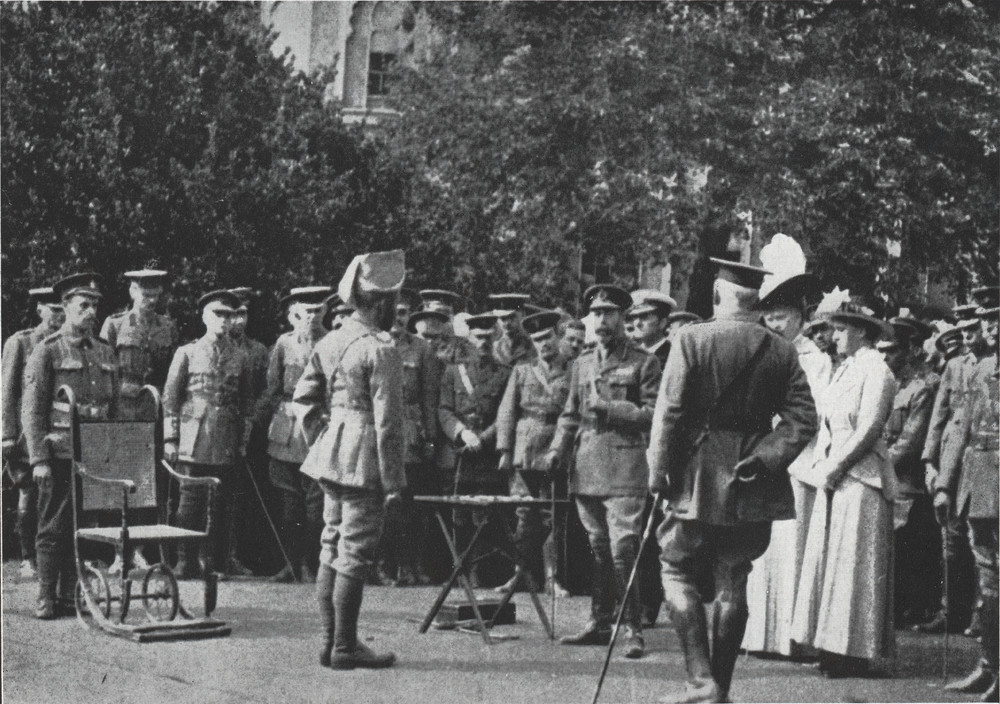
By contrast, the Royal Pavilion Indian hospital seems to have been far less strict and more of its patients were returned to India. The Pavilion hospital’s most celebrated patient, Mir Dast, was invalided back to India after receiving the Victoria Cross in the garden in August 1915. When he was personally awarded his medal by King George V, he asked the king to change British policy, and allow wounded Indian soldiers to return home after their recovery.


Mir Dast is also a reminder that fighting continued in Neuve Chapelle for many months after the battle. He had been sent to Brighton after suffering from a gas attack in trenches near Neuve Chapelle in May 1915. He never recovered from his wounds and, like many Indian soldiers, would long remember the name of a small French village.

George V awards Mir Dast his VC in the Pavilion garden, August 1915

George V awards Mir Dast his VC in the Pavilion garden, August 1915

As part of our programme of events marking the centenary of WW1, the Royal Pavilion features new displays showing how some of its rooms appeared as Indian hospital wards. We have also launched a new audio tour for 2015, focusing on the Pavilion’s role as WW1 hospital

Kevin Bacon, Digital Development Officer

Further resources

The War Stories Memory Tree

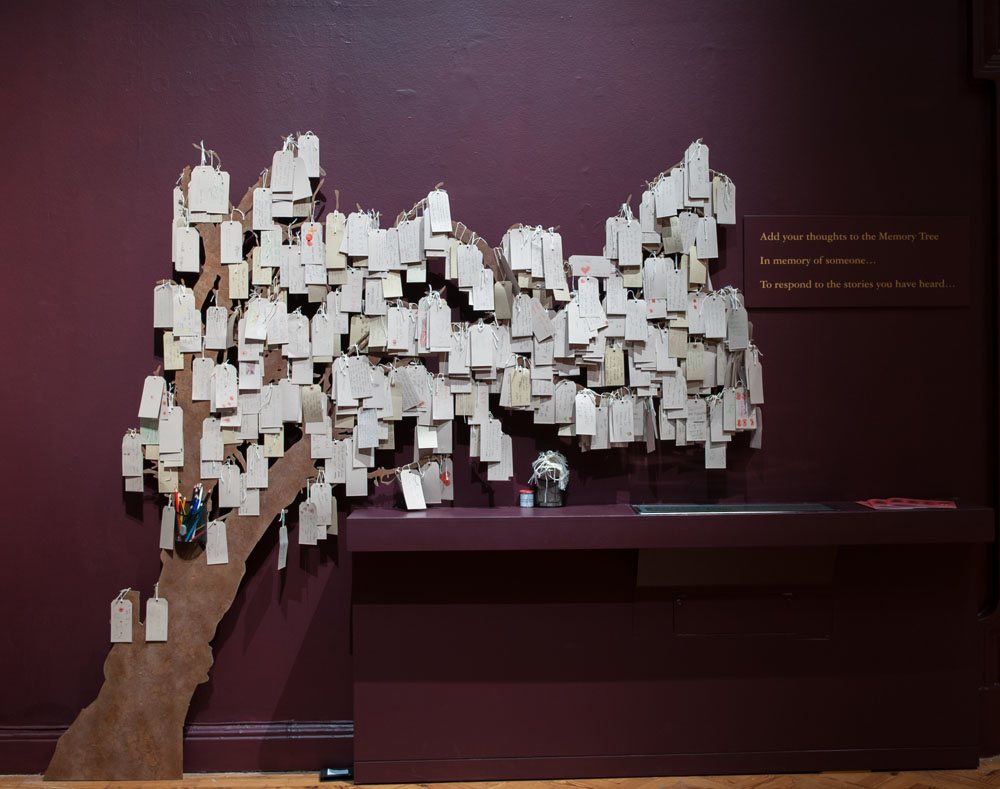
Memory tags laid out on tree shaped stand

This is a legacy story from an earlier version of our website. It may contain some formatting issues and broken links.

Volunteer Inés Cañellas has been working on the War Stories: Voices from the First World War exhibition at Brighton Museum & Art Gallery. There are only a few days left to see this exhibition, due to finish on 1 March.

Card from War Stories memory tree. Reads: 'More emotional for me than I expected, to read the letters back home of a fallen loved one and the idea of the many represented by the Unknown Warrior. Why do people war?Through my placement in the Creative Programming Department at Brighton Museum I have been able to take part in amazing projects that have given me invaluable experience. The skills I’m gaining through my work are transferable and invaluable for my studies, so week after week, my placement never stops to reward me in different ways (what also makes me a happy volunteer is that work in the department is always so varied and hands-on, which to me, makes the perfect way to learn new stuff!)

Looking back at the time I have spent in the museum so far I can say, without any doubt, that nothing has been as touching and thought provoking as my current task, as part of the museum’s current exhibition ‘War Stories: Voices from the First World War’. I will try to explain my experience in the best way I can. Visitors are given a chance to express their thoughts about war by writing personal messages on memory cards. Most of these cards, inspired by the exhibition’s life stories, express messages of respect and gratitude towards soldiers, nurses and civilians whose lives have been affected by war. Homage is also paid to visitors’ lost family members and to the individuals that make the exhibition’s life stories. (I can tell you, the story of the Unknown Soldier has been the most talked about.) Other cards have shown people’s general thoughts and reflections about war, which have been also very interesting. With a piece of string attached to every card, visitors are invited to hang their cards and contribute towards making a Memory Tree. The audience response has been amazing; the tree keeps on growing, and cards have to get taken down regularly to make room for new ones.

Brighton Museum and Art Gallery, WW1 Exhibition,  War Stories,

I would never have imagined that going through the memory cards would take me on a fascinating (and sometimes heartbreaking) journey that after weeks of reading is still reshaping my own understandings of war. Looking for my own memories of war, I can remember my grandparents telling me stories about the Spanish Civil War (I’m from Spain, and before Franco’s dictatorship my country was at war for three years, from 1936 until 1939). I know my great grandparents were killed during the conflict, leaving my granddad an orphan… Something I shared with the exhibition visitors is that my grandparents don’t really like to talk about that time, so my perception of that war was had never been really clear in my head. This is one of the main reasons why exhibitions like this are so relevant to the public.

Another thing I have noticed is how each life story has helped people appreciate their own freedom and their own quality of life. It is interesting to see how a horrible, devastating event like a war can trigger such feelings of togetherness and gratitude towards different people. I found that extremely moving and made me treasure how I am permitted to live my life today.

Photo of card from War Stories memory tree. Reads: 'Thank you for this exibition. You made me cry. We should remember our history. In memory of everyone who died in 1st World War.'

Each comment and feeling has given me the opportunity to get an insight on people’s personal feelings and thoughts, and for that I feel grateful. I look forward to carrying on with my project and I encourage you to visit us during these last remaining days, and place any war stories you have in the memory tree.

Inés Cañellas, Volunteer

Related Content

Vietnamese Waterpuppets

This is a legacy story from an earlier version of our website. It may contain some formatting issues and broken links.

Music, firecrackers and smoke bring these dramas to life on a shimmering stage of water. Once performed on a village pond they now travel the world.

Water provides the magic and hides the mechanism of the puppet. In Vietnam today schools teach this art, once jealously guarded and passed down only from father to son.

wail000106_300h250wTeu, as master of ceremonies, sits on the buffalo. He introduces many colourful characters, each one will perform their own story – from the mythical and legendary to the ordinary and everyday.

Introducing Vietnamese waterpuppet performance

Performed on a village pond, the lake of a temple, or indoors in a purpose-built theatre, this ancient art is thriving in Vietnam. The stage is the water’s surface – puppets dive underwater and then appear to emerge from nowhere. Puppeteers work within the manipulation room behind the water stage. They stand up to their waists in water, up to ten metres from the puppet action, screened from the view of the audience by a bamboo or linen screen. They hold their puppets on long bamboo poles submerged beneath the water, manipulating the arms and heads with hidden strings. Larger puppets are supported on the surface of the water by large floats of lightweight wood; rudders aid in turning the puppets in the water. Other ingenious mechanisms exist for animating the more complex scenes involving the movement in formation of a number of puppets. These tend to be closely guarded secrets.

Vietnamese water puppetry has many characters, historical, legendary and mythical, such as the phoenix and the water spirits or fairies, but most abundant are those embodying ordinary peasants – fishermen, and duck tenders.

Detail, outdoor theatre © Ingrid Ramm-Bonwitt 1991

Detail, outdoor theatre © Ingrid Ramm-Bonwitt 1991

The skills that the puppeteer needs were once closely guarded. The tradition was passed from father to son; daughters were usually not taught because they might marry outside the village.

The puppets are carved from fig, a light, soft durable wood. Each puppet is between 30 and 100 cm tall, and weighs up to 5 kg. The body and lower limbs are usually made in one piece; the upper limbs have joints for movement. The submerged bases of the puppets are fitted with floats, the correct size and shape to control the level of submersion.

Traditional water puppetry used percussion instruments to maintain the rhythm of a performance. The main instruments are drums, bells, gongs, horns and shells. Firecrackers are widely used as sound effects. Although there are songs in some water puppetry scenes, rhythm plays the main role, rather than allowing the development of distinctive music of its own.


Musicians © Thang Long Water Puppet Theatre, Hanoi

Musicians © Thang Long Water Puppet Theatre, Hanoi

The scenes in waterpuppet theatre

Among the scenes that are standard in contemporary water puppet performances, there is a potential repertoire of 200 items. Usually 15 or 16 vignettes are shown in one performance.


Examples include:

  • Teu, the jester and master of ceremonies
  • Firecrackers, flag raising and fanfare
  • An invitation to the spectators to take betel leaves and refreshment
  • Dance of the fairies
  • The dance of the four sacred creatures: dragon, unicorn, phoenix and giant tortoise
  • The four rural occupations (farmers, frog catchers, duck catchers, weavers)
  • The four castes
  • Wrestling between two athletes
  • Fight of the buffalo, horse race, boat race, seesaw game
  • March of the troops, funeral march
  • Dance of the immortals
  • Rainmaking dragons
  • Lions quarrelling over a ball
  • Heroes from history  the Truing sisters founding the nation AD40, Tran Hung Dao, 13th century, Ming soldiers, 15th century.

Particular scenes grew in popularity – they suited the range of movement possible by the puppets and the nature of performance taking place on the water. It is common to present scenes of simple emotive domestic activity followed by scenes of fast-moving action, for example:

  • Weaving silk – a woman working at her loom stops to feed a baby brought in by her mother. The baby, having drunk her fill, is handed back to her mother and she resumes her work.
  • Duck catchers – an old couple carry a basket of eggs on stage, these hatch into a flock of ducklings and the two old people try to tend the lively little creatures. A fox appears and watches the ducklings, is pursued and hides in a tree. It pounces on one duckling and carries it off in his mouth. The old couple chase the fox, capture and beat him.


Twelve

This is a legacy story from an earlier version of our website. It may contain some formatting issues and broken links.

twelve_01

Twelve was a comprehensive project designed to study the relationship between ‘Chinese things’ and ‘Chinese people’. Historical collections in British museums offer unique challenges to those working with contemporary audiences. The Chinese collections held by Brighton Museum & Art Gallery were largely formed by British people engaged in travel and trade in the late 19th century. They often reveal more about British experiences than they do about China or Chinese people.

The scope

The project looked at these objects to determine how they could be used to develop new dialogues about the relationship between ‘Chinese things’ and ‘Chinese people’ without obscuring the specific historical contexts in which they were acquired.

The consultation

A collaboration between Erika Tan, Brighton Museum & Art Gallery and individuals from Brighton & Hove’s Chinese communities.

The experience

• Chinese crafts workshops
• The development of a new archive of images and oral testimonies
• The creation of a new permanent collection
• The Supplementary Museum (15 November 2005-19 February 2006), a series of installations developed collaboratively by artist Erika Tan and Individuals from Brighton & Hove

Twelve Publication [Adobe PDF 1,143 KB]

A look back at the Whitehawk Family Archaeology Day

This is a legacy story from an earlier version of our website. It may contain some formatting issues and broken links.

Fiona Redford, Programmes Support Officer, looks back at last month’s Whitehawk Family Archaeology Day.

Early one drizzly, grey, January Saturday morning, members of the Local History and programming teams were busy finalising the arrangements for the Whitehawk Family Archaeology Day.  Furniture, handling collections, flint artefacts, human bones and spinning wheels were all manoeuvred into position.

By 10 o’clock there was a small huddle of eager visitors at the front door. By 11o’clock, there was a steady but relentless flow of excited families – all eager to have a look at and find out more about our exciting archaeological past.

Photo of fur with stone age tools laid upon it

Courtesy Hilary Orange, UCL

There was a really good variety of things to do, thanks to curator Andy Maxted, and Hilary Orange, who represents UCL’s project Archaeology South East.  There were flint knapping and prehistoric clothing demonstrations; and children’s creative workshops, which included digging for objects in a sandpit, making sashes, and creating badges based on local wildlife. There were two activities relating to pot making & decoration techniques and an observational drawing activity — all of which proved extremely popular.

Alexia Lazou delivered several fantastic archaeological Magic Lantern shows throughout the day, showing images of the 1930’s excavation of Whitehawk.

Other activities included Drop-Spindle and Spinning Wheel demonstrations, handling collections (including ancient artefacts and human remains), three talks, and numerous displays and projections. In addition to our work, 14 other local archaeological groups and societies took part. The Dig Whitehawk! volunteers were brilliant at chatting to the public, handing out programmes and directing visitors to the activities.

Through a ‘happy coincidence’ John Cooper’s Bite-size Museum talk on Amber also ran that day and became part of the programme. That too went down a storm! He’ll be doing another Bite-size Museum talk on Flint on 17 March.

All in all, it was a fantastic day that saw over 2000 people visit the museum and allowed them to get really hands-on experience of our local archaeology. Hard work – but all worth it.

Family days are run periodically throughout the year and are advertised in the What’s On Guide and on our website. So if you missed this one – keep your eyes peeled for the next one and feel free to get involved!

Fiona Redford, Programmes Support Officer


Further resources


The ‘Ancient’ Game in a Modern Conflict

This is a legacy story from an earlier version of our website. It may contain some formatting issues and broken links.

Technical advancement met the battlefield in the First World War. Increasingly mechanised on a scale never before seen, the war became a “storm of steel”, coined as the title to the memoir of German officer Ernst Jünger’s experiences on the Western Front.

Among scenes of mud, futility and sacrifice, particular forms of offensive and defensive weaponry became synonymous with trench warfare: the machine gun and barbed wire; sapping and the laying of mines; trench, field and heavy artillery and names like ‘howitzer’, ’18-pounder’ and ‘Big Bertha’; shell fire and shrapnel are to name but a few. The latter in particular claimed more lives than any, an estimated 70-80% of all fatal casualties. Furthermore, wounds from shrapnel significantly contributed to the approximately two million British soldiers, sailors and airmen that had been permanently disabled or disfigured by the conflict. This included over 41,000 amputees.

The first limbless patients at the Royal Pavilion were admitted on 20th April 1916 following the complex’s use as a hospital for Indian servicemen. Colonel Sir R Neil Campbell, “the trusty Scot to be relied on”, and his staff focused on rehabilitation and vocational training, pioneering at the time, laying the groundwork for today’s treatment of limbless ex-servicemen. Here, they convalesced to improve their strength before referral to Queen Mary’s Hospital at Roehampton, a specialist centre for fitting prosthetic limbs.

Maintaining morale of the invalided men as well as preparing them with the skills needed to find employment after the Army were very much part of daily life at the Royal Pavilion Military Hospital. The Pavilion “Blues” magazine, running from June 1916 to February 1920, gives a good insight into the activities patients involved themselves in. Sport features strongly, and a Sports Committee was quickly formed to organise events within the hospital and elsewhere, answering the cry “Play up “Blues”, and make the Pavilion the most interesting Hospital in Brighton”. Of the outdoor sports football, ‘king’ cricket and the ‘ancient’ game of stoolball would prove especially popular among the men, and women, who participated.

For those not familiar to stoolball, it’s probably best described as ‘cricket in the air’ with different bats, balls and wickets. My personal interest in the ‘ancient’ game comes from having played it whilst at primary school in Brighton. Regrettably, I have yet to pick up a stoolball bat in anger since and was completely unaware of its fascinating heritage and significance in rehabilitating injured soldiers until reading through volumes of the “Blues” magazine, seeing it referred to time and time again. This curious game predates cricket and other modern batting-sports, being played for over 500 years. It is even given a mention in Shakespeare’s comedy The Two Noble Kinsmen, “playing stool ball” supposedly used as a euphemism for sexual behaviour! The origins of the game lie firmly in Sussex and it could be argued that England’s first female sports ‘stars’ were those named in the Glynde Butterflies team of 1866, along with teams from other Sussex villages with brilliant names like the Chailey Grasshoppers and Selmeston Harvest Bugs.

The popularity of the sport has ebbed and flowed over the past 150 years or so, but midway through the First World War it experienced a real resurgence thanks to one Major William Wilson Grantham (1866-1942). He almost single-handedly revived the sport, suggesting its suitability to Military Tribunal for men invalided by war “for whom cricket or football was too strenuous”, prompted by his own son being wounded whilst serving in the Royal Sussex Regiment. Thanks to his efforts, knowledge of the game was passed to military hospitals such as the Royal Pavilion where it was very much enjoyed by patients and staff alike.

Heightening popularity resulted in matches featuring injured servicemen being played at the County Ground, Hove and elsewhere in the country, including Lords. The first of these matches at the home of cricket on 31st August 1917 featured teams from the 2nd London Hospital, ‘damaged by wounds’, and Ye Ancient Lawyers, ‘damaged by age’. It was reported in newspapers as far afield as Kalgoorlie, Western Australia and was also recorded for promotion and posterity by the Topical Film Company. Soon after the war’s end, showpiece matches were being played to raise funds for injured ex-servicemen such as that played at Buckingham Palace, watched by George V and Queen Mary, in September 1922. Through Major Grantham’s passion and determination, stoolball would experience a golden era and an almost worldwide reach being achieved, funds raised being used to send equipment and copies of the rules to Australia, Canada, Egypt and Japan.

All-female stoolball teams battling it out at the County Ground, Hove, c1930s. Image obtained from a glass plate negative of the Brighton & Hove Herald newspaper [DB1124.346]

All-female stoolball teams battling it out at the County Ground, Hove, c1930s. Image obtained from a glass plate negative of the Brighton & Hove Herald newspaper [DB1124.346]

Dan Robertson, Assistant Curator

The Royal Pavilion’s Hidden Histories: the hospital for Limbless Men

Patients at WW1 Royal Pavilion hospital

This is a legacy story from an earlier version of our website. It may contain some formatting issues and broken links.

Photo of patients at the Limbless Hospital, 1917

Patients at the Limbless Hospital, 1917

When I was a student in Brighton 25 years ago I became very used to seeing the iconic Royal Pavilion building during my everyday life in the city. I then discovered the story of this former royal palace being used as a hospital for injured soldiers during the First World War and suddenly I started looking at it in a new way. Since then it has fascinated me that this beautiful, yet strange building was somehow transformed into a state of the art military hospital, first for Indian soldiers and then for British soldiers who had lost a limb in warfare. I am certainly not the first to have found this fascinating.

An article in the 1917-18 The Brighton Season magazine describes the spectacle of the transformed palace:

‘..the great rooms, famous for their beauty, now hospital wards, is indeed a strange, sad sight, and one that probably very few ever dreamed that their eyes should rest upon.’

Since the opening of the Indian Military Hospital display in the Pavilion in 2010, there has been renewed interest in the forgotten story of thousands of Indian soldiers hospitalised in the city between 1914 and 1916. We are fortunate that this was recorded through a huge range of photographs, paintings, postcards and a commemorative book — all of which can now be downloaded for free.

However, the story of the Pavilion as a hospital for limbless soldiers, from 1916 until 1920, is a little less well known. There are hardly any photographs of the interior of the Pavilion during this time.

It was not just a hospital at this time, but a place of rehabilitation and retraining, before the men went to Roehampton to be fitted with new prosthetic limbs. To this end, workshops were built in the Pavilion grounds. The motto written over the entrance, ‘Hope welcomes all who enter here’ was said to be chosen by Queen Mary, who gave her name to the new buildings.

Queen Mary's workshop, 1917

Queen Mary’s workshop, 1917


The Queen Mary workshops provided training to enable the soldiers to learn to become book-keepers, motor mechanics, and carpenters, among other trades. There is a short film showing life at the workshops, held by Pathe, which can be seen here.

[iframe id=”https://www.youtube.com/embed/h9DceOSNILw” align=”center”]
Sport and leisure activities were also used as a means of rehabilitation. Cricket, the ancient Sussex game of Stoolball, even hairdressing competitions were held in the Pavilion Gardens.

Jody East, Creative Programme Curator, Brighton Museum & Art Gallery

********