Story Category: Legacy

“The greatest curiosities I have ever seen” – The story of a litter of exotic big cats that caught the eye of King George IV

This is a legacy story from an earlier version of our website. It may contain some formatting issues and broken links.

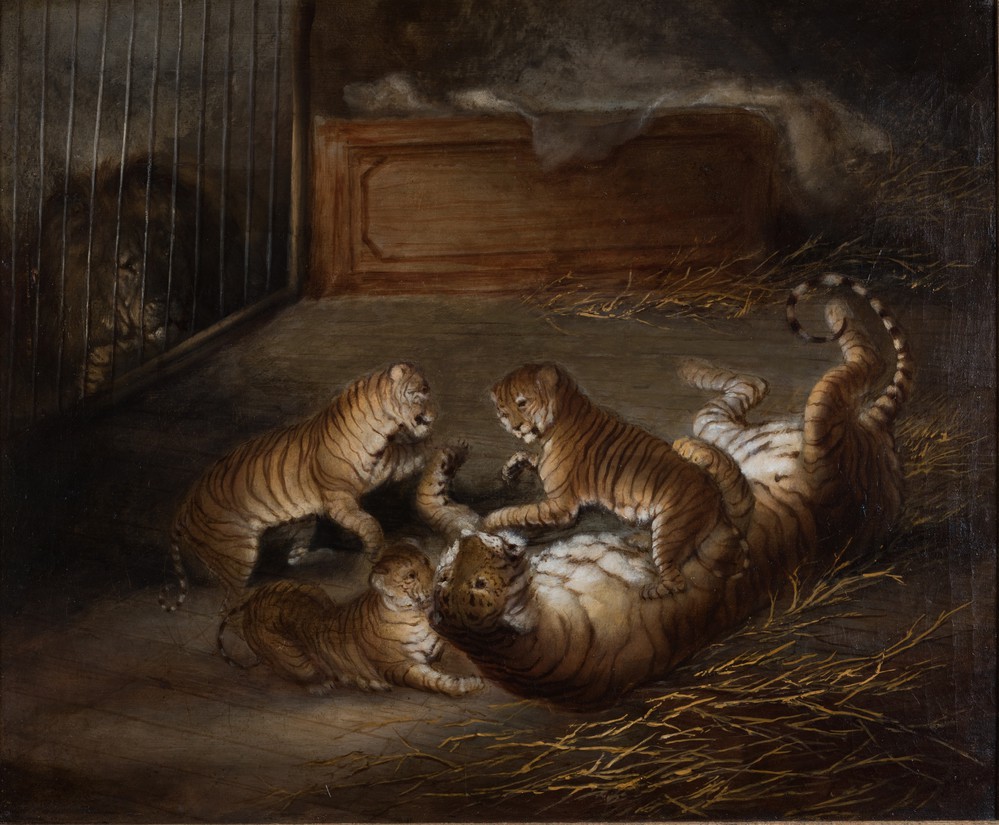
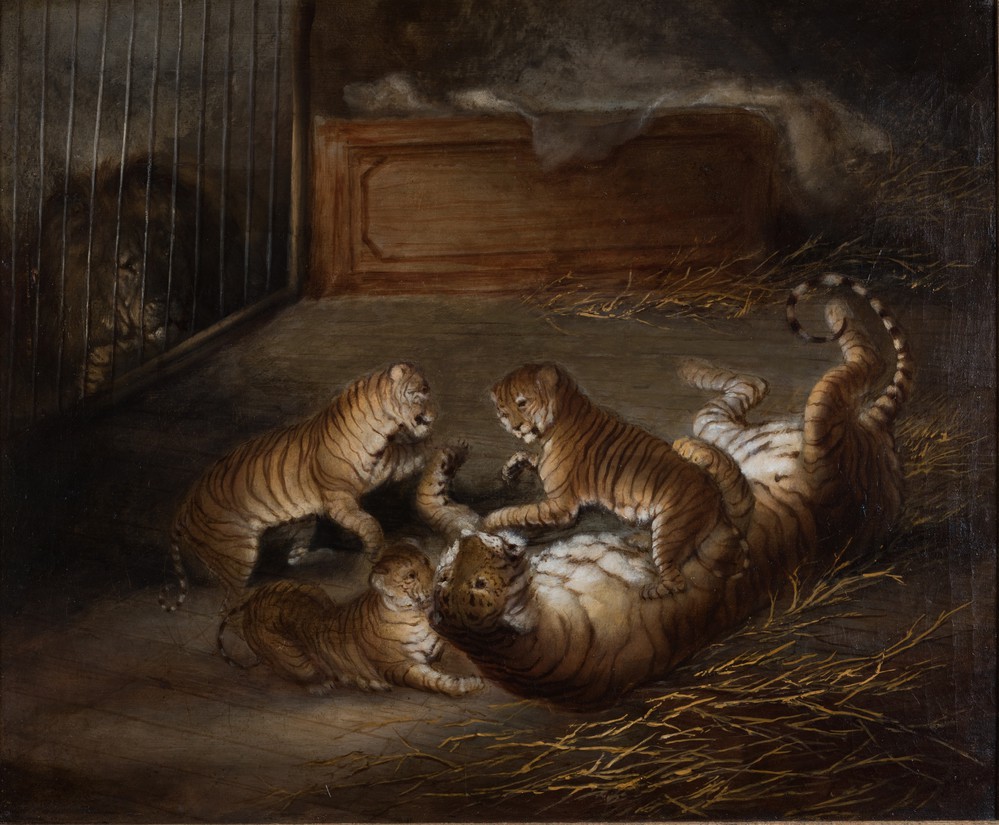
One of the stars of the Exotic Creatures exhibition at the Royal Pavilion (14 November 2015 to 28 February 2016) is a painting of creatures that had never before been seen in England. It shows Three ‘liger’ Cubs, the offspring of a lion and a tigress, who were born in the travelling menagerie of Thomas Atkins on 24 or 28 October 1824 at Windsor. The liger cubs – two males and one female – were possibly the first in Britain. Their births caused a sensation and the press reported soon after that they had already ‘attracted hundreds of spectators, being the only instance of the kind that ever occurred.’
Painting of Three 'liger' cubs, bred between a lion and a tigress at Windsor Great Park in October 1824

Three ‘liger’ cubs, bred between a lion and a tigress at Windsor Great Park in October 1824. Collection Stephen Pavey.


Lions and tigers can only interbreed in captivity, as they live on different continents. If ligers survive until adulthood they are often bigger and heavier than either parent, making them the largest hybrid cats. Male ligers can grow to the size of a pony and weigh over half a tonne. Most male ligers are infertile, so they very rarely procreate, and are considered to be of a gentle nature, due to the lack of testosterone. If the father is a tiger and the mother a lion, the offspring are called ‘tigons’.

Painting of The Nubian Giraffe, Jacques-Laurent Agasse, 1827. Courtesy ROYAL COLLECTION TRUST / HER MAJESTY QUEEN ELIZABETH II 2015

The Nubian Giraffe, Jacques-Laurent Agasse, 1827. Courtesy ROYAL COLLECTION TRUST / HER MAJESTY QUEEN ELIZABETH II 2015

Several artists flocked to study and paint the unusual hybrids of Atkins’ menagerie, among them the famous animal painter Jacques-Laurent Agasse (now at the Yale Center for British Art in New Haven, Connecticut), who a few years later was commissioned by George IV to paint an even more exotic creature: the Nubian giraffe given to the king as a gift by the Pasha of Egypt (this large painting is on loan from the Royal Collection and hangs opposite the Three ‘liger’ cubs’).

Jacques-Laurent Agasse, 1767–1849, Swiss, active in Britain (from 1800), Group of Whelps Bred between a Lion and a Tigress, 1825, Oil on canvas, Yale Center for British Art, Paul Mellon Collection

Jacques-Laurent Agasse, 1767–1849, Swiss, active in Britain (from 1800), Group of Whelps Bred between a Lion and a Tigress, 1825, Oil on canvas, Yale Center for British Art, Paul Mellon Collection

Our painting is cautiously attributed to Richard Barrett Davis (1782 – 1854), who had strong connection with the royal family from 1789 onwards, but it has previously also been linked to James Northcote (1746 – 1831). The cubs are shown here playing with their mother, with the father looking on from behind bars, but the tigress reportedly refused to let them suckle. A female terrier was drafted in as a whet nurse, which is included in Agasse’s painting.  George IV, whose private menagerie was nearby at Sandpit Gate in Windsor Great Park, heard of the birth of the ligers and immediately asked to see them. They were duly presented to him at the Royal Cottage in the Park. The papers reported that he called them ‘lion-tigers’, took one of the cubs in his arms and commented that they were the greatest curiosities he had ever seen.

Atkins left Windsor with his menagerie after a few weeks and appears to have made the most of this royal connection, advertising the liger cubs as having been blessed by the King with the words ‘Long may you live and prosper, and be beneficial to your master.’ This, however, was not to be, as they died within less than a year, but the same lion and tigress produced five more litters between 1825 and 1833. Most of these ligers cubs only lived for a few months and the fifth litter, born 1831 at Kensington, was shown to the young Princess Victoria (later Queen Victoria) and her mother, the Duchess of Kent. King William IV, too, asked to be shown liger cubs born in 1837 in a different menagerie.

The liger cubs featured greatly in 19th century literature. Their story was told and illustrated with images in James Rennie’s The Menageries (1829), Robert Huish’s The Wonders of the Animal Kingdom (1830), in Thomas Landseer’s Characteristic Sketches of Animals (1832), in John George Wood’s Illustrated Natural History (1853, 1874) and many other publications. . At the end of the 19th century attempts of systematic interbreeding of lions and tigers were carried out at the Zoological Gardens at Dublin and in 1896 an account of the history of ligers in Britain – beginning with the litter in this painting – was published in Richard Lydekker’s A Hand-Book to the Carnivora (Lloyd’s Natural History).

Picture of The stuffed Lion-Tiger, from: Richard Lydekker, Lloyd's Natural History: A Hand-Book to the Carnivora. Part I. Cats, Civets and Mongooses, London, 1896

The stuffed Lion-Tiger, from: Richard Lydekker, Lloyd’s Natural History: A Hand-Book to the Carnivora. Part I. Cats, Civets and Mongooses, London, 1896

Two of the liger cubs in Atkins' menagerie in December 1827. From James Rennie?s The Menageries (1829)

Two of the liger cubs in Atkins’ menagerie in December 1827. From James Rennie?s The Menageries (1829)

The Lion, Tigress and cubs. Hand-coloured etching. From Robert Huish?s The Wonders of the Animal Kingdom. London, 1830

The Lion, Tigress and cubs. Hand-coloured etching. From Robert Huish?s The Wonders of the Animal Kingdom. London, 1830

The painting on display here has probably never before been shown in a public exhibition. It was recently included in a Sotheby’s auction sale of old masters, and acquired by Stephen Pavey, a local collector and supporter of the Royal Pavilion. It is slightly smaller in size and by a less accomplished artist than Agasse’s work, but is nevertheless extremely charming and adds another dimension to the liger cubs story, as it is the only one that shows the tigress and her cubs in playful movement. It would not have been possible for us to borrow the Agasse painting from the Yale Center for British Art, and we are therefore extremely grateful to Mr Pavey for having purchased the painting with the aim to support the Exotic Creatures exhibition.

Alexandra Loske, Curator of Exotic Creatures

  • Alexandra Loske will give two ‘Bite-Size Museum’ talks (free with museum admission) about Exotic Creatures, at which she will show additional objects that did not make it into the display and focus on ceramic pieces and printed sources. The first will take place on Tuesday, 5 January 2016, the second on Tuesday 16 February. Please note that the talks will in the Willett Collection of Brighton Museum & Art Gallery, not in the Prince Regent’s Gallery.
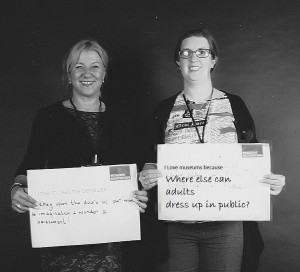
Amanda and Holly’s trip to the Museum Association Conference

This is a legacy story from an earlier version of our website. It may contain some formatting issues and broken links.

Well it’s over a week since our return from the Museum Association Conference in Birmingham, we had a fantastic two days but it was really exhausting and a full on experience, rushing from one event to the next. We both agreed on the journey home that we were brain frazzled, but somehow it was worth it. In the time since the conference Amanda has reviewed the delegate list and we were, as we suspected, just a handful of front line staff that were in attendance. Possibly five out of 100s!

Pass

This in itself was a very interesting experience, as many of the exhibitors in the hall were noticeably overly interested in hearing that we were from the Royal Pavilion & Museums. This faded quite quickly on hearing we were front line staff and not Directors or CEO’s with the authority to make decisions for their businesses. However we were not deterred and have left the conference feeling motivated, empowered and enabled.

The general atmosphere at conference was very friendly and welcoming, delegates went out of their way to say hello and share information. Networking was in full swing and we met lots of interesting people.

Attending some of the talks, we realised that the heritage sector in general is suffering severely from financial cuts. There was no beating about the bush for the way forward, it’s change all the way as the sector as a whole has to adjust to keeping going with less and less funds.

One event Amanda attended was titled From Resilience to Prosperity. It used a metaphor of a meteorite about to strike the earth to bring home the severity of cuts the sector is facing. Alternatives to the current business models were put forward, which acknowledged and accepted future changes, such as loss of revenue impacting on staff numbers. But it suggested ways to counter deficits by marketing opportunities.

Holly attended a session about how museums should be more like football clubs. This notion sounds ridiculous in the first instance but it focused on the smaller clubs like United FC formed from the disparaged Manchester United fans when an American took over the club a few years ago. Since then, United FC and several other clubs have developed strong community engagement programmes. The talk argued that museums could learn a lot from this sort of club who benefit from lifelong supporters.

As a sector we were told that we are in a better position than other public services to benefit from ‘social capital’ as it can be built on through culture and we are the keepers of culture so to speak. A crisis is upon us and as a sector we need to act rather than over react. This is all a new concept to us and we think we will have to research more to fully understand the implications. But it was interesting to see a position which promoted action and positivity and a way forward with a focus on drivers of commercial success to increase productivity and, in effect, be in control of our own destiny as an individual heritage building, by making bigger and bolder changes.

Lots of people we spoke to were already in museums which had gone to trust. One example is Birmingham Museums who went in to trust a few years ago as this gave them better protection from council cuts. As a trust they were able to start a campaign against the cuts with local and online support. Due to the campaign the planned cut was spread over two years allowing them to plan new methods of fundraising and savings. We also spoke to one of the curators at Birmingham Museum and Art Gallery, who left us feeling quite positive by acknowledging that whilst transition in itself can seem quite frightening, there is life after trust. A life more streamlined with the focus and emphasis on the strengths of the museum and the individuals within that museum. Strong brands with new models of delivery from an onboard workforce are successful.

On our first day at the conference, Amanda was flagging considerably by 5pm, but Holly being full of life and energy, insisted we went to yet one more event. I was so pleased we did as it was really informative. A very dynamic director from Bede’s World with a strong northern accent and a history of employment within the steel industry was fabulous. He emphasised the importance of the workforce ‘rubbing along’ together, not ‘rubbing against’ each other. He had transformed Bede’s World and seemed to have done so with a very down to earth pragmatic approach, which was based on common sense and facing reality. He had made decisions which empowered his staff and the community. He changed how the idea of a museum can extend into the community and even managed to set up a 6th form college for a group of failing students from a nearby school. Bede’s World is now looking to become a provider of education and also offers apprenticeships to those learners. This was inspirational!

MA conference 2015

Other events were just as inspiring and motivational such as the Museum Accessibility Talk for the Blind and Partially Sighted. It talked about a visit as a whole experience from planning through the threshold, to leaving. Its emphasis was on access for all being equal and gave advice on how to do this successfully. Apparently only 20% of museums have large print information. From this event I came away more informed on the use and advantages of vivid, varied language being given from describers. Also how important it is for all staff to be fully informed on accessibility and one of the most important things which I heard, not only at this session but another as well which focused on access for all, was that friendly, happy and well informed staff make museums more approachable and accessible.

Amanda also attended a session on LGBT collections within museums which talked about the Walker at Liverpool. This was really interesting and The Matt Smith Ceramics at the Queering the Museum exhibition, were just brilliant and is well worth Googling. I was really pleased to hear the lady from the Walker saying they have funding to work with us, how exciting I can’t wait!

Amanda’s last session at the conference was her favourite, it was called Travellers and Museums. She made a point of visiting this session as she already had an interest in the subject, due to her role of working with the Women’s Land Army on a voluntary basis. She had discovered that the Romany Communities involvement in the Women’s Land Army in World War 2 was very under researched. This, it seems, extends to the histories of the Romany, Gypsy, Travelling and Fairground communities in general in the Museums and Records office. For many reasons, one being the communities own reluctance to share their histories, and also a tradition of story telling amongst themselves.

The Oxford Museum has managed to forge links with an Irish Travellers Woman Group in the Oxford area. This in itself was quite a feat as the communities are hostile to outside approach. A charismatic lady called Kit who had been the mainstay and primary contact within the travellers group had been persuaded to attend the conference and talk. This had been quite a worrying decision as Kit explained that she was faced with fears of discrimination outside her community and was always expecting a virtual ‘slap across the cheek’. That very morning she had been asked within her own community why she was bothering to attend as no one would be interested.

Kit was dynamic funny and passionate and now loves museums after her work with Oxford University Museum. Why, she asks, are our histories invisible? Her enthusiasm and passion mixed with individuality and pure oomph were really inspiring. Oxford University Museums decision to make these bonds and work with the travelling community, facing what appeared to be many challenges, have really produced valuable links and a wonderful exhibition and highlighted the need for more links with communities across Britain from other museums. Kit highlighted how the travelling communities own histories have changed beyond recognition within the last 30 years and how her ‘daddy’s’ stories, which reflect long traditions of a life now vanishing, will soon be lost and how much they need to be included in visible histories reflected within museums. In her words “We have always been here”.

In another room in the vast complex that is Birmingham ICC, Holly attended some session on the visitor experience within the museum. The first was given by Shakespeare’s Birthplace Trust detailing how they have used primary sources from the Tudor period to create several school activities including Elizabethan shopping and Tudor recipes. These activities are available for teachers from the website, so even schools a distance from the museum can participate from their classrooms. The highlight of the Shakespeare Birthplace Trusts year is mid-March when they hold Shakespeare Week. In combination with museums and venues around the country they help organise events for children and adults to engage with Shakespeare in a new and exciting way. Part of the talk was given by the events programmer from Tatton Park who this year ran a number of events for school children and general visitors during this year’s Shakespeare’s week. But, I hear you cry, Brighton Museums have no connection to Shakespeare, why is this relevant? Well as explained during the talk, the connection does not have to be obvious, Sunderland FC are planning Shakespeare’s Dream Team event for 2016.

Holly’s last talk was given by the National Trust property, Erddig and TheWholeStory company. Erdding found that their visitors were not engaging with the information about the house, yet it had so many stories to tell. They allowed their volunteers to research stories about the house which TheWholeStory company came in to train them to deliver these stories to engage with the visitors. The stories that are told link the area of the house and gardens that they are in, for example a story about the carpenter next to the gates that he fixed. Erdding have found that their volunteers have found this a more fulfilling day and there is a waiting list to be trained as a story teller. While they have started to get positive name checks in the visitor surveys.

As you can see our trip to Birmingham was full of interesting information and amazing examples of brilliant people. We saw how they work future potential exhibitions, a way to look forward to the future realistically but positively and an insight into new approaches to running the museum, digital technology and the visitor experience. We thoroughly enjoyed every minute of it even though it was exhausting!

Holly Parsons, Old Police Cells Volunteer & Amanda Scales, Visitor Services Officer

Taking Over

This is a legacy story from an earlier version of our website. It may contain some formatting issues and broken links.

Kids in Museums’ Takeover Day – Friday 20th November 2015

Takeover Day is a celebration of children and young people’s contributions to museums, galleries, arts organisations, archives and heritage sites. It’s a day on which they are given meaningful roles, working alongside staff and volunteers to participate in the life of the museum.

RubyWhilst at 18 years and 5 months old I’m sadly no longer a “kid” (that was hard to admit), I am still technically categorised as a “young person” so am taking the opportunity to jump on the bandwagon of Kids in Museums’ Takeover Day today.

As you may already know, I am lucky enough to be a member of Brighton Museum & Art Gallery’s Fashion Cities Africa team, working alongside some seriously talented and experienced people on a workforce development placement. As well as this, I work in a retail position in the Royal Pavilion and Brighton Museum and often help out in the Royal Pavilion & Museums booking office. In other words, I am very much involved in the world of museums.

Today I am not doing anything particularly different from what I usually do in celebration of Takeover Day, but have decided instead to talk a little bit about how I “take over” on an almost daily basis. Over the past few months I have been running Fashion Cities Africa’s very own Tumblr, writing blog posts for our Brighton Museums blog about the progress of Fashion Cities Africa and posting regular updates on our Brighton Museums Instagram (@brighton_museums). Whilst this may sound like a lot of work, these have actually been some of the most fun, engaging and interesting months of my life.

Being the voice behind the social media accounts of Britain’s first major exhibition about contemporary African Fashion is more than just taking a few snaps, tapping out a couple of lines and throwing in some hashtags. Alongside doing all of these things, I have witnessed just how much time, thought and hard work goes into creating an exhibition; from the research trips halfway across the world, to the brainstorming about how to appeal to young people, to the in-depth discussions about which shade of turquoise to use on the marketing material. It has been these very meetings and discussions that have inspired so many of our social media posts, providing me with a never-ending flow of news and ideas to share with our followers.

I have also met loads of fascinating individuals along the way, from the permanent Brighton Museum-based members of the FCA team to authors, journalists, graphic designers and PR consultants. I have interviewed Mimi Mmabatho Selemela about her experiences of life and fashion in South Africa, chatted to Curator of Fashion & Textiles Martin Pel about his favourite Fashion Cities Africa moments so far, taken a trip out to the Brighton Museums warehouse to dig through our African textile collections with Keeper of World Art Helen Mears and travelled up to London to experience Africa Utopia, a festival hosted at the Southbank Centre; all of which are experiences that I have gone on to share online.

Not only have I loved having so much news, experiences and developments to tell our followers about, but I’ve also loved keeping an eye on what the people that we follow have been doing, too. Running Fashion Cities Africa’s social networking accounts has introduced me to a truly amazing online social circle, leading me to designers, photographers, models and bloggers who I’d never previously heard of. 2MNYSBLNGS and The Sartists are now some of my favourite Instagrammers of all time!

I hope you guys have all had a great day and have enjoyed doing whatever you’ve been doing! I’m loving Takeover Day too, but most of all, I’m loving having the opportunity to take over the social media accounts for an exhibition as amazing as Fashion Cities Africa every day!

As ever, thanks for reading guys!

Ruby McGonigle, front of house team member at the Royal Pavilion

Geting to know our web users

This is a legacy story from an earlier version of our website. It may contain some formatting issues and broken links.

Last week I gave a talk at the Museums Association’s 2015 conference alongside Peter Pavement of Surface Impression. Our talk, which was part of its workshop and exhibition strand, was about the development of our new website which launched in March of this year.

Our session focused on the research we conducted on our users’ needs and motivations for using the site, and how the results were fed into the design and development process. The presentation wasn’t filmed, but the slides below should tell much of the story.

(If the slides below are not visible in your browser, you can view them on this SlideShare page.)
I won’t give a detailed summary of our talk here, but it focused on the need to develop a website around its users’ needs. That may seem screamingly obvious, especially to anyone who has read the Government Digital Service’s Design Principles, but understanding those needs and embedding them in the development process presents its own challenges. One of the questions we grappled with in the early stages of researching the website development was what methods should we use to understand our users — in short, how do we pose the questions we need to answer? Our approach, which drew on Google Analytics data, Culture 24’s Let’s Get Real action research project, and the work of American academic Professor John Falk, leant heavily towards the behavioural rather than the demographic.
Behavioural models of human behaviour can seem counter-intuitive; most of us instinctively understand people through attributes such as sex, race, and age. This is why demographic models are so popular. But what was so surprising about the web development process was how quickly the behavioural approach became part of a common language between RPM staff working on the website and the developer.
That approach has also continued to inform our ongoing digital work. One small example can be found in the learning themes we introduced into our website earlier this year. These are simply streams of data from our published collections that have been tagged to link with National Curriculum subjects. It’s an attempt to make our collection data more accessible to school users, and while we’re still a long way from making our online collections truly fit for that audience, it is a modest step in an important direction. It also marks a vital shift in thinking away from simply presenting our collection data as an objective description of physical matter to repurposing it for an identifiable audience.
Much more work needs to be done in this area, but embedding our audience needs into our planning is a key part of our future digital practice.
Kevin Bacon, Digital Development Officer

Helen: An incredibly busy few months

Making Africa: A Continent of Contemporary Design

This is a legacy story from an earlier version of our website. It may contain some formatting issues and broken links.

It’s been an incredibly busy few months for those of us working on the Fashion Cities Africa exhibition project and our Heritage Lottery Fund Collecting Cultures project.

Through meetings with our consultants – including Helen Jennings and Hannah Pool – we’ve been able to progress our thinking about the exhibition content and the way in which it will be interpreted. We’ve even been able to agree on mannequins (Stockmans covered in black – as a tone not a colour – jersey)! We’ve also been regularly meeting with graphic designer Lulu Kitololo who’s working on the show’s visual identity.Vitra Design Museum

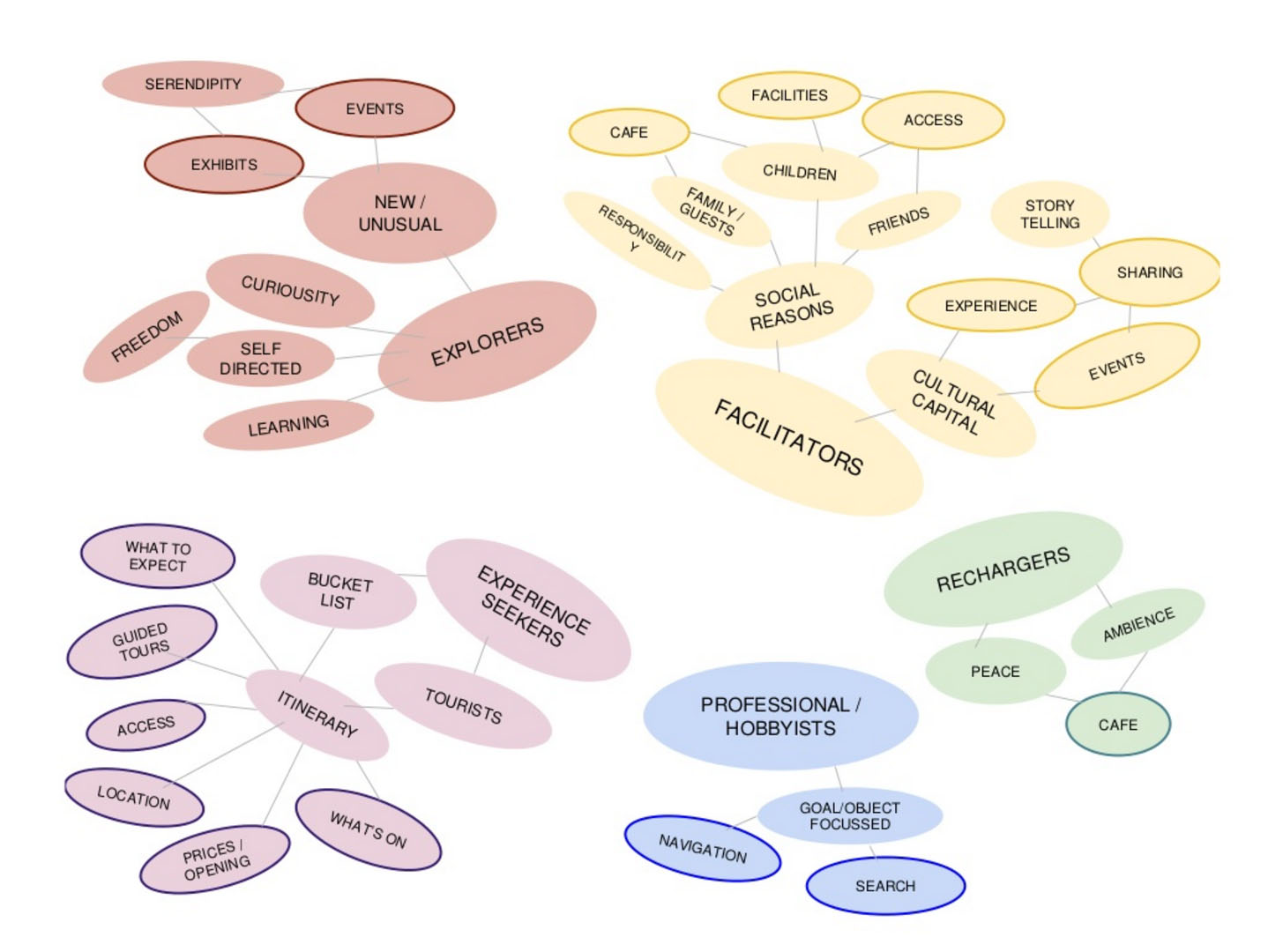
I squeezed in a personal trip to Weil am Rhein, near Basel, to see the exhibition Making Africa: A Continent of Contemporary Design, an encyclopaedic show which incorporated work by artists, designers and makers from across the continent and from the African diaspora. On show at the slick design museum, Vitra Design Museum (then the Guggenheim Museum Bilbao 30 October 30 2015 – 21 February 2016), it was interesting to see how its curators were dealing with some of the same issues as us although I felt glad our lens are tightened a little through the cities focus. I also recently attended the 1:54 Contemporary African Art Fair at Somerset House, London. Over three years the fair has grown from modest beginnings with just a few largely UK-based galleries showing work by relatively familiar names to becoming a huge international concern presenting work by an increasingly broad range of artists. This year some of the South African galleries, like Afronova, were especially helpful. There seems to be an established commercial interest in archival photography in South Africa not yet seen elsewhere on the continent except perhaps in Mali where the legacy of studio photographers par excellence Malike Sidibé and Seydou Keïta lives on.

Our collecting panel has met twice and members have some incredibly exciting ideas for developing a collecting strategy. We’ve talked a bit about what kind of relationship the ‘new’ collection might have with our historic holdings of African textiles. The panel hope to provide a comment on the old but to also take the collection in new strategic directions. Although it’s early days the level of energy and debate is incredible and it was exciting to recently discuss the project with European museum colleagues at a workshop on ‘co-collecting’ organised as part of the SWICH (‘Sharing a World of Inclusion, Creativity and Heritage: Ethnography, Museums of World Culture and New Citizenship in Europe’) initiative, a four-year collaborative project between ten 10 museums across Europe funded by the EU’s Creative Europe funding programme.

For the next few weeks the focus will be on completing loans negotiations and starting to write exhibition text. The press release went out yesterday so there’s now no going back!

Helen Mears, Keeper of World Art / Member of the Fashion Cities Africa exhibition team

Harriett: An account of our research trip to Lagos

Lagos’ fashion

This is a legacy story from an earlier version of our website. It may contain some formatting issues and broken links.

I travelled to Lagos with Martin Pel, Curator of Fashion and Textiles, in order to research content for the Fashion Cities Africa exhibition to be held at Brighton Museum & Art Gallery from April 2016.

This work also served as an introduction and initial research for longer term fieldwork for my PhD, which is funded by Brighton Museum & Art Gallery and the University of Sussex.

Lagos is an energising place. Fashion is everywhere and not limited to higher classes. The presence of tailors in Lagos ensures that people eeking out a living on the street selling fruit and other goods express themselves through wearing wraps and unique bespoke garments. Younger people also have their own tailors.

On our first day we met Jennifer Onnochi, Project Manager at the British Council, who introduced us to Lagos’ fashion scene. There is a lack of faLagos #2shion design training in Nigeria, which the British Council is trying to address through various projects, such as Tool Kit Training, Young Fashion Designer of the Year and Pitch to Stitch, which encourages banks to invest in young designers. Formerly the creative industries were not particularly valued in Nigeria and parents often expect their children to embark on careers such as banking, law or science, meaning that many Nigerian fashion designers have not actually received formal training in fashion. Many designers have been trained in highly academic fields and then go on to work in fashion later in life or employ their creativity at the weekends.

We were introduced to Lanre da Silva, who holds a Master’s Degree in Business Administration. She sells her fashion pieces at Temple Muse, a shopping centre in Lagos, and Alara, a new concept store on Lagos’ Victoria Island. She also stocks with Dolce & Gabbana, and obtains her fabrics and materials from Paris, Switzerland, Turkey and the UK. She has a factory in Lekki, Lagos, and employs twelve fashion cutters, seven tailors and two beaders. Oil wealth often provides backing for some of Lagos’ designerLagos #4s; Lanre’s husband works in oil and gas.

Wadami Amolegbe, who we also met at the British Council and who accompanied us for two days, works for Style House Files, which produces Lagos Fashion and Design Week. Wadami is a young fashionista whose family lives in the US. She attended university in New York and decided to come back to Nigeria to make the most of opportunities in fashion. She said herself that she “balances faith and fashion”, wearing garments by designers and also attending mosque in full Muslim attire. Wadami writes a blog and has a lot of contacts in the Lagos fashion world.

Next we visited designer Yegwa Ukpo at Stranger, a concept store in Lekki aimed at promoting up and coming designers. Stanger stocks what they call “progressive” designers such as I.am.isigo, Orange Culture and Post-Imperial. Yegwe is inspired by aso oke and historic textiles such as those in the collection of Nike Davies Okundaye. Yegwe is currently exploring using indigo dyed textiles in his work.

We then visited the Nike Art Gallery which was set up by Nike Davies Okundaye and houses artworks ranging from paintings, to furniture, to jewellery, to historic textiles.

The following evening we visited a fashion party at Alara, the concept store mentioned earlier. The shop is similar to an art space and was the vision of Reni Folawiyo. Folawiyo has successfully created a platform for Nigerian art and fashion through Alara. Her standards are high and she only includes designers who she feels are of the correct standard. Couture clothes are stocked in the shop’s upper levels, with mostly European designer labels such as Alexander McQueen and Stella McCartney being sold. African designer labels stocked include Jewel by Lisa, Duro Olowu and Post-Imperial. This party was the place to be seen in African fashion circles and designers themselves were in attendance, such as Maki Oh.

We then visited Bubu Ogisi (ILagos #5.am.isigo) at her studio. An earlier collection of hers titled ‘Taboo’ was inspired by the Wodaabe tribe and the celebration of female sexuality and sexual freedom. I.am.isigo explores ideas like androgyny, challenging strong patriarchal notions which exist within Nigerian society. Bubu’s ‘White Noise’ collection of oversized shirts or one-size-fits-all box shapes with striped designs was inspired by static flow whilst waiting for her TV to switch on! I.am.isigo stocks at shops such as Stranger and Grey Velvet. She is also a stylist for Orange Culture and Kenneth Ize.

Next we went to see Mai Atafo, who began creating a clothing line in 2007. He specialises in wedding wear and formal suits. In Nigeria there are three elements of a wedding; the introduction to parents and family, the traditional wedding and the show-stopping white wedding. A little while ago he invited Darren Beaman, a tailor from Saville Row, to come to Lagos for a week and train his tailors. Every two years Atafo organises an elaborate fashion show involving a narrative.

Later that day we met Rukky Ladoja and Obi Obi from Grey, who specialise in ready-to-wear clothing. Their target market is young professionals, young mothers and people in their late twenties. These designers Lagos #3show at Lagos Fashion and Design Week and Ghana Glitz.
The next day we visited the shop of Deola Sagoe. Sagoe uses adire textiles and aso oke fabric. Clients visit her shop, are measured by its in-house tailors and request an outfit style, which determines the price.

We then visited the shop of Folake Coker (Tiffany Amber), which is aimed at the wealthy, high-class lady and has outlets in New York, Paris and London. Launched in 1988, Tiffany Amber was Africa’s first ready-to-wear label. Coker has a diffusion line and a couture line. She has her own factory and uses a level of quality control inspired by that of Europe; she says that Europeans have a sharper eye for detail. Coker has become “tired” of Ankara, which has become a stereotype for African Fashion. Coker spoke to us of the challenges of being in the African fashion industry, such as the difficulty of moving around the continent due to restrictions such as Visa issues. Coker observed how the African fashion industry is still to be recognised on a global scale, as even designers such as Maki Oh, who has the best PR, have not yet had success in the US.

Finally we visited the showroom of Jewel by Lisa, where we met Zara, the Brand Development Coordinator. Jewel by Lisa has different sub-lines; Lisa Folawiyo, which has a good global following, Pretty Precious, a children’s label, and J Label, an affordable diffusion line. The brand’s general aesthetic boasts a lot of African prints and beadwork embellishments.

Textiles on a Tuesday

Sierra Leonean man’s coat

This is a legacy story from an earlier version of our website. It may contain some formatting issues and broken links.

A delve into Brighton Museum & Art Gallery’s African textiles collection…

A few weeks ago I headed out to Brighton Museum & Art Gallery’s artefact store, a huge place filled to the brim with intriguing goodies, old and new.

There I met up with Helen Mears, Keeper of World Art here at the Brighton Museum & Art Gallery, so that she could lift the lids on some very exciting boxes containing some equally exciting African textiles.

After snapping on her protective latex gloves, Helen, along with our Collections Assistant Stephen KiskoKanga Textile, carefully laid across the table this striking Kanga textile, originating from Kenya in the 1940s. Kanga textiles usually begin as one long strip of fabric, before being printed with a vibrant pattern such as the one we see here, and being cut in half to create a two-piece outfit. Often, prints and motifs are incorporated into African textiles as a way of allowing wearers to make subtle political statements; this particular textile, which is adorned with the distinctive Swastika symbol and branded with an image of the Nazi, Japanese and previous Italian flags waving in unison with one another, is likely to represent the ally relationship between these three countries during WWII.

After carefully folding the Kanga textile back away into its tissue-cushioned box, Helen and Stephen unearthed this breathtaking GhBatakari Gownanaian Batakari Gown. The immaculately hand-written tag hanging from the neck of this giant garment labels it a “witch doctor’s dress” from Kumasi, a city in Ghana’s Ashanti kingdom. This gown was most likely acquired when Kumasi was invaded in the Ashanti Campaign, a British punitive expedition which ran through 1873 and 1874. The implications of this left the atmosphere around the table feeling heavy for some time, as Helen, Stephen and I paused for a moment to admire the piece and its amazing workmanship. The protective amulets we see adorning the front of this gown are covered with various hides, such as crocodile skin. Traditionally, these amulets are often filled with miniature scrolls bearing sections of the Quran, as a form of spiritual protection from negativity or bad luck.

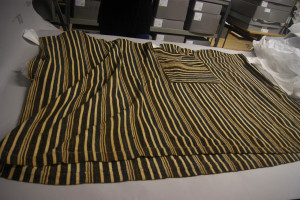
Next, Helen and Stephen showed me this Sierra Leonean man’s coat. This ginormous garment was collected by Thomas Alldridge, the Honorary Correspondent Secretary for the Man's dress
Royal Colonial Institute in Sierra Leone during the early 1900s. Alldridge spent his free time studying indigenous craft techniques and collecting Sierra Leonean crafts and textiles, interested in the potential for trading these pieces with the United Kingdom. Similar to the Ghanaian Batakari gown, this fabulous coat is hand-dyed and hand-woven from individual strips of fabric, creating this stripe-like pattern.

Finally, the last storage box of the morning was removed from the shelf, and inside it was a Nigerian Mmwo Mask, also known as a Maiden Spirit Mask. Traditionally, Nigerian men dress up in such Mmwo Maskmasks in order to look like young maidens, as a way of remembering the spirits of beautiful girls who have passed away.
After many gasps of awe, plenty of snapping on my camera and much careful rustling of tissue paper, my trip to the store was over and I was ready to go home and flick through the photographs of the beautiful textiles
I’d been shown. It was amazing to have in front of me so many authentic and unique pieces, each with their own history and back-story.

It was these sorts of textile pieces from Brighton Museum & Art Gallery’s African Collection that originally inspired Helen Mears to conceive Fashion Cities Africa. Therefore, whilst it’s extremely exciting that we are currently in the process of acquiring and commissioning contemporary fashion pieces for the exhibition, it’s also important that we spend some time appreciating the garments that kick-started this fabulous brainchild of Helen’s!

A hugely interesting element of contemporary African fashion is the ways in which many people now combine faith with fashion and tradition with trends – so it’s been super interesting to see how elements of older textile pieces, such as those we have tucked away in our store, still influence fashion today.

Thanks for reading, all!

Until next time,
Ruby McGonigle, front of house team member at the Royal Pavilion

Museum Tales

Italian Station Cafe c.1952

This is a legacy story from an earlier version of our website. It may contain some formatting issues and broken links.

Creative Future is a charity that provides training, mentoring and the chance to publish and exhibit to talented people who lack opportunities due to mental health issues, disability, health or social circumstance. For more information see www.creativefuture.org.uk

They will be reciting their work in Brighton Museum and Art Gallery at 2pm on Wednesday 28th October in the Fashion Gallery. The event is free with admission. A pamphlet of their works will be available to purchase on the day.

Here’s an example of some of the work:

Flanders Field by Tony Spiers

We are such blessed beasts, we sheep, we flocks of Southdowns, we Wensleydales, we Herdwicks, we Beulah Speckled Face. What joy to be alive in 1915 and off to Flanders Fields, where, they say, the ground is so soft on your hooves and the sky is always blue and thronged with larks and swallows and the sweet, sweet yarrow, and salad-burnet and soft-brome leap from the turf into your open mouths, and there is such gaiety there and merriment and we are lambs to the laughter.

We are such lucky ones, we Saddleback pigs, we British Lops, we Tamworths, we Gloucester Old Spots, for we are off to Flanders Fields, to hog heaven, where, they say, the troughs forever overflow with skimmed milk, whey and tender carrots, mangolds and ripest pippins and the rain is warm and hardly wet at all, and there is all the mud you can roll in.

In Flanders Fields, they say the flies are untroublesome, and sing to you most pleasantly in insect choirs, and the grass is a green you have only dreamed of, and honeyed cud of buttercups and red clover and cowslips is ready-chewed for you, and rainbows paint themselves in the sky. And now the trucks are come to take us there, for we are the cows and calves, we Sussex Red, we Aberdeen Angus, we Blue Albions, we Dexters, we Whitebred Shorthorns, we Belted Galloways, we gladsome animals, we chosen few.


Italian Station CafeItalian Station Cafe c.1952 by Simon Wrigley

She sits with her back to the glass bead curtain,

upright, head slightly bowed as if she’s posing

in a way she’s taught herself from the movies,

facing the bar, getting half the attention

of the regular drinkers and gamblers

because she’s got the gift of fertility.

Then, sooner or later, a man will enter,

placing in front of her a glass of Cynar.

As a drunk calls for wine and the dealer

cuts the cards for the next game, she’ll go with him,

out of anger: towards her father’s Party,

her brother who left for the seminary,

but mainly towards her mother for dying.

Her name is Rosa, or, perhaps, Rosetta.

And when the day comes that the man doesn’t enter,

she’ll pick up her bag and cross to the station,

where she’ll buy a ticket for the streets of Rome.

The Victorian Taxidermist by Moray Sanders THE VICTORIAN TAXIDERMIST

I’m a Victorian Taxidermist

But I’ve just received the sack.

I stuffed a hippopotamus

And took up too much slack.


Ruby: A Day in Africa Utopia

Africa Utopia

This is a legacy story from an earlier version of our website. It may contain some formatting issues and broken links.


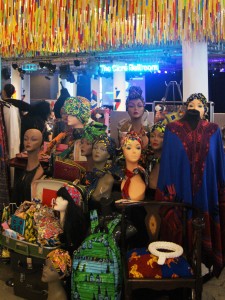
What a busy (but thoroughly enjoyable) weekend I had last week! One of many vibrant clothes stalls at Africa Utopia's marketplace, sporting almost every print and colour imaginable!

Last Saturday I was lucky enough to be sent up to London’s Southbank Centre for a day at Africa Utopia. Africa Utopia, now in its third year, is a vibrant and exciting festival that celebrates the arts and culture of Africa, hosting a marketplace for independent artists and fashion designers to sell and showcase their creations, a diverse street food market and a range of fun activities for visitors to spectate and take part in. This miniature festival is curated by journalist and author Hannah Pool, who is also a consultant for our upcoming Fashion Cities Africa exhibition.

I began my visit mooching around Africa Utopia’s marketplace, marvelling at the unique and colourful jewellery, accessories and clothing on show around me. Many of the pieces on sale were hand-crafted by the designers themselves, the workmanship, level of quality and attention to detail blowing me away. Particular favourites of mine were AfroRetro’s earrings created from upcycled envelopes and Jekkah’s fabulous traditional prints.

Next, I headed down to the Clore Ballroom to watch beautiful women of all ages, from anywhere from Morocco to Sierra Leone, strutting their stuff down the People’s Catwalk, a fashion show dedicated to showcasing African influences on London fashion. It was amazing to see so many people championing their cultural backgrounds through their clothing, combining high street with heritage, traditional African designs with modern-day western trends.

Following some imA model strutting her stuff down the People's Catwalkpeccable bows from the models and a huge round of applause from all of us at the end of the show, the Clore Ballroom emptied out, leaving me to head back up to the marketplace and check out tiata fahodzi and their pop-up hair salon. tiata fahodzi are Britain’s leading African theatre company and are currently working on their latest play, aunty, aunty, let me do your hair. Visitors of Africa Utopia were invited by the group to take seats in the hairdressing chairs of their mock hairdressers’ to share their wildest and wackiest salon stories. Sadly I have none of these myself, so opted for hovering at the back of the crowd and earwigging in on other people’s!

Finally, after another round of the marketplace, mustering up every ounce of willpower I had not to spend all of my money on beautiful jewellery and clothes, I hurried back down to the Clore Ballroom in time for AfroRetro’s fabric printing workshop. AfroRetro, a duo made up of Ugandan-British sisters Lilly and Anna, are best known for their fun fashion line which celebrates and promotes upcycling. Throughout their printing workshop, AfroRetro welcomed us into their world and encouraged us to get creative with the tools, techniques and materials of their trade. Sadly my print didn’t quite go to plan in the end (a disaster, to say the least!) but learning some new skills and losing myself in a world of paint and patterns was brilliant fun!

From my point oPartway through creating a fabric print with AfroRetrof view, I found it really valuable to get a feel of Africa Utopia and come back to Brighton with feedback and ideas for the rest of the team that we may be able to feed into our own Fashion Cities Africa exhibition. Overall, I had an excellent day and absolutely loved spending time surrounded by people who were so proud of their heritage and so excited to celebrate their culture. The vibe was energetic and fun from the beginning to the end, and I left feeling invigorated (and extremely hungry, thanks to the amazing smells wafting from the African street food market!)
Thanks for reading, everybody! Don’t forget to keep your eye on our Tumblr page for more news, stories and photos about what we’ve all been up to as Fashion Cities Africa draws ever closer!

Until next time,
Ruby McGonigle, front of house team member at the Royal Pavilion

A Trip To Brighton

This is a legacy story from an earlier version of our website. It may contain some formatting issues and broken links.

Extracted from:

Sussex and other Rhymes

by James Harvey

Published in 1919 by Hearth Cranton Ltd, London.

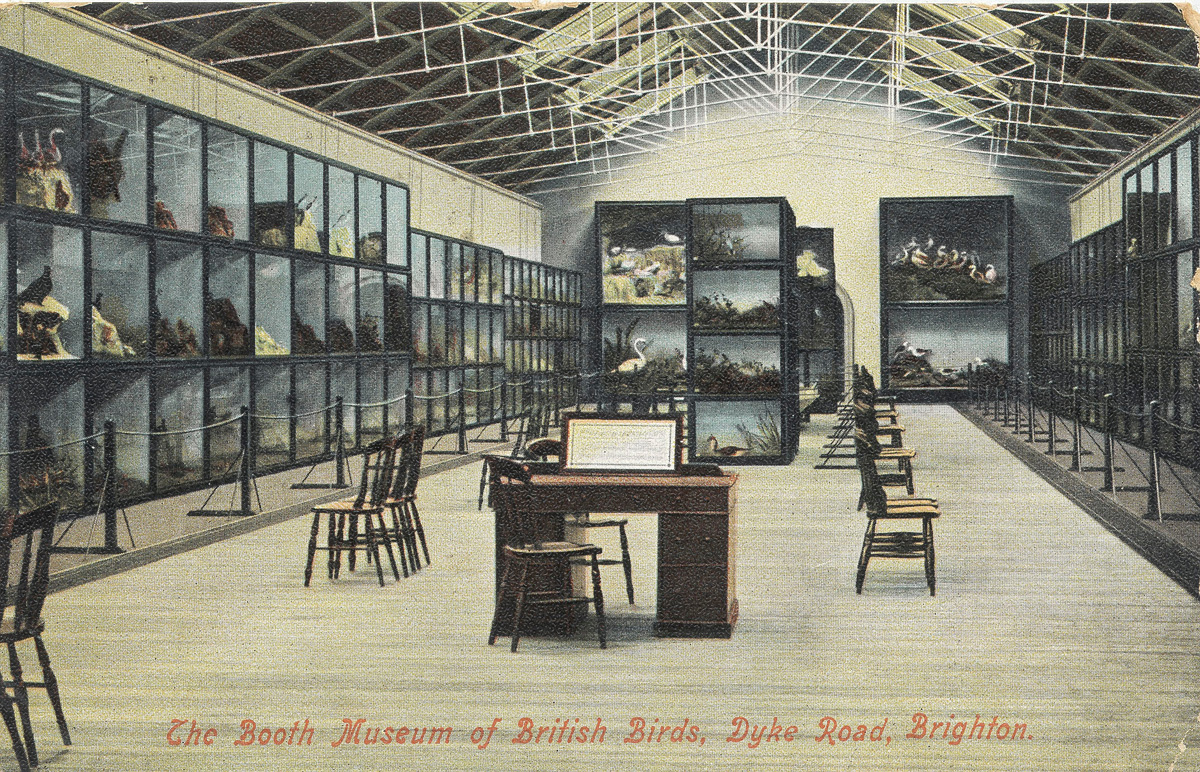
Booth Museum of British Birds, Dyke Road

Booth Museum of British Birds, Dyke Road

A TRIP TO BRIGHTON

Tom:               You can’t see Brighton in a day,

You want about a month to stay;

To-day I’ll own, our track’s been wrong,

But next time we’ll keep with the throng

We’ll make the trip a special here,

At London Bridge, I’ll meet you there;

Rain, hail or snow, just bring your stick,

That Bird Museum, you’ll say is thick;

A’Thursday we will have to come,

I hear you say already, “Some!”


Harry:              What, just to see a few stuffed birds?


Tom:               Just whisper, please! Just mind your words!

You see there are so few about;

This stretch of sea, it shuts them out,

And, as for sea-gulls, what are they!

They’re half and half, on fish they prey,

And sand, and earthworms eat as well;

No song from swimming birds does swell,

Except the dying swan, they say

A’welcoming the fatal day;

These trams go straight to the Museum,

And then you’ll see the crowd that’s in ‘em;

We’ll see the “Allegorical,” too,

And for a day’s trip that will do.

Please note that although the ‘trams’ still go straight to the Booth Museum (Buses 27 and 14), the Museum now closes all day Thursdays! We are open every other day 10am – 5pm (closing for lunch 12 – 1.15pm), Sundays 2-5pm. Entry is free of charge.

John Cooper, Keeper of Natural Sciences