Story Category: Legacy

Animal, Vegetable or Mineral? Mystery Object 2: What a peach

This is a legacy story from an earlier version of our website. It may contain some formatting issues and broken links.

It’s time for another round of our Booth Museum Animal, Vegetable or Mineral? quiz.

I’ve worked at the Booth Museum for several years and I’ve seen a lot of really bizarre objects behind the scenes which never fail to leave me shocked and amazed. Normally, at museum events, I bring these objects out to show visitors and have a quick Booth Museum game of Animal, Vegetable or Mineral?  But under the circumstances of Covid-19, we thought we would write our game as an online quiz instead.

In each blog, we will focus on an interesting object and discover how it was made, where on earth it has come from and throw in a few juicy facts along the way.

Can you guess what the mystery object is before we reveal the answer?

Mystery Object of the Day

Mystery object

Mystery object

Clue 1 

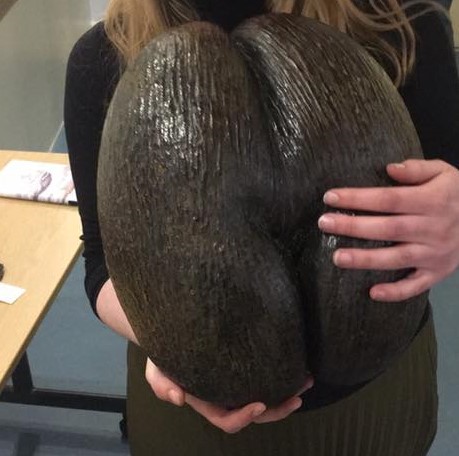
This cheeky looking object, that I am gently caressing in my hands, can be found washed up on the shores of coral islands in the Indian Ocean. Legend has it they are the fruit of trees that grow under the ocean…

Clue 2 

But despite these legendary tales, the Booth Museum’s own curator Lee Ismail has captured a rear glimpse of one of these bootylicious objects looking pretty peachy in it’s natural habitat…bottom’s up!

Mystery object in natural habitat, © Lee Ismail

And the answer is…drum roll please….


The nut of the Coco de Mer palm, Lodoicea maldivica

Coco de Mer fruit CC BY-SA 3.0, https://commons.wikimedia.org/w/index.php?curid=237434

Coco de Mer fruit CC BY-SA 3.0

That’s nuts

The Coco de Mer palm tree, Lodoicea maldivica grows on only two islands out of the 115 islands of the Seychelles archipelago, Praslin and Curieuse. Their huge fruit, which contains the nut, takes seven years to grow and are the largest and heaviest seeds in the world. They weigh around 25 kilograms and reach half a meter in diameter.

Coconut of the sea

Hundreds of years ago before the Seychelles were discovered, these huge nuts landed on beaches of foreign isles, like the Maldives, where the tree was unknown. Many sailors accounted seeing the nut rise up from the ocean and so began to believe they had come from underwater trees giving them the name Coco de Mer; the Coconut of the Sea. This is a pretty story but in reality when a fresh Coco de Mer fruit falls into the sea they are so heavy they sink straight to the bottom and the sea water kills them. However, the sailors’ stories of nuts rising up from the ocean weren’t a million miles from the truth. After sinking to the ocean floor and dying, the external green husk of the fruit disintegrates leaving behind the rump-shaped nut. The heavy internal flesh eventually rots away and fills with gas, allowing the hollow nut to rise to the surface, to confuse unsuspecting sailors. The shells can then be carried by the waves for hundreds of miles and wash up on foreign shores.

The Forbidden Fruit

The shape of the seeds which is said to resemble a woman’s bottom led to people believe they were a powerful aphrodisiac and could be made into irresistible love potions. The old Linnaean name for the Coco de Mer palm was Lodoicea callipyge. Callipyge literally means “beautiful buttocks” in Greek.

Mystery object, photo by Kate Holden

Coco de Mer nut, photo by Kate Holden

Love nuts

If that didn’t leave you hot under the collar, then what explorers found out about Coco de Mer palms in the middle of the 18th century might. Unlike the coconut palm, the Coco de Mer palm has separate male and female trees. It is the female tree which produces round flowers which when pollinated grow into the Coco de Mer fruit. Male palms grow small yellow flowers on a long spiky catkin, which is the longest male flower in the world and I think it’s pretty safe to say, you can definitely tell which tree is which…

Coco de mer palm tree, male, CC BY-SA 3.0


The uncanny resemblance to human reproductive organs gave rise to another legend surrounding the plant. On dark and stormy nights when no-one is watching, these sneaky trees are said to uproot themselves and hold each other in a passionate, sexual embrace. During daylight hours, however, reproduction between these trees is much less steamy, but is still surrounded by mystery. The way the female flower is pollinated to produce the nut is still unknown to science. Some scientists believe that bees are involved but others, think this sweet little animal which feeds off nectar and pollen of the male plants might hold the key to the secret.

Bringing up baby

In the plant kingdom, seeds have evolved to be dispersed as far away from their parent tree as possible, this helps to avoid competition between parent and offspring. The Coco de Mer nut is different – its hefty weight means it is unable to travel far from the tree and it has recently been discovered, it actually thrives in the shadow of its parent. Coco de Mer palms are the first example in the world of a plant caring for its seedlings after germination.

So how does an immobile plant care for its offspring? Naturally, the Coco de Mer palms live in very nutrient-depleted soil but researchers have found the soil directly below them tends to be more nutrient-rich, around 50% higher than soil just 2 meters away. The secret behind this partly lies in the shape of the palm’s leaves. Over time the leaves get covered in nutrient-rich detritus including birds faeces and dead flowers. When it rains the pleated shape of the leaves acts as a perfect funnel, directing water and the detritus with it, directly onto the ground below them, ready to be soaked up by the seedlings.

Discover More

There is much more to be discovered about these fascinating and unique plants, to find out, visit the New Scientist’s article, The secret of the world’s largest seed revealed

You might be able to hold a real Coco de Mer in the flesh at one of the Booth Museum’s events when we re-open. Keep an eye out on our What’s On page.

Read more in the Animal, Vegetable or Mineral series

Grace Brindle, Collections Assistant
Queer the Pier: Vesta Tilley

This is a legacy story from an earlier version of our website. It may contain some formatting issues and broken links.

As a community curator for Queer the Pier, I had a variety of different roles contributing to several aspects of the exhibition. A large part of my time was spent helping to create the arcade game section of the exhibition with the project’s building team.

To tell the stories from Brighton, Hove and Sussex’s queer history, we decided to build themed pieces that emulated a pier experience whilst preserving the LGBTIQ+ history that we wanted to include in the exhibition. 

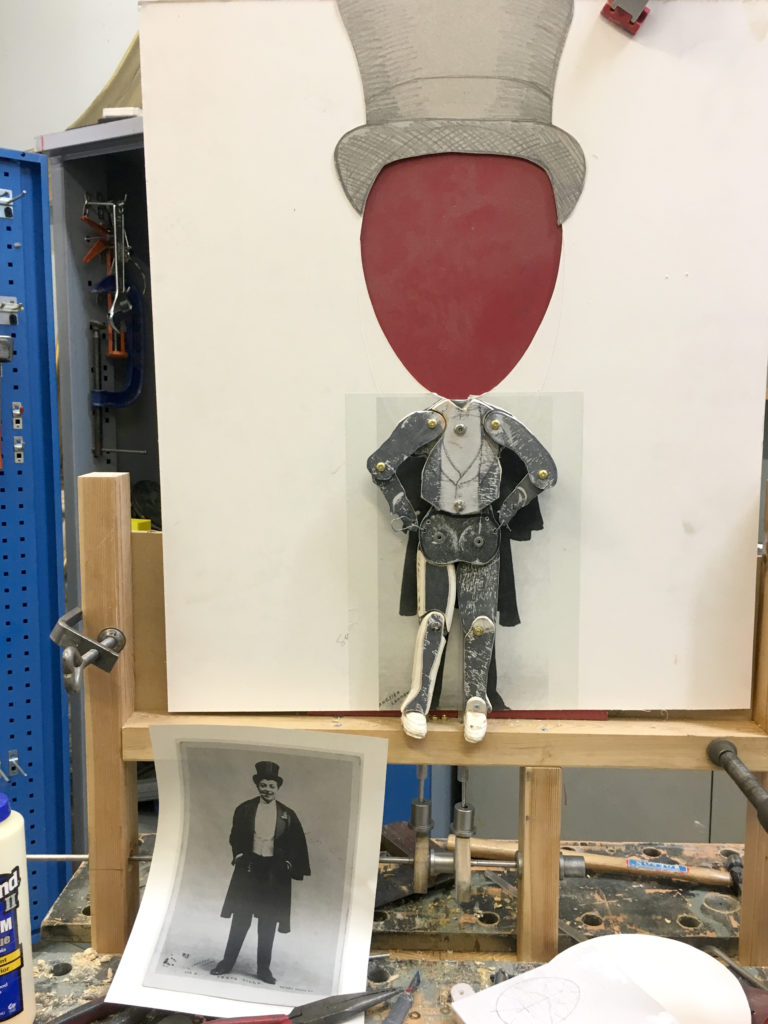
Alongside exhibition pieces such as the re-imagined fortune telling machine and zoetrope, we created an automata machine, telling the story of Vesta Tilley, whose real name was Matilda Alice Powles, (1864-1952). A highly successful music hall singer and male impersonator, her career spanned over 50 years from 1870 to 1920, and she performed at the Brighton Hippodrome in Middle Street. She wore men’s clothing on stage, challenging gender stereotypes, and although married to Walter De Frece, through dress and performance, she played with gender roles and paved the way for future female comics and male impersonators. 

To create the arcade game section of the exhibition, we worked with Brighton Museum’s Exhibition Designer, Alex Hawkey, who throughout the summer and autumn months helped a group of the community curation team to build automaton machines and pier-themed games. The piece I started working on upon joining the Queer the Pier team, was the Vesta Tilley automaton machine, and with Alex kindly helping every step of the way, I got to building. Below is a photo diary of some of the key stages of building the machine: 

Figure 1: Alex’s design that the Vesta Tilley machine was based from. 

Figure 2: For research, I went to visit the now closed Brighton Hippodrome that Vesta Tilley had performed in to get a better idea of the location of the building within Brighton on Middle Street. 

Figure 3: After a few attempts at other methods, we decided to draw the Brighton Hippodrome proscenium which would frame the automata machine parts.

Figure 4: The next stage was to create cut outs to form Vesta’s body.

Figure 5: Fitting the pieces together before dismantling for shaping.

Figure 6: The next stage was shaping the pieces to make them more 3D.

Figure 7: Fitting the pieces together.

Figure 8: I then created curtains to fit under the proscenium illustration.

Figure 9: Painting the finished shaped pieces.

Figure 10: She’s nearly there!

Figure 11: After the plinth was ready, the next stage was to cut the head hole out for a photo opportunity!

Figure 12: Creating Vesta’s hat and starting to put sections together.

Figure 13: Beneath the wooden stage, the mechanism which makes the figure dance by turning the handle, was then fitted.

Figure 14: After some final adjustments, it was complete! 

After spending time in the studio building and making, it was great to see the Vesta Tilley automata machine standing proudly in the exhibition ready for visitors to enjoy. The opening night of Queer the Pier was heart-warming, not only to see everyone’s incredible hard work come together, but also to see people celebrating queer history and Brighton’s diverse LGBTIQ+ community. Watching people interact with the arcade games and turning the handle of the Vesta Tilley machine to watch it dance and listen to the accompanying famous Vesta Tilley song ‘Jolly good luck to the girl who loves a soldier’, was a delight. 

Below is a diagram to show where the Vesta Tilley automata machine is placed within the exhibition. 

See the Vesta Tilley automation in action

Video by Daren Kay and Gary Moyle


Zoe Smith, Queer the Pier Community Curator


Lady Denman, a Woman of Action

This is a legacy story from an earlier version of our website. It may contain some formatting issues and broken links.

Today’s Pioneering Women of Sussex blog is written by Museum Assistant Lisa Hinkins. Lisa celebrates the incredible Lady Denman, director of the Women’s Land Army during the Second World War, and President of the Women’s Institute from 1917 – 1946. She also reflects on the role of ‘women in action’ during our current crisis.

Gertrude Mary Denman (née Pearson), Lady Denman, by Bassano Ltd, 21 March 1918, (c) National Portrait Gallery

Raised in an openly feminist and politically active house, Gertrude Mary Denman (1884-1954) recognised very early in life that her family wealth and status in society must be used to serve the greater good of the community. Her home, Balcombe Place, near Haywards Heath would become the Women’s Land Army administrative headquarters through the duration of World War II. She was given the house by her father, Weetman Pearson, 1st Viscount Cowdry as a wedding present in 1905. 

Gertrude, (known as “Trudie” in close circles), was married to Thomas Denman (1874-1954), 3rd Baron Denman and fifth governor-general of Australia (1911-1914). During her time abroad she held many national and international leadership roles within women’s organisations. She represented a growing exchange of progressive ideas regarding women’s place and roles within society. 

In Britain, after serving as chairman of the subcommittee of the Agricultural Organisation Society, Lady Denman helped found the Women’s Institutes (WI) in 1916. The institutes became self-governing when under Lady Denman’s supervision the National Federation of Women’s Institutes (NFWI) was formed in 1917. She was elected its first president and was re-elected to this position every year until her retirement in 1946. 

WORLD WAR I

“Trudie” was no ‘Lady of Leisure,’ she was a true non-conforming woman, ignoring society expectations. As president of the NFWI and then assistant director of the Women’s Land Army (WLA) during World War I, she worked hard to demonstrate to women of all classes what it meant to be “women of action.” 

Recognising the importance of maintaining food supplies during wartime, Lady Denman and these organisations urged housewives both urban and rural to conserve food, can fruit and vegetables and sell surplus produce. During WWI, the Women’s Land Army provided the much-needed labour on farms as young men were sent to fight on the front-line. This multi-level action aided food production for the nation. It also served to heighten female political and social activism. Utilizing labour shortages by assigning women these jobs demonstrated their abilities and gave momentum for the need for global female suffrage. In 1933 Lady Denman was made a Dame Commander of the Order of the British Empire (DBE).

LAND GIRLS  

Lady Denman making a speech at Arundel Castle Land Army rally (May 1943) Garland N22143

With the advent of World War II, a Register for Employment Order was issued in England for women aged 18-45 to sign up for jobs. At this point the country had been importing 70% of its food. Once again, the Women’s Land Army was called upon to help feed the nation. These hard-working women became affectionately known as the Land Girls. Lady Denman was elevated to director of the WLA and arranged Balcombe Place as its headquarters. Up until the end of WWII, over 200,000 women served in the WLA. Many made life-long friendships with one and other. They supported each other during a period of uncertainty and upheaval – numerous women left urban homes to live in WLA hostels in rural areas or live on the farms where they were employed.

A land girl operating a tractor on a site near Brighton, probably in Woodingdean, 1941

Once demobbed after the end of WWII, these audacious women felt ignored. They received letters of thanks from the then Queen Elizabeth but received no economic support in recognition of their contribution of service from the British Government. In gratitude for its members tireless service the WLA held a Christmas party, where Lady Denman received rapturous cheers and applause. She later resigned as the WLA director in protest and disgust for the disrespect her members received from the government. Despite this, in 1951 she was made a Dame Grand Cross (GBE). 

PRESENT DAY 

Women’s Land Army commemorative badge

In 2008 the Women’s Land Army was finally given the official recognition from the Government of their service and contribution to the war effort and awarded a commemorative badge.

In 2020, women are at the forefront of tackling the climate crisis, peace and social discrimination. Women of action are  needed more than ever. Role models such as environmentalist Dr Jane Goodall are inspiring all ages with their message of hope, environmental responsibility and to care for both fellow humans and all life on earth through their social media platforms, during this lockdown period.

Organisations such as Sisters on the Planet Ambassadors, launched by Oxfam in 2008 bring together women of action. I got involved with promoting this in my previous role within Recycling and Sustainability at a local authority. Sisters on the Planet work in partnerships together around the world to fight discrimination against women and girls that is still pervasive. In 2020, women still carry out the bulk of unpaid domestic and care work. This adds trillions to the global economy, of which they are not seeing the benefits. 

During our own period of uncertainty and upheaval in lockdown, my female friends have been busy keeping connected with their WI groups by making scrub bags for NHS staff. Many have turned to their gardens, growing vegetables, sharing the produce and seeds.

To mark the VE Day 75th Anniversary, I shall be hosting a specially themed family pub quiz via Skype. We shall be decorating our homes with bunting and tucking into afternoon tea while quizzing through cyber space.  And while we carry out our own DIY celebrations, I will think of all these courageous “women of action” past and present who work tirelessly to protect us and the natural world on.

Written by Lisa Hinkins, Museum Assistant

Reflections on war

This is a legacy story from an earlier version of our website. It may contain some formatting issues and broken links.

Beth Burr, Programming Assistant, takes us on a journey through the reflections, remembrances and heartfelt feelings of visitors to Brighton Museum’s 2014 War Stories: Voices from the First World War exhibition and considers their relevance today.

In 2014 visitors to Brighton Museum were thinking about war. In commemoration of World War I the museum held an exhibition War Stories which explored the impact of war through the personal experiences of individuals from Sussex, Belgium, Germany, and India. Their memories, letters, diaries and personal objects gave glimpse into lives lived in the uncertain time of war.

During the Covid19 lockdown, I have been revisiting the feedback from visitors to the exhibition. People were invited to take a tag and write their own thoughts about the impact of war, and also to remember their own loved ones. 

It became obvious that certain themes began to emerge once I delved in. Some of them really resonate with today & the strange times we are currently going through. 

Sacrifice and Bravery

A couple of the big ones I found were the sacrifice and bravery of the soldiers, which is no doubt how we all see the NHS / health workers coping with impossible conditions; with both just seeing it as them doing their jobs. 

Many of the tags are from an adult’s point of view, but I liked the clarity and brutal honesty of war from a child’s perspective:

My Hero 

This was an area I also saw parallels with the way that we talk about Covid19 today. Some in uniform, but also more ordinary heroes who keep things going in tricky times. I especially found it touching that so many visitors had left personal messages to their grandparents & parents with the tags acting as an intergenerational transmitting tool. Some had never met each other, but wish they had. 

Overseas

I am drawn to comparisons on how many different nations fought with the UK in the war, including the many Indian soldiers, some of whom were hospitalised in the Royal Pavilion. During Covid19 we have all been struck by the number of NHS staff from around the world all working together towards the same cause. 

Trauma

Darker aspects appeared amongst the tags such as sadness, appalling conditions, trauma as a result of experiences and the hardships faced by those who were on the front line. Families were torn apart and often never recovered:

Thought provoking

Today we try to imagine and visualize what it must have been like to fight, or live through those times. Many families carry their stories and histories. Many soldiers were too traumatised to share their experiences. 

Nurses

There were lots of messages to all the nurses in WW1, thanking them for their service. I was heartened to see that visitors were remembering the women who engaged on the war efforts, and the vital part they played. Today, during the Covid19 lockdown we show our gratitude by applauding NHS and key workers every Thursday at 8pm.

Today

Conflict happening in today’s world and thoughts for loved ones came up in the tags quite a few times. Conflicts around the world still create trauma and separate families.

Peace

Many of the tags thanked those who fell for their contribution to the ‘relative’ peace of today. There were also messages of hope for peace in wars still taking place around the world, and poignant thoughts on why we have not learnt our lessons from the past.

Friendship

Themes of communities coming together are also seen in the tags. Today this is no different with help and kindness being offered to others as communities come together. An uplifting tag which I felt was a positive conclusion to thoughts about friendship beyond conflict is this final tag left by a couple visiting the museum. 

VE Day Friday Draw and Create

This is a legacy story from an earlier version of our website. It may contain some formatting issues and broken links.

Friday 8th May is the VE Day 75th Anniversary of the end of World War 2. As part of the Mid-Week Draw weekly drawing sessions I organise at Brighton Museum, I thought it would be fun to come up with a few creative ideas around this special theme.

Have a go and have fun!

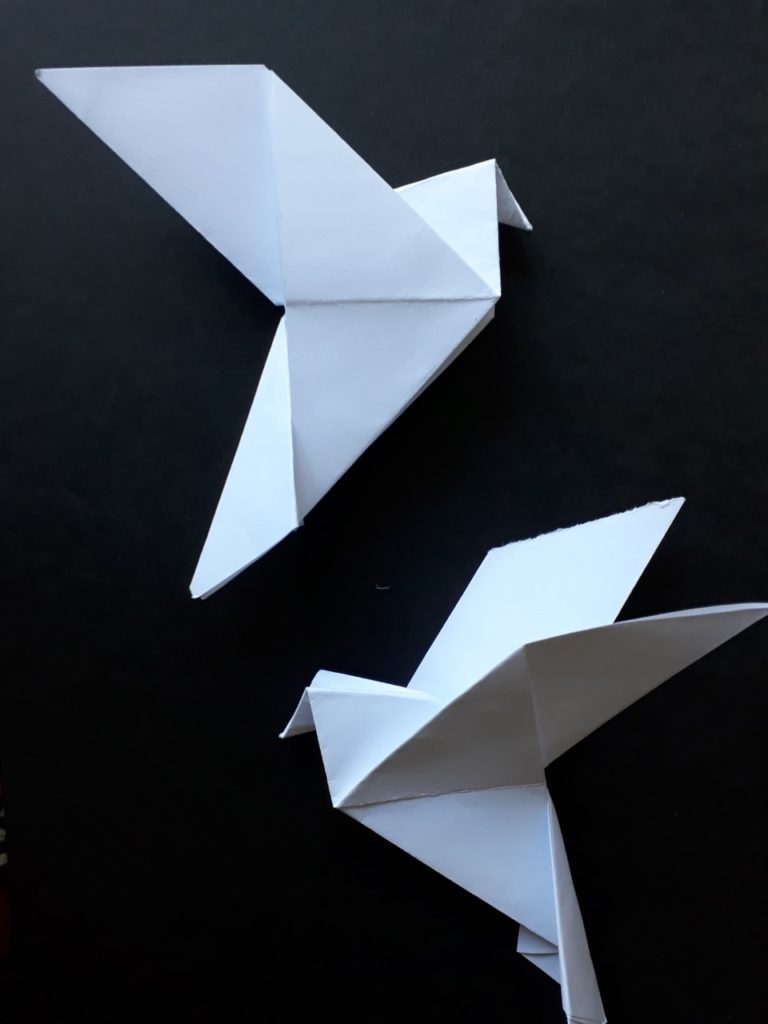
Make a simple Dove of Peace origami model

I made a couple of doves to let you see how effective they are.

Dove of Peace origami model

You can download these origami instructions from our online image website

Created by Beth Burr

Or watch instructions on how to make the doves on YouTube

You can upload your model and see if we can make a flock of peace doves!

Have a go at sketching the Peace Statue in Hove

King Edward’s Memorial, Brighton, otherwise known as the Peace Statue

Peace Statue, Hove. 11th November 1939

Design your own VE Day Commemorative coin

Here is a coin I designed to give you some ideas. 

VE Day coin design

You can download the coin template from our online image website

Created by Beth Burr

Join In

You can send your drawings and designs to us, so we can all see your brilliant artwork. Email them to Beth at beth.burr@brighton-hove.gov.uk 

Tweet @BrightonMuseums or if you are uploading them to Facebook with pride, share the url in the comments section below.

Happy drawing!

Discover More

The Mid-Week Draw

Beth Burr, Museum Support Officer

Celebrate A Sky Full of Birds

This is a legacy story from an earlier version of our website. It may contain some formatting issues and broken links.

Saturday 9th May 2020 is World Migratory Bird Day. There seems to be a day for everything now, but these birds deserve recognition for their incredible annual journeys.

Pacific golden plovers spend winter in Hawaii before flying to Alaska to breed in summer – sensible birds! © Lee Ismail

There are thousands of species of bird that migrate with changing seasons around the world. In the UK this sees many species of birds arriving here to begin breeding in the spring. Most of these birds have travelled North from wintering grounds in the Southern Hemisphere. Many travel from Africa, but some travel even further.

Chiffchaff, Southwick, March 2020 © Lee Ismail

If you are in your garden or a local green space during the lockdown, you can see several species that have made the long journey back from wintering in Africa. Chiffchaffs and other warblers are some of the earliest arrivals, making landfall on the South Coast around March and April (though some Chiffchaffs are staying all year round with the warming climate). These are soon joined by other small birds such as whitethroats and flycatchers. They have travelled from the Mediterranean and Western Africa where they’ve spent the winter months, and have returned as our insect population wakes from their winter hibernation. They time this arrival in order to reproduce themselves, so their newborn chicks have enough food to eat. This also lets them avoid competition and predation from animals that stay resident in the tropics year-round, as there are far fewer resident species in the Northern Hemisphere.

Sedge warbler at Adur River, April 2020. © Lee Ismail

Late spring sees the arrival of some of the great migratory species. The swallows are some of the first to arrive in April, having spent six weeks flying up from as far away as Namibia and South Africa. They set about building nests in order to hatch a first brood of eggs in early July. This gives them the chance to raise a second, and sometimes even a third brood before the autumn migration south. By raising several broods they increase the chance that some of their chicks will survive through to the following spring to have chicks themselves.

Swallow at Charleston House, Sussex © Lee Ismail

Swifts are another popular summer migrant to the UK and like swallows can travel from as far as South Africa. However, even if they only travel up from and back to Western Africa, their time on the wing is arguably more impressive than that of the swallow. Whilst swallows roost en route and when they arrive at their destination, the swifts never land for the entire round trip to and from Africa! A healthy swift will not land until they are ready to lay eggs. They will eat, drink, mate and even sleep on the wing.

Swift near Lewes © Lee Ismail

Other birds migrate in order to follow these birds. Some to hunt them and some for more nefarious reasons. The common cuckoo, for example, migrates north following the small warblers and flycatchers. They stop off on the way to rest and feed, and arrive during the nesting period for these little birds. They will then lay their eggs in one of several species of small birds nest (some, such as the dunnock are non-migratory residents). Adult cuckoos play no part in rearing their chicks, so once they are satisfied their chick is safe, they head south earlier than any other migrants, most having left by June.

Cuckoo display at the Booth Museum, Brighton

The hobby migrates up from Africa following their prey – the swifts and martins. These small falcons look like oversized swifts in flight. They arrive shortly after swifts do and breed in Europe and the UK while their prey are here. When their prey head back south again the hobby’s follow.

Hobby in flight over Orford Ness, Suffolk. © Lee Ismail

These long migrations are all impressive, but none compare to that of the Arctic tern. These small birds – about as long as a pigeon, but far more streamlined – travel from the Antarctic where they spend the European winter all the way up to the Arctic to nest during our summer. Some birds don’t head all the way up to the Arctic and nest in Scotland and Ireland. Those birds that nest in the Arctic circle hold the world record for the longest animal migration on the planet – and they fly it every year! 

Arctic tern protecting its nest © AWeith CC BY-SA 4.0

White storks are one of the migratory birds illegally targeted over the Mediterranean. Image © Lee Ismail

Unfortunately, as with most elements of the natural world, these birds are threatened by human activity. Industrial farming and loss of important insect habitats, such as wetlands, has resulted in a devastating drop in insect numbers. This means many birds starve on their journeys. They even face a huge direct onslaught by humans in many Mediterranean countries. Cyprus, Egypt, Lebanon and Syria account for a large number of migratory bird deaths, but the worst offender is Malta where there is uncontrolled shooting of birds during the annual migrations. Even if you don’t respect the incredible journeys these birds make, or appreciate their aesthetic presence in our environment, these birds need to be preserved and protected for their importance to the environmental health of the planet.

So we hope you agree World Migratory Bird Day is a day worth celebrating!

Lee Ismail, Curator of Natural Sciences 

Celebrating World Migratory Bird Day with a Swift Sussex Nature Hero

This is a legacy story from an earlier version of our website. It may contain some formatting issues and broken links.

This week the Booth Museum of Natural History continues its series of interviews with the Nature Heroes of Sussex. Today, we are celebrating the forthcoming World Migratory Bird Day with an interview from Jack Thompson, Conservation Officer for RSPB Brighton. Jack is also a supporter of the Brighton & Hove Swift Group which protects Sussex’s most iconic summer migratory bird.

Nature Heroes are the people who work tirelessly to help protect wildlife and connect people to nature within our area; within the Brighton & Lewes Downs Biosphere or the South Downs National Park – and sometimes both. Each week, we focus on a different Nature Hero to highlight the projects they have worked on and find out how they have had a positive impact on our environment. We also asked them for some friendly advice on how we can all do our bit to help wildlife in Sussex, during and after lockdown.

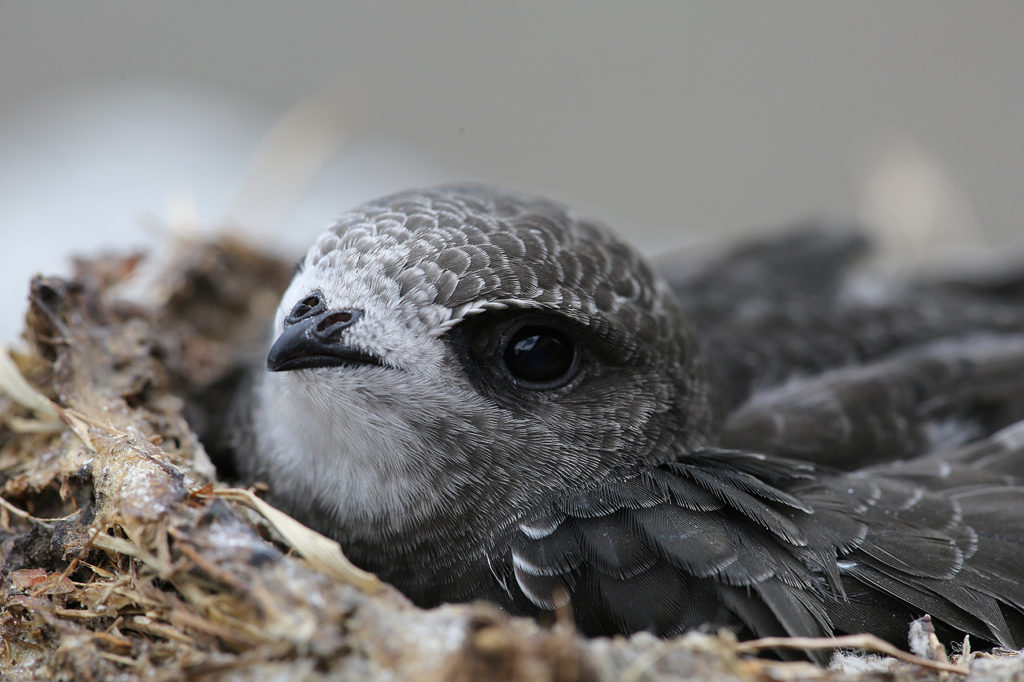
Swift (Apus apus) in nest, photo copyright Alain Georgy

Common swift, Apus apus, in nest © Alain Georgy

Jack Thompson, RSPB Brighton Conservation Officer

Jack Thompson is a Conservation Officer at the Royal Society for the Protection of Birds (RSPB). His work includes representing the RSPB in off-reserve conservation work, particularly involving heathland habitat and common swifts (Apus apus). His drive is to try and empower the public to help their local wildlife, as our connection to nature runs so deeply in our culture, history, economics, and emotions, the best way we can save nature is through people, and in turn, nature will help us.

What do you love about the wildlife in Sussex?

I think what I love most about Sussex is the range of biodiversity that you can find over a relatively small area. The topography of the landscape with the rolling South Downs running through Sussex lends the land to having a real diversity in its soil and sunlight, which creates these pockets of amazingly diverse plants and animals. You don’t have to travel far out of Brighton to enter the chalk grasslands of the South Downs, and from there a walk west will take you past the Adur and into the Arun Valley; wetlands galore! To the north-east of Brighton you’ll find yourself in the middle of the Ashdown Forest, a beautiful landscape of heathland with as much cultural, historical, and ecological value as there is beauty. Head a little bit east from the city and the famous Seven Sisters will appear; these chalk cliffs being home to some amazing seabirds such as fulmar and kittiwake. And then in the far west you come to the Manhood Peninsula, home to some incredible waders and seasonal guests in the form of our dainty little terns on our shingle beaches. Sussex has so much to offer, and each of the areas have so much to explore.

Northern fulmar, Fulmarusg Glacialis, Frédéric CLOITRE CC BY-SA 4.0

Northern fulmar, Fulmarus glacialis, Frédéric CLOITRE CC BY-SA 4.0

What wildlife project have you worked on in Sussex that you feel has made the most difference to wildlife?

Supporting Brighton and Hove swift group is definitely a highlight for me. Swifts are an amazing bird that migrate all the way over from Africa to the UK every summer, and despite travelling that far, they’re only with us for a few months, and then they fly back to their wintering grounds! Unfortunately however, the case for the swift across the UK has been one of decline, where each year these amazing birds have lost more and more nest sites. These tiny birds nest in all sorts of nooks and crannies of our urban buildings, often found in the soffit or under the eaves of a roof. Redevelopment, refurbishment and the likes however, have created structures that no longer allow swifts to access their homes.

Swift (Apus apus) in flight, photo copyright David Moreton

Common swift, Apus apus in flight, © David Moreton

Enter Brighton and Hove swifts; a group of fantastically dedicated volunteers from all reaches of Brighton and Hove that continue to support swifts. The group surveys and monitors swift populations and hotspots, giving a better understanding of how swifts are doing in Brighton and Hove. We are able to make a real difference working together as a group, as we can get involved with our local communities and council to talk about the plight of the swift. Through the hard work of our volunteer surveyors, caseworkers and Brighton & Hove City Council’s (BHCC) planning officers, BHCC have recently announced a planning condition that will see swift bricks (an internal nest box that can be fitted into the brickwork of buildings) integrated into all appropriate new developments over 5m high. This is the first big step towards safeguarding the future of swifts in Brighton and Hove. The group will continue to monitor the state of our local swifts, along with trying to create as many new opportunities as possible so that these birds can flourish once again! I am extremely proud to support this fantastic team that show the value of communities working together to support their local wildlife.

How are you connecting to nature during lockdown? Can you offer any advice to people?

Starling, Sturnus vulgaris © Lee Ismail

Starling, Sturnus vulgaris © Lee Ismail

As I’m sure is the case for a lot of other people living in Brighton, I don’t have access to a garden. But I do still have access to nature in many ways. Just opening the window and looking out, there’s so much going on outside. It’s great to see house sparrows flitting between roof tile to hedge, starlings chattering away on top of aerials, jackdaws inquisitively looking down chimney pots, or seeing the sudden explosion of activity from all involved as the resident sparrowhawk or peregrine scope out the area from above.

Jackdaw, Corvus monedula, © Lee Ismail

Jackdaw, Corvus monedula, © Lee Ismail

There is so much to see, and I think the important thing is shifting the way we look at our urban environment, because there are some pretty special species that have learnt how to live in this tough habitat. There’s particular plant species like ground ivy that are able to tackle the tough, phosphate-filled urban environment to grow in the cracks of our pathways where other plants cannot. And the bees and butterflies that feed off this bounty of nectar and pollen provided on our roadside verges, window pots, and hedges.

In a time of uncertainty, where the lockdown has meant that we are able to do less, I find that it gives us more time to appreciate the detail. It gives us time to reflect on the things we don’t usually give ourselves time to reflect on in our busy, urban lives. So looking at the detail, in all the nooks and crannies of this urban jungle, gives me that connection to nature that I’m sure many of us are seeking!

What project are you most excited to get back to when you leave lockdown?

Being able to get out to my local survey patch for swifts, and hear their calls fill the evening sky in Brighton. Once you start hearing it, it’ll stay with you forever! It’s a truly magical call, and fills me with the warm feeling of expectancy for a summer just round the corner. Being able to walk round Brighton on a clear summer’s evening watching swifts darting round the streets at breakneck speed, turning at acute angles, and giving us a free viewing of an aerobatic masterclass. And that great thing for me is that I don’t really need to go anywhere to start the survey, because we have them right here in Brighton. They’re a part of our history as a city, and hopefully through the project, we can continue to see them return to their Brighton homes, and flourish.

What one thing would you recommend that people can do to support local wildlife in Sussex?

Right now, I think the most effective tool we can use is communication. A lot of people have taken to social media to show the variety of things they’re seeing popping up in their gardens or public spaces. And that message is extremely important right now, with time to get outside limited to our one daily form of exercise, having a connection with nature whilst doing so can be extremely important for our wellbeing. Once we see the lockdown measures relaxed in the future and it is safe to do so, it would be great to see more people involved in community projects, helping with local wildlife spaces to really bring everyone closer to nature. There’s a real community feel to the Brighton and Hove Swifts group that we have, and if you are interested in helping swifts, please do get in touch by emailing BHSwifts@rspb.org.uk

Discover More

  • Find out about swifts on the RSPB website 
  • Have you got a spare 5 mins to help swifts? Send your recordings from your daily exercise to the RSPB Swift Mapper
  • Create a home for swifts by following the RSPB guide on installing a nest box
  • Swift conservation projects have been happening all around the UK and beyond. Find out what people have been doing further afield by visiting the swift conservation website
  • For those who can’t get outside, we found a wonderful video of common swifts in flight for you to enjoy, but if you can, why not send us your photos of swifts from your daily exercise around Brighton?

[arve url=”https://www.youtube.com/watch?v=Rd3NlfbA7yQ” /]

Watch out for our next Nature Hero of Sussex in our blog next week.

Grace Brindle, Collections Assistant


Pavilion Dreamer

This is a legacy story from an earlier version of our website. It may contain some formatting issues and broken links.

Chrissie Berridge explains how the Royal Pavilion provides constant inspiration for her photo-artwork
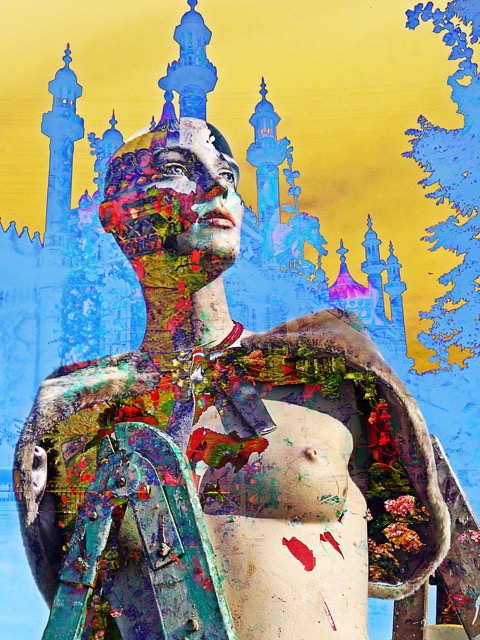
Over the years I have taken thousands of photographs. When I’m not out taking new pictures I enjoy manipulating the ones that I already have. It’s proved to be a productive way to use up time when I’ve been unable to get out and about during the Coronavirus lockdown.  Working at my computer I select and overlay various photographs, working with creative apps to make new, striking images.

I usually work as a Visitor Services Officer at the Royal Pavilion and I enjoy seeing people photographing its iconic exterior. When you visit Brighton a photograph of this landmark is a must-have! Looking out from the first floor windows I see the cameras and mobile phones raised the minute people walk through the Indian Gate, capturing the fairy-tale frontage. There are also countless selfies taken in front of the main entrance; couples lounge against the turning circle’s green fencing, recent graduates wave mortarboards for their celebratory photo, and numerous groups of students waving and pouting. And now of course those who venture inside the Pavilion can fill their photo streams with even more exotic imagery!

You’d think that working at the Pavilion I would be immune to its photographic charm, but the opposite is true. It is a building that truly gets under your skin. The changing light, the differing seasons, and the beautiful planting in the gardens surrounding it, render the Pavilion a constant subject for the lens. That myriad of turrets and domes makes for a great image and it can’t be mistaken for any other building.

Another of my other favourite subjects to photograph are mannequins. Whether it is a full length figure, or just a head shot, I am constantly drawn to them. I’ve snapped them at exhibitions, in shop windows, and at antique fairs, and of course I have one at home. They’re certainly easier to capture than real moving people.

Pavilion Gaze by Chrissie Berridge

During a couple of creative sessions, I worked with both of these subjects to produce two new images. With Pavilion Gaze I combined a number of photographs; one I refer to as ‘the mannequin and the mixing bowl’ (taken at the Ardingly International Antiques Fair) of a female mannequin wearing a fur cape perched on a step ladder, beside a Mason Cash mixing bowl. The second image is a view of the north end of the Pavilion – not as frequently photographed as the west front of the building by visitors, and yet a third photograph is of a swathe of flowers taken at Preston Park’s beautiful wild flower meadow. The combination has been overlaid, tweaked and altered using computer software. The Pavilion, rendered to a sky blue silhouette is unmistakable!

Pavilion Dream by Chrissie Berridge

In my second artwork, Pavilion Dream I wanted to conjure up a Sleeping Beauty scenario, where the gardens have grown beyond their usual boundaries in a bid to hide the Pavilion, emphasising the fantasy elements that are part of this building’s charm. I used photographs of flowers and seed heads combined again with that view of the north end of the Pavilion exterior. Here you can see more of the architectural detailing of the minarets and domes. The prominent silhouetted seed heads were originally photographed in the grounds of at Emmaus in Portslade. All the photographs have been manipulated to create this final image.

I’ll certainly be on working on more Pavilion-inspired images in the days to come.

Images: copyright Chrissie Berridge


The story behind the picture: Deciphering a hand-written letter from 1936

This is a legacy story from an earlier version of our website. It may contain some formatting issues and broken links.

This is a page from a letter written by Mrs Diana Magniac (nèe Macdonald) in 1936 to Mr Henry Roberts, curator of the Thomas-Stanford Museum, as Preston Manor was then called. When undertaking research using hand-written letters I am frequently faced with a deciphering challenge before I can get to the information I am seeking.

What does the letter say?

Reading historical letters takes some practice. You get better at it as you become familiar with the hand-writing of a particular individual. At first glance a letter like this appears as a mass of swirls and is tiring to the eye.

I have a scan of this letter as part of my research into Preston Manor’s haunted history. It is pertinent to ghosts because it is a reply to a letter written by Mr Roberts although we don’t have a copy of that one. He must have asked Diana’s permission to quote her regarding her experience seeing ghosts at Preston Manor.

The letter covers other matters as well and reads

Letter by Diana Magniac 1936


“Dear Mr Roberts, I am glad Margaret is recovering but I am so sorry she has had so much pain. Yes of course you may quote me in your article about the Preston ghost, and my sister also, but may I first have a short draft of text for…”

I think that last word is ‘text’. It may not be but the word fits Diana’s request.

Margaret was the wife of Mr Henry Roberts. She suffered frequent bouts of ill-health and would eventually die suddenly of a brain haemorrhage in the family apartments at Preston Manor eleven years on in 1947.

Letter-writing tools

The original letter exists in an archive at Preston Manor. The pale cream-coloured paper measures about 6 x 8 inches, in imperial not metric measurements, as we are thinking about the pre-metric days of the 1930s.

Born in 1866 Diana Macdonald grew up at Preston Manor with her twin, Lily. They were home-schooled by a governess, learning to write first with pencil then graduating to a dip-into-ink pen with a metal nib. By 1936, now aged 70, Diana was more likely using a fountain or reservoir pen. This device still retained the metal nib element of the older style pen but contained an additional small tubular rubber sac that could be filled with ink and so avoid dipping the nib into an ink-pot every few words. Enlarging and studying this letter shows it is without the tell-tale drips that even the most carefully correspondent rarely avoided when using the ink-dip type pen.

When my eye looks confusedly over the swirling looping words on hand-written letters I wonder if people at the time had the same response.  When opening this letter over the breakfast table when the first post arrived did Henry Roberts set it aside to tackle later? Perhaps when he was sitting in better light wearing his reading glasses? Or did he glance through the words interpreting Diana’s writing as rapidly as we would scan a modern-day message displayed on our screens?

The glamorous Diana

Diana Magniac whose glamorous 1895 portrait hangs today in pride of place in the entrance hall at Preston Manor knew Henry Roberts very well. Although he was a museum employee and she was a member of the grand family who’d donated Preston Manor to Brighton in 1932, they were good friends. The pair had known each other socially for many years. However letter writing etiquette of the day required them to address each other in a formal manner. Dear Mr Roberts not Dear Henry and Dear Mrs Magniac not Dear Diana. In fact, they would have addressed each other so when meeting in person, such were the conventions of the time.

Diana was a widow in 1936 and living at 10 Cumberland Mansions W1, a grand apartment block near Hyde Park. Her life was one of leisure and luxury. When Henry’s daughter Margery wrote her memoirs in 1998, she recalled the Macdonald twins, “they were beautiful women, but always rather aloof from everyday life.” I suspect Henry Roberts was a little in awe of his attractive correspondent and was always thrilled to see an envelope addressed to him in her distinct hand-writing.

The etiquette of letter-writing

Nuances around social class dictated every part of your life in the 1930s.

Upper-class Diana would have referred to the paper on which she wrote as “writing paper” and not “notepaper” which was a word used by persons lower down the social scale.

I have a book, Modern Etiquette, The Key to Social Success, dated 1950 but which concerns matters of polite and correct behaviour that existed in 1936, as etiquette changed very little during the period in-between.

The book states regarding hand-writing,

“If your writing is very difficult to read, either set to work to make it more legible or try to type your letters. The signature, of course, must always be handwritten on all  letters.”

Regarding type-written letters Modern Etiquette states, “quite a number of people type even their personal letters, which was once considered bad form, but is now quite legitimate.”

Modern Etiquette also gives advice regarding writing paper,

“This should be as good as you can afford and quiet – usually cream in tint. Blue-grey stationery is quite allowable, but avoid pink, green or other definite shades which, except for children, are not considered the best of taste.”

Writing to Preston Manor

The archive of letters at Preston Manor are mostly business letters connected to the day-to-day function of Preston Manor as a museum in the mid-years of the 20th century and are a mix of handwritten and typewritten documents. Special interest groups wishing to book a guided tour of the museum would make contact by letter. These letters survive from groups as diverse the Women’s Gas Federation Homecraft Circle (1957), the Institute of Operating Theatre Technicians (1969) and the Circle of Glass Collectors (1962) and of course, there are many letters from schools wishing to book an educational visit.

Personal handwritten letters, such as this one by Diana Magniac, form a small part of the collection and are a fascinating glimpse into the days when reading a message from a friend required an element of concentration to interpret.


Paula Wrightson, Venue Officer Preston Manor

Mid-Week Draw Online: Week 5

This is a legacy story from an earlier version of our website. It may contain some formatting issues and broken links.

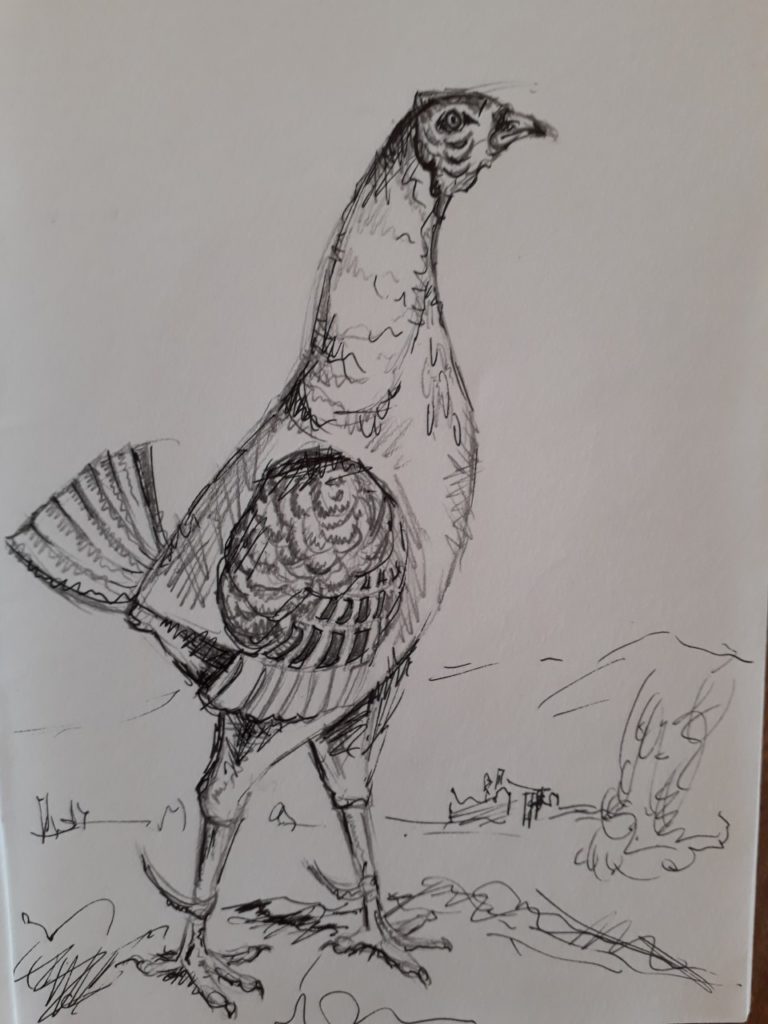
Beth has chosen a great selection of objects for you to get your teeth stuck in to for this week’s draw. She’s had a go at a fighting cockerel, why not take a look and see if you’re inspired to draw too?

Draw Artists

We are very pleased to see that some of you have taken part in our online Mid-Week Draw, here are some of the fantastic works that have been sent in.

Ossie

Join In

If you are tempted to have a go, please share your drawings with us, we would love to see them. Email them to Beth at beth.burr@brighton-hove.gov.uk 

Tweet @BrightonMuseums or if you are uploading them to Facebook with pride, share the url in the comments section below.

Come back next Wednesday to see what new objects Beth has chosen.

Here are some more drawing ideas:

  • Have a go at drawing your pet
  • Draw a picture of different leaves, or flower heads if you can’t find any leaves
  • Draw a map of the world from memory

Discover More

The Mid-Week Draw

Beth Burr, Museum Support Officer