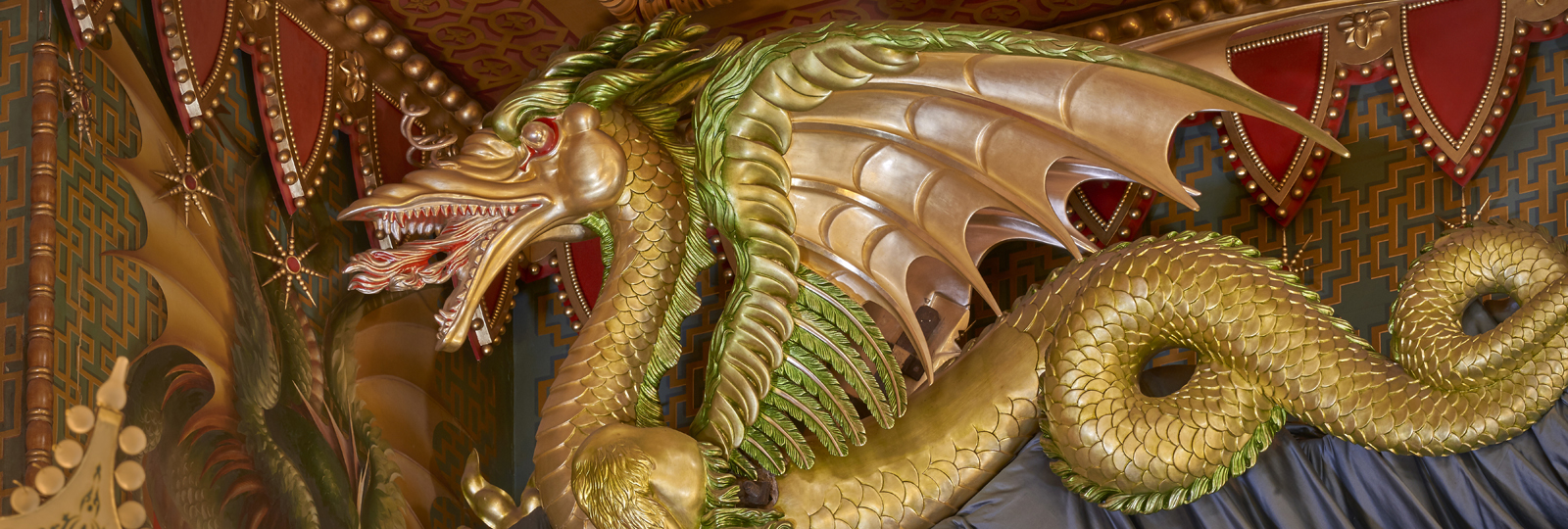
Fire & Water: Dreaming of Dragons
The exhibition Fire and Water: Dreaming of Dragons in the Prince Regent Gallery of the Royal Pavilion tells the wider story of dragons and showcases extraordinary examples from our collections.
View some of the highlights here.
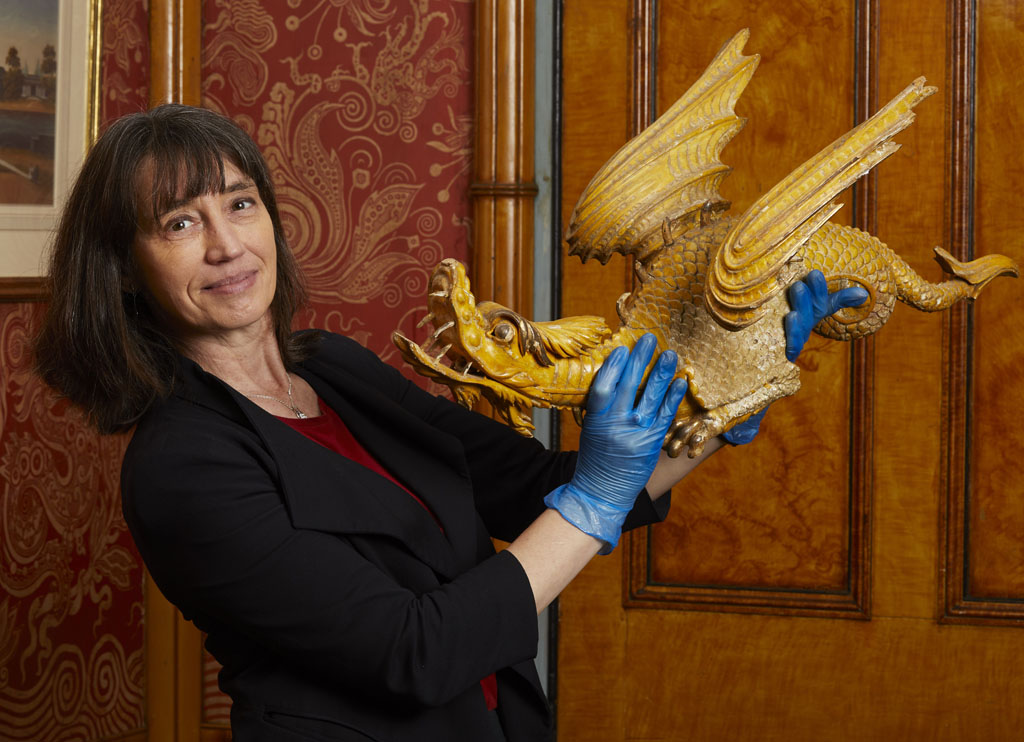
Carved dragon from the Royal Pavilion, Designed by Frederick Crace or Robert Jones, c1815
Eleven of these winged dragons once hung in the Yellow Drawing Room (now called the Music Room Gallery), with lanterns hanging from their claws. They were gilded and originally had a green-ish glaze. Four of them were moved to the Long Gallery in c1819.
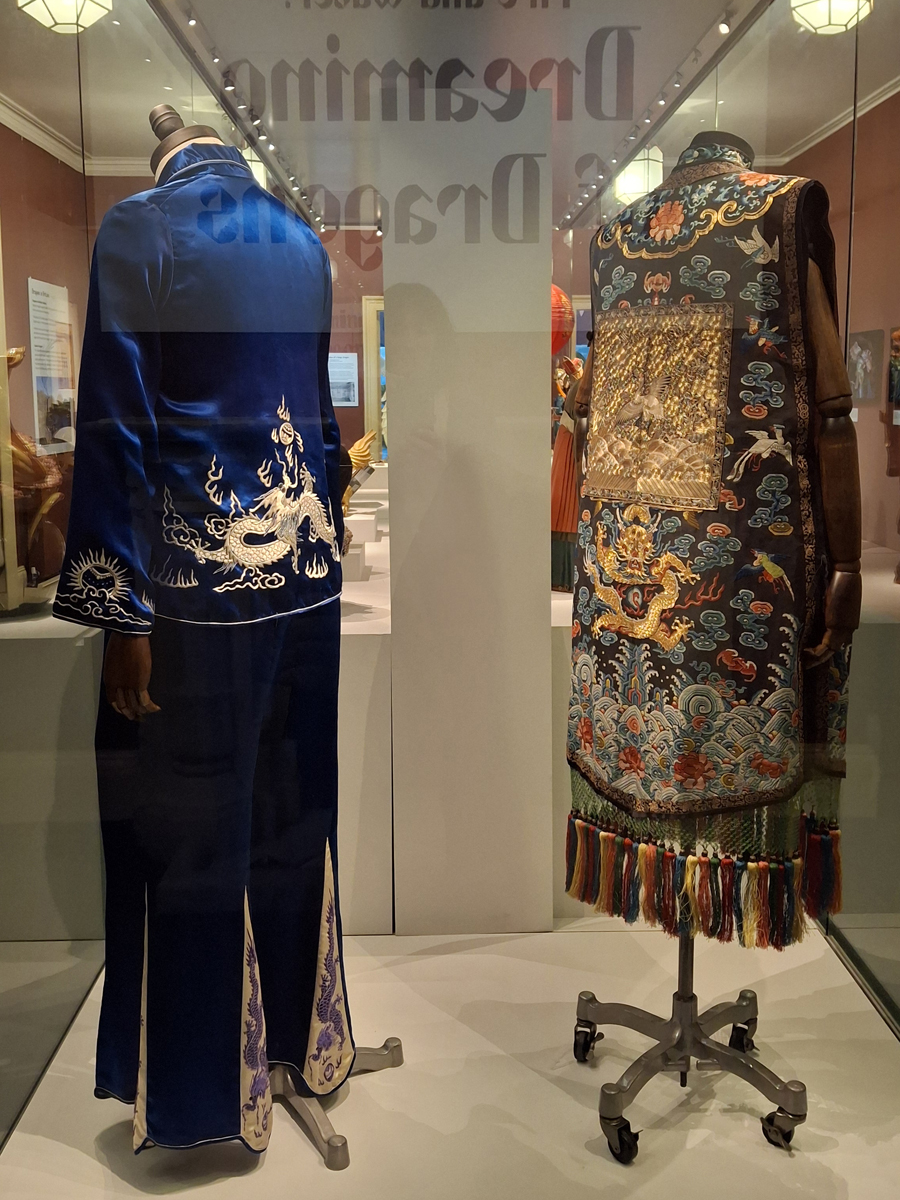
Silk Pyjamas, English, c1920
In the early 20th century, there was a renewed interest in China and Japan in fashion and the arts. Bold colours, linear patterns and images of flowers, dragons etc. were considered adventurous. Using dragon motifs was considered especially daring.
The embroidered dragons on these pyjamas, with their five claws, are Chinese. The inclusion of clouds and sun, suggests that these may be shen-lung 神龍 or weather dragons, who are particularly associated with rain and clouds.
Xiape 霞帔, Ceremonial vest, China, 18th century or late 19th century
On loan from the decedents of the Nymans Messels
This ceremonial vest, called a xiape 霞帔, was made in China. It would have been worn by a woman on formal occasions over her court robe. Applied on the back of the vest is a square insignia badge for the wife of a fifth-rank civil official. This indicates the wearer’s husband’s status. The badge is embroidered with a silver pheasant, shown with cloud formations, and rolling waveforms in satin stitch and couching. Another identical badge, now detached, would have been applied to the front.
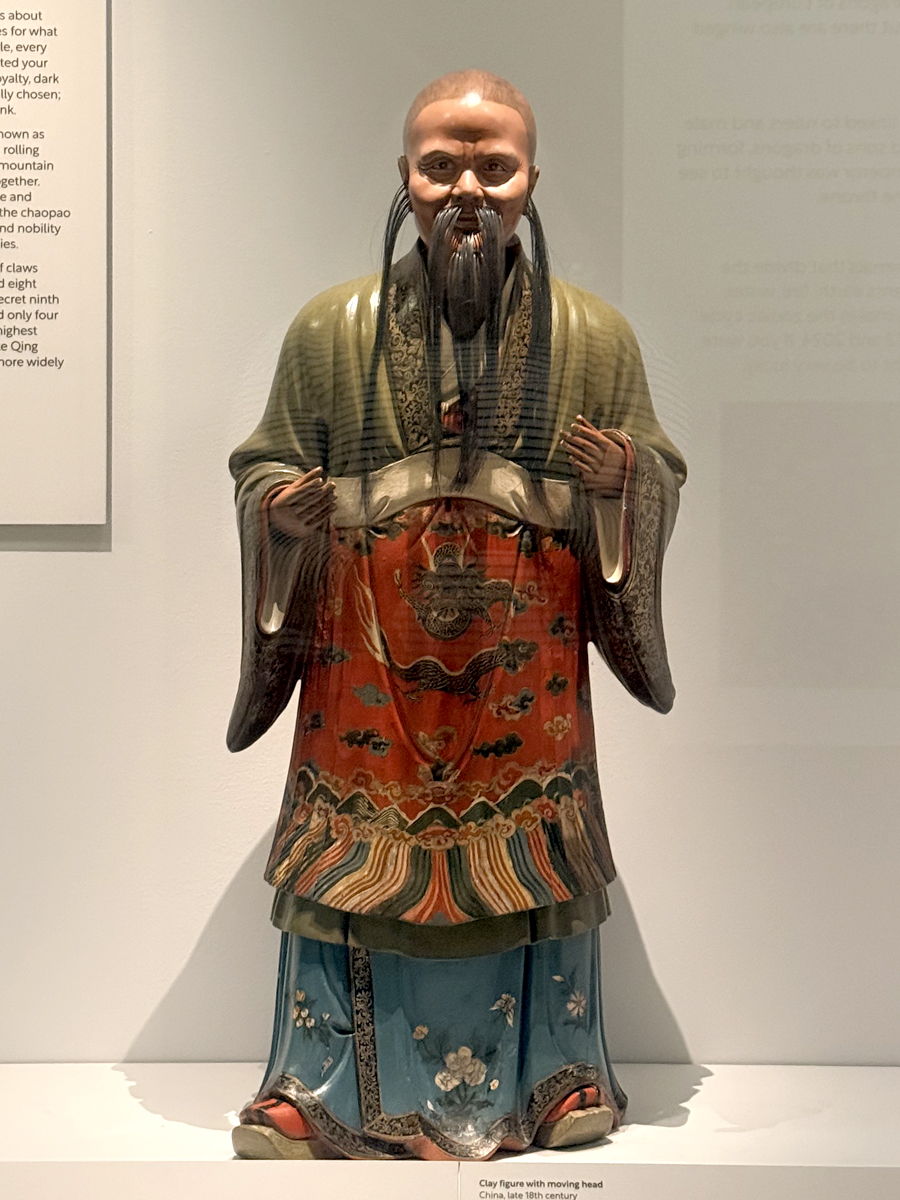
Clay figure with moving head, China, late 18th century
The Long Gallery of the Royal Pavilion is lined with brightly coloured Chinese figures. These fragile objects were often adorned with jewellery, silks, real hair, and bamboo cane. Often referred to – inaccurately – as ‘Chinese Court Officials’ they represent character types of the late Qing dynasty (1644-1912). When their heads are lightly touched, they nod gently.
The figures are prime examples of Chinese export art, made in workshops in the south of China, close to Guangzhou, where traders of the East India Companies would buy goods they thought might appeal to Westerners. It is likely that the designers of the Royal Pavilion copied motifs and colours from these figures. This one sports a dragon on the front of the robe.
Hidden dragons in the Red Drawing Room
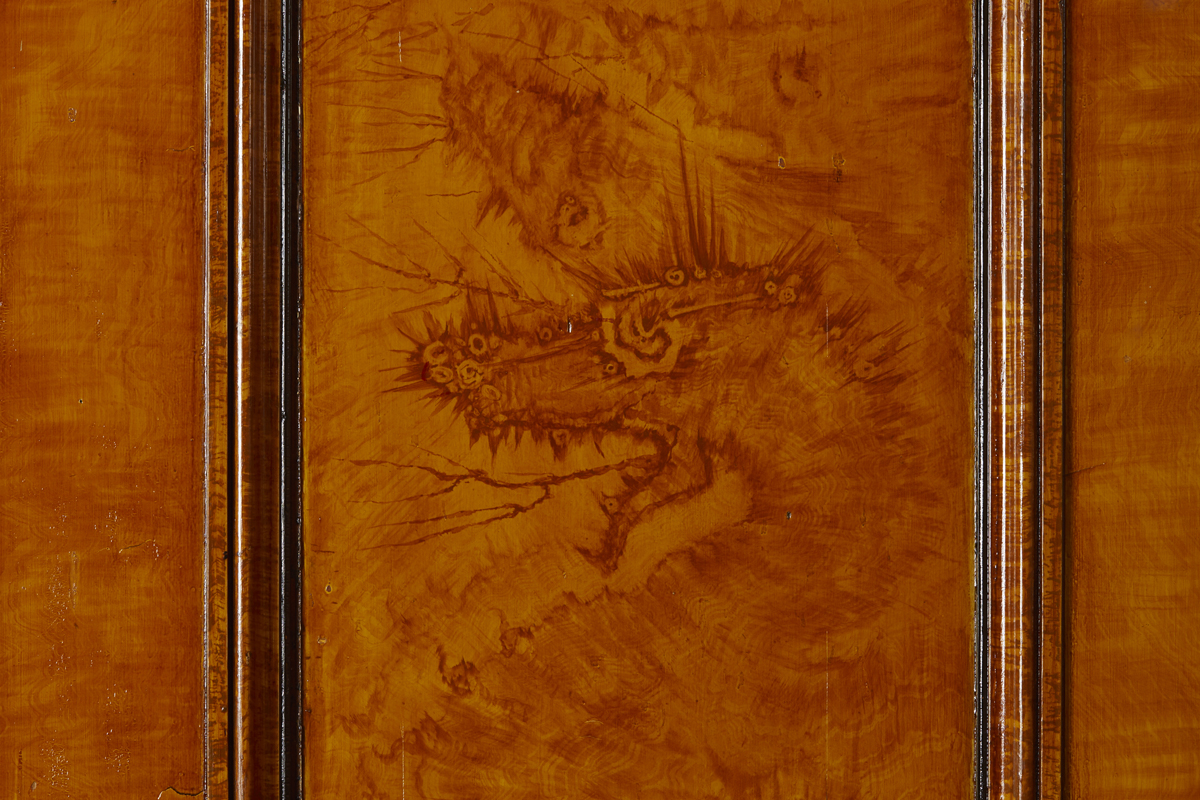
In the Red Drawing Room, which is not usually open to the public, there are subtle dragons that reveal themselves only when looking carefully. Dragons and other creatures emerge from surfaces that imitate satinwood. They are painted into the woodgrain effect of all doors and wood-panelled areas, such as window casements, doors, and skirting boards. They were designed in c1820 by Robert Jones.
A dragon boat on Chinese wallpaper
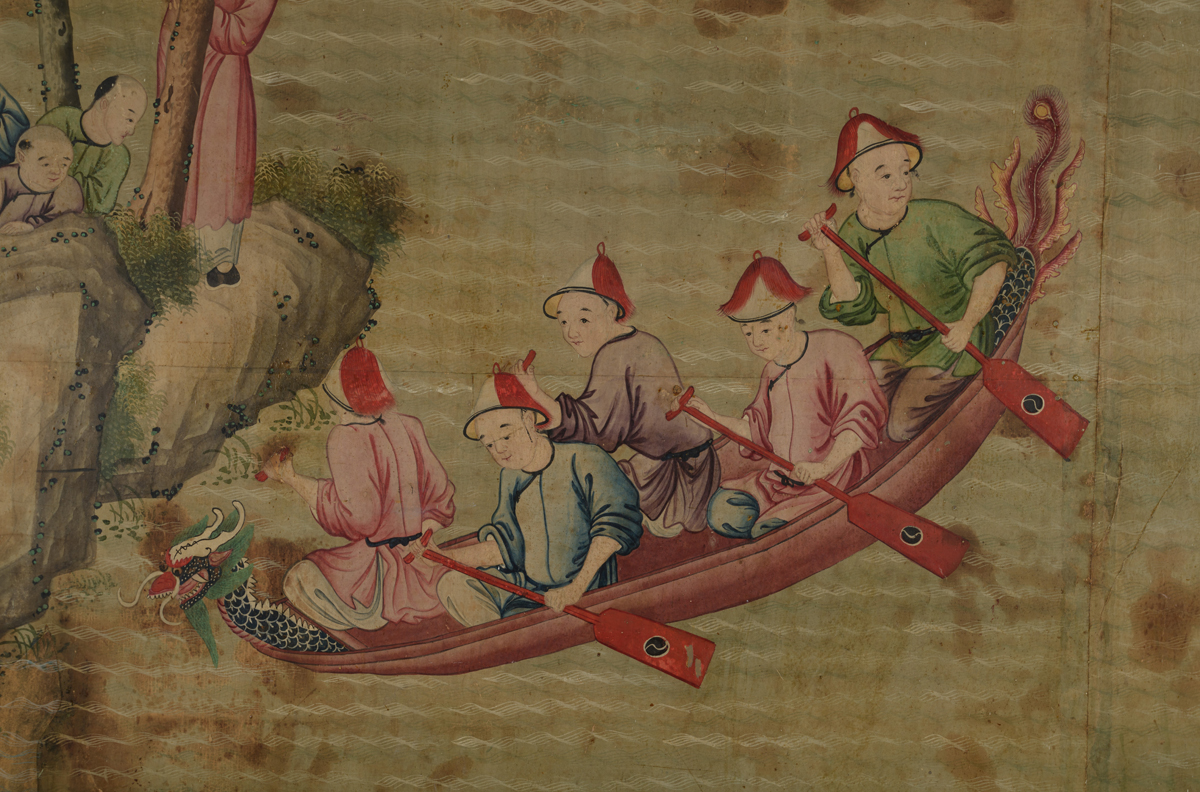
In a corridor on the upper floor of the Pavilion is the only Chinese wallpaper still in its original place. It was made in c1790 and hung in the Pavilion in c1821. Among other scenes, it depicts a Dragon Boat Festival. This commemorates the life of Chu Yuan (332 295 BC), a poet and official who drowned himself after protesting against
corruption.
Fishy illuminated dragons
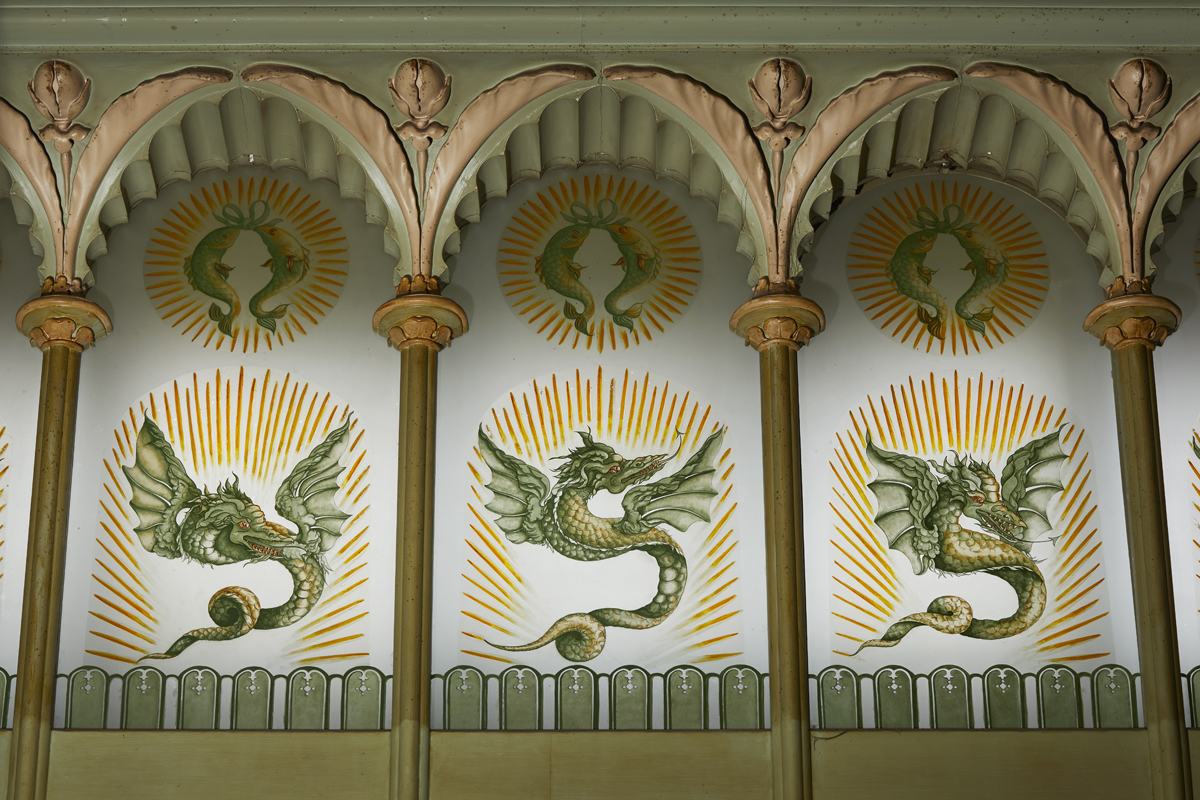
Visitors who arrived in the late afternoon or evening would have seen an assembly of fish-like dragons on the band of windows at high level on the west side of the Entrance Hall, illuminated by the light of the setting sun. These were possibly inspired by a type of Asian water dragon with the head and fins of a giant fish.
Incense Clock China, 19th century (before 1875)
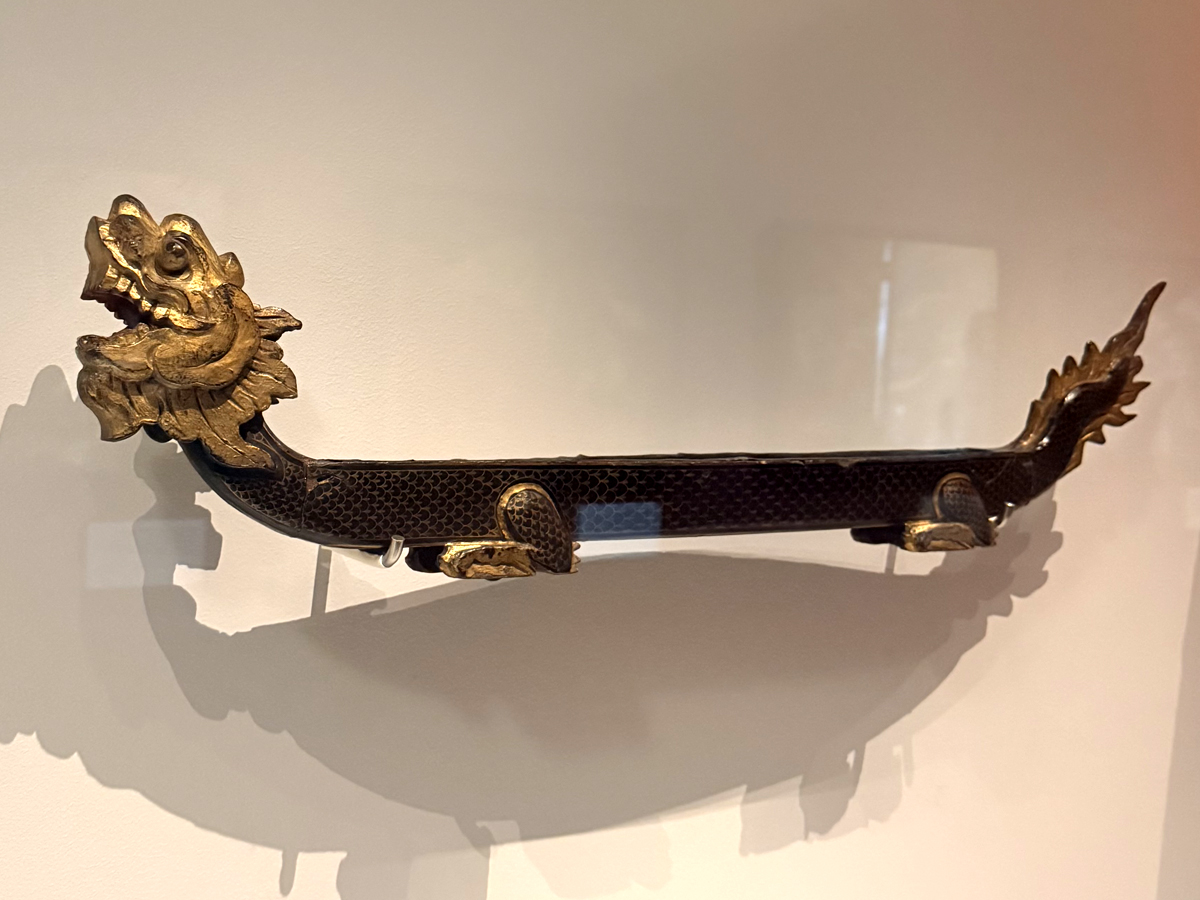
Popular in China during the Qing dynasty (1644-1912), incense clocks were a way of keeping time before mechanical clocks were widely available. This clock is in the form of a dragon boat. A stick of incense would be laid along the middle burning at a controlled rate. Thin strings attached to metal weights would be suspended across the top of the clock at set intervals. Once the incense reached and burnt the string, the weight would fall to a metal dish below, signalling a set time interval had passed.
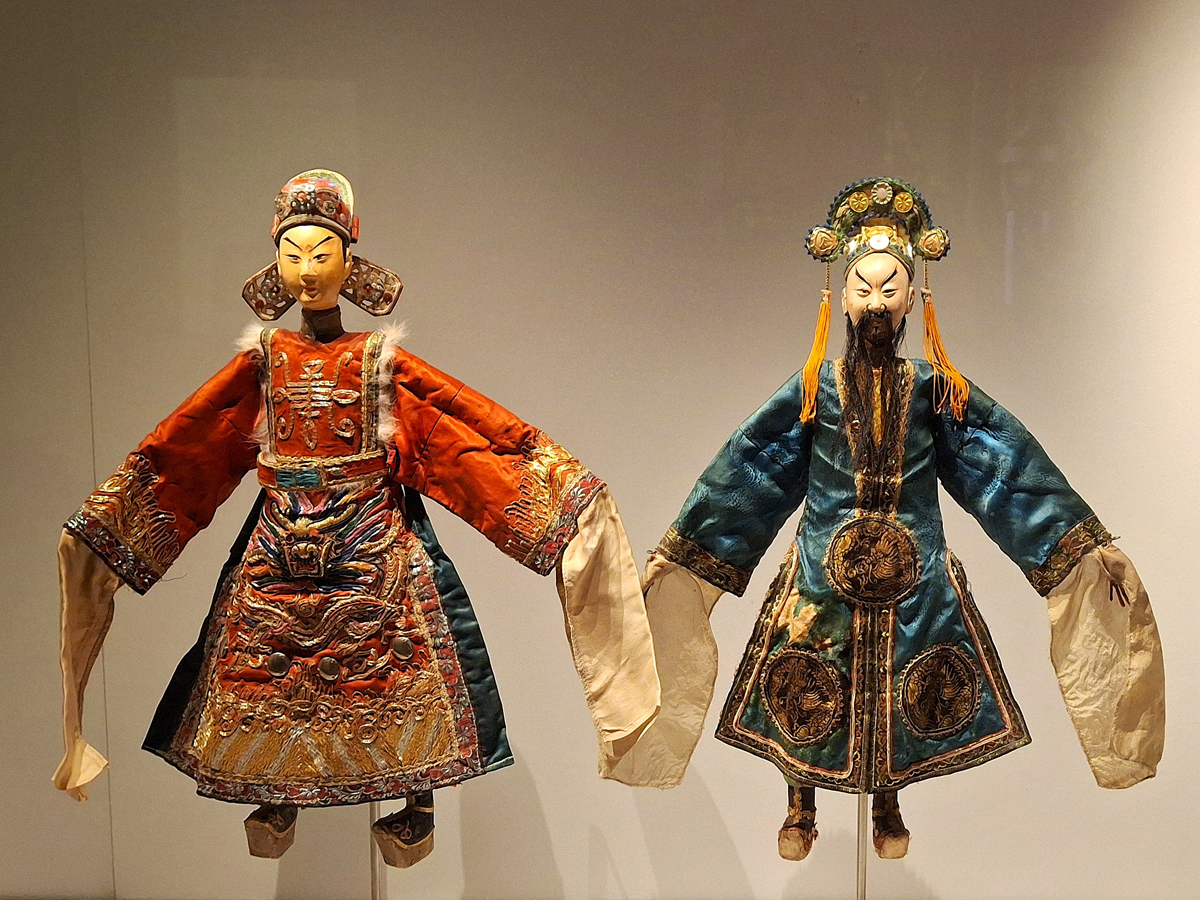
Puppets Ch’ao-Choy or Fujien (福建) Province, China, 19th century
Rod puppets, glove puppets and marionettes are an important part of Chinese culture, entertainment and religious rituals. The puppets represent some Chinese spirits and deities and were sometimes used in Taoist exorcism rites.
A rod is inserted into the back of the puppet, with two rods attached to the hands. Costumes for the puppets mimicked Chinese opera and showed the character’s status. Royalty and important characters often wore elaborate robes like dragon robes, or jifu 吉服.
The only dragon on the outside
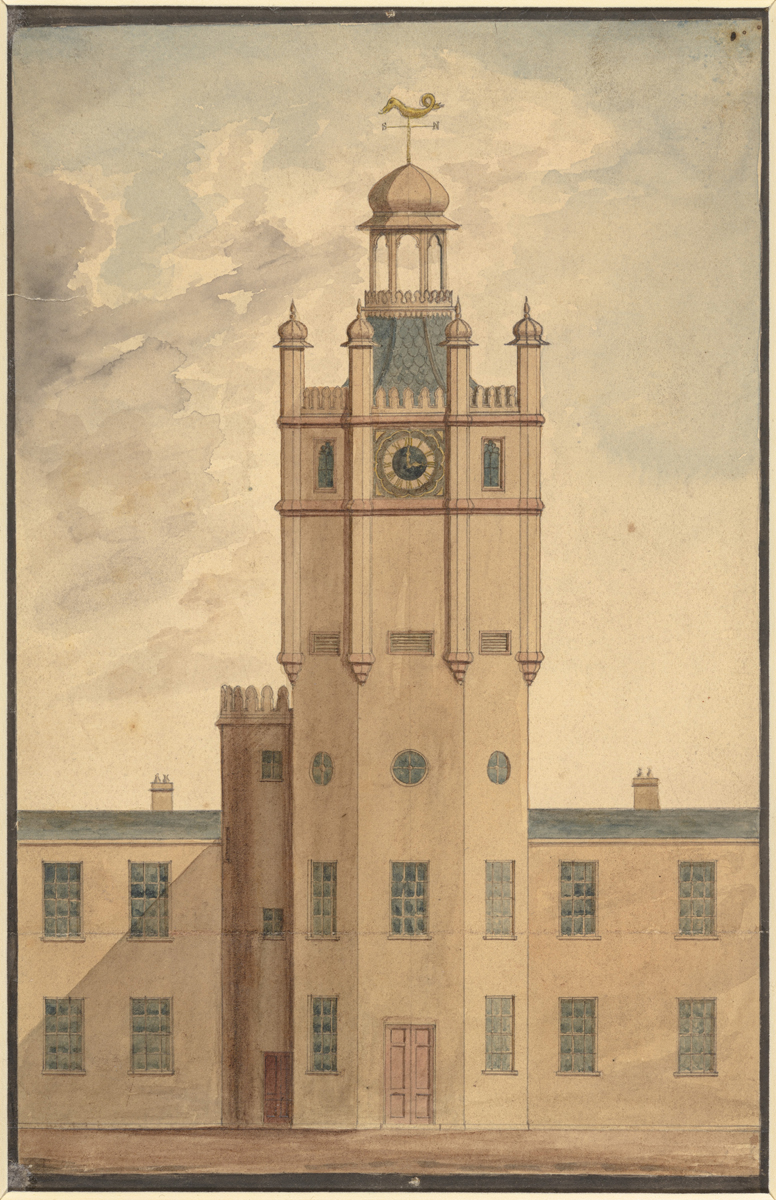
This is the first dragon a visitor to the Royal Pavilion in the 19th century would have seen. The gilt-bronze weathervane was attached to the top of a water and clock tower at the south end of the building, more than 10 metres (35 feet) above the roofline. The dragon was clearly visible from North Street, providing weather information to the people of Brighton.
The Water and Clock Tower at the Royal Pavilion, Office of John Nash, c1816
The tower was added to the palace in 1816, when the architect John Nash extended and transformed the Royal Pavilion. It housed a large freshwater tank that provided pressure to supply piped water to the rooms in the Royal Pavilion by gravity. It was demolished in the late 1890s, but luckily the weathervane in the shape of a dragon survived.