Gender Stories – The Words We Use
Gender – How people identify and express themselves, such as being a man, a woman, or nonbinary. Distinct from sex, gender is about socially constructed roles and behaviours associated with masculinity and femininity.
Sex – Biological traits that are used to categorise people as male, female, or intersex.
Sexuality – A person’s sexual orientation, based on who they do or don’t feel physical, emotional, or romantic attraction towards.
LGBTQIA+ – An acronym for lesbian, gay, bisexual, transgender, queer or questioning, intersex, and asexual. The + has been added to make the term more inclusive, and to acknowledge all non-straight, non-cisgender identities.
Questioning – Anyone who hasn’t yet self-defined their sexual orientation, gender identity, gender expression, or some combination of the three. They are still in a process of exploration.
Intersectionality – The idea that various forms of social inequality (including race, gender, class, and sexuality) intersect, overlap, and combine to create particular and context-specific experiences of oppression and discrimination.
Gender
Masculine – Roles, behaviours, or qualities traditionally associated with men in a particular society or cultural context.
Feminine – Roles, behaviours, or qualities traditionally associated with women in a particular society or cultural context.
Gender Stereotypes – Often oversimplified beliefs about the behaviours, characteristics, and roles attributed to women and men.
Feminism – A broad range of movements and ideologies which centre around the belief that men and women should have equal rights, opportunities, and treatment in all aspects of life.
Intersectional Feminism – A range of movements and ideologies which recognises that various social identities (like race, class, gender, ability, etc.) intersect and create unique experiences of discrimination and oppression. Intersectional feminism actively includes and acknowledges the experiences of women with different social identities.
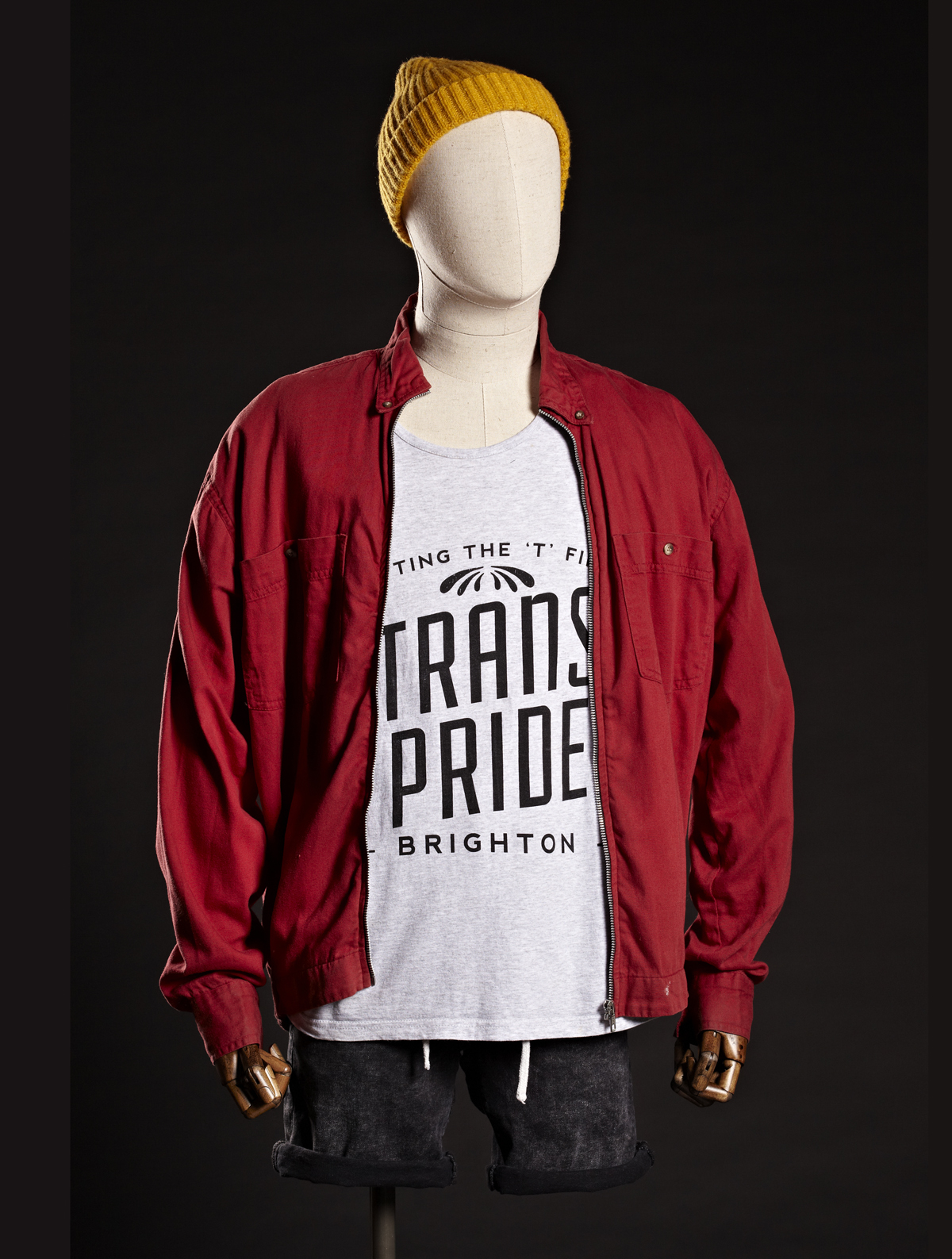
Trans – Trans is a shortened form of transgender, which is a term used to describe people whose gender identity is different to the sex they were assigned at birth. This is an umbrella term which includes many different identities, not just people who
have transitioned socially or physically from one binary gender identity to another.
Trans Masculine – A broad term that encompasses a range of people, usually assigned female at birth, whose gender identity aligns with masculinity.
Trans feminine – A broad term that encompasses a range of people, usually assigned male at birth, whose gender identity aligns with femininity.
Binary – The idea that gender naturally fits into two distinct and opposite groups, ‘male’ and ‘female.’
Non-Binary – A person whose gender identity or expression falls outside of binary understandings of gender and the categories of man and woman.
Gender-fluid/queer – A gender identity that is not fixed and may vary over time or in different situations.
Agender – A person who does not identify with any gender, experiencing a lack of gender or a neutral gender identity.
Gender reassignment – Gender reassignment is a protected characteristic that applies to a person who is proposing to undergo, undergoing or has undergone a process of changing the sex they were assigned at birth.
Transition – A more commonly used term for the process of gender reassignment. This might, but does not necessarily, include a person changing their body through surgery or hormone treatment. A person undergoing transition might adopt a new name and use different pronouns.
Transphobia – A fear, hatred, or prejudice against trans people. This could be the fear or dislike of someone based on the fact they are trans, including denying their gender identity, refusing to accept it, or causing bodily harm to someone who is trans.
Gender Critical – People who believe that sex is male or female and cannot change. They believe that gender is rooted in sex.
Sex
Intersex – A natural variation in human biology in which people are born with physical characteristics—such as chromosomes, hormones, or genitalia—that do not fit typical definitions of male or female.
Cis – A person whose gender identity aligns with the sex they were assigned at birth.
AMAB – An acronym for ‘assigned male at birth’.
AFAB – An acronym for ‘assigned female at birth’.
Sexuality
Queer – A term used to talk about non-normative identities, and particularly identities and orientations that are not heterosexual. Previously used as a slur, the term is more commonly used by younger people.
Culturally Queer – Individuals who are not necessarily LGBTQIA+ themselves, but have been deeply immersed in and influenced by queer culture.
Heterosexual – A person who is sexually, romantically, or emotionally attracted to a person of the opposite gender.
Homosexual – A person who is sexually, romantically, or emotionally attracted to a person of the same gender.
Bisexual – A person who could be sexually, romantically, or emotionally attracted to a person of more than one gender.
Pansexual – Attraction based on people rather than gender identity or sex.
A-sexual – A-sexual, or ‘ace’, refers to people who do not feel sexual attraction.
A-romantic – A term used to describe people who do not feel romantic attraction.
Homophobia – This encompasses a range of negative attitudes and feelings toward homosexuality or people who are identified or perceived as being lesbian, gay, bisexual, or transgender (LGBTQIA+).
When speaking to or referring to another person, it is respectful to use the name, pronouns and terminology which the person uses to describe themselves.
If you are ever unsure which words to use to describe someone, just ask in a respectful way from a place of kindness