Out of the Woodwork
In the Red Drawing Room of the Royal Pavilion, the first room to the right off the Green Entrance Hall, the artist and designer Robert Jones included dragons in the pattern of the so-called Dragon Wallpaper. This was inspired by Chinese court robes and painted by hand in white on a rich vermilion red ground with a glaze of transparent carmine. These wallpaper dragons are stylised and easily visible. George IV liked the pattern so much that he asked for it to be repeated as a block-printed version in different colours (green and yellow) in other rooms of the Pavilion.
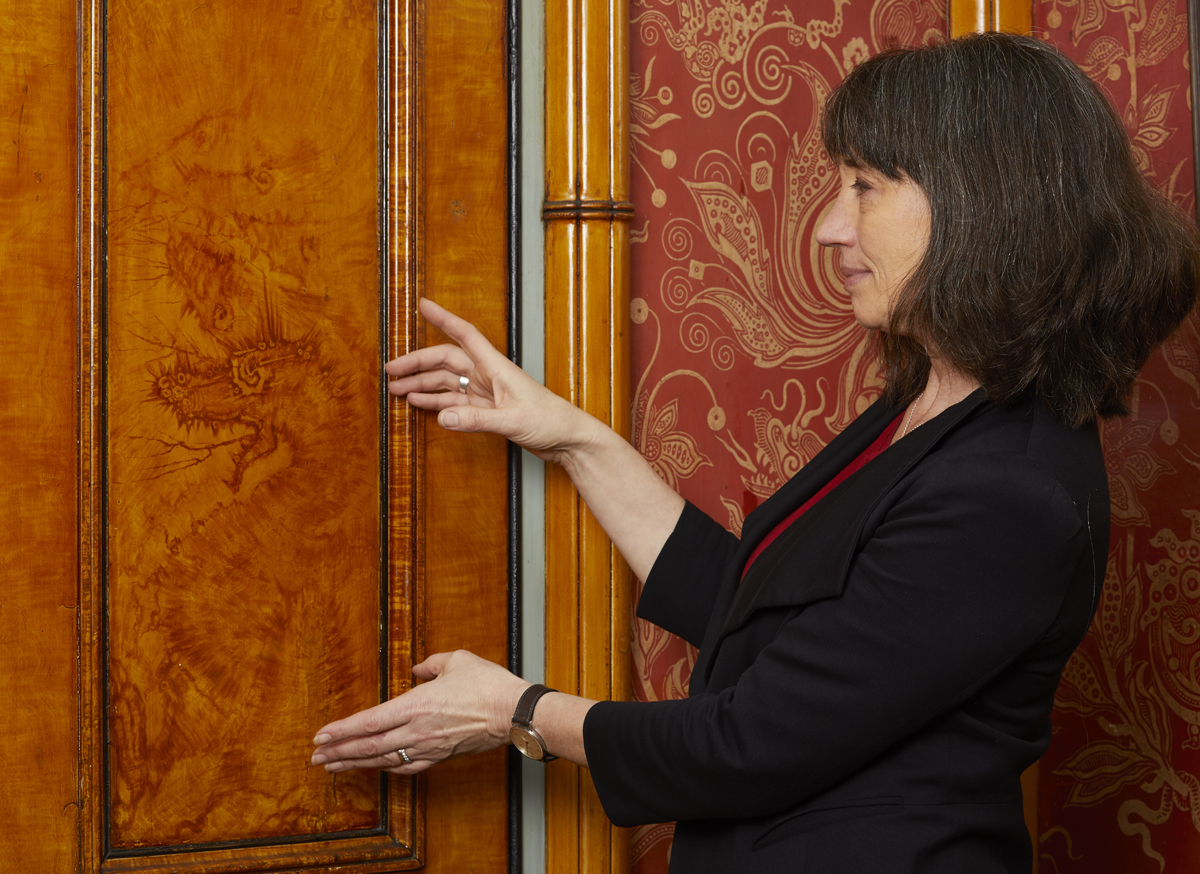
But in this room, Jones also sneaked in other, more subtle, dragons, that would reveal themselves to visitors only on close inspection, or perhaps by chance.
Once you have spotted them you see them everywhere, and you find yourself looking around the room in search of more delightful discoveries. These dragons are painted into the woodgrain effect of all doors and wood-panelled surfaces, such as window casements, shutters and skirting boards. Dragons and other snake-like, phantastical creatures emerge from paint surfaces that imitate satinwood. They are full of movement, fluid even, and give a vivid impression of how they were created: the artist’s brush wandering, painting a first tentative little creature, then more and more.
Woodgraining, marbling and trompe l’oeil effects were popular features in eighteenth and nineteenth century interior decorating. By means of painting, artists imitated other, usually more precious, materials and surfaces, such as marble or indeed satinwood. In the Pavilion, a building that plays with your senses by incorporating optical illusions and imitations, we find many of these pretend surfaces, skilfully executed by the Craces, Robert Jones, and their assistants. Pink marbled surfaces, for example, can be seen in the niches of the Long Gallery, while imitation bamboo (either fashioned from beechwood or cast metal) is dotted around the entire building. Nowhere though is the technique of woodgraining executed so playfully and effectively as in the Red Drawing Room.
We cannot say for certain whether Jones himself painted the dozens of squirming dragons into the woodgrain of this room, but it is likely that his brush indeed “wandered” and painted a first dragon, possible with no intention to make this a design feature. An apocryphal story claims that George IV saw Jones doing this and was so delighted by the creatures that he ordered him to include them everywhere in the room. It is a lovely story, but there is no evidence that this happened. Very little is known about the important figure Robert Jones, but some of his Pavilion accounts survive.
These confirm that he worked extensively on the Red Drawing Room decorations between 1820 and 1822, but no mention is made of the hidden dragons in the woodgraining, only generic references to the richness of the design scheme, the quality of the pigments used, and the highly decorated and varnished surfaces. Unlike the Dragon Wallpaper, which is a 20th century reproduction, the wooden surfaces in this room are largely original. In the mid-19th century, many of them were covered in a brown copal varnish, but these dark layers were beginning to be removed in the 1920s, revealing Robert Jones’ delightful dragons once again.
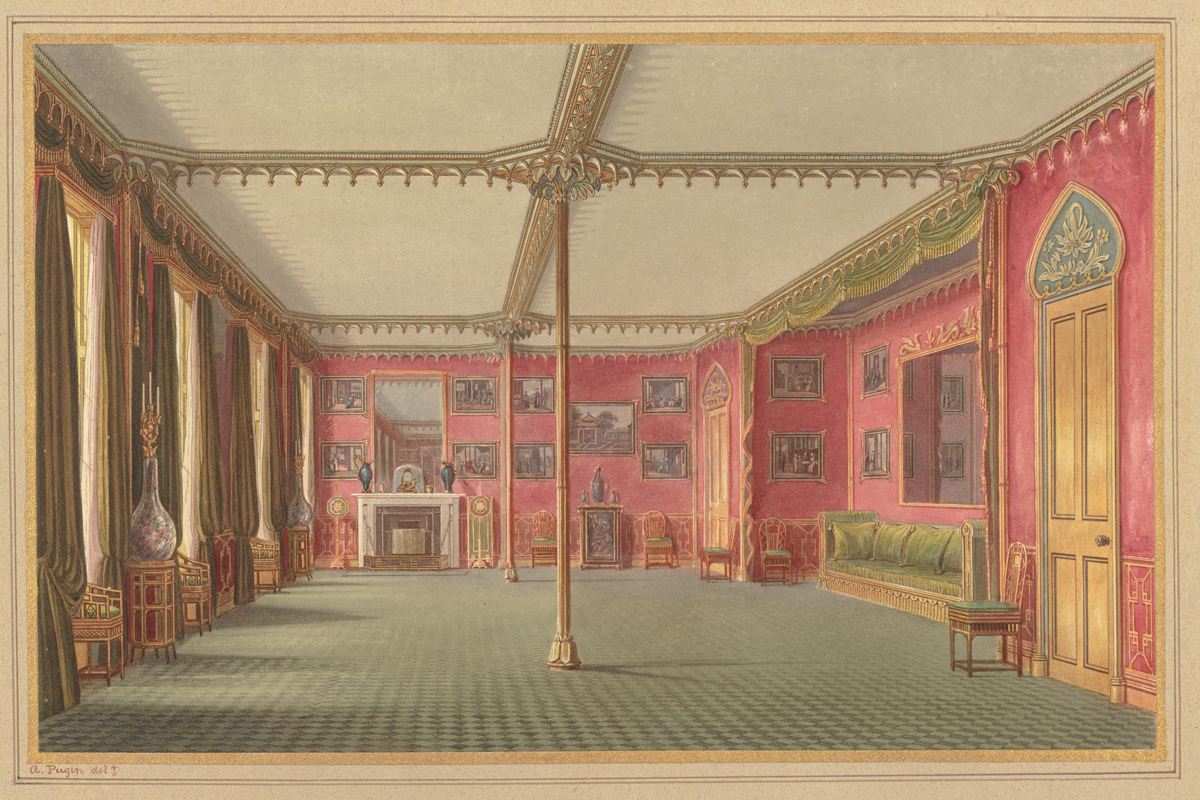
The Red Drawing Room is not on the normal visitor route through the building, but is used for special events and occasions, including wedding ceremonies.