Living Monuments: A Discovery of the Pavilion Elms
Introduction
Ashley Brown is a postgraduate researcher in Curating Collections and Heritage at the University of Brighton. She is working within the Access and Interpretation team at the Royal Pavilion. Ashley is driven by a passion for material culture, heritage and inclusive storytelling. She undertook this project to map, reframe and bring fresh visibility to the Royal Pavilion’s historic elm collection. Ashley is bridging technical archival research and satellite geolocation with accessible interpretation. Her work seeks to transform these quiet botanical survivors into engaging living monuments for all visitors to explore for many future generations.
The Deep Roots
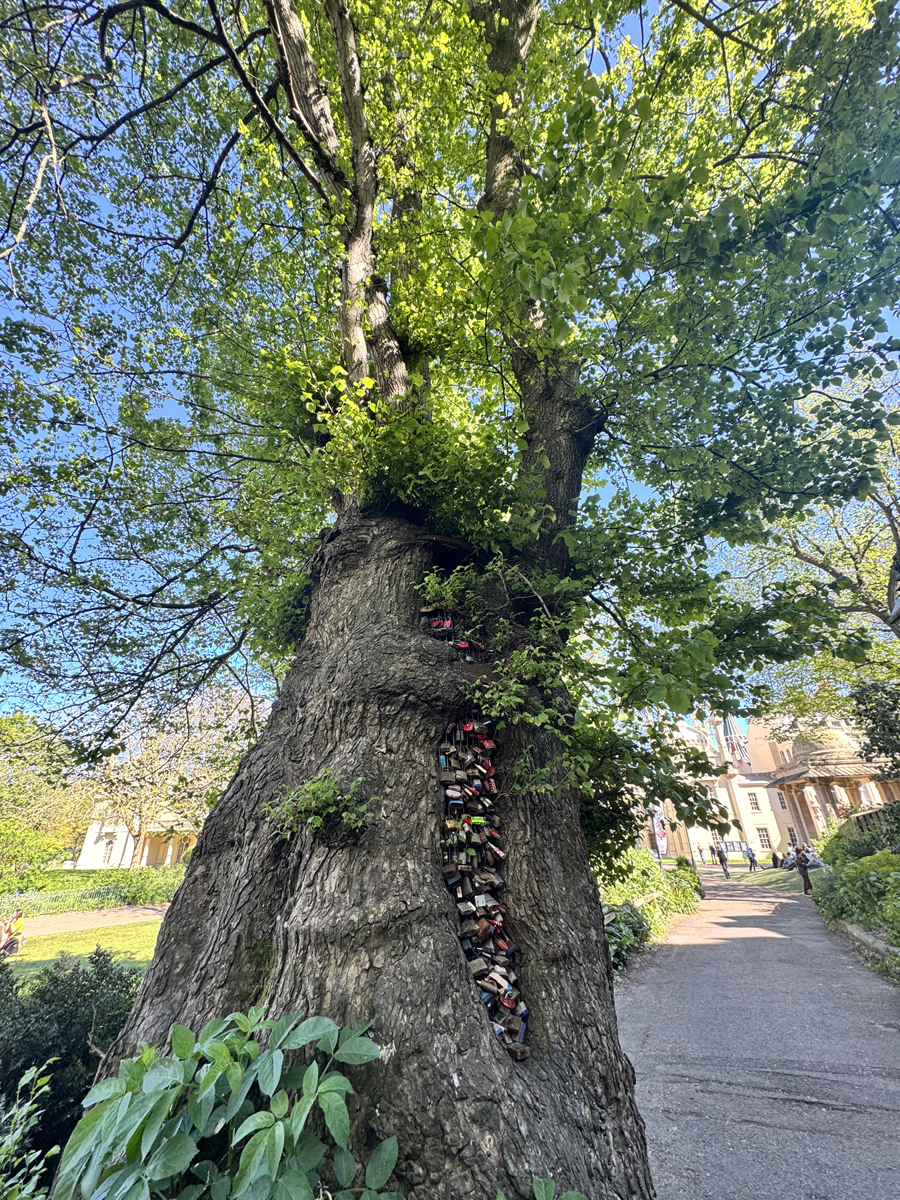
Our story doesn’t begin in the Regency era, but 5,000 years ago. As Martin Ingrouille notes, the Ulmus genus has survived waves of decimation since the postglacial period, marking the very development of British vegetation. When we walk past the North Gate, we are not simply seeing a tree, but a survivor of an ancient lineage that predates the Pavilion itself. Not only a garden marvel, the durable and water-resistant elm wood has also long served the arts and crafts of society, from musical instruments to great boats.
Mapping this collection has revealed the “exceedingly complicated taxonomy” that Oliver Rackham famously described. Within our eleven recorded species, we see the contrast between the “normal,” seed-bearing Wych Elm (Ulmus glabra) and the massive, upright English Elm (Ulmus procera). The Pavilion elms have shifted from familiar background trees into a living archive of ecological history, horticultural craft and civic memory. By combining historical research, field observation, photography and geolocation, this project has made the collection more visible, more legible and more meaningful for everyone who cares for the garden.
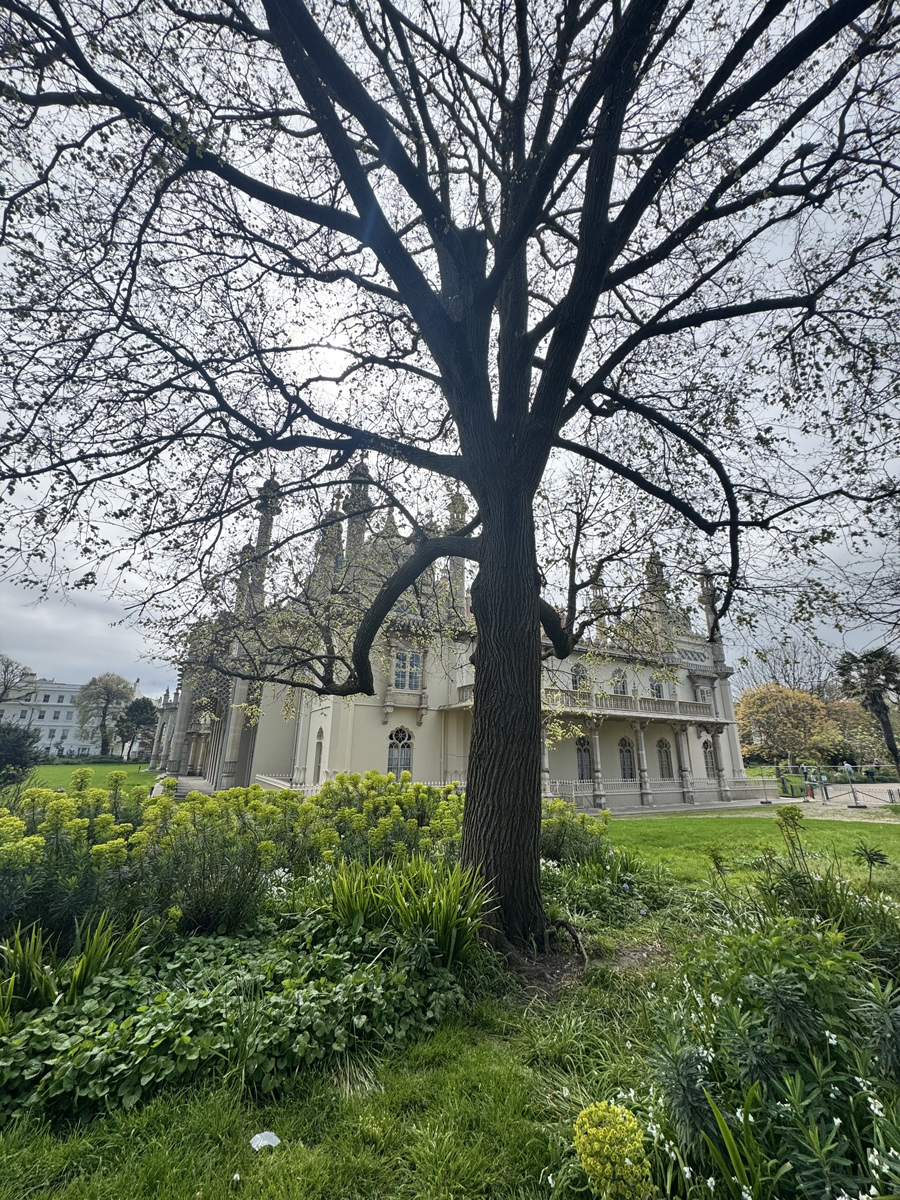
In the garden, this botanical complexity became more memorable through a few nicknames that began as personal memory joggers. They are by no means official titles, but they helped navigate the landscape and develop a genuine affinity with the elms. Having spent so much time in their presence, it is easy to feel a sense of peace and connection and hopefully others might find their own ways to meet the collection.
You may find your own names for them, but it brought a smile to see the huddle of Dutch elms by the café, who seemed like a group of “Gossip Girls” sharing the latest Pavilion news! Or the magnificent specimen overlooking the security office, standing like a silent “Watchman.” Even the 18th-century English Elm (Ulmus ‘Procera’) near the Indian Gate of the South entrance — a hollow-but-healthy marvel held together by a sturdy iron brace — feels like a grand matriarch of the gardens, proof of the value of community-led conservation.
Finally, let’s not forget the most photographed tree in Brighton, the mysterious Weeping Wych, who even saw the grand celebrations of Queen Victoria’s Diamond Jubilee in 1897!
Mapping the Trees
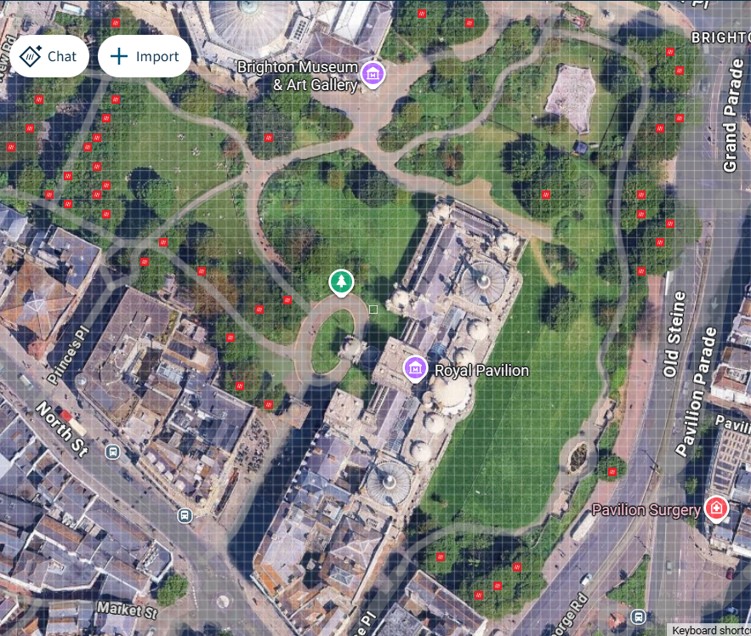
Brighton & Hove holds a globally significant archive of over 17,000 elms. At the Pavilion, we curate a vital micro-collection of this national treasure. By moving from general maintenance to curatorial excellence, we have geolocated these specimens to ensure that their sculptural winter forms and cooling summer shade remain a landmark of Brighton’s heritage for the next century.
A bump in the road occurred when the very canopies of the magnificent trees blocked the signal trying to map them, but thanks to technology, satellite, multiple maps and a dash of patience, we were able to assign them accurate co-ordinates and their what3words location so that they are easily found for others to enjoy.
A Legacy for All
This research transforms these trees from background greenery into Regency landmarks. As we turn toward access and inclusion, their stories will shape new audio tours and signage, inviting everyone to explore this living archive.