Conservation at Christmas and Other Updates
Tessa Corton, Graduate Conservator, continues a series of blog posts from the Graduate Conservators at Brighton & Hove Museums.
In the last update, Dominic wrote about how he’s Bringing A Shine Back to the Table Decker’s Room. Since then, Austen has come for Christmas at the Royal Pavilion, and the palace needs to be ready. Read on to find out more.
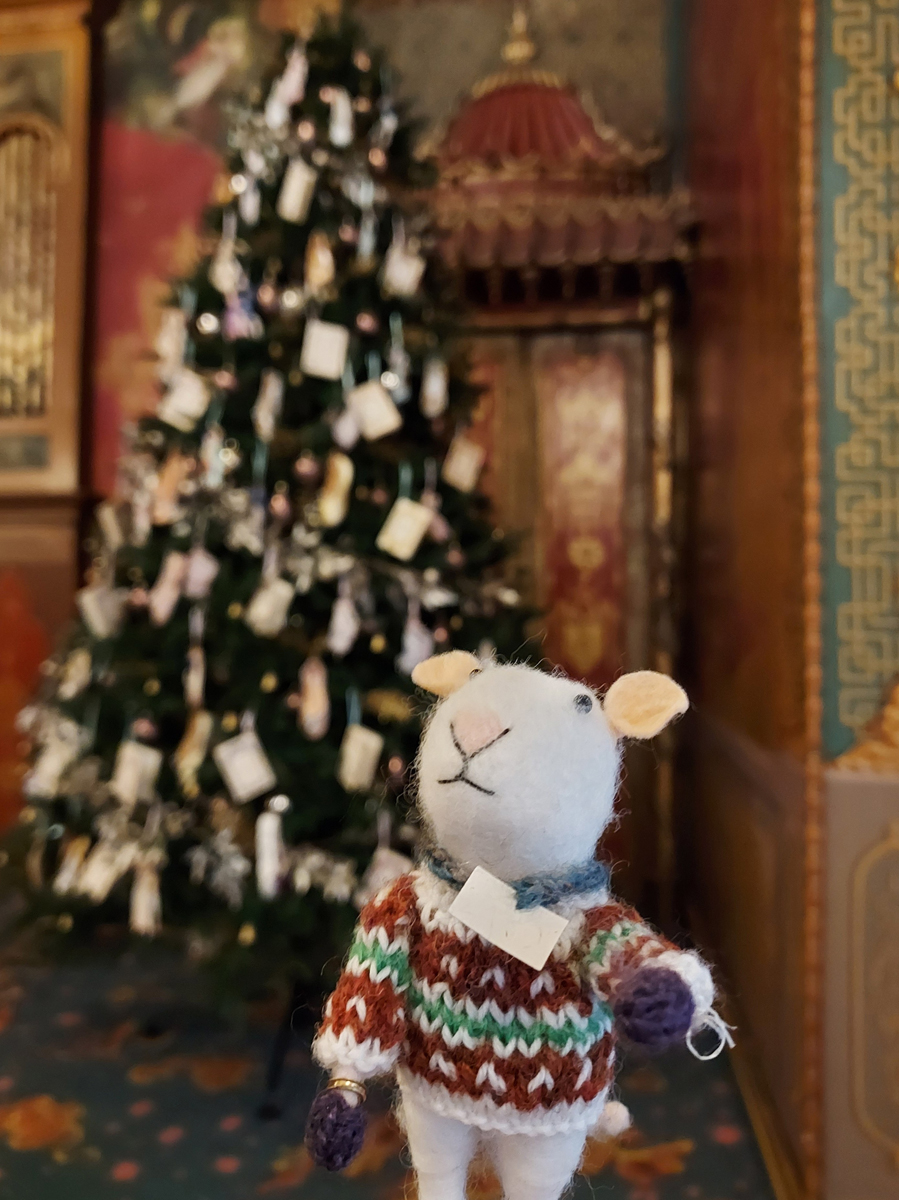
Christmas and Conservation
Christmas starts in July at the Royal Pavilion, or the planning does at least. Over the past few months, I have been the conservation team’s lead during this process. It was my job to keep the rest of the team informed of proposed installations, object moves, and changes to display environments and pass on their feedback in meetings with other departments. It was important to keep the building and objects needs in mind.
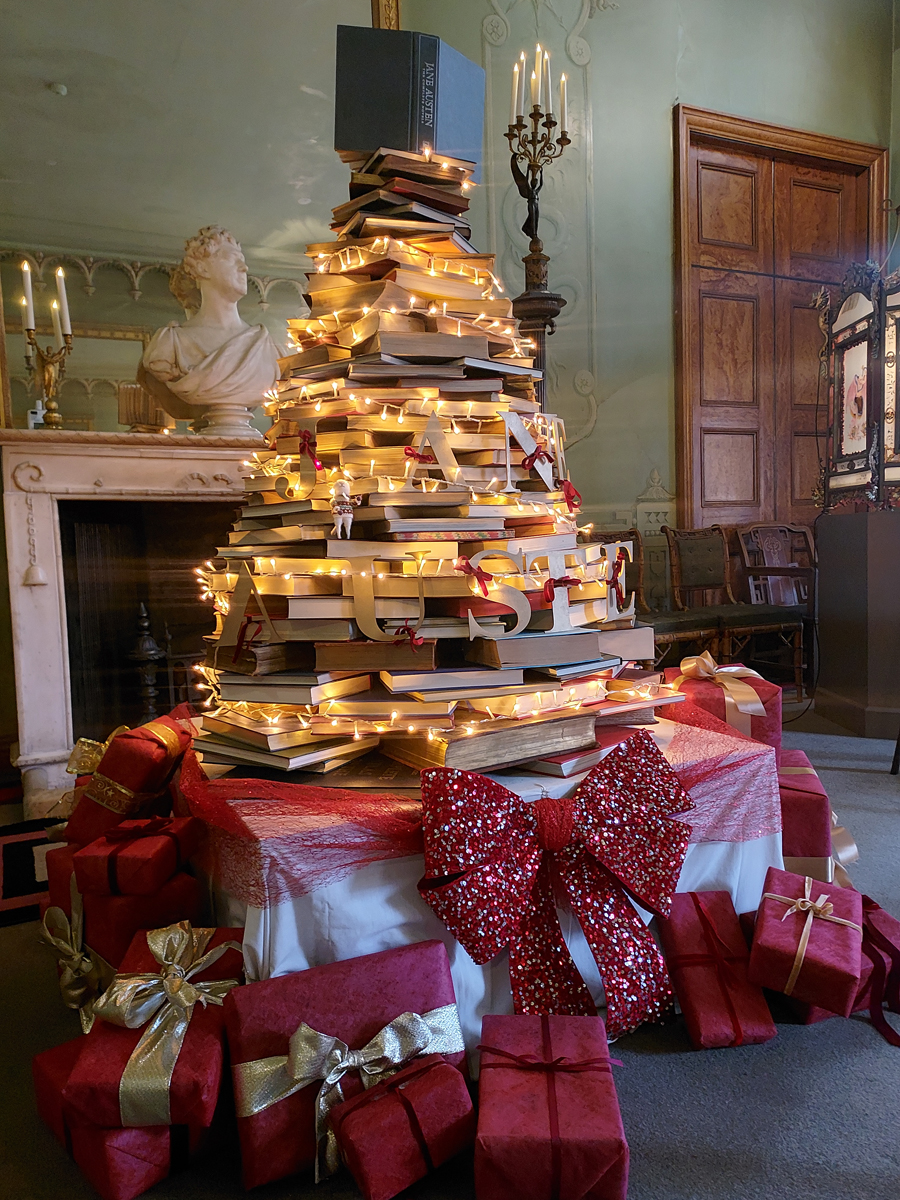
With the Jane Austen theme came, unsurprisingly, many books. As these are organic, their presence in the building could have posed a risk by introducing pests and mould.
This risk is heightened with the use of second-hand books, which ended up comprising the Entrance Hall tree. To minimise the risks, we would ordinarily freeze them for two weeks. This kills any pests and renders mould inactive before it undoes further cleaning.
However, due to the volume of books required for Christmas (over 500!), this was not practical. The freezer is only so big. Instead, I aided our Assistant Conservator Hannah in communicating a quarantine process to the Christmas team and helped ensure it was followed successfully. The books were placed in acid free tissue paper lined, plastic, quarantine boxes with pest traps for two weeks. They were then checked and, thankfully, no pests were found. Finally, Dominic and I examined them all for mould and cleaned those affected before they were ready to be installed.
One of the biggest parts of Christmas for conservation assistants is object moves. I went on many walk arounds with other teams to obtain the clearest understanding of what needed moving and where. These I then mapped out to circulate through the department for review and comment.
Once the layout for the Christmas exhibition was finalised, Dominic and I, along with Conservation Assistant Emily, set about rearranging the smaller items of furniture to accommodate the trees, cases, and other interactive elements, which other members of the department had already built ready to construct in situ.
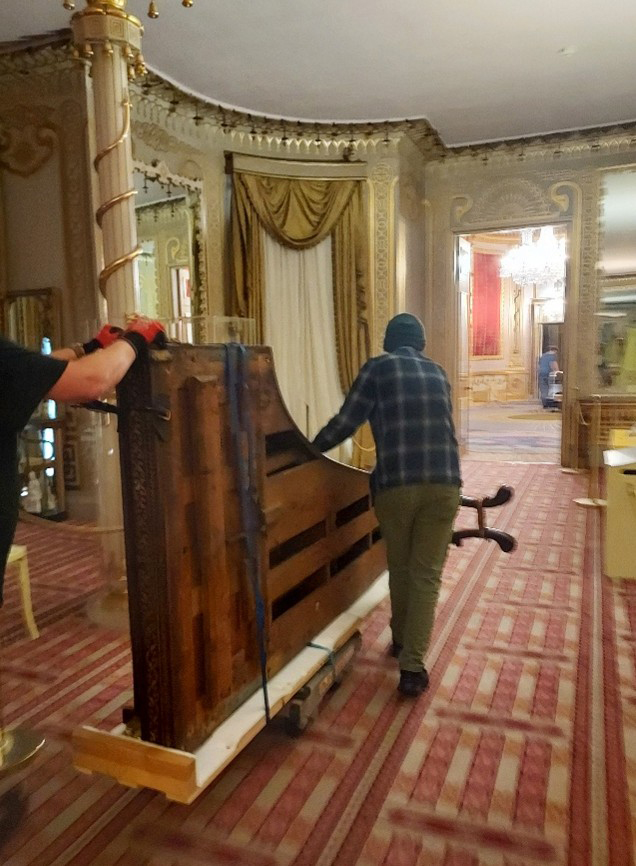
Sometimes rearranging objects was less simple than moving a chair from one side of the room to the other. One of the first moves, and most complex, was the Tomkison piano. Usually located in the Music Room Gallery, it had already been moved into the Music Room for a series of concerts in September and was scheduled to return to its home location soon after. This is no simple feat however as the move requires at least four people and involves removing the legs so it can be turned on its side to fit through the doors. As it was requested to be displayed in the Banqueting Room Gallery for Christmas, the most time efficient solution was to transport the piano directly from the Music Room to the Banqueting Room Gallery.
At the time, the COLOUR exhibition was still on-going meaning that some of the displays had to be moved to accommodate the instrument. Emily and I focused on these smaller moves whilst Objects Conservator Andy, Conservation Technician Steve, and Dominic manoeuvred the piano onto its skates with my occasional help. In no time at all, the piano was in its new temporary home where it will remain until January.

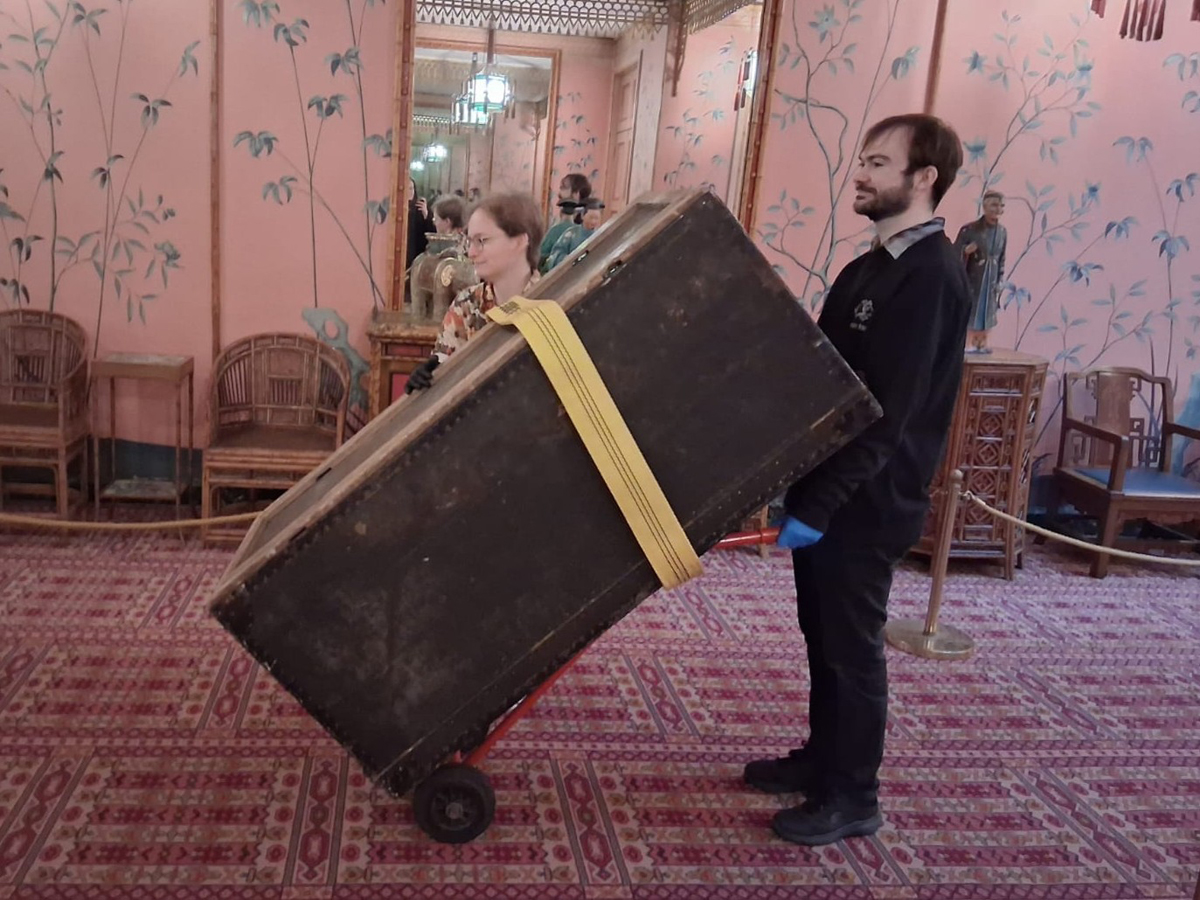
Other items had to come out of storage. For the Northanger Abbey inspired display in Queen Victoria’s bedroom, a large trunk was needed. One was identified as suitable for display by the Collections Team in our off-site storage facility. Like the books, it required quarantining and cleaning before it could be brought into the Pavilion.
This was completed in the conservation spaces at the Old Courthouse. After the trunk had passed through this process, it was ready to be moved into position but, due to its large size and substantial weight, it needed two people to lift and a trolley to wheel it to the foot of Queen Victoria’s bed.
Finally, it was time to finish decorating the Pavilion. By this point, most of the hard work is done for conservation – the plans have been finalised, interactive stages built, and objects moved into position. Now our role was to ensure everything was done safely and securely and to clean up the glitter afterwards. The last thing we wanted was damage from a low flying paper seagull!
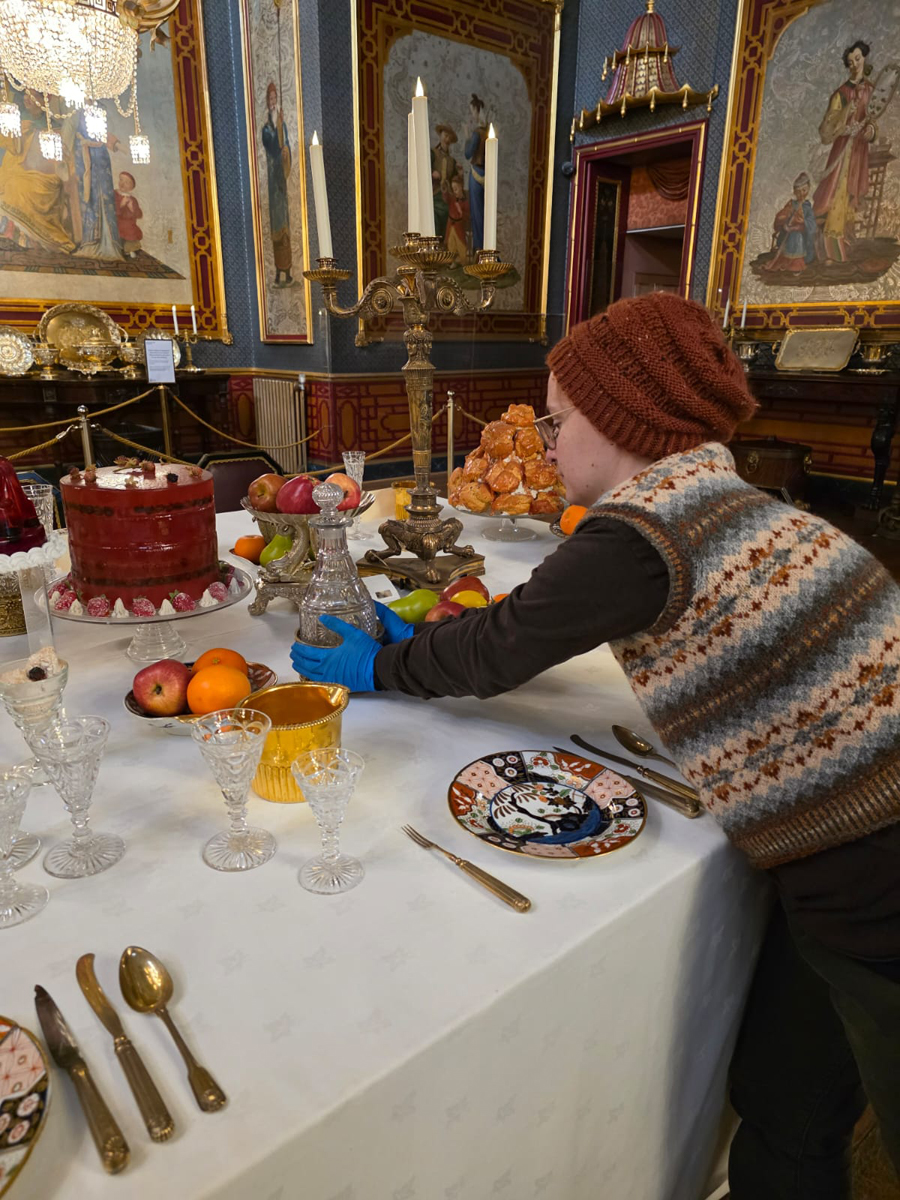
One of the other installs which required our involvement was the Banqueting Room table scape. Unlike during the COLOUR exhibition, all the cutlery, plates, decanters, wine coolers, glasses, sweetmeat jars, dishes, ice pails, and sauce jugs remained on display alongside an array of imitation cakes and desserts. The intention was to create a lavish feast for Austen and her characters. However, adding to the existing display meant rearranging the table, which required conservation’s help.
I worked with Amber, the mastermind behind Austen at Christmas, to make sure access to the table was readily available and adjusting the spacing of the crockery to make room for the range of delicious looking sweet treats.
One of the last jobs Conservation undertake for the Christmas exhibition is to ensure the final display does not negatively impact the never-ending care of the building and its contents. We ensured that
- Props and garlands were placed on a thin plastic sheet of Melinex to protect decorative surfaces and tied in as necessary to suitable points
- Ropes were appropriately placed to hinder interactions with the decorations which may result in damage
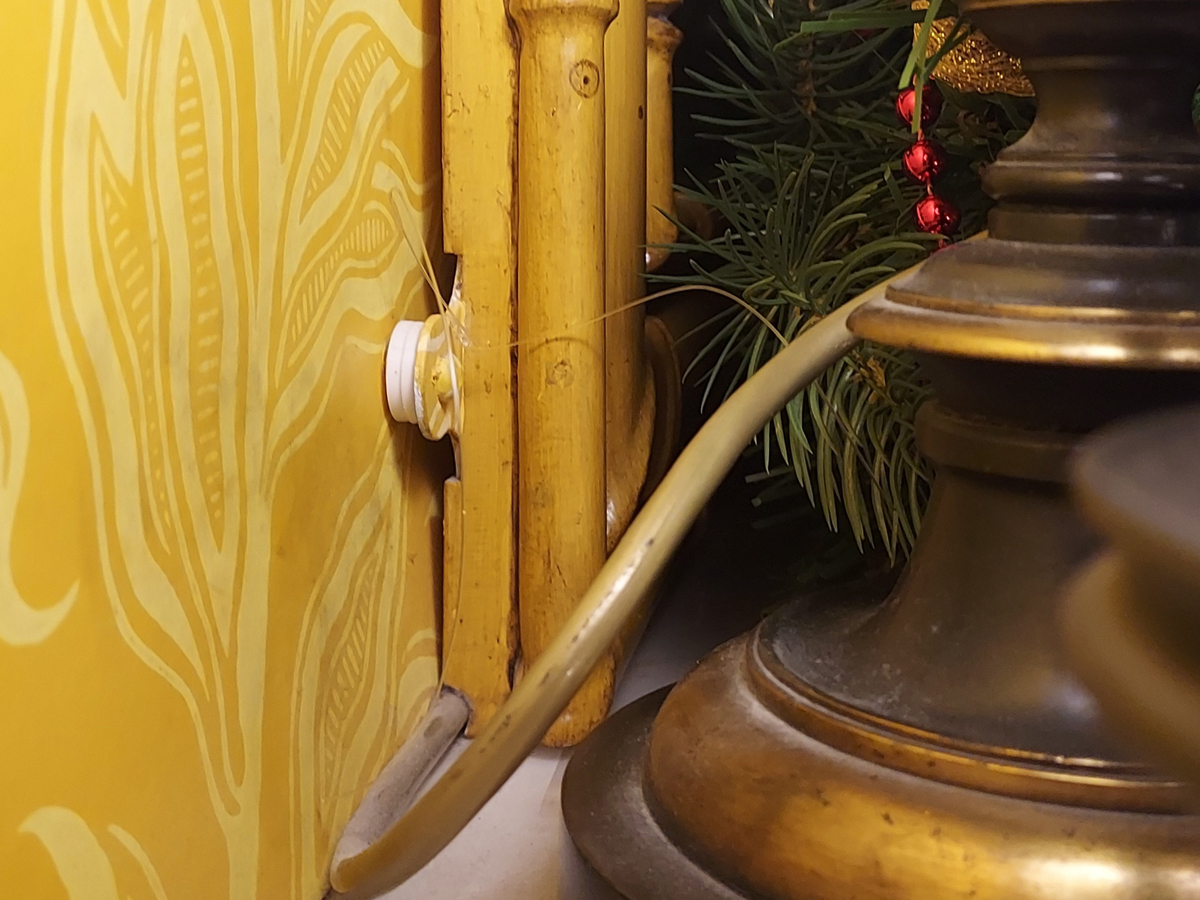
- Lighting and sound equipment didn’t interfere with on-going environmental control systems. There are limited plug sockets in a room and conservation’s heaters and dehumidifiers are necessary to continuously control the temperature and relative humidity in the spaces. This helps prevent things like mould and damage from sudden changes in temperature and humidity occurring.

At the time of writing, all the decorations were hung, and the finishing touches were being installed ready for opening day, but most of Conservation’s tasks were complete.
There were more tasks completed by the department, which were not covered by the contents of this post – we were involved in every display across the Pavilion in some way – but hopefully this gives an insight into the amount of planning and work which goes into putting on a remarkable Christmas show.
Hove Attic Mould Remediation
Since my last post, much progress has been made with the collections from Hove Museum. I waved goodbye to Íris, who has completed her master’s with the University of Brighton, and said hello to another volunteer, Ella.
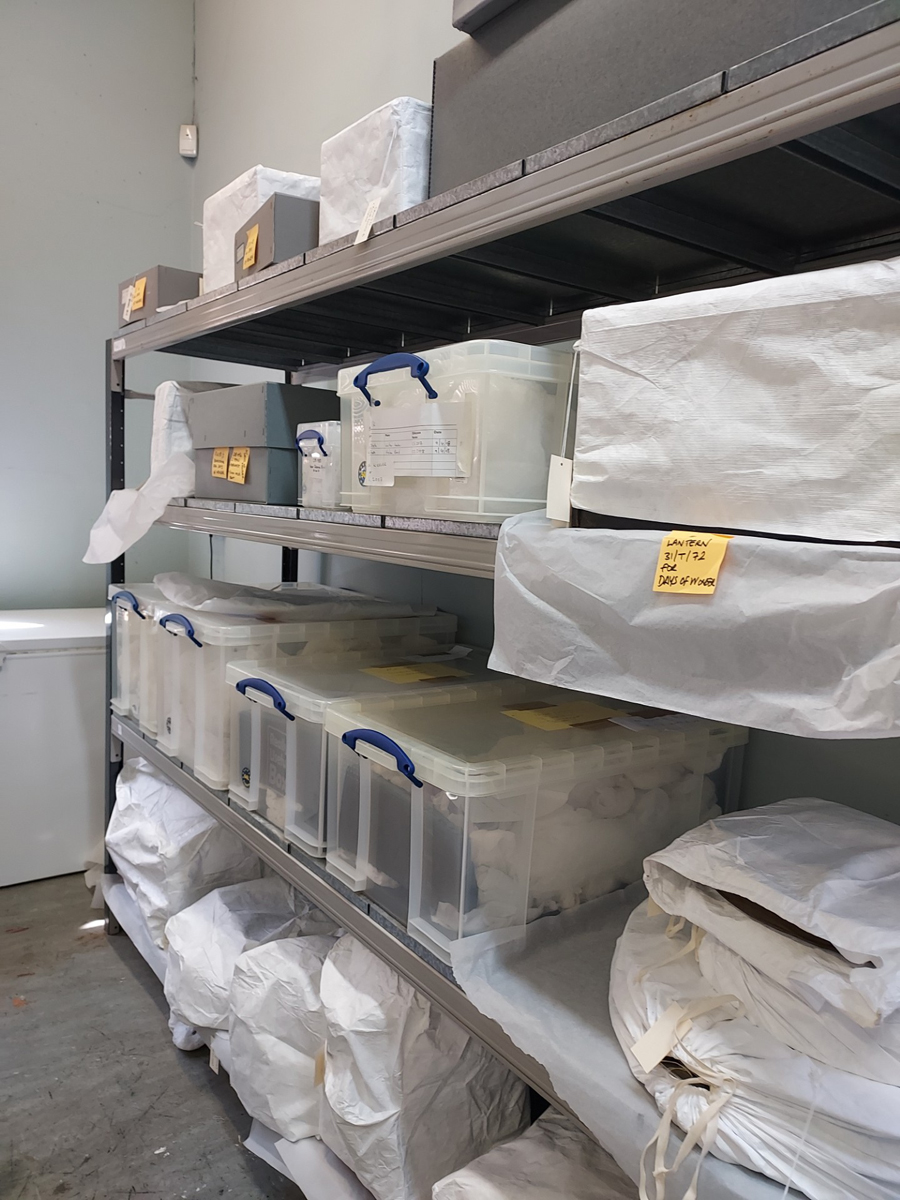
Phase One (aka the first room) has been completed with their wonderful help. All the items have been cleaned, repackaged, and returned to a temporary storage space at Hove Museum.
Much of the film collection’s cameras and empty film reels are on open storage and I created bespoke Tyvek covers for these to minimise the amount of dust settling on them.
Less dust should mean less opportunities for mould to regrow.
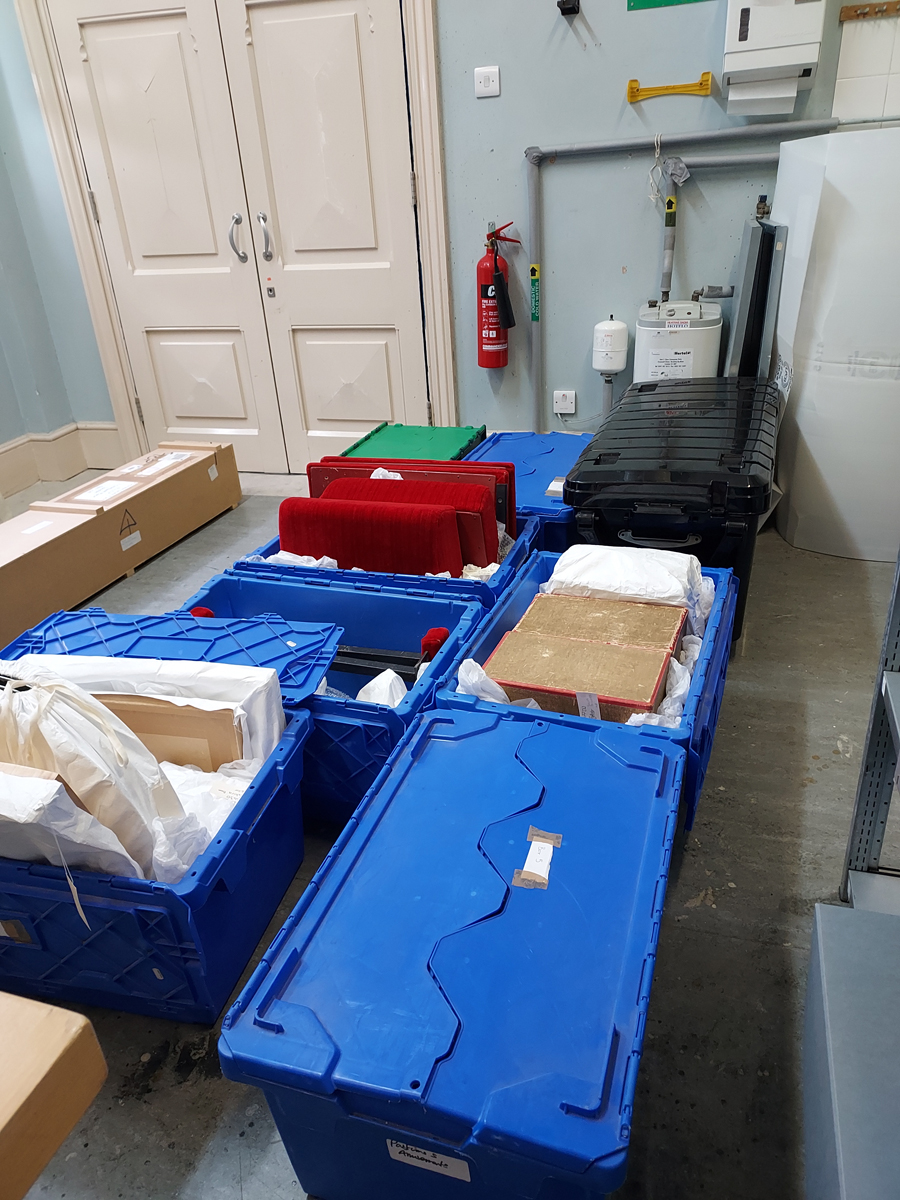
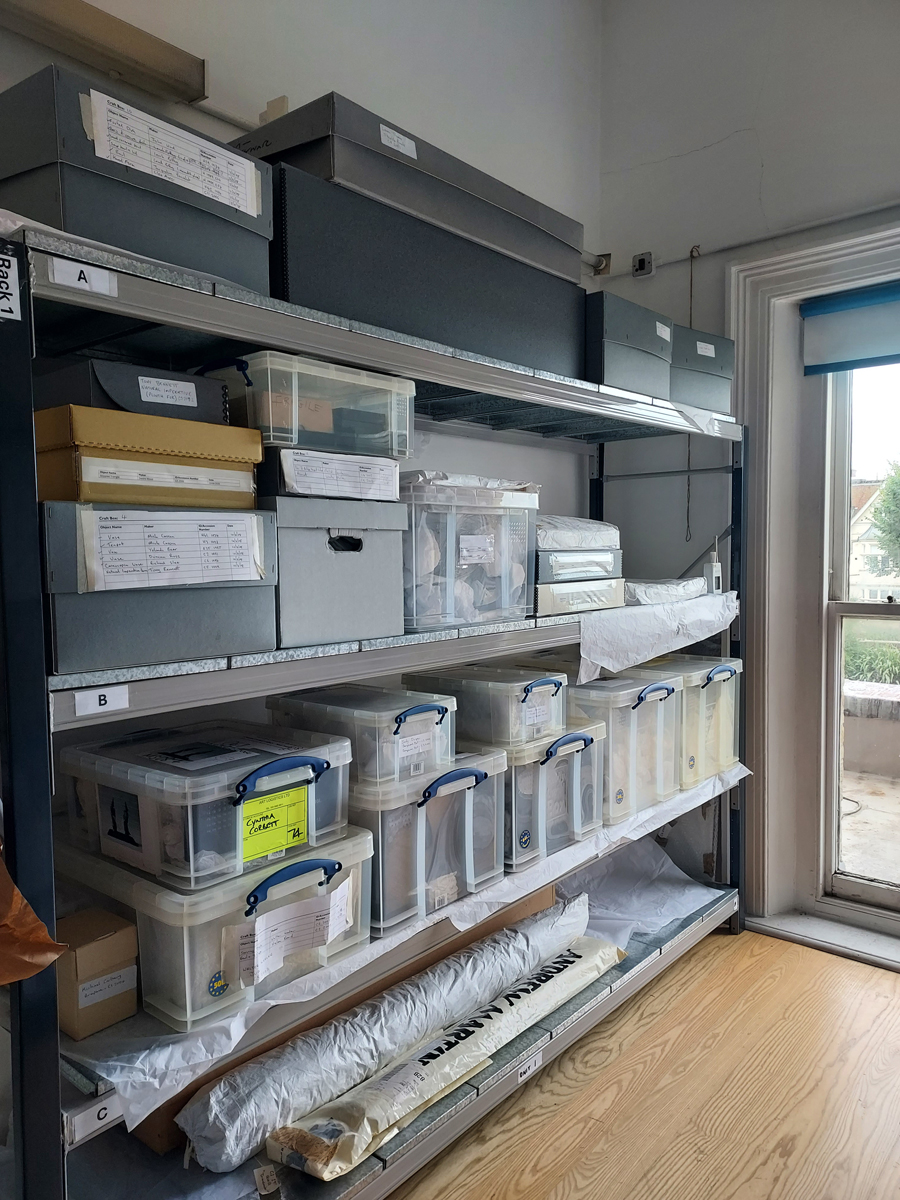
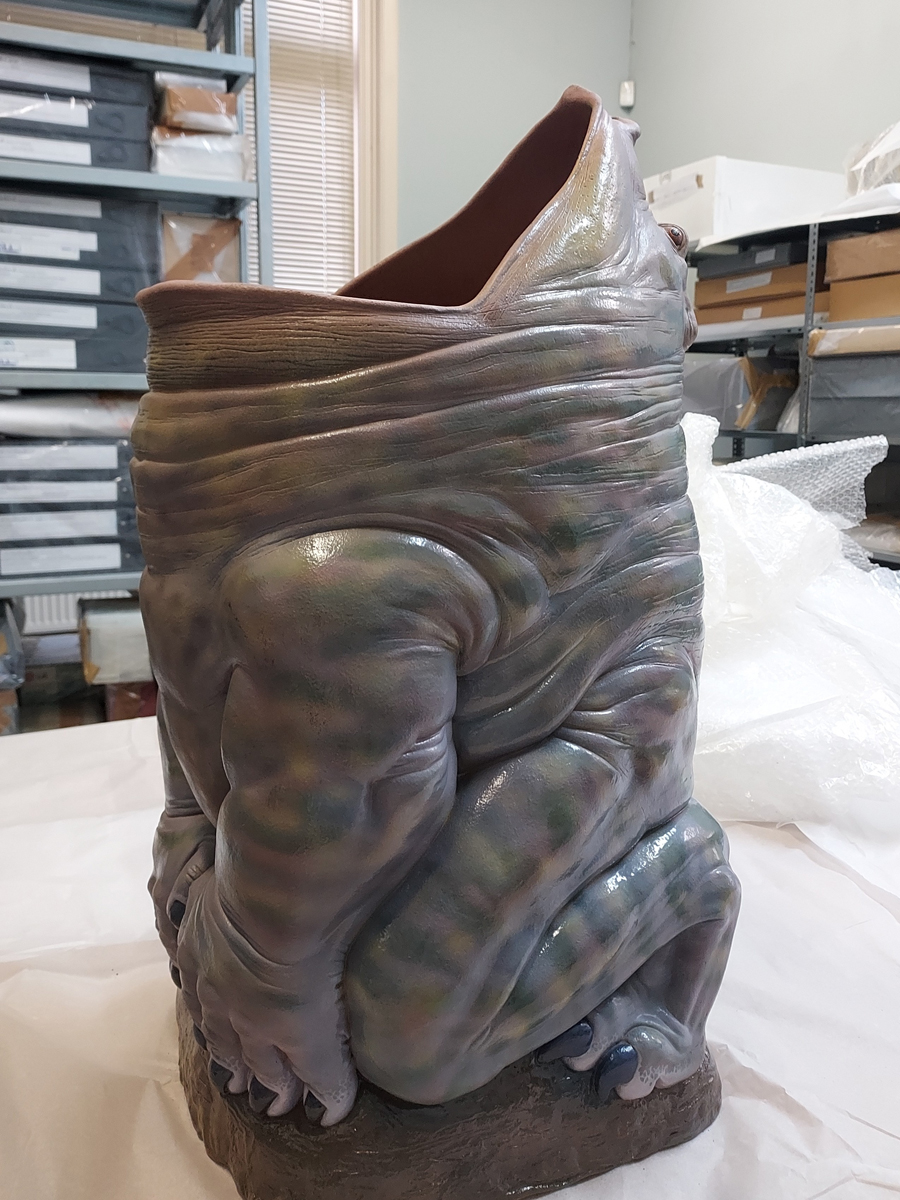
Attention has turned to the next room which is entirely devoted to the craft collection. Since bringing them over from Hove Museum in the autumn, Ella and I have begun to assess and clean these items, which range from large ceramics to textiles and paper collages, using the same process as Phase One. We’ve come across some interesting items so far, including the “Gulper” by Tony Bennett which has become a firm favourite.
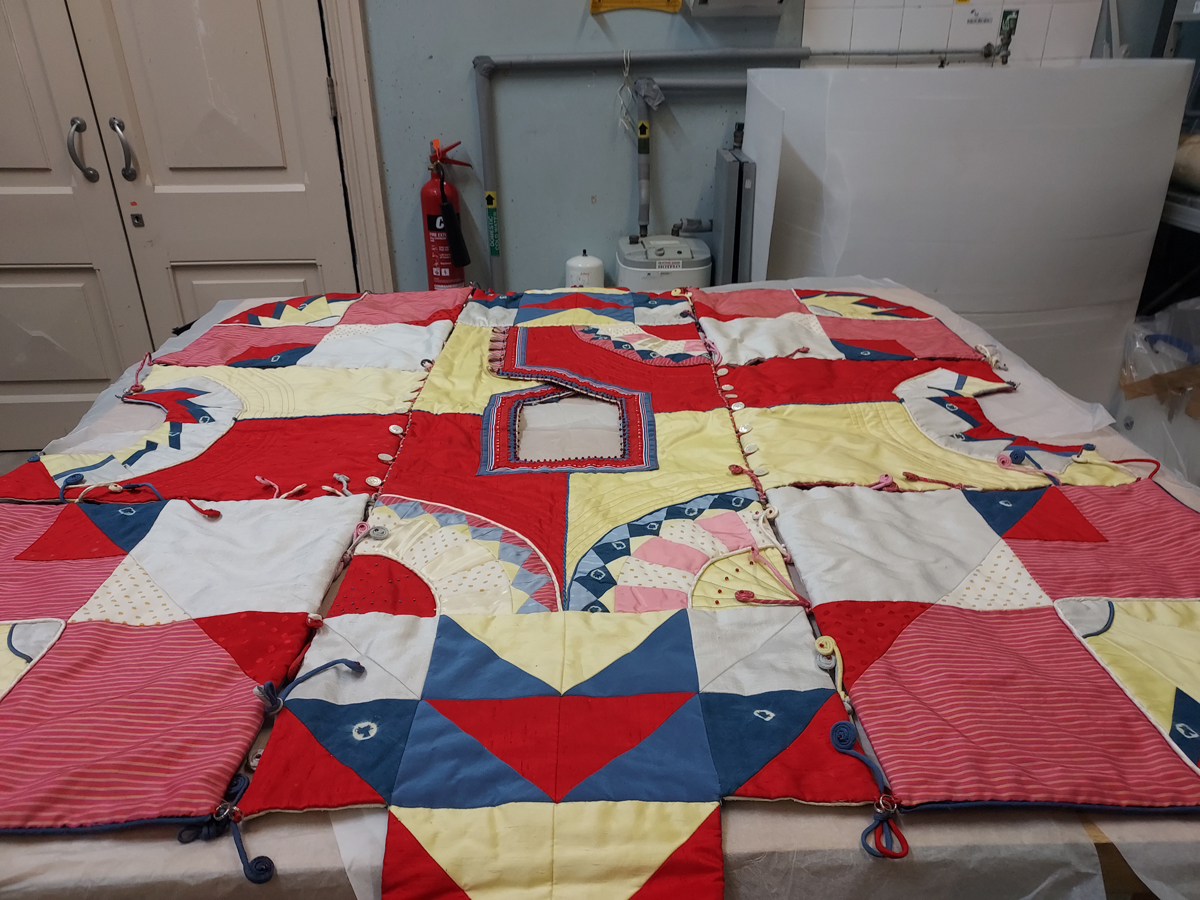
We also discovered mould can have a favourite colour. The red on this coat cover is apparently very tasty.
Ella is working with me until February, after which I will be joined by another volunteer from the University of Brighton’s Curating Collections and Heritage MA course. We will continue to clean the contents of the craft store and uncover more hidden gems in the collection.
Portfolio Preparations
Over the past year I have taken on or helped with a variety of projects which have helped develop my skills as a conservator. Last month, Andy organised a portfolio workshop to help Dominic and I best showcase our skills and experience for future job interviews.
It prompted me to think and reflect over what has changed since I started and how much I have grown in confidence. I hope to build my portfolio over the next year to best illustrate what I have achieved and learnt by working at Brighton & Hove Museums.
Look out for my next post in summer next year where I will cover some of the results from the blue wool dosimeters I installed in Preston Manor.
The next blog will be from Dominic and will feature updates to his projects.