Chinese wallpaper analysis kicks off Year of the Horse at The National Archives
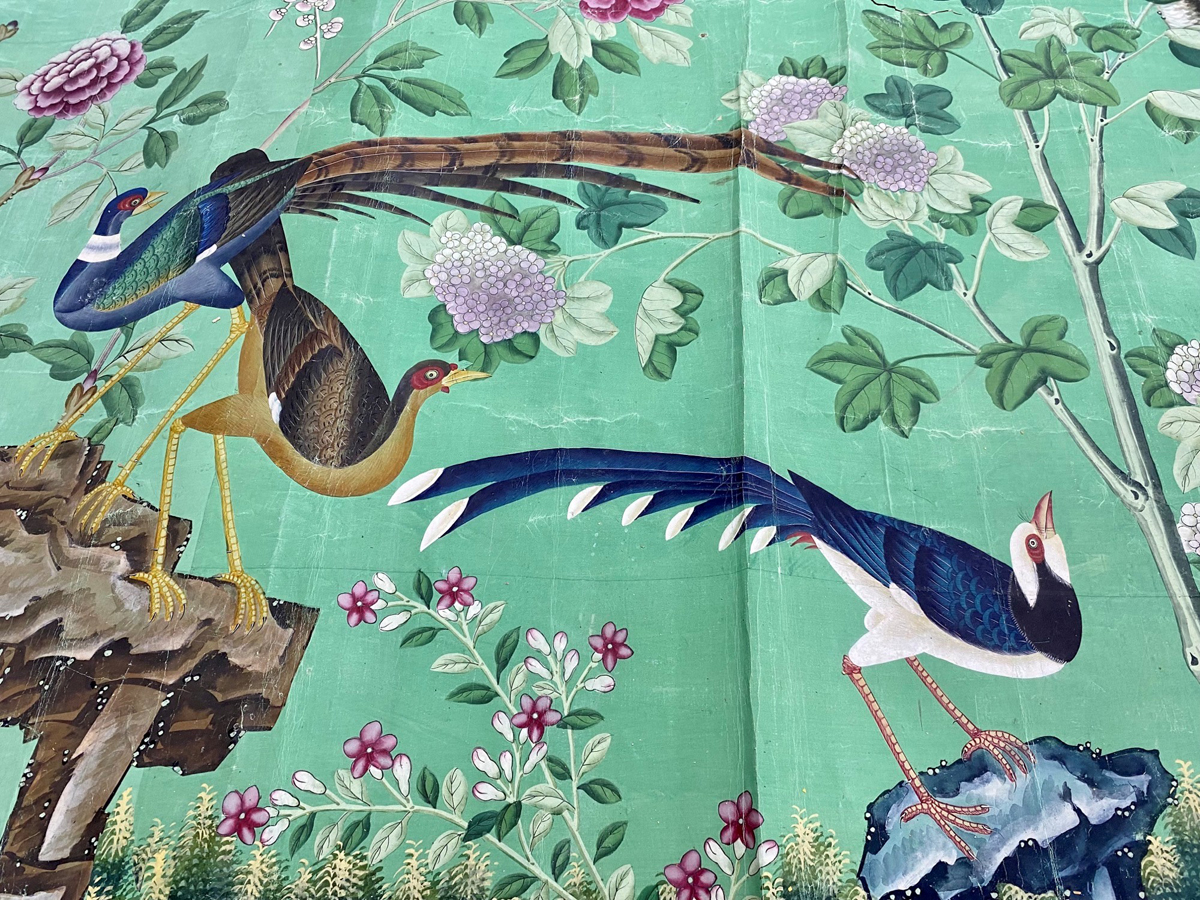
Chinese wallpaper from the Royal Pavilion is involved in one of the most comprehensive analytical studies of Chinese export wallpaper which has begun at The National Archives.
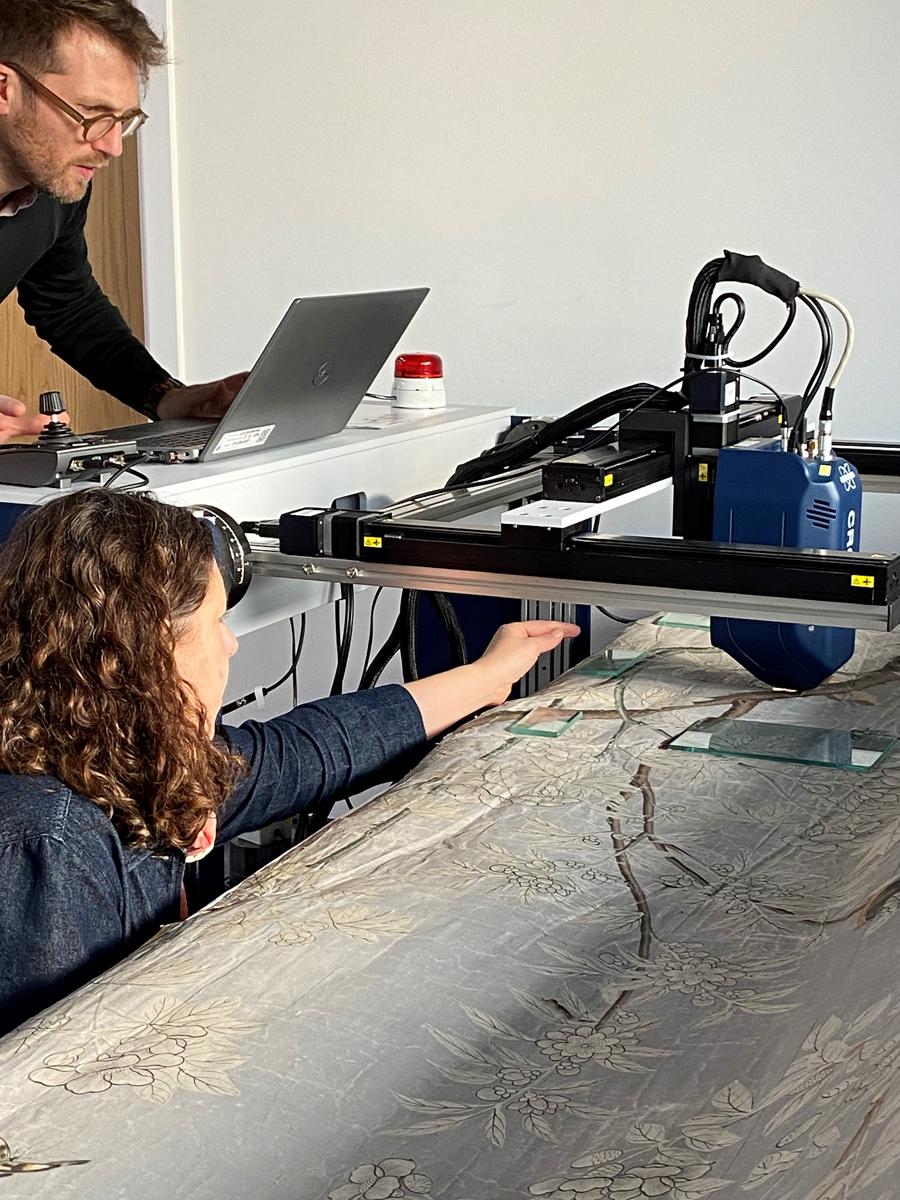
At the start of Chinese New Year (17 February 2026), cutting-edge equipment at The National Archives is being used to analyse hand painted historic wallpapers, dated between 1770-1812.
The wallpapers are from the Royal Pavilion, Brighton, whose paper conservator Amy Junker Heslip is analysing their pigments and paper composition using X-ray fluorescence and fibre-optic reflectance spectroscopy.
The luxury wallpapers were purchased for George IV. They were made in China exclusively for export and imported to Britain by the British East India company at a time when a round-trip took approximately 15 months by sea.
They cost the modern equivalent of £300 per roll and were sold in sets of 24 or 40 rolls to an exclusively upper-class European market. When demand for them was at its peak merchants in the port of Guangzhou (Canton) were shipping around 3000 sheets each season.
Surviving examples can still be seen in stately homes around Britain, where it was particularly popular for withdrawing rooms and ladies’ bedrooms.
Chinese researcher Jinren Yu, from the Institute of Botany, Chinese Academy of Sciences, is undertaking PhD research in collaboration with the Royal Botanic Gardens, Kew, and visited The National Archives to identify some of the plants and flowers on the richly coloured wallpapers.
Ms Junker Heslip’s analysis is supported by The National Archives through the RICHeS programme and by CHASE (The Consortium for the Humanities and the Arts South-East England). As part of the UK’s major investment in heritage research, RICHeS has enabled The National Archives to develop a high-tech heritage science and conservation research laboratory in Kew, south-west London which is available for use by other institutions.