Making a Costume: A Step-by-Step Guide
Discover how a Masked Singer costume is brought to life, from the first clay sculpt to the finished character seen on stage. Follow the four key steps that transform an idea into a wearable work of art.

Step 1 – From Sketch to Sculpture
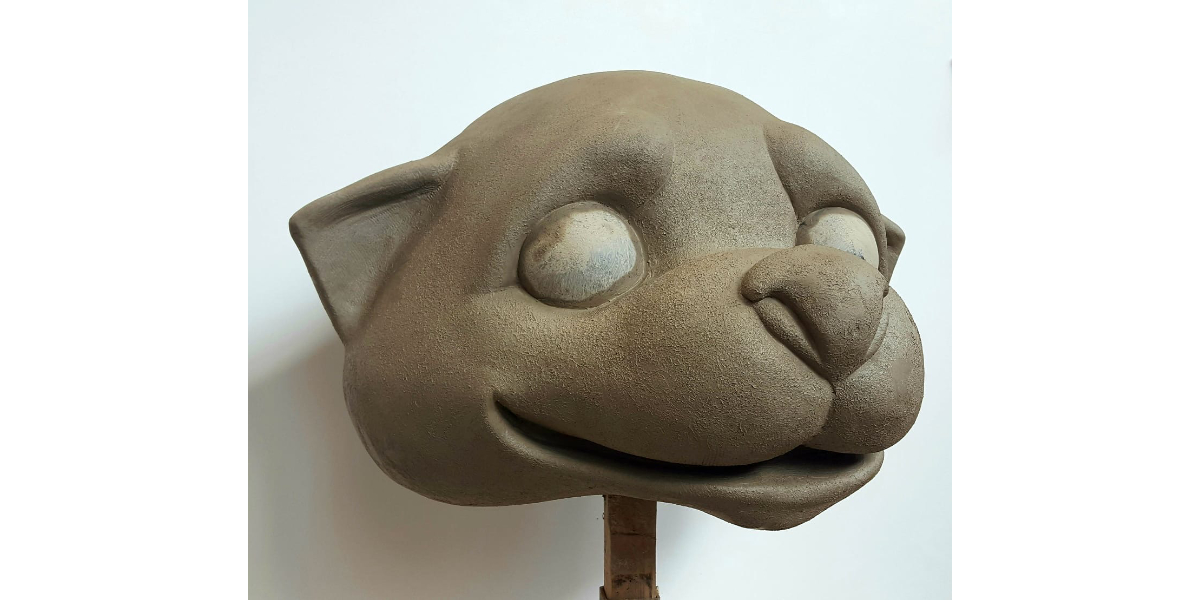
Most masks on The Masked Singer UK begin as a clay sculpture created by one of the talented team at Plunge Creations.
Using the original design sketches as a guide, the sculptor creates a three-dimensional version of the character’s head. It’s the first time the costume moves from drawing to real object. Working closely with the costume team, the sculptor makes sure the mask is in proportion with the rest of the costume, carefully considering details such as the neck length and shoulder width.
The team must also think about performance and comfort. Can a human head fit comfortably inside the mask? Can the character appear to look towards the audience regardless of where the performer’s head is positioned or where their eyeline is?
Once complete, the clay sculpt is photographed from all angles before being reviewed by Bandicoot. After approval, the mask’s shape is locked in and can no longer be changed.

Step 2 – Moulding the Mask
Once the clay sculpt is approved, the costume team use it to create a lightweight, breathable mask that can be worn by a performer.
They use a material called Varaform. This specialist cotton mesh contains a heat-sensitive resin that becomes flexible when warmed. The team use a heat gun to carefully soften and shape the mesh around the clay sculpt, capturing every detail. As the Varaform cools, it hardens and holds its new shape.
Once set, the Varaform is carefully cut down the back and removed from the clay sculpt, which is returned to the sculpture workshop to be reused.
The mesh mask is washed to remove any remaining traces of clay before the cut seam is sealed with additional strips of Varaform.
Because Varafrom softens when heated, the team must take extra care when handling the finished masks. They cannot use hairdryers to dry fur-covered costumes, and masks must never be left near radiators or in direct sunlight, as heat can cause them to lose their shape.

Step 3 – Bringing the Mask to Life
Once the Varaform mask structure is complete, the costume team fit an adjustable internal cradle that sits securely on the performer’s head and can be fastened under the chin.
The cradle keeps the performer’s eyes aligned with the vision panels and ensures the mask sits at the correct height in relation to the costume’s neck and shoulders. It also distributes the weight of the mask evenly over the head, making it as comfortable as possible to wear.
With the structure in place, the transformation, and the fun, can begin. The mask is first covered in a stretchy base fabric before the team bring the character to life using an enormous range of techniques and materials. Furs, fabrics, sequins, feathers, eyelashes, whiskers, horns, teeth and all manner of embellishments are painstakingly applied by hand to create the character’s unique personality.
The eyes are fitted last to protect their shiny finish. These are often made from acrylic hemispheres half filled with a clear casting resin. Then an eye design is laid on top before a final layer of resin seals the graphic in place.

Step 4 – Costume Making
No two Masked Singer costumes are made in exactly the same way. The construction method depends on the character’s design.
Big, bulky costumes are often made from reticulated foam, a lightweight material with a porous, open structure that lets air flow through it. The foam is cut and glued together to create the character’s shape before being covered, or ‘skinned’, in stretch fabric.
Some of the heaviest costumes need a specially made aluminium frame hidden inside the body of the costume. Attached to a backpack worn by the performer, the frame helps to evenly distribute the weight, making the costumes safer and more comfortable to wear.
Other costumes are more like a bespoke tailored suit or dress. Using the performer’s measurements, the costume team draft their own patterns before cutting and sewing every part by hand.
Once the structure is complete, costume makers hand-paint, stitch and glue the embellishments that bring each character to life.
Whatever technique is used, one rule always applies: the celebrity’s identity must stay completely hidden. Their hands and feet are disguised, and neck dressings are carefully constructed so no part of the performer can be seen between the mask and the costume.
The judges, studio audience and viewers at home must see only the character, never the person beneath the costume, until the moment of unmasking.